Sallow Sedge (Carex lurida)
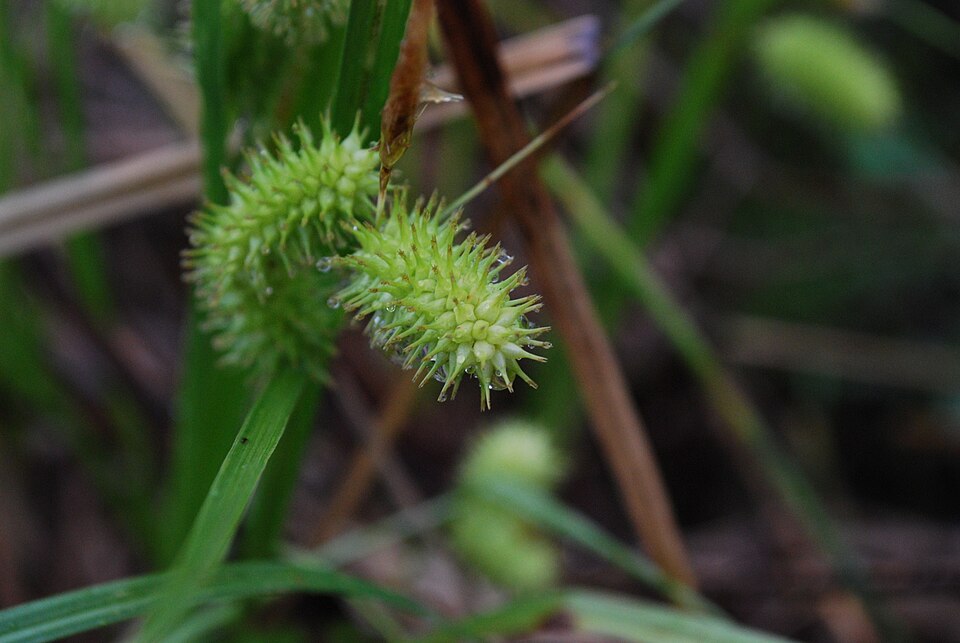
Carex lurida, commonly called Sallow Sedge or Shallow Sedge, is a native perennial wetland sedge that thrives in the saturated, seasonally flooded margins of streams, ponds, marshes, and wet meadows across the eastern United States. One of the most ecologically important and visually distinctive native sedges for wet sites in the Mid-Atlantic region, it is characterized by its robust, upright clumps 1 to 3 feet tall and its remarkable seed heads — dense, bottle-brush-like cylinders of inflated, beak-tipped perigynia that look almost reptilian when they develop in late summer.
Sallow Sedge has become an increasingly important plant in ecological restoration and sustainable stormwater management throughout Maryland, Virginia, and West Virginia. Its tolerance of wet to seasonally flooded conditions, combined with good root mass and fibrous spreading habit, makes it an outstanding plant for rain gardens, bioswales, stream bank restoration, and the edges of constructed wetlands. It establishes readily, grows vigorously, and spreads to form dense, weed-suppressing colonies in wet areas where few other ornamental plants perform well.
As with most native sedges, Sallow Sedge’s ecological value extends far beyond aesthetics. It is a larval host plant for several Satyr butterfly species and supports the specialist insect communities that form the base of the food web in wetland ecosystems. The seeds are eaten by waterfowl and small wetland birds, and the dense clumps provide nesting habitat and thermal cover for marsh-dwelling wildlife. In restoration contexts, Sallow Sedge is one of the workhorses of wetland edge community establishment in the Chesapeake Bay watershed.
Identification
Sallow Sedge forms robust, upright clumps growing 1 to 3 feet tall. Like all sedges, its stems are triangular (three-sided) in cross-section. It is typically larger and more vigorous than Pennsylvania Sedge, reflecting its preference for wetter, more nutrient-rich soils. It spreads by short rhizomes and slowly expands into multi-stemmed clumps over time.
Leaves & Stems
The leaf blades are flat, 4 to 10 mm wide, and grass-like, bright to medium green. They are longer and wider than the leaves of Pennsylvania Sedge, more closely resembling many common wetland grasses at first glance. The leaves have rough margins and can be slightly glossy on the upper surface. Multiple leaf blades emerge from each rhizome node, creating a dense, fountain-like clump. The triangular stems (culms) are sturdy and upright.
Flowers & Fruit
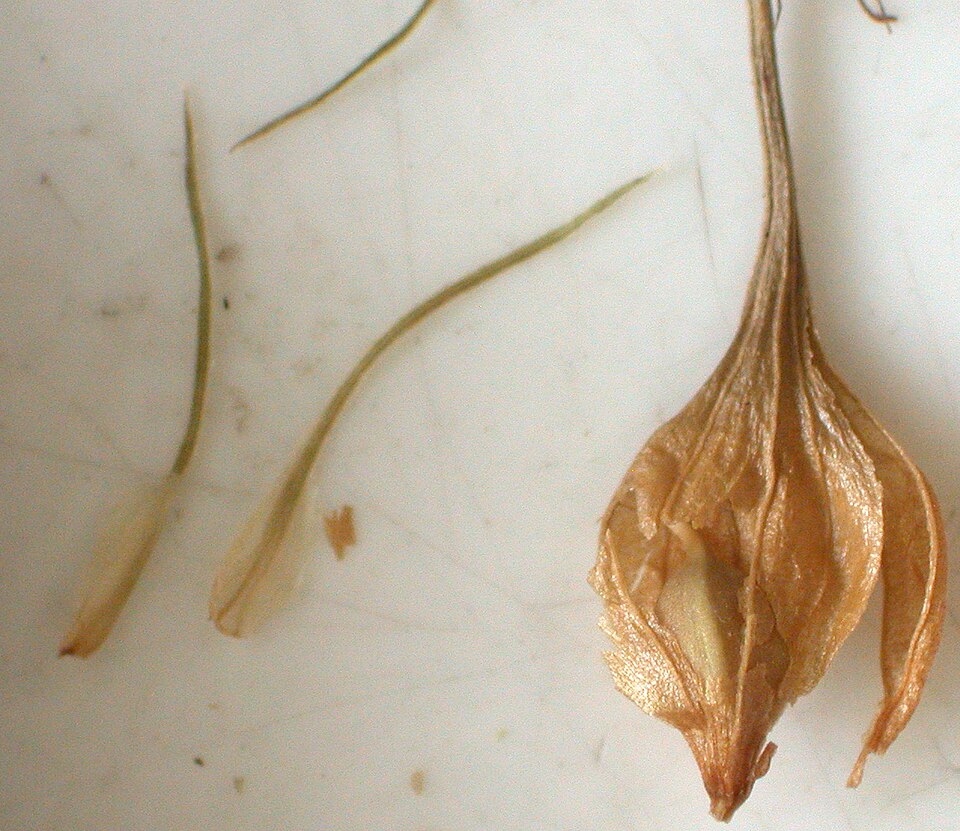
The most distinctive feature of Sallow Sedge is its seed heads, which develop from June through August. The female spikes (pistillate) are 1 to 4 inches long and densely cylindrical, packed with individual perigynia (seed envelopes) that are strongly inflated, egg-shaped, and taper to a long, beak-like tip. The overall effect is of a dense, spiky, green-to-brown bottle-brush — one of the most architecturally interesting seed heads of any native wetland plant. These distinctive perigynia immediately separate C. lurida from most other native sedges. The male (staminate) spikes appear above the female spikes at the top of each culm.
Quick Facts
| Scientific Name | Carex lurida |
| Family | Cyperaceae (Sedge) |
| Plant Type | Perennial wetland sedge |
| Mature Height | 1–3 ft |
| Sun Exposure | Full Sun to Part Shade |
| Water Needs | Moderate to High |
| Bloom Time | May – July (seed heads ornamental through fall) |
| Flower Color | Green (wind-pollinated, distinctive seed heads) |
| USDA Hardiness Zones | 3–9 |
Native Range
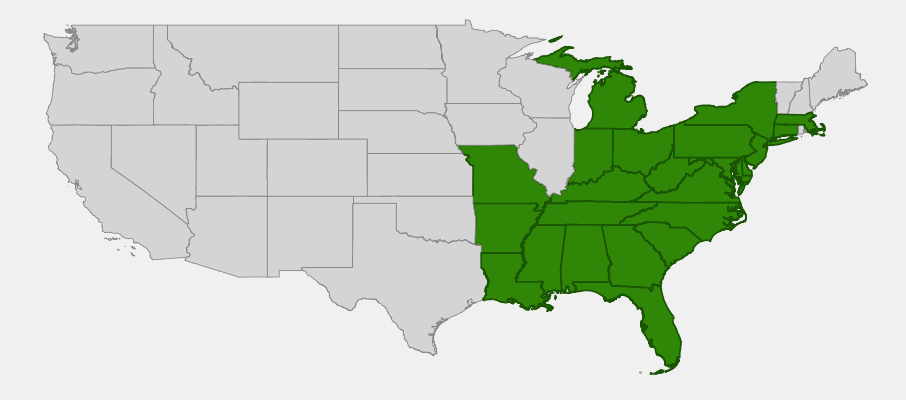
Sallow Sedge is native to a large portion of eastern North America, ranging from Ontario and Quebec in Canada south through New England, the Mid-Atlantic states, and the Appalachian Mountains, continuing through the Southeast to Florida and west to Wisconsin, Missouri, and Arkansas. It is native throughout Maryland, Virginia, and West Virginia, occurring in suitable wet habitats in virtually every county.
Within the Chesapeake Bay watershed, Sallow Sedge is an important component of stream-side vegetation, wet meadow communities, and seasonally flooded depressional wetlands. It grows naturally alongside other wetland sedges, rushes, and forbs in the transitional zone between open water and upland vegetation. In Maryland and Virginia, it is frequently found alongside Blue Flag Iris (Iris versicolor), Swamp Milkweed (Asclepias incarnata), Cardinal Flower (Lobelia cardinalis), and various native rushes and grasses.
The species name “lurida” means “lurid” or “pale yellow” in Latin, possibly referring to the yellowish-green color of the perigynia as they mature, or to the somewhat sinister-looking, heavily armed appearance of the seed heads. The common name “Shallow Sedge” refers to its preference for shallow water margins, while “Sallow” (meaning “pale, sickly yellow”) also references the color of the mature fruit.
📋 Regional plant lists featuring Sallow Sedge: Maryland, Virginia & West Virginia
Growing & Care Guide
Sallow Sedge is an easy, vigorous plant in wet conditions, requiring minimal care once established. Its key requirement is moisture — it does not perform well in dry situations.
Light
Sallow Sedge grows best in full sun to part shade. In full sun with adequate moisture, it grows most vigorously and produces the most abundant seed heads. In part shade — as it often naturally grows under streamside trees — it performs well but may be slightly less vigorous. It does not thrive in heavy shade.
Soil & Water
Moisture is the critical requirement. Sallow Sedge thrives in consistently wet to saturated soils and tolerates standing water up to several inches deep for extended periods. It is ideal for the wet margins of rain gardens, bioswales, pond edges, and stream banks where water persists after storms. Rich, loamy soils produce the most vigorous growth, but it tolerates clay and other heavy soils typical of wetland sites. Do not plant in dry or well-drained soils — it will struggle and eventually die without consistent moisture.
Planting Tips
Plant in spring or fall, spacing plants 18 to 24 inches apart in restoration or bioswale contexts; closer (12–18 inches) for quicker coverage. Container-grown plants establish easily. Plant at or near the water’s edge — slightly above the waterline is ideal. In rain gardens, plant in the lowest zone of the garden where water collects and persists longest after rain events. Do not let new plantings dry out in the first growing season.
Pruning & Maintenance
Cut clumps back to 4 to 6 inches in late winter or early spring before new growth emerges. Remove old, tattered foliage from the previous season. Other than this annual cut-back, Sallow Sedge requires minimal maintenance. It is pest- and disease-resistant. Over many years, large old clumps can be divided to rejuvenate growth and propagate additional plants. Divisions should be made in early spring when new growth is just emerging.
Landscape Uses
- Rain garden — excellent for the wet zone where water collects
- Bioswale planting — robust, tolerates inundation
- Stream bank restoration — helps stabilize banks and filter runoff
- Pond margin — attractive edge plant with ornamental seed heads
- Wet meadow restoration
- Native wetland garden alongside Blue Flag Iris and Cardinal Flower
Wildlife & Ecological Value
Sallow Sedge is a productive ecological component of wetland communities across its range.
For Birds
The seeds are consumed by various wetland and waterside birds, including ducks, Rails, Swamp Sparrows, and Song Sparrows. The dense clumps provide excellent nesting habitat for Marsh Wrens and other wetland-edge birds that build cup nests in dense vegetation near water. Common Yellowthroat warblers use dense wetland vegetation including sedge clumps for nesting throughout the Mid-Atlantic region.
For Butterflies & Insects
Like Pennsylvania Sedge and other native Carex species, Sallow Sedge supports specialist Satyr butterfly caterpillars, including the Appalachian Brown (Lethe appalachia), which occurs in the same moist, shaded wetland habitats as this sedge. Native sedges as a group are among the most important host plants for native specialist insects — supporting far more caterpillar diversity than introduced sedge or grass species used in conventional landscaping.
Ecosystem Role
In wetland communities, Sallow Sedge performs significant physical and chemical functions. Its dense root systems stabilize stream banks and pond margins, reducing erosion during storm events. The roots and shoots trap sediment and filter agricultural and urban runoff, removing excess nutrients before they enter streams and contributing to water quality improvement throughout the Chesapeake Bay watershed. The standing dead material from previous years provides overwintering habitat for beneficial insects, small amphibians, and invertebrates.
Cultural & Historical Uses
Wetland sedges played important roles in the material cultures of Indigenous peoples throughout the eastern woodlands. Native American nations of the Chesapeake Bay region, including the Piscataway, Nanticoke, and Powhatan peoples, used wetland sedges for weaving, matting, and thatching. Sedge leaves and stems were woven into mats used as floor coverings, wall coverings, and sleeping surfaces in dwellings. The broad, strong leaves of larger sedge species like C. lurida were particularly useful for these purposes due to their flexibility, length, and water-resistance.
The wet habitats where Sallow Sedge grows were also critical subsistence zones for Indigenous peoples — providing fish, waterfowl, and a wide variety of edible and medicinal plants in close proximity. Wetland sedge communities functioned as important seasonal hunting and gathering areas, particularly in spring and fall when waterfowl migrations concentrated along Chesapeake Bay tributaries.
In contemporary practice, Sallow Sedge has become a workhorse of green infrastructure and stormwater management projects throughout the Mid-Atlantic. Its combination of wet-site tolerance, robust growth, ornamental seed heads, and wildlife value makes it one of the most specified native plants in bioengineered stream bank restoration, green infrastructure design, and sustainable landscaping projects by engineers, landscape architects, and ecologists working in the Chesapeake Bay watershed restoration effort.
Frequently Asked Questions
What makes Sallow Sedge’s seed heads so distinctive?
The seed heads of C. lurida consist of densely packed, strongly inflated perigynia (individual seed envelopes) that are egg-shaped with a long, beak-like tip. They’re clustered into cylindrical spikes that look almost like fuzzy green or brown bottle-brushes — quite unlike any common grass or typical plant seed head. This distinctive morphology makes Sallow Sedge one of the most easily identified native sedges once you’ve seen it.
Can Sallow Sedge grow in a regular garden (not a wet site)?
It is not a good choice for dry or even moderately moist sites — it really needs consistently wet conditions. For drier shade, Pennsylvania Sedge (C. pensylvanica) is a far better choice. For average moisture, Appalachian Sedge (C. appalachica) or Pennsylvania Sedge are more appropriate. Sallow Sedge should be reserved for wet sites where it excels.
Is Sallow Sedge good for a rain garden?
Yes — it is one of the best native plants for the wet zone of a rain garden (the lowest area that holds water the longest after rain events). It tolerates periodic inundation, grows vigorously in wet conditions, and has ornamental value with its distinctive seed heads. Plant it alongside Blue Flag Iris, Swamp Milkweed, and Cardinal Flower for a beautiful and ecologically productive rain garden.
How does Sallow Sedge spread?
It spreads slowly by rhizomes, forming expanding clumps over time. It does not spread aggressively or become invasive in gardens. In appropriate wet conditions, it will gradually expand its footprint, which is desirable for erosion control and bank stabilization purposes.
Are there cultivars of Sallow Sedge?
Sallow Sedge is typically sold as the straight species rather than named cultivars. It is a functionally robust plant that performs consistently well without selection for specific ornamental traits. It can be found at native plant nurseries specializing in wetland plants and habitat restoration species.

Looking for a nursery that carries Sallow Sedge?
Browse our native plant nursery directory: Maryland · Virginia · West Virginia