
Sassafras (Sassafras albidum)
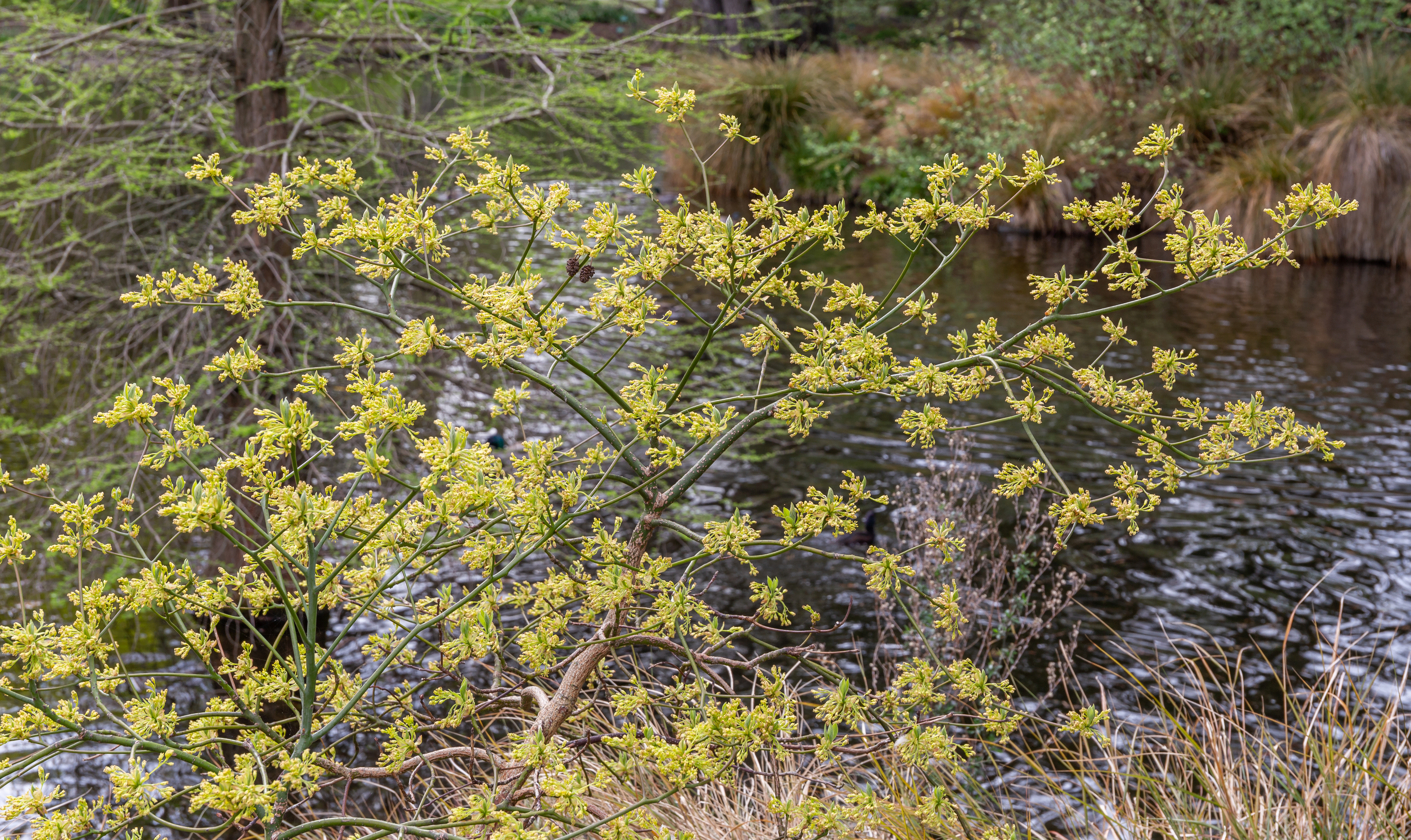
Sassafras albidum, commonly known as Sassafras, White Sassafras, or Red Sassafras, is one of North America’s most distinctive and beloved native trees, renowned for its uniquely variable leaves, spectacular fall colors, and rich cultural history. This member of the Lauraceae (laurel) family stands alone as the sole species of Sassafras native to North America, making every specimen a botanical treasure that connects us to the continent’s deep natural heritage.
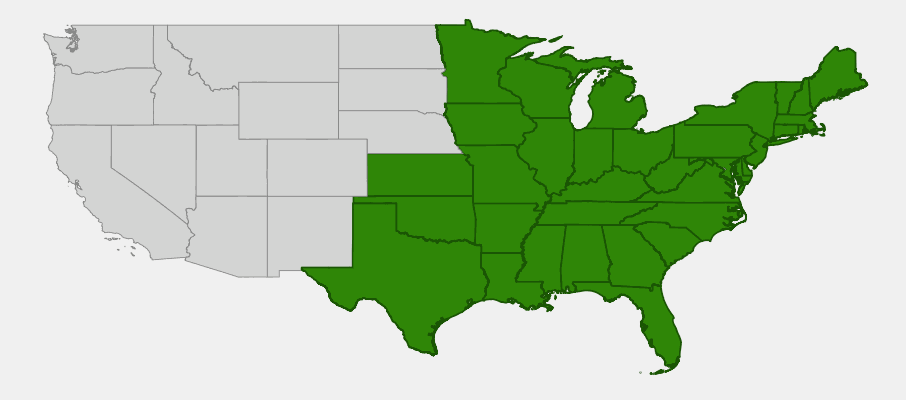
Growing naturally across vast swaths of eastern North America — from southern Maine to central Florida and west to southeastern Iowa and eastern Texas — Sassafras is a remarkably adaptable medium-sized deciduous tree that can reach 35 to 50 feet in height. What makes Sassafras instantly recognizable, even from a distance, is its extraordinary leaf polymorphism: a single tree can simultaneously display oval leaves, mitten-shaped leaves with a single lobe, and three-lobed leaves that resemble a turkey’s foot. This botanical shapeshifting, combined with its aromatic bark, stems, and roots, has made Sassafras a cornerstone species in American folklore, traditional medicine, and ecological systems for centuries.
In autumn, Sassafras transforms into one of the most spectacular fall color displays in the eastern forest, with individual trees bursting into brilliant combinations of yellow, orange, pink, and deep scarlet red — sometimes displaying all these colors simultaneously on different branches. The tree’s ecological value extends far beyond its visual appeal: the dark blue berries are a critical food source for over 40 species of birds, while the dense growth habit and early successional nature make it an essential component of forest edges, clearings, and young woodlands throughout its range.
Identification
Sassafras typically grows as a medium-sized deciduous tree reaching 35 to 50 feet tall with a trunk diameter of 12 to 24 inches, though exceptional specimens in ideal conditions can reach up to 80 feet. The overall form is often irregular and open, with a characteristic flat-topped crown in mature trees. In younger specimens or forest edge conditions, Sassafras frequently develops multiple trunks or grows as a large shrub, creating dense colonies through root sprouts.
Bark
The bark of Sassafras is one of its most distinctive features. On young trees and branches, the bark is smooth and green to reddish-brown, often with a distinctive aromatic quality when scratched or bruised. As trees mature, the bark develops deep furrows and becomes rough and deeply ridged with a reddish-brown to grayish-brown color. The inner bark has a distinctive spicy, root beer-like fragrance that is immediately recognizable and has been prized throughout history. This aromatic quality is present in all parts of the tree — bark, twigs, leaves, and especially the roots.
Leaves
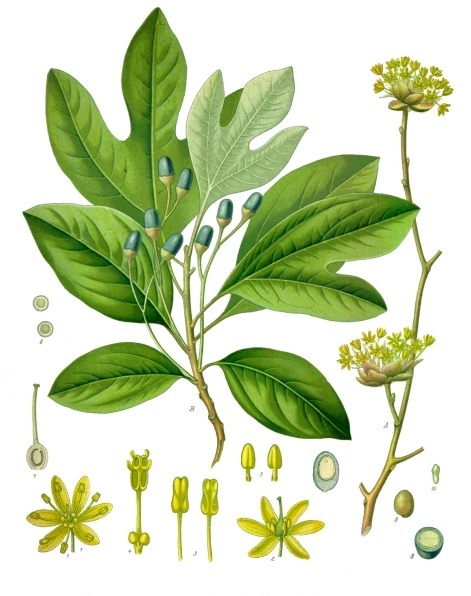
The leaves are perhaps the most famous feature of Sassafras, displaying a remarkable polymorphism that makes the species instantly identifiable. A single tree can produce three distinctly different leaf shapes: entire (oval and unlobed), mitten-shaped with a single thumb-like lobe on one side, and three-lobed resembling a turkey’s foot. Leaves are alternate, deciduous, and typically 4 to 6 inches long and 2 to 4 inches wide. They have a bright green color in summer with prominent veination, turning to spectacular displays of yellow, orange, red, and purple in fall. When crushed, the leaves release a pleasant spicy fragrance similar to the bark.
Flowers & Fruit
Sassafras is dioecious, meaning individual trees are either male or female. The small, greenish-yellow flowers appear in early spring before the leaves emerge, clustered in loose terminal racemes. Male flowers have nine stamens arranged in three series, while female flowers have a single pistil surrounded by six reduced stamens (staminodes). The flowers are small and inconspicuous but play an important role in early spring ecology, providing nectar for early-emerging pollinators when few other food sources are available.
Female trees produce distinctive dark blue, berry-like drupes about ⅓ to ½ inch long, borne on bright red stalks (pedicels) that create a striking contrast in late summer and early fall. These berries are a critical food source for numerous bird species and are considered one of the most important wildlife foods produced by native trees in the eastern United States. The berries ripen from late August through September and are quickly consumed by wildlife.
Quick Facts
| Scientific Name | Sassafras albidum |
| Family | Lauraceae (Laurel) |
| Plant Type | Deciduous Tree |
| Mature Height | 35–50 ft |
| Sun Exposure | Full Sun |
| Water Needs | High to Low |
| Bloom Time | April – May |
| Flower Color | Greenish-yellow |
| USDA Hardiness Zones | 4–9 |
Native Range
Sassafras boasts one of the largest native ranges of any tree species in eastern North America, stretching from southern Maine and New Hampshire south to central Florida, and west from the Atlantic coast to southeastern Iowa, eastern Kansas, and eastern Texas. This vast distribution makes Sassafras a truly continental species, adapted to an enormous variety of climates, soil types, and ecological conditions across more than 30 U.S. states.
The species reaches its greatest abundance and largest size in the mixed deciduous forests of the Ohio River Valley and the lower Appalachian Mountains, where deep, fertile soils and moderate temperatures create ideal growing conditions. Here, Sassafras commonly associates with other native hardwoods like American Chestnut (historically), various oaks, hickories, maples, and Tulip Tree. Throughout most of its range, Sassafras functions as an early to mid-successional species, colonizing forest openings, old fields, and disturbed sites through both seed dispersal and aggressive root sprouting.
Interestingly, Sassafras demonstrates remarkable ecological plasticity across its range, growing equally well in the sandy soils of the Atlantic Coastal Plain, the clay hills of the Piedmont, the rocky slopes of the Appalachians, and the prairie edges of the Midwest. This adaptability has made it a valuable restoration species for diverse ecological zones and helped it maintain stable populations despite centuries of harvesting pressure for its aromatic roots and bark.
📋 Regional plant lists featuring Sassafras: North Carolina & South Carolina
Growing & Care Guide
Sassafras is remarkably easy to grow and exceptionally adaptable, making it an excellent choice for both novice and experienced native plant gardeners. Its tolerance for a wide range of soil conditions, drought resistance once established, and minimal pest problems make it a low-maintenance addition to any landscape focused on native species and wildlife support.
Light
Sassafras performs best in full sun, where it develops its most robust growth, densest foliage, and most spectacular fall colors. However, the species shows good tolerance for partial shade, particularly in its juvenile stages. In forest settings, young Sassafras trees can grow successfully in the understory for several years before seeking full sunlight through the canopy. For optimal landscape performance, plant Sassafras where it will receive at least 6 hours of direct sunlight daily.
Soil & Water
One of Sassafras’s greatest strengths is its remarkable soil adaptability. The species thrives in well-drained soils ranging from sandy to clay, acidic to slightly alkaline (pH 5.0-7.5), and poor to fertile. It demonstrates excellent drought tolerance once established, with deep taproots that can access water sources unavailable to surface-rooted plants. However, Sassafras also handles periodic flooding and consistently moist soils well, making it suitable for rain gardens and bioswales. The key requirement is avoiding constantly waterlogged conditions, which can lead to root rot.
Planting Tips
Plant Sassafras in early spring or fall for best establishment. The species can be challenging to transplant once mature due to its deep taproot, so start with smaller nursery specimens or grow from seed. Space trees 20-30 feet apart for landscape use, closer for naturalistic groves or screening. Sassafras readily self-sows and also spreads through root suckers, so be prepared for its colonizing tendencies if that fits your landscape goals. For a more controlled approach, regular removal of suckers will maintain a single-trunk specimen.
Pruning & Maintenance
Sassafras requires minimal pruning and maintenance. Remove dead, damaged, or crossing branches in late winter while the tree is dormant. If you prefer a single-trunk tree form over the natural multi-stem habit, prune out competing leaders and root suckers annually for the first few years. Avoid heavy pruning, as Sassafras may respond with excessive suckering. The species is naturally pest and disease resistant, requiring no chemical interventions when grown in appropriate conditions.
Landscape Uses
Sassafras excels in numerous landscape applications:
- Wildlife gardens — berries attract numerous bird species while flowers support early pollinators
- Fall color displays — among the most spectacular autumn color of any native tree
- Naturalized areas — excellent for prairie edges, woodland margins, and restoration projects
- Screening and privacy — dense growth habit provides effective visual barriers
- Slope stabilization — root system helps prevent erosion on banks and hillsides
- Four-season interest — attractive bark, unique leaves, spring flowers, fall fruit, and winter silhouette
- Low-maintenance landscapes — thrives with minimal care once established
Wildlife & Ecological Value
Sassafras ranks among the most ecologically valuable native trees in eastern North America, supporting an impressive array of wildlife species throughout the year and playing crucial roles in forest succession and ecosystem function.
For Birds
The dark blue berries of female Sassafras trees represent one of the most important wildlife food sources in the eastern forest, consumed by over 40 species of birds. Major consumers include American Robins, Wood Thrushes, Hermit Thrushes, Gray Catbirds, Northern Mockingbirds, Cedar Waxwings, Eastern Bluebirds, various vireo species, and numerous warbler species during migration. Game birds like Wild Turkey, Northern Bobwhite, and Ruffed Grouse also rely heavily on Sassafras berries. The high fat content of the berries makes them particularly valuable for birds preparing for migration or winter survival.
For Mammals
Black Bears are major consumers of Sassafras berries and will climb trees to reach the fruit clusters. White-tailed Deer browse the leaves and twigs, while rabbits and various rodent species consume fallen berries and occasionally gnaw the aromatic bark. Raccoons, opossums, and gray squirrels all include Sassafras berries in their diets. The dense suckering growth habit creates excellent cover for small mammals and ground-nesting birds.
For Pollinators
Sassafras flowers appear early in the spring when few other nectar sources are available, making them particularly valuable to early-emerging native bees, including mason bees, mining bees, and early bumblebee queens. The flowers also attract beneficial insects like syrphid flies and small beetles. While individual flowers are small, the clustered arrangement and early timing make Sassafras an important component of pollinator-friendly landscapes.
Ecosystem Role
As an early to mid-successional species, Sassafras plays a vital role in forest regeneration and ecological succession. Its ability to rapidly colonize disturbed sites through both seed dispersal and root sprouting helps stabilize soils and begins the process of forest recovery. The species serves as a “nurse tree” for shade-tolerant species that eventually replace it in the forest succession. Sassafras also supports numerous insect species, including the larvae of several specialist moths and butterflies, contributing to the complex food webs that support forest biodiversity.
Cultural & Historical Uses
Few native plants have played as significant a role in American cultural and economic history as Sassafras. From its central place in Indigenous medicine and cuisine to its role in early European colonization and American folk traditions, Sassafras has been intimately woven into the human story of North America for thousands of years.
Indigenous peoples throughout eastern North America used virtually every part of the Sassafras tree for medicine, food, and cultural purposes. The aromatic root bark was commonly used as a spring tonic and blood purifier, while the leaves were dried and powdered to create filé powder — a crucial thickening and flavoring agent in traditional gumbo that remains essential to Creole and Cajun cuisine today. The Choctaw word “kombo” (meaning sassafras) is the likely origin of the word “gumbo” itself. Various tribes also used Sassafras medicinally to treat everything from fevers and rheumatism to eye problems and skin conditions.
European colonists quickly recognized the value of Sassafras, and it became one of the earliest and most important export crops from the New World. In the late 1500s and early 1600s, Sassafras root was literally worth more than its weight in silver in European markets, where it was prized as a cure-all medicine and exotic flavoring. The famous botanist John Josselyn wrote in 1672 that Sassafras was “excellent to cure the French Pox” and numerous other ailments. Ships regularly returned to Europe loaded with Sassafras root, contributing significantly to the early colonial economy.
Throughout American history, Sassafras has remained an important folk medicine and flavoring agent. The roots were used to make sassafras tea — a popular spring tonic believed to thin the blood after winter — and provided the original flavoring for root beer. During the Great Depression, many rural families supplemented their income by harvesting and selling Sassafras root to commercial buyers. However, modern research has revealed that safrole, the main aromatic compound in Sassafras root and bark, is a potential carcinogen, leading to restrictions on its commercial use in foods and beverages since 1960.
Frequently Asked Questions
Is Sassafras safe to use medicinally or as a food flavoring?
While Sassafras has a long history of traditional use, modern research has shown that safrole, the main aromatic compound in the root and bark, is a potential carcinogen and liver toxin. The FDA banned safrole-containing products for internal consumption in 1960. However, young Sassafras leaves (used to make filé powder) contain minimal safrole and are considered safe when used as a cooking spice.
Why do Sassafras trees have different shaped leaves?
The variable leaf shapes (oval, mitten-shaped, and three-lobed) are a natural characteristic called polymorphism. This trait is thought to be an evolutionary adaptation that may help the tree optimize photosynthesis under different light conditions or provide protection from herbivores. Young trees and shade-grown branches tend to have more lobed leaves, while mature trees in full sun often produce more oval leaves.
Does Sassafras spread aggressively in the landscape?
Sassafras does spread through root suckers and can form colonies, but this tendency can be managed through annual removal of unwanted shoots. In natural settings, this spreading habit is beneficial for erosion control and wildlife habitat. For more controlled landscapes, choose male trees (which don’t produce berries that birds spread) and remove suckers regularly.
How can I tell if my Sassafras tree is male or female?
You can determine the sex only when the tree is flowering or fruiting. Female trees produce the valuable dark blue berries on red stalks, while male trees produce only flowers and never fruit. If wildlife value is important to you, female trees are preferable, though you’ll need both sexes in the area for fruit production.
What’s the best way to establish Sassafras in my landscape?
Plant small nursery specimens in spring or fall, as mature trees transplant poorly due to their deep taproot. Sassafras can also be grown easily from fresh seed collected in fall and planted immediately, though seedlings take several years to reach substantial size. The tree is very low-maintenance once established and adapts to a wide range of soil conditions.

Looking for a nursery that carries Sassafras?
Browse our native plant nursery directory: North Carolina · South Carolina