Shaw’s Agave (Agave shawii)
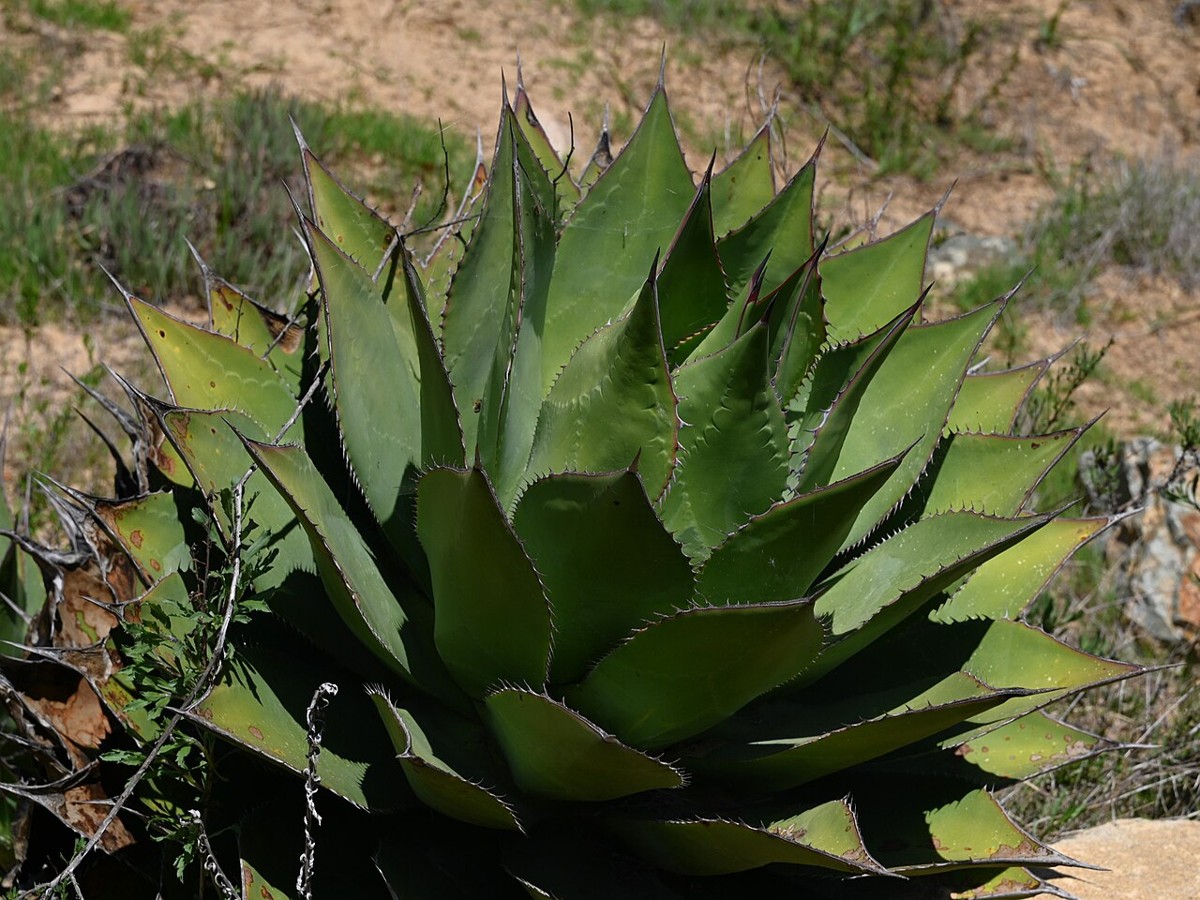
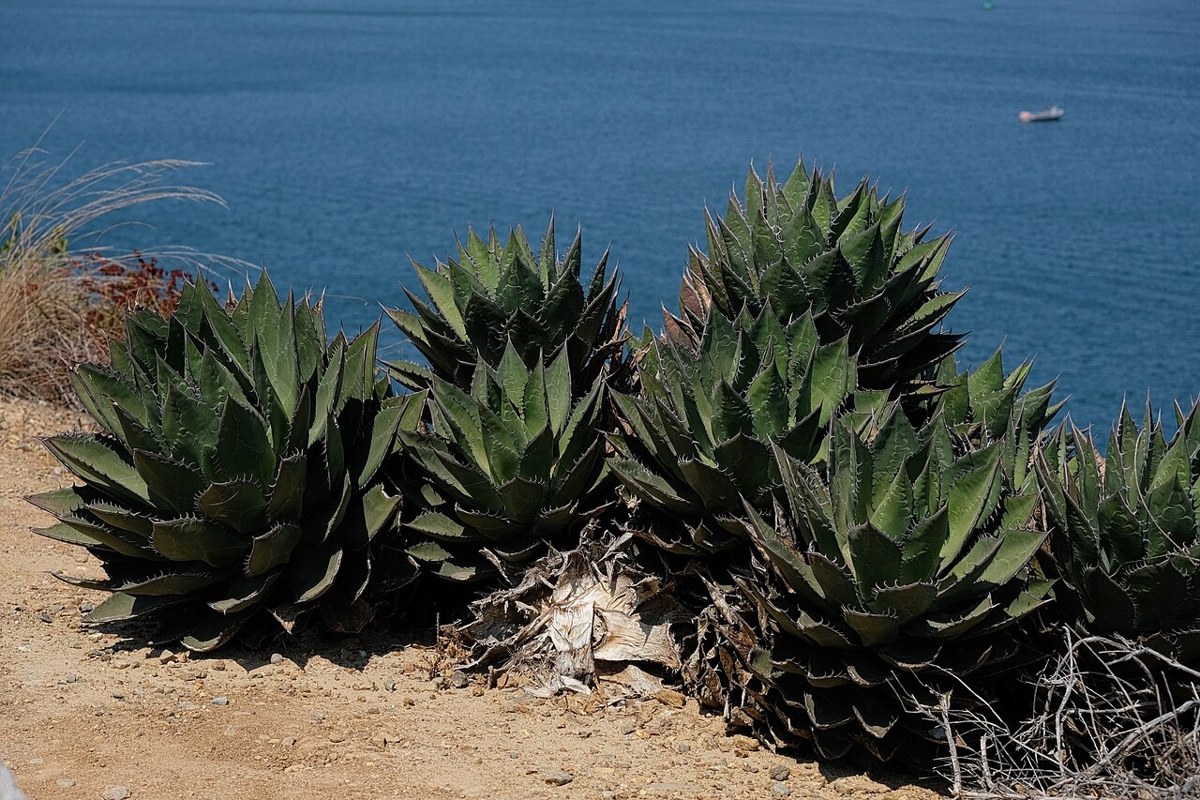
Agave shawii, commonly known as Shaw’s Agave or Coastal Agave, is a striking, broad-leaved rosette succulent found in the United States only along a narrow strip of coastal San Diego County, California — the very northern edge of a range centered almost entirely in Baja California, Mexico. It forms a dense, symmetrical rosette of thick, blue-green to gray-green leaves, each edged with a row of hooked, reddish-brown marginal spines and tipped with a sharp dark terminal spine, giving the whole plant a formidable, sculptural presence.
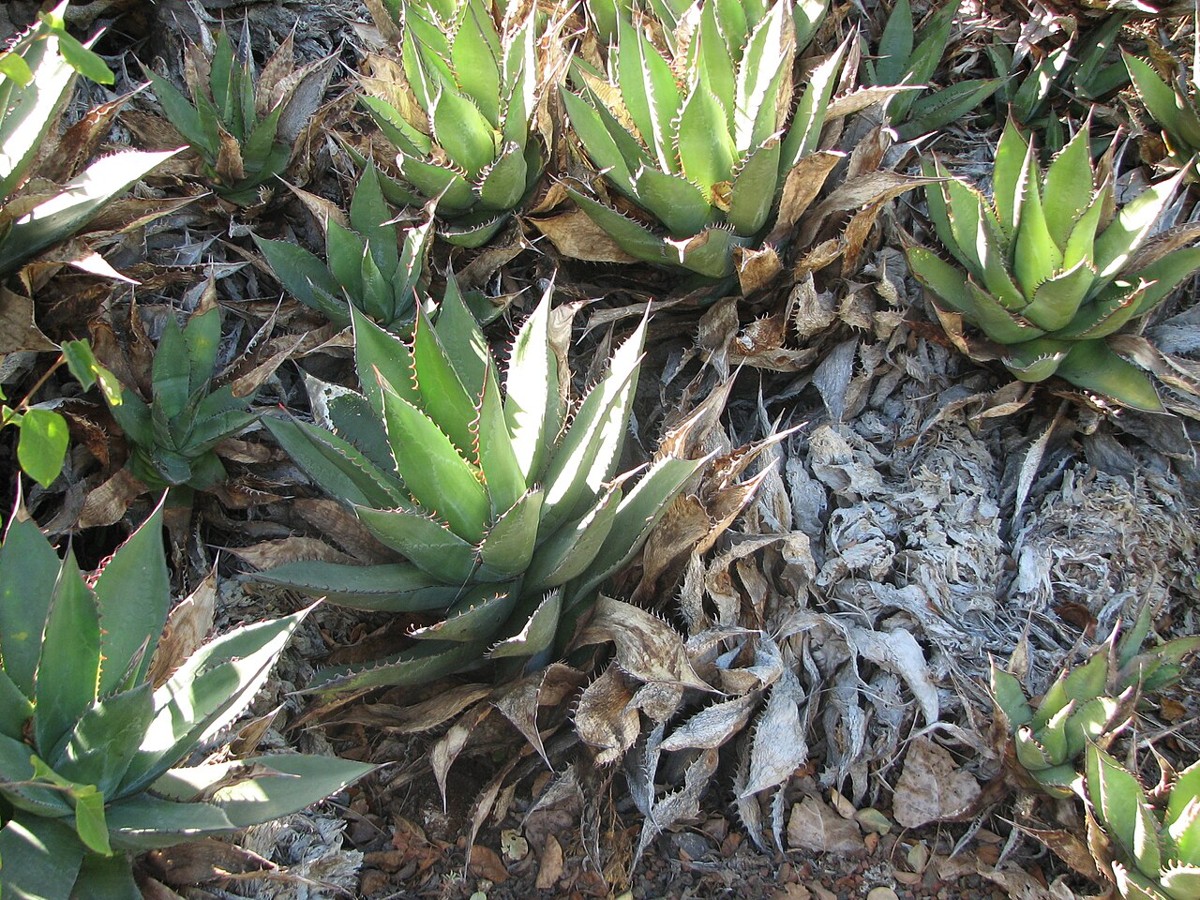
Unlike many agaves that flower once and die after many years of slow vegetative growth, Shaw’s agave often spreads by offsets (pups) around the base of the parent rosette, so a single original plant can expand into a dense colonial cluster covering several square feet over time, long before — or instead of — its dramatic once-in-a-lifetime flowering event, when a towering branched stalk of yellow flowers rises well above the foliage.
In the United States, Shaw’s agave is a genuinely rare native plant, reduced to only a couple of small wild populations within San Diego County and listed as endangered by the California Native Plant Society. For California gardeners within its coastal range, growing nursery-propagated Shaw’s agave is both a striking landscape choice and a small act of conservation support for one of the state’s most geographically restricted native succulents.
Identification
Shaw’s agave forms a rosette 2 to 3 feet tall and 3 to 4 feet across, composed of 30 to 60 thick, rigid, lance-shaped leaves that taper from a broad base to a sharp point. Mature rosettes often produce offsets at the base, forming small to large clonal colonies over time.
Leaves
Leaves are blue-green to gray-green, sometimes with reddish tinges toward the margins, typically 12 to 20 inches long and 3 to 5 inches wide at the base. Each leaf margin bears a continuous row of hooked, reddish-brown to dark brown teeth, and every leaf ends in a stout, dark, very sharp terminal spine up to an inch and a half long.
Flower Stalk
Mature rosettes (typically at least 10 to 20 years old) send up a branched flowering stalk 8 to 16 feet tall, among the tallest produced by any agave native to California. The stalk carries numerous lateral branches, each bearing clusters of tubular, yellow flowers that open over several weeks, drawing significant pollinator activity before the flowering rosette eventually dies, leaving any offsets to continue the colony.
Fruit & Seeds
Following pollination, the plant produces oblong, woody seed capsules that split open to release flat, black, papery seeds. Because flowering rosettes die after seed set, reproduction in the wild relies on a combination of seedling establishment and vegetative spread by offsets, with offsets likely the more important means of local persistence given the species’ limited and fragmented habitat.
Quick Facts
| Scientific Name | Agave shawii |
| Family | Asparagaceae (subfamily Agavoideae) |
| Plant Type | Evergreen succulent rosette (monocarpic) |
| Mature Height | 2–3 ft (rosette); flower stalk 8–16 ft |
| Mature Spread | 3–4 ft per rosette; colonies much wider |
| Growth Rate | Slow |
| Sun Exposure | Full Sun to Light Shade |
| Water Needs | Low; drought tolerant once established |
| Soil Type | Rocky or sandy, well-drained coastal soils |
| Soil pH | Neutral to slightly alkaline (6.5–7.8) |
| Bloom Time | Spring, once per rosette after 10–20+ years |
| Flower Color | Yellow |
| Fall Color | None (evergreen) |
| Fruit | Woody capsule with flat black seeds |
| Deer Resistant | Yes |
| USDA Hardiness Zones | 9b–11 |
Native Range
In the United States, Shaw’s agave is known natively from only a very small area of coastal San Diego County, California, at the extreme northern tip of its overall range, which is centered on the Pacific coast of Baja California, Mexico, where the species remains relatively common. Wild California populations are restricted to a handful of coastal bluffs and slopes, with one population reportedly down to a single individual plant, making it one of the rarest native plants within the state.
Typical habitat is coastal sage scrub and maritime succulent scrub on bluffs and slopes directly influenced by ocean fog and salt air, usually within a mile or two of the immediate coastline and below about 500 feet elevation. The species is adapted to the mild, nearly frost-free climate of this narrow coastal strip and does not tolerate the colder winters found even a short distance inland.
Agave shawii subspecies shawii is designated as endangered by the California Native Plant Society (CNPS Rare Plant Rank 1B.1) due to its extremely limited distribution within the state, historic habitat loss to coastal development, and ongoing threats from further construction, trampling and non-native plant competition along the remaining undeveloped coastal bluffs where it survives.
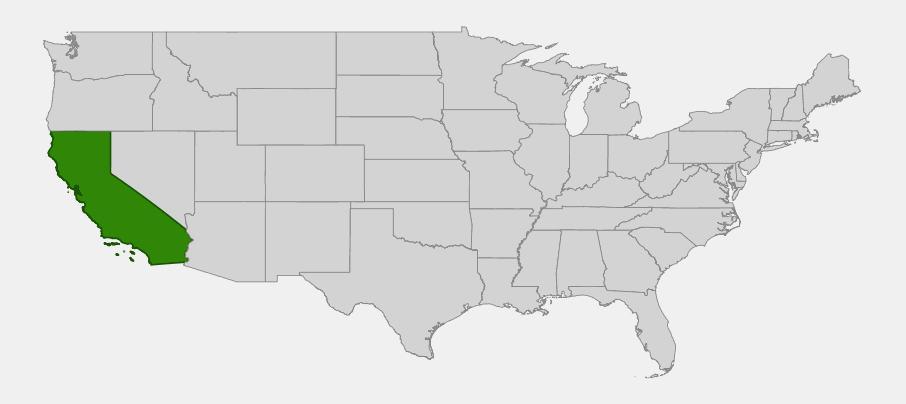
📋 Regional plant lists featuring Shaw’s Agave: California & Nevada
Growing & Care Guide
Shaw’s agave is best suited to coastal Southern California gardens that can replicate its mild, nearly frost-free native climate. Inland and higher-elevation gardeners will find it far less reliable, since even brief hard freezes can severely damage or kill the plant.
Light
Plant in full sun along the immediate coast, where cool temperatures and marine influence prevent leaf scorch; in warmer microclimates slightly further inland, light afternoon shade helps prevent sunburn on the broad leaf faces. Avoid deep, dense shade, which encourages weak, stretched growth.
Soil & Water
Plant in well-drained, rocky or sandy soil similar to its native coastal bluff habitat. Water occasionally during the first year to establish the root system, then reduce to infrequent deep watering; established plants are quite drought tolerant and are more often killed by overwatering and poor drainage than by dry conditions.
Planting Tips
Give Shaw’s agave plenty of room to grow into its full 3- to 4-foot rosette width and to accommodate the offsets it will likely produce around its base over time. Plant well away from pathways and play areas, since the sharp terminal leaf spines and hooked marginal teeth can cause serious puncture wounds. Only plant nursery-propagated specimens — never collect from the wild, given how critically limited California’s native populations already are.
Pruning & Maintenance
Very little maintenance is needed. Remove dried or damaged lower leaves as they occur, and once a rosette flowers and dies back after its once-in-a-lifetime bloom, cut out the spent rosette to make room for the offsets it typically leaves behind. Wear thick gloves and eye protection when working near the plant because of its sharp spines.
Propagation
The most reliable method for home gardeners is dividing rooted offsets (“pups”) from an established colony, which can be detached with a sharp, clean knife once they have their own root system and replanted directly. Seed propagation is possible following a flowering event but is slower, and seed-grown plants may take many years to reach flowering size themselves.
Landscape Uses
- Coastal native plant gardens within its narrow San Diego County range
- Architectural accent for a sculptural, blue-green focal rosette
- Erosion control on coastal bluffs and slopes, mimicking its wild habitat role
- Conservation and rare-plant collector gardens supporting a critically limited California native
- Security barrier plantings, given its sharp, defensive leaf spines
Wildlife & Ecological Value
Despite its limited range in the United States, Shaw’s agave is an important resource for coastal wildlife wherever it grows, particularly during its rare but spectacular flowering events.
For Pollinators
The tall flowering stalk, towering well above the surrounding coastal scrub, is highly attractive to native bees and other insects during its multi-week bloom, offering a concentrated nectar and pollen source in a habitat where large floral displays are uncommon. In parts of its Mexican range, nectar-feeding bats are also known to visit agave flowers, though hummingbirds and insects are the primary California pollinators.
For Birds
Hummingbirds visit the tubular yellow flowers for nectar during the brief flowering period, and the dense, spiny rosettes offer secure nesting and roosting cover for small coastal scrub birds at other times of year.
For Mammals
Small mammals use the protected space beneath and among mature rosette colonies for cover from predators, taking advantage of the defensive spine barrier the same way desert rodents use spiny cacti and chollas elsewhere in the region.
Ecosystem Role
As a long-lived, slow-growing succulent of coastal sage scrub, Shaw’s agave adds structural diversity to a plant community increasingly fragmented by coastal development, and its rare flowering events provide a significant, if infrequent, pollinator resource within its remaining habitat.
Cultural & Historical Uses
Like many agave species, Shaw’s agave was likely used by Indigenous peoples of the San Diego coastal region and Baja California for food and fiber, following practices widespread among agave-using cultures of the Southwest and northwestern Mexico — the heart of the rosette could be roasted for food, and the tough leaf fibers processed for cordage and textiles, though specific historical documentation for this species is limited compared to more widely studied agaves such as Agave deserti.
The species is named for Henry Shaw, the English-born St. Louis businessman and philanthropist who founded the Missouri Botanical Garden, reflecting nineteenth-century botanical collecting networks that connected plant specimens from the American Southwest and Mexico to institutions and patrons on the East Coast and in Europe.
Today, Shaw’s agave is primarily significant as a conservation subject. Its critically small California population has made it a focus of coastal habitat preservation efforts in San Diego County, and it is occasionally propagated by specialty succulent nurseries and botanic gardens partly in support of ex-situ conservation of the species’ genetic diversity.
Frequently Asked Questions
Is Shaw’s agave endangered?
Within California, yes — the California Native Plant Society ranks it as a plant of highest conservation concern (Rare Plant Rank 1B.1), with only a couple of small wild populations remaining in San Diego County. The species is much more common in Baja California, Mexico, where most of its natural range lies.
Does Shaw’s agave die after it flowers?
Yes, like most agaves it is monocarpic — each individual rosette flowers only once, after ten to twenty or more years of growth, and then dies. However, Shaw’s agave typically produces offsets around its base well before flowering, so the overall clonal colony usually continues even after a particular rosette blooms and dies.
Can Shaw’s agave handle frost?
Not well. It is adapted to the mild, nearly frost-free climate of the immediate California and Baja California coast, and even brief hard freezes can severely damage or kill it. It is best grown only in coastal Southern California gardens or warm, sheltered microclimates nearby.
How big does Shaw’s agave get?
Individual rosettes typically reach 2 to 3 feet tall and 3 to 4 feet across, but because the species often spreads by offsets, an established colony of multiple rosettes can eventually cover a much larger area.
Where can I see wild Shaw’s agave in California?
Because the remaining California populations are so small and sensitive, their exact locations are not widely publicized to protect them from disturbance. Visitors interested in seeing the species are better served by the more robust wild populations along the Pacific coast of Baja California, Mexico, or by specimens in California botanic gardens.

Looking for a nursery that carries Shaw’s Agave?
Browse our native plant nursery directory: California