Shining Willow (Salix lucida)
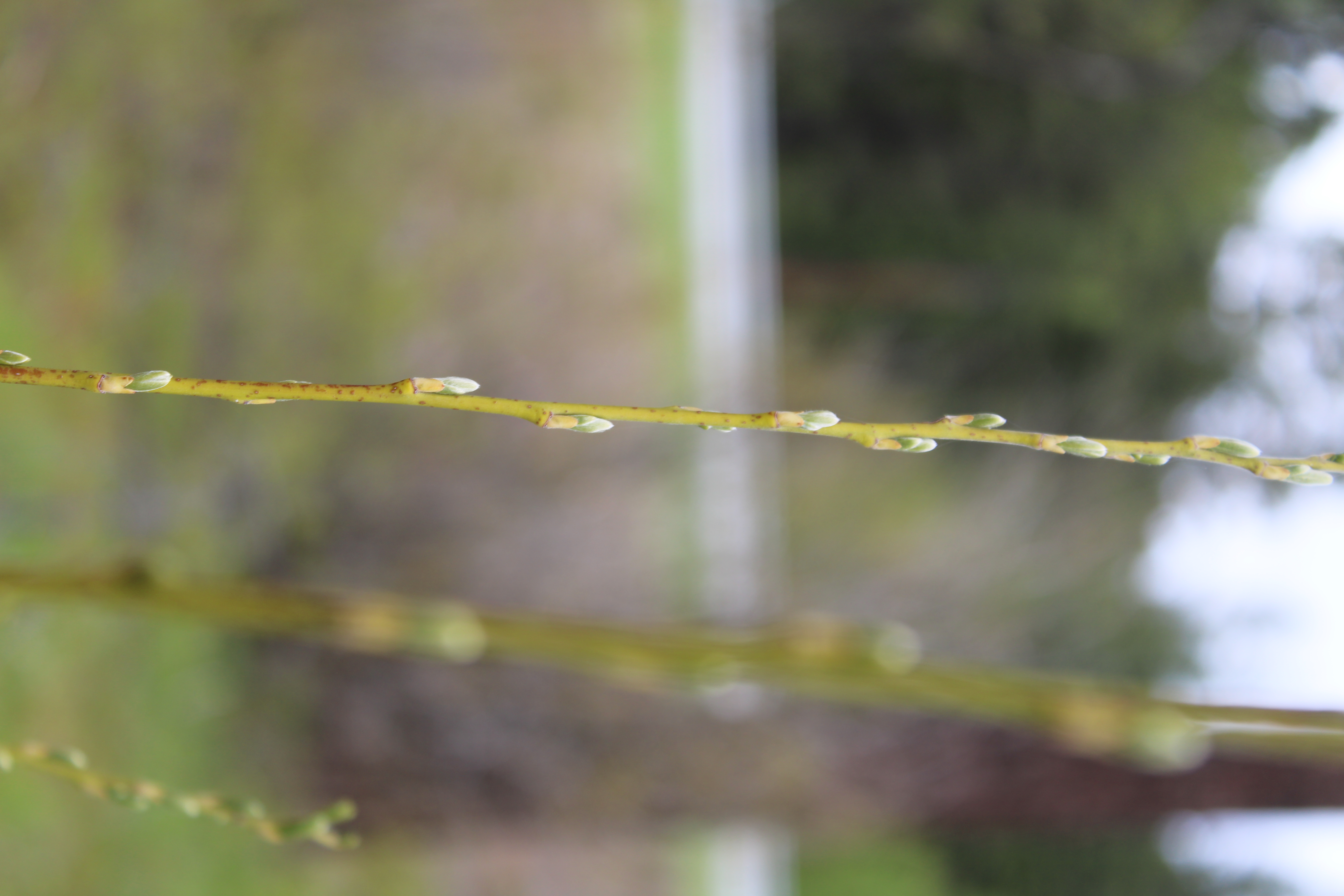
Salix lucida, commonly known as Shining Willow or Glossy Willow, is one of the most ornamentally attractive native willows of the Great Lakes region. The species name “lucida” means “shining” or “lustrous” — a perfect description of its most distinctive feature: leaves of unusually high gloss that shimmer and flash in sunlight as they move in the breeze, creating a dynamic, light-catching display unlike any other native shrub of wet habitats. Combined with bright yellowish-green stems and graceful form reaching up to 20 feet, Shining Willow is a standout among native wetland shrubs.
Native to streambanks, lakeshores, wet meadows, and wetland margins across the Great Lakes region and northeastern North America, Shining Willow thrives in the moist to wet, full-sun conditions found at the edge of water. It grows as a large, multi-stemmed shrub or small tree, forming dense, arching thickets that provide exceptional habitat for wildlife — nesting birds, overwintering insects, and browsing mammals all depend on willow thickets. Early spring catkins are among the first nectar and pollen sources available to native bees emerging from winter dormancy.
For gardeners and land managers in Michigan, Minnesota, and Wisconsin working with wet or seasonally flooded sites, Shining Willow is an excellent native alternative to invasive shrubs like Purple Loosestrife (Lythrum salicaria) or Common Buckthorn (Rhamnus cathartica). It establishes rapidly from cuttings, stabilizes streambanks against erosion, and provides immediate, high-density wildlife habitat in riparian restoration projects.
Identification
Shining Willow grows as a large, multi-stemmed shrub or small tree reaching up to 20 feet in height, with a broad, spreading, irregular crown. The stems are yellowish-green to golden-yellow when young, adding to the plant’s ornamental interest in winter when the bright stem color contrasts beautifully against snow. The plant’s overall form is graceful and arching, with slender, flexible branches.
Bark & Stems
Young stems are glossy, yellowish-green to olive-yellow, sometimes tinged reddish on the sunny side. Older stems and trunks become grayish-brown with shallow ridges. The distinctive yellow-green color of the young stems is one of the easiest identification markers for Shining Willow — it stands out vividly in winter against a snowy backdrop or the duller gray-brown of other shrubs. The stems are flexible and resilient, rarely breaking in ice or snow storms that damage more brittle shrubs.
Leaves
The leaves are the plant’s signature feature: lance-shaped to narrowly elliptical, 2–5 inches long and ½ to 1 inch wide, with a long-tapered tip and finely toothed margins. The upper surface is intensely glossy — more lustrous than virtually any other native willow — while the underside is pale and matte. The leaves are arranged alternately and have a distinct, pleasant aroma when crushed. In autumn, the foliage turns golden-yellow before dropping.
Catkins & Seeds
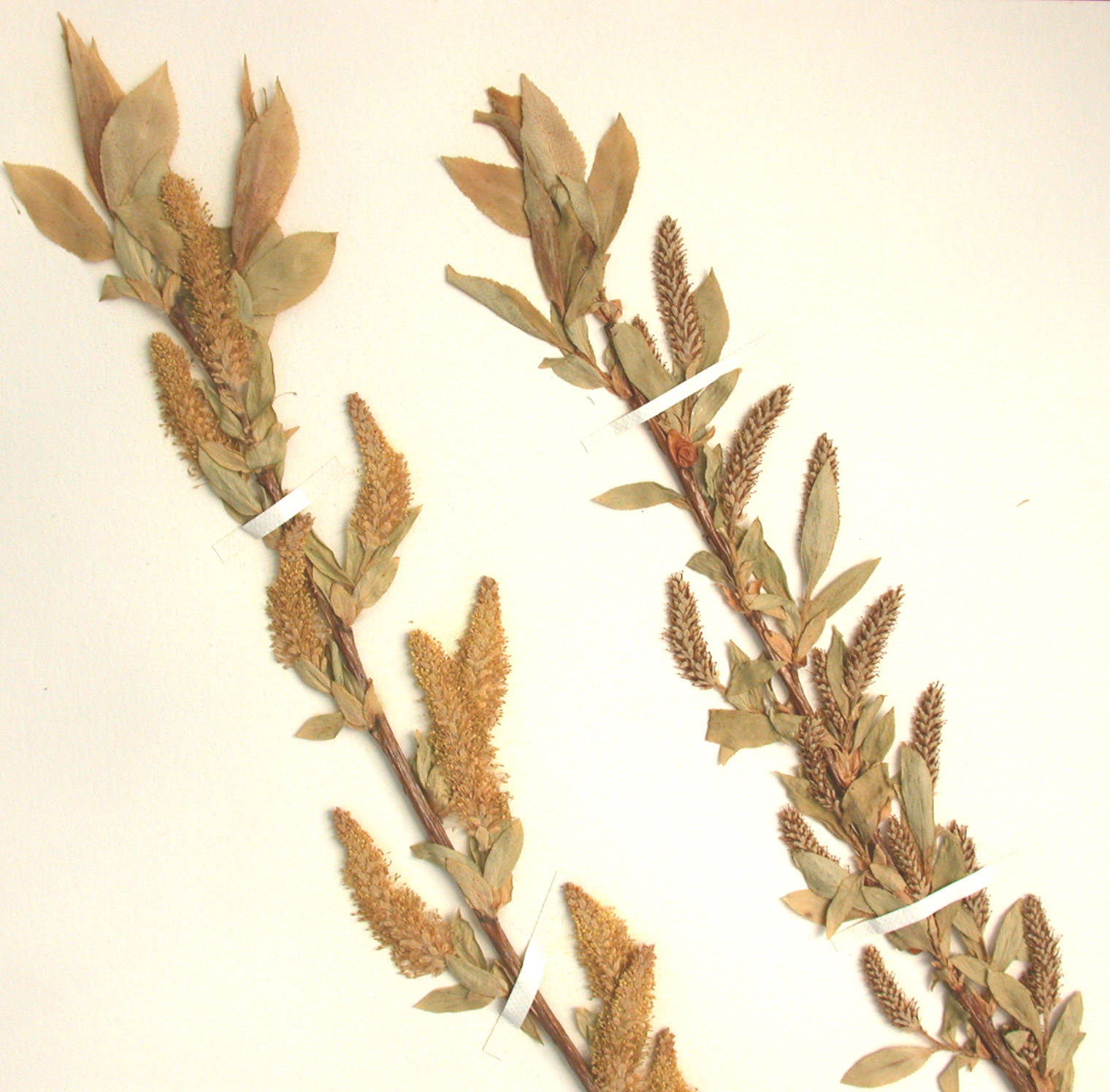
Like all willows, Shining Willow produces male and female catkins on separate plants (dioecious). Catkins emerge in early spring (April–May in the Great Lakes region), before or with the early leaves — cylindrical, 1–2 inches long, and densely covered with tiny flowers. Male catkins are more showy, with yellow anthers that provide abundant pollen for early-emerging pollinators. The wind-dispersed seeds are tiny, cottony tufts shed in late spring through early summer.
Quick Facts
| Scientific Name | Salix lucida |
| Family | Salicaceae (Willow) |
| Plant Type | Deciduous Shrub / Small Tree |
| Mature Height | 20 ft |
| Sun Exposure | Full Sun |
| Water Needs | Moderate to High |
| Bloom Time | April – May (catkins before leaves) |
| Flower Color | Yellow (male catkins); Green (female) |
| Fall Color | Golden yellow |
| Winter Interest | Bright yellowish-green stems |
| USDA Hardiness Zones | 2–6 |
Native Range
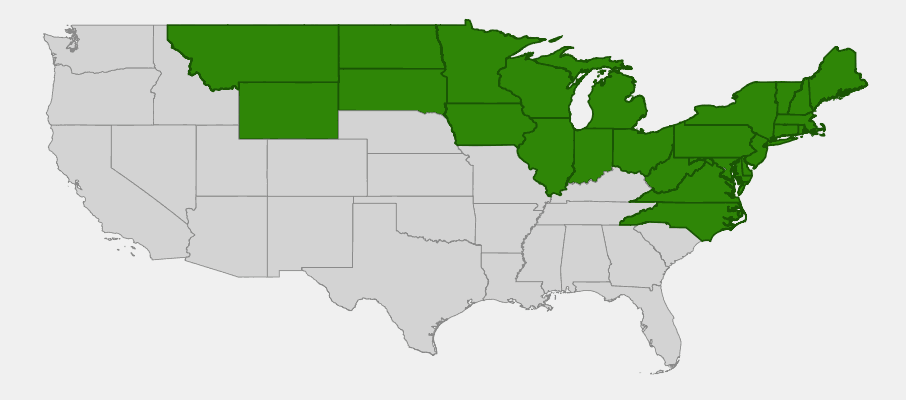
Shining Willow is native to northeastern North America, with its core range centered on the Great Lakes region and northeastern states. It occurs naturally throughout Michigan, Minnesota, Wisconsin, and the surrounding states, as well as across southern Canada from Manitoba to Newfoundland. It is one of the most widespread native willows of the northern Great Lakes region and boreal zone, growing from near sea level at Lake Superior’s shore to moderate elevations in the mountains of the northeastern states.
In its natural habitat, Shining Willow grows along streambanks, lakeshores, marshes, wet meadows, and the margins of bogs and fens. It is most abundant in areas with consistently moist to wet soils and full sun — the classic riparian shrub habitat of the Great Lakes region. It is often associated with other native wetland shrubs such as Speckled Alder (Alnus incana), Red-osier Dogwood (Cornus stolonifera), and various other native willow species. It forms dense, multi-stemmed thickets along stream channels, providing essential streambank stabilization.
Shining Willow is an early successional species — one of the first woody plants to colonize newly exposed, moist mineral soils along stream channels, lakeshores disturbed by wave action or ice scour, and wet areas opened by tree fall or flooding. This pioneering quality makes it invaluable for riparian restoration projects where rapid establishment of native shrub cover is needed to prevent erosion, stabilize banks, and provide immediate wildlife habitat.
📋 Regional plant lists featuring Shining Willow: Michigan, Minnesota & Wisconsin
Growing & Care Guide
Shining Willow is one of the easiest native shrubs to establish in moist to wet sites. It roots readily from cuttings, grows rapidly once established, and requires minimal care — making it ideal for streambank restoration and wet native landscapes.
Light
Shining Willow performs best in full sun. It tolerates brief periods of part shade but is not a shade plant — in dense shade, growth becomes leggy and sparse, and the plant’s ornamental qualities are diminished. For streambank and riparian plantings, choose open, sunny sites along south- or west-facing banks for best results.
Soil & Water
Consistent moisture is Shining Willow’s primary requirement. It thrives in moist to wet soils — from consistently moist but well-drained streambanks to seasonally flooded wetland margins. It tolerates standing water for extended periods and is one of the best native shrubs for sites that are periodically flooded. Avoid consistently dry soils, which will stress and may kill established plants. Soil pH tolerance is broad — it grows well in slightly acidic to neutral soils typical of Great Lakes riparian settings.
Planting Tips
Shining Willow is extraordinarily easy to propagate from hardwood cuttings — a 6–12 inch stick cut from dormant wood in late winter, pushed into moist soil, will typically root in 2–4 weeks. This makes it inexpensive to establish in large-scale riparian restoration projects. Space shrubs 6–10 feet apart for naturalistic riparian planting; closer spacing (3–4 feet) will quickly create a dense thicket hedge. Plant in spring after frost-free dates or in early fall for best establishment.
Pruning & Maintenance
Shining Willow may be coppiced (cut to the ground) every 3–5 years to maintain a compact, multi-stemmed form and encourage production of the bright yellow young stems that provide winter color. Without coppicing, it grows into a large, arching shrub or small tree — both forms are attractive and functional. Remove dead or damaged stems in late winter. No fertilization or pest control is needed in appropriate growing conditions.
Landscape Uses
Shining Willow excels for:
- Streambank stabilization — deep roots and dense growth prevent erosion
- Riparian buffer planting — filters runoff before it enters streams
- Rain garden edge planting — tolerates periodic inundation
- Pond and lake margin planting — provides wildlife habitat at the water’s edge
- Wet meadow restoration — establishes rapidly as a native pioneer
- Wildlife hedge — dense thickets provide nesting and cover habitat
- Four-season interest — yellow stems in winter, catkins in spring, glossy foliage in summer, yellow fall color
Wildlife & Ecological Value
Shining Willow is one of the highest-value native shrubs for wildlife in the Great Lakes region — willows as a group support more species of Lepidoptera (caterpillars) than almost any other native plant genus in North America, and Shining Willow is no exception.
For Birds
The dense thickets formed by Shining Willow provide essential nesting habitat for many bird species including Yellow Warbler, Common Yellowthroat, Willow Flycatcher, Marsh Wren, and various sparrows. The catkins are eaten by American Goldfinch and other finches in early spring. The abundant caterpillars and other insects feeding on willow foliage are critical food for insectivorous songbirds during breeding season, when protein-rich invertebrate prey is essential for chick development.
For Mammals
Willow is a critical food plant for beaver — both for dam-building material and as food. Beaver activity around Shining Willow stands creates important wetland habitat. White-tailed deer browse the foliage and twigs; moose in northern Minnesota are major consumers of willow foliage in winter. Muskrat, snowshoe hare, and cottontail rabbit also browse willow stems and foliage. The thickets provide escape cover and nesting habitat for many small mammals.
For Pollinators
Shining Willow’s early spring catkins are among the most important native pollen and nectar sources for pollinators emerging from winter dormancy. Willow pollen is the primary food source for the specialist willow bee (Andrena spp.) and is eagerly collected by bumblebee queens (Bombus spp.) establishing new colonies in early spring. Honeybees work willow catkins intensively when weather permits. The catkins bloom before most other native pollen and nectar sources are available, providing a critical early-season resource.
Ecosystem Role
Willows — including Shining Willow — support the highest number of native caterpillar species (Lepidoptera) of any native plant genus in the eastern United States, with over 450 species of moths and butterflies using willows as larval host plants in various regions. This exceptional caterpillar diversity makes willows an irreplaceable food base for the insectivorous birds — particularly the warblers, flycatchers, and vireos — that breed in Great Lakes woodlands and wetlands. The riparian thickets also stabilize streambanks, reduce flood velocity, filter agricultural and urban runoff, and provide the wood and dam-building material that beavers use to create wetland ecosystems benefiting hundreds of other species.
Cultural & Historical Uses
Willows have been used by humans for millennia, and Shining Willow is no exception to the long tradition of willow use among Great Lakes Indigenous peoples. The Ojibwe (Anishinaabe) and other Great Lakes nations used willow bark, roots, and leaves medicinally — most importantly, as a pain reliever and fever reducer. Willow bark contains salicin, the natural compound from which aspirin (acetylsalicylic acid) was eventually synthesized in the 19th century. The effectiveness of willow bark as a pain reliever was not coincidence — it was backed by centuries of empirical Indigenous pharmacological knowledge.
The flexible stems of Shining Willow were used extensively for basket weaving — the long, pliable young shoots (especially from coppiced plants) are ideal basket-weaving material, producing strong, lightweight, and attractive baskets. Willow bark was used as cord and binding material, and large pieces of bark were used for constructing temporary shelters and canoe coverings. The wood, though soft and prone to decay when wet, was used for fuel and occasionally for small woodworking projects.
In the 19th and early 20th centuries, willow cultivation for basket weaving (using both native and European willow species) was a significant cottage industry in parts of the Great Lakes region. Today, coppiced willows are grown for biomass energy production and as sustainable material for wicker and basket weaving. Shining Willow’s fast growth, easy propagation from cuttings, and glossy ornamental appeal have made it increasingly popular in native plant landscaping and riparian restoration projects across its range.
Frequently Asked Questions
Does Shining Willow have invasive roots?
Like all willows, Shining Willow has aggressive, water-seeking roots that can clog drain pipes and disturb foundations if planted too close to infrastructure. Keep it well away from septic systems, sewer lines, and building foundations — a minimum of 15–20 feet is recommended. For naturalistic plantings away from infrastructure, the roots pose no special concern and are actually beneficial for streambank stabilization.
How fast does Shining Willow grow?
Very fast — Shining Willow is one of the fastest-growing native shrubs of the Great Lakes region. Young plants from cuttings can establish and begin growing vigorously in their first season, adding 3–6 feet of growth annually under favorable moist conditions. This rapid establishment makes it excellent for urgent erosion control and habitat restoration needs.
How can I tell Shining Willow from other native willows?
The intense glossiness of the upper leaf surface is the most distinctive feature — Salix lucida has noticeably shinier leaves than other Great Lakes native willows. Combined with the yellowish-green young stems and pleasantly scented leaves, it is fairly distinctive. However, willow identification can be challenging; if in doubt, consult a regional flora or native plant expert.
Can Shining Willow be used for erosion control?
Yes — Shining Willow is excellent for streambank and wetland margin erosion control. It can be propagated inexpensively from live cuttings (fascines) pushed directly into moist streambank soils, where they root rapidly. The dense root system and above-ground stem matrix together provide strong bank stabilization. It is one of the most commonly used native species in Great Lakes riparian restoration projects.
Is Shining Willow deer resistant?
No — deer browse Shining Willow readily, particularly the tender young growth. In areas with high deer pressure, young plantings may need protection for the first year or two. However, established plants typically tolerate deer browsing well and resprout vigorously from the root crown even after heavy browse. Coppiced plants that are regularly cut back also tend to produce more shoot growth than deer can consume.