White Spruce (Picea glauca)
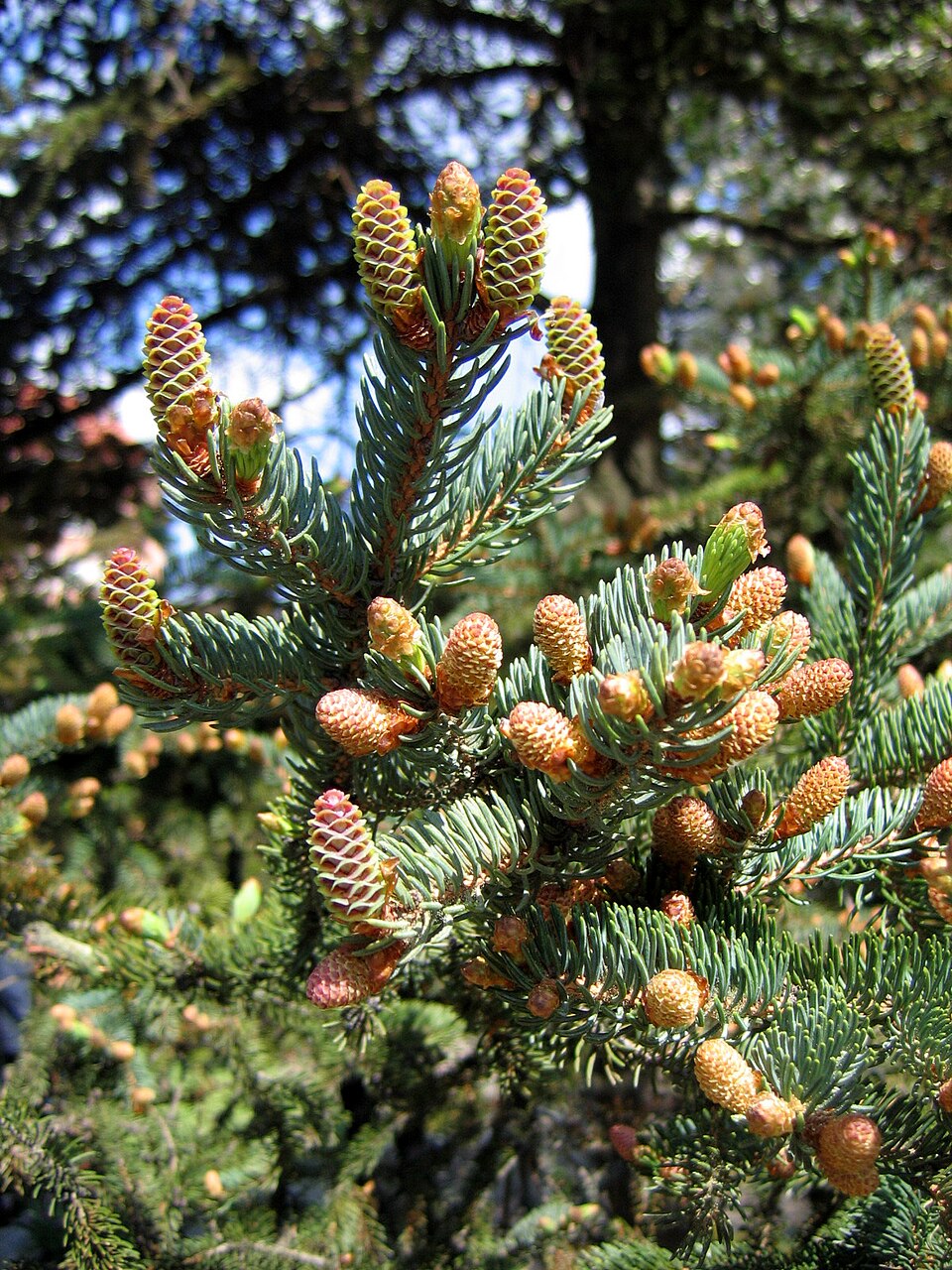
Picea glauca, the White Spruce, is one of the most important and ecologically dominant native conifers of the boreal forest — a stately, adaptable evergreen tree found across nearly the entire northern breadth of North America, from Alaska to Newfoundland. With its classic, densely conical crown of bluish-green to white-green needles, attractive small cones, and exceptional hardiness (to Zone 1), White Spruce is both a cornerstone of boreal forest ecology and a highly valuable tree for northern landscape plantings. It provides critical food and habitat for an exceptional diversity of wildlife, particularly in the Great Lakes states where it is a native component of the northern mixed and boreal forest communities.
Growing 50 to 100 feet tall in maturity, White Spruce is a medium to large conifer with a lifespan of 200 to 300 years under natural conditions. Its common name refers to the characteristic waxy, whitish-blue bloom on young needles and twigs — a feature that gives the foliage its distinctive silver-green to bluish-white appearance and distinguishes it from the darker-needled Black Spruce (Picea mariana). The needles produce a distinctive, somewhat skunk-like odor when crushed — a reliable identification feature sometimes called “cat-spruce” by foresters.
White Spruce is notable for its ecological versatility: it grows on a wide range of soil types and moisture levels, from wet lowland margins to dry, rocky uplands, and from riverbank forests to windswept alpine treeline. This adaptability, combined with its rapid growth compared to other boreal conifers, makes it a valuable species for windbreaks, wildlife habitat plantings, and restoration of northern forest communities. Its dense crown provides exceptional thermal and storm cover for wildlife through the harsh northern winters.
Identification
White Spruce is a medium to large evergreen conifer typically growing 50 to 100 feet (15–30 m) tall, with a trunk diameter of 1 to 3 feet (30–90 cm). The crown is narrowly conical to pyramidal in youth, becoming broader and more irregular with age. In forest settings, the crown may be somewhat open and irregular; in open grown situations, trees develop the full, dense, symmetrically conical form most familiar from ornamental plantings. Individual trees in protected, productive sites can live 200–300+ years.
Bark
The bark is thin, grayish-brown, and smooth on young trees, becoming irregularly scaly and finely plated with age — the plates are thin and roundish, separating from the surface in irregular flakes. The inner bark is brownish. The bark is thinner than that of most pines, making the tree somewhat sensitive to fire, though it can recolonize burned areas relatively quickly from surviving trees or wind-blown seed.
Needles
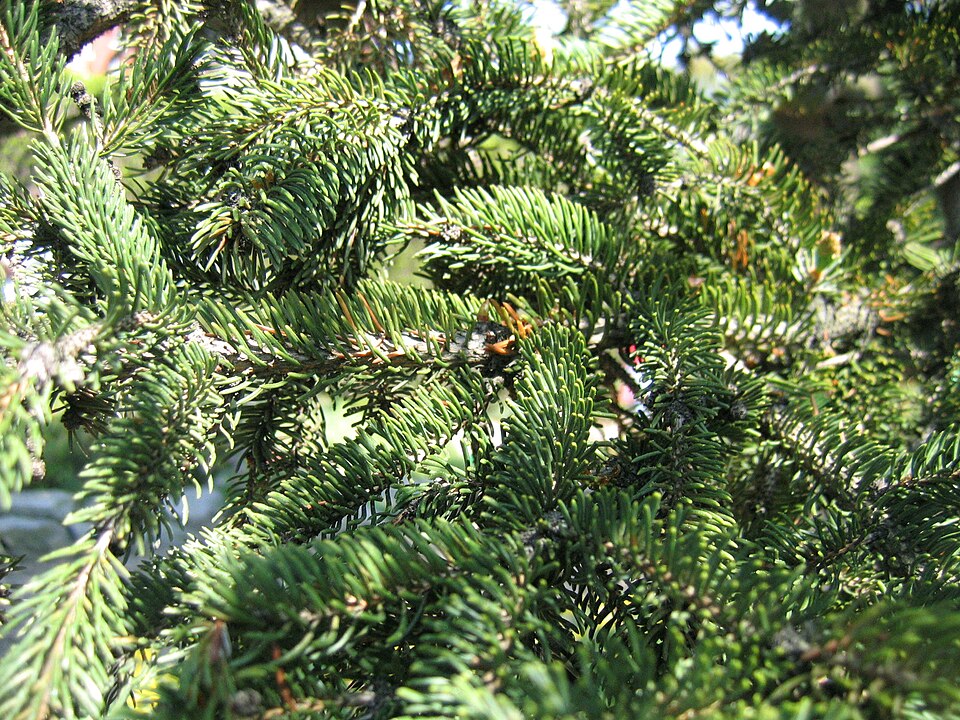
The needles are the key identification feature — stiff, sharp-pointed, ½ to ¾ inch (1.2–2 cm) long, and 4-angled (rhombic in cross-section, allowing them to roll between the fingers). They are blue-green to glaucous (with a waxy whitish bloom), giving the foliage a silvery or white-green appearance that is responsible for the common name. The undersides of needles have two whitish stomatal bands. When crushed, the needles emit a distinctive, pungent, somewhat skunk-like or cat-like odor — a reliable field identification character. Needles attach to the twig on small, persistent peg-like bases (sterigmata) that remain on the twig after needles fall, creating a rough-feeling surface — another reliable spruce identification feature.
Cones
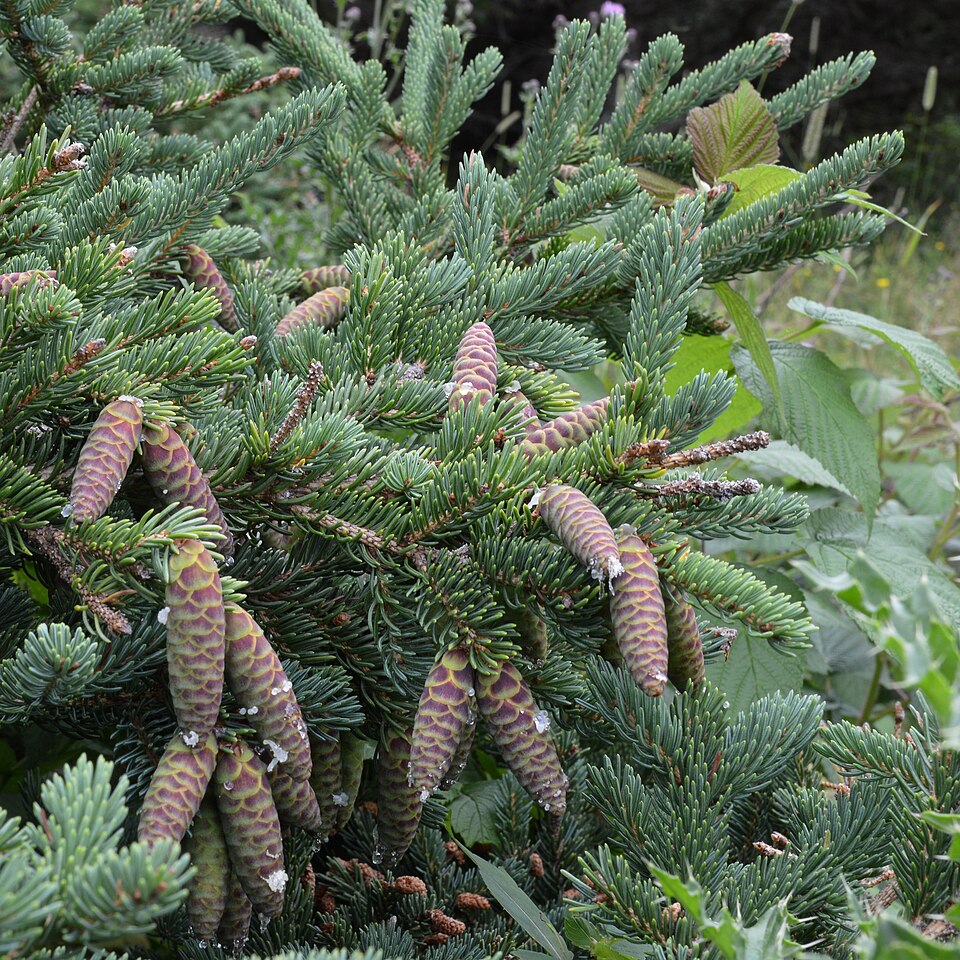
The seed cones are small, cylindrical to elongated-oval, 1¼ to 2½ inches (3–6 cm) long — among the smallest of any North American spruce. They hang downward from upper branches, ripening from green to pale brown in their first season (August–September) and releasing seeds shortly after maturity. The cone scales are thin, rounded, and flexible (not spiny or pointed). The cones have papery, thin-margined scales that close in dry conditions and open in moist weather to release seeds. Pollen cones are small, orange-red, and appear in spring on the lower and mid-crown branches.
Quick Facts
| Scientific Name | Picea glauca |
| Family | Pinaceae (Pine) |
| Plant Type | Evergreen Conifer (Tree) |
| Mature Height | 50–100 ft |
| Sun Exposure | Part Shade to Full Sun |
| Water Needs | Moderate |
| Needle Color | Blue-green to white-green (glaucous) |
| Cone Size | 1¼–2½ in (small for spruce) |
| Growth Rate | Moderate (1–2 ft/year) |
| Wildlife Value | Exceptional — seeds, cover, nesting |
| USDA Hardiness Zones | 1–6 |
Native Range
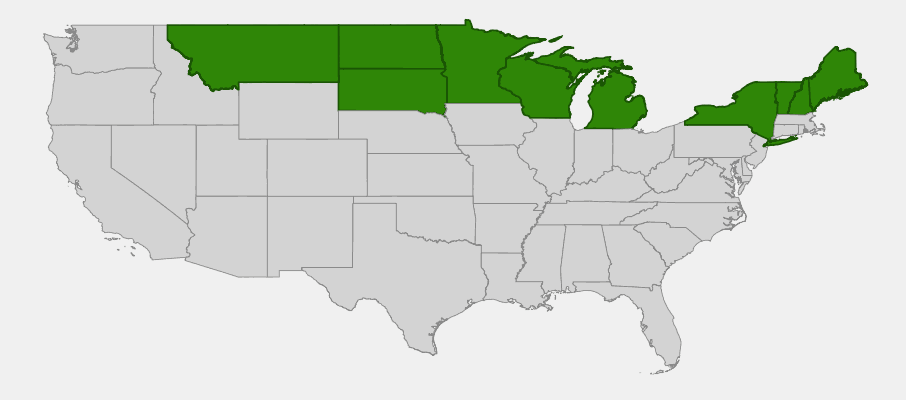
White Spruce has one of the broadest native ranges of any North American tree, occurring across virtually the entire boreal forest belt from central Alaska east through the Yukon, Northwest Territories, and across all Canadian provinces to the Maritime provinces and Newfoundland. Within the contiguous United States, it occurs naturally across northern Minnesota, Wisconsin, and Michigan (including the Upper Peninsula), in northern New England (Maine, New Hampshire, Vermont, and parts of upstate New York), in parts of Montana and the northern Rocky Mountains, and in the northern Dakotas and South Dakota. It reaches its southern distributional limits in the northern Great Lakes states, where it transitions into mixed northern hardwood forests at its southern range boundary.
In Minnesota, Wisconsin, and Michigan, White Spruce is a characteristic component of the northern boreal and mixed boreal-hardwood forest transition zone. It grows with Black Spruce, Balsam Fir, Eastern White Pine, Paper Birch, and Quaking Aspen in complex forest communities that are among the most wildlife-rich in the Great Lakes region. In Minnesota’s Boundary Waters Canoe Area Wilderness, White Spruce is one of the dominant canopy trees, providing the structure that defines the iconic northern wilderness forest.
White Spruce is a relatively early successional species — it colonizes open and disturbed sites quickly through wind-dispersed seed, and can grow in a wide range of light conditions. It is eventually replaced by Balsam Fir and other shade-tolerant species in forest succession, but its relatively rapid growth for a boreal conifer allows it to persist as a dominant species for extended periods. It is highly adaptable to soil conditions, growing on everything from riverbank sands to rocky upland soils, and from near-neutral to strongly acidic substrates.
📋 Regional plant lists featuring White Spruce: Michigan, Minnesota & Wisconsin
Growing & Care Guide
White Spruce is an exceptionally adaptable conifer for northern landscapes, combining the wildlife value and native character of a boreal forest tree with good tolerance for landscape conditions. It is faster-growing than many other native northern conifers and requires minimal care once established.
Light
White Spruce grows best in part shade to full sun. Younger trees tolerate more shade than many conifers and can establish beneath a light forest canopy. In landscape settings, full sun produces the densest crown and most symmetrical form. The tree is not as shade-tolerant as Balsam Fir but is more tolerant than most pines. For specimen or windbreak plantings, full sun is preferred.
Soil & Water
This is one of White Spruce’s great strengths — it tolerates a remarkable range of soil conditions. It grows on sandy soils, loamy soils, clay soils, wet soils near streams, and dry, rocky upland soils. Best growth occurs on moist, well-drained loam with moderate fertility. It tolerates both acidic (pH 4.5–6.0) and somewhat alkaline soils (to pH 7.5), making it more adaptable than many other native conifers to urban and suburban landscape conditions. Established trees are moderately drought-tolerant. Avoid sites with persistent waterlogging, which can cause root disease.
Planting Tips
Plant balled-and-burlapped or container-grown stock in spring or early fall. Space trees 20–30 feet apart for windbreak or grove plantings; allow 15 feet for individual specimens in smaller landscapes. Young White Spruce can be challenging to establish in hot, dry conditions — water regularly in the first 2–3 years and mulch the root zone with 2–3 inches of wood chip mulch to conserve moisture and moderate soil temperature. Avoid heavy clay or compacted soils without amendment.
Pruning & Maintenance
White Spruce requires minimal pruning in most landscape settings. Its naturally conical form develops without intervention. If lower branches need to be removed for clearance, do so in late winter. Avoid shearing, which creates dense outer growth that shades out inner branches and can lead to dieback and poor structural integrity. The main pests to monitor are the Eastern Spruce Budworm (Choristoneura fumiferana), which can cause significant defoliation in outbreak years, and White Pine Weevil, which can kill the terminal leader of young trees. Neither typically causes permanent harm to healthy, established trees.
Landscape Uses
- Windbreaks and shelterbelts — dense evergreen crown provides excellent wind protection
- Wildlife habitat plantings — outstanding year-round wildlife value
- Screening and privacy — fast-growing for an evergreen screen
- Northern restoration — cornerstone boreal forest species
- Specimen tree — classic conical form for large properties
- Christmas tree production — widely grown for cut trees
- Riparian buffers — tolerates moist conditions near streams and lakes
Wildlife & Ecological Value
White Spruce is among the most wildlife-productive native conifers in the Great Lakes and boreal regions, providing food, nesting sites, and thermal cover for an exceptional diversity of species across all seasons.
For Birds
White Spruce is a critical habitat tree for numerous bird species. The small seeds are a primary food source for Red Crossbills, White-winged Crossbills, Pine Siskins, Common Redpolls, and Evening Grosbeaks — specialist boreal seed-eaters that track spruce cone crops across the continent. The dense evergreen canopy provides nesting habitat for Hermit Thrushes, Dark-eyed Juncos, White-throated Sparrows, Nashville Warblers, and numerous other warblers. Northern Saw-whet Owls and Boreal Owls roost in dense spruce stands. Blue Jays, Black-capped Chickadees, Boreal Chickadees, and Red-breasted Nuthatches depend heavily on spruce forests year-round. In winter, Spruce Grouse rely almost exclusively on White Spruce needles for food — needles make up the majority of their winter diet.
For Mammals
White Spruce forests support important mammal communities in the northern Great Lakes and boreal regions. Snowshoe Hares use dense spruce stands for thermal cover and escape from predators, and browse young spruce heavily in winter. Canadian Lynx follow Snowshoe Hare populations into spruce-dominated habitats. Red Squirrels cut and cache spruce cones as their primary winter food source — their middens (cone-cutting sites with massive piles of spent scales) are a characteristic feature of spruce forests. Moose browse young spruce growth, particularly in winter. Porcupines eat the inner bark and are particularly associated with conifers including White Spruce.
For Insects & Pollinators
While not a primary pollinator plant, White Spruce’s pollen-producing male cones provide early spring pollen resources for bees. More importantly, the foliage hosts a rich community of specialist insects including spruce budworm moths, spruce bark beetles, spruce aphids, and dozens of species of scale insects and mites — all of which in turn support the insectivorous bird community of the boreal forest. The bark and dead wood host wood-boring beetles and other saproxylic insects that play critical roles in nutrient cycling.
Ecosystem Role
White Spruce is a foundational species of the boreal and northern mixed forest ecosystem. Its dense, year-round canopy moderates temperature, reduces wind, traps snow, and creates the distinctive microclimate of boreal forest understories. Its deep, acidic leaf litter accumulates slowly and supports distinctive soil fungal communities and invertebrate assemblages. As a moderate-to-fast early successional conifer in boreal ecosystems, it plays a critical role in forest recovery following disturbance by fire, wind, or spruce budworm outbreak.
Cultural & Historical Uses
White Spruce has been intimately woven into the cultures of Indigenous peoples across its vast range for thousands of years. The flexible, rot-resistant roots — particularly those growing in sandy soils where they extend in long, thin strands just below the surface — were used throughout the boreal region to stitch birchbark canoes. Known as wattap or watap among various Algonquian-speaking peoples, the roots were split, boiled to increase pliability, then used to sew the overlapping pieces of birchbark together and bind structural elements. The waterproof pitch that seals the joints was also derived from White Spruce resin — heated and mixed with animal grease to form a pliable caulk that hardened watertight when cool.
The inner bark of White Spruce was consumed as emergency food during times of famine — scraped from young trees in spring when it is still moist and nutritious, dried, and ground into a starchy meal. Spruce gum — the dried, hardened resin that oozes from wounds in the bark — was chewed as a breath freshener and throat soother, and was a popular trade item. The strong, straight-grained wood was used for tool handles, snowshoe frames, sled runners, and other applications where strength and lightness were required. In a treeless landscape, spruce provided essential structural material for shelter construction.
European settlers and later lumber companies recognized the value of White Spruce wood, which is strong, light, resonant, and uniform in grain — ideal for construction lumber, paper pulp, musical instrument soundboards (spruce has exceptional acoustic properties), and aircraft construction during both World Wars. Today, White Spruce remains an important commercial timber species across Canada, and its straight-grained, resonant wood continues to be prized for the soundboards of acoustic guitars, violins, and other stringed instruments. In the landscape, it is widely grown as a Christmas tree, ornamental specimen, and windbreak tree throughout the northern states and Canada.
Frequently Asked Questions
Why do White Spruce needles smell like cat or skunk?
The distinctive pungent odor of crushed White Spruce needles comes from volatile terpene compounds, particularly alpha-pinene and other monoterpenes. The intensity of this smell is variable — some trees are more pungent than others. This characteristic has earned the species the local nickname “cat spruce” or “skunk spruce” in parts of its range. Despite the smell, the tree is perfectly fine in the landscape — the odor is only released when needles are physically crushed or broken.
How is White Spruce different from Colorado Blue Spruce?
Colorado Blue Spruce (Picea pungens) is native to the Rocky Mountains and is widely planted as an ornamental — it has intensely blue to silver-blue needles, larger cones (2–4 in), and stiffer, sharper needles than White Spruce. White Spruce has smaller cones (1¼–2½ in), slightly less intensely blue-green needles, and is native to the northern boreal region rather than the Rockies. White Spruce is the ecologically appropriate choice for Michigan, Wisconsin, and Minnesota; Colorado Blue Spruce is not native to the Great Lakes region.
Can White Spruce tolerate urban conditions?
White Spruce is more tolerant of urban conditions than many native conifers. It handles a range of soil types, tolerates moderate pollution, and adapts to somewhat alkaline soils often found in urban areas. However, like all spruces, it is sensitive to compacted, poorly drained soils and needs adequate space for its root system. In urban settings, give it good soil drainage and avoid planting under overhead power lines given its potential 50–100 ft height.
How fast does White Spruce grow?
White Spruce is a moderate-growth conifer — typically adding 1–2 feet per year under good conditions in its first 20–30 years, then slowing with age. This puts it in the faster category of northern conifers (faster than Eastern White Cedar or Balsam Fir, but slower than Eastern White Pine). It can reach 30–40 feet in 25–30 years under ideal conditions, making it a reasonably quick option for windbreak and screening applications.
Does White Spruce produce edible seeds?
The seeds of White Spruce are small (about ¼ inch), winged, and technically edible — they were consumed historically by Indigenous peoples and are eaten by wildlife. They are nutritious but have a resinous flavor that most people find unpalatable. The young, light-green shoot tips (the new spring growth) can be eaten raw or made into spruce tip tea, spruce tip syrup, or spruce beer — a traditional beverage with a long history. Spruce tips are rich in Vitamin C and have a bright, citrusy flavor when young.