
Silk Bay (Persea humilis)
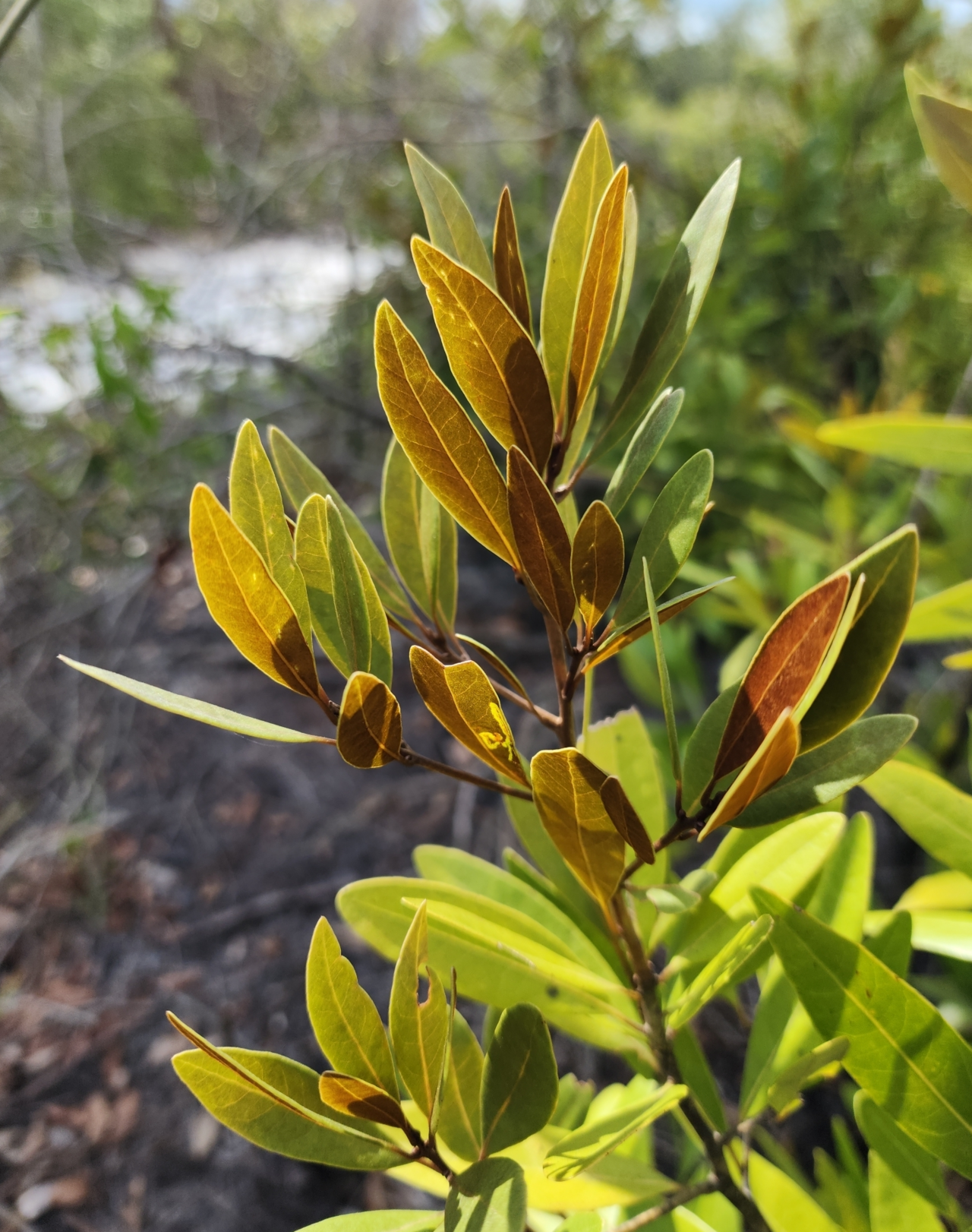
Persea humilis, commonly called Silk Bay or Scrub Bay, is a small evergreen tree found nowhere in the world except the sandy scrub of peninsular Florida. It takes its name from the dense, silky, rust to blackish hairs that coat the undersides of its new leaves, a feature that helps the plant conserve water in the harsh, well-drained, nutrient-poor scrub habitat it calls home.
Silk Bay is a close relative of the more widespread Red Bay (Persea borbonia), sharing the aromatic, leathery leaves typical of the laurel family, but it is specifically adapted to dry, fire-prone Florida scrub and xeric hammock rather than the moister, often coastal sites Red Bay favors. In recent years it has drawn additional interest for a grimmer reason: while highly susceptible to the introduced laurel wilt disease that has devastated Red Bay and Swamp Bay across the Southeast, Silk Bay appears somewhat less likely to be killed by the disease than its relatives, making surviving populations important both ecologically and for ongoing laurel wilt research.
For gardeners in central and southern Florida with a genuinely dry, sunny, sandy site, Silk Bay is a true regional endemic that asks for almost nothing once established, tolerates drought and nutrient-poor soil with ease, and serves as a larval host for two of the state’s most striking swallowtail butterflies.
Identification
Silk Bay is a medium tree or large shrub with a dense, rounded to somewhat cylindrical crown, typically 15 to 25 feet tall in South Florida and reaching as much as 38 feet under favorable conditions elsewhere in the state. The growth form is usually taller than broad, with thick, brown bark roughened by numerous furrows and ridges as the tree matures, and growth is moderate rather than fast.
Leaves
Leaves are evergreen, leathery, medium green and somewhat waxy above, typically 1 to 3 inches long (sources also report blades to about 2 to 3 inches with short flower stalks of 1 to 3 cm). The defining identification feature is on the underside: dense, fine, appressed hairs ranging from rusty to blackish in color, uniform across the leaf surface and veins, which help reduce water loss in the exposed, sun-baked scrub habitat. Crushed leaves release the characteristic spicy-aromatic scent typical of the laurel family, the same trait found in bay laurel, sassafras and Red Bay.
Flowers & Fruit
In spring, Silk Bay produces small, inconspicuous greenish flowers, typical of the laurel family and easy to overlook against the foliage. These are followed by rounded, dark drupes, similar in form to the fruit of its relatives, which ripen later in the season and are used by wildlife.
Quick Facts
| Scientific Name | Persea humilis |
| Family | Lauraceae (Laurel) |
| Plant Type | Evergreen medium tree or large shrub |
| Mature Height | 15–25 ft typical; to 38 ft in favorable sites |
| Mature Spread | 10–15 ft; taller than broad |
| Growth Rate | Moderate |
| Sun Exposure | Full Sun |
| Water Needs | Low; high drought tolerance once established |
| Soil Type | Dry, well-drained sandy soil, no humus required |
| Soil pH | Acidic |
| Bloom Time | Spring |
| Flower Color | Greenish, inconspicuous |
| Fall Color | None (evergreen) |
| Fruit | Rounded dark drupe |
| Deer Resistant | Moderate |
| USDA Hardiness Zones | 9b–11 |
Native Range
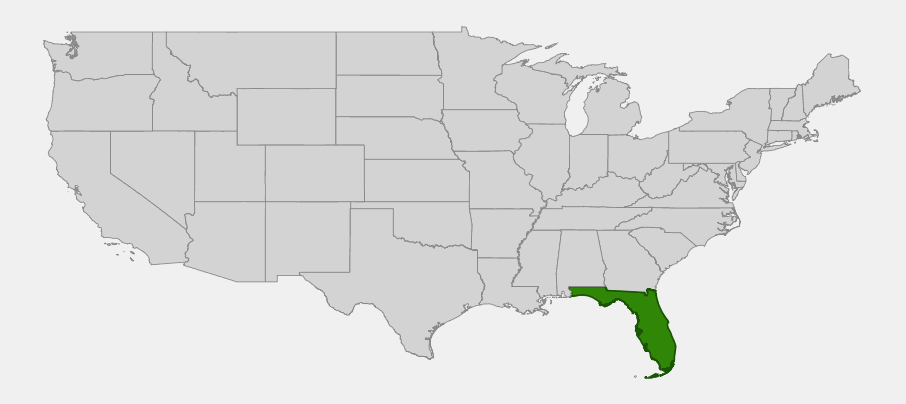
Silk Bay is endemic to peninsular Florida, found only from Volusia, Putnam, Marion and Levy counties south through the central peninsula to Palm Beach and Collier counties. It occurs in no other U.S. state and nowhere else in the world, making it, like several other Florida scrub endemics, a species whose entire global population is confined to one part of one state.
Typical habitat is Florida scrub, scrubby flatwoods and xeric hammock: dry, sunny, extremely well-drained, nutrient-poor sandy soils that are naturally low in organic matter. These habitats depend on periodic fire for their long-term health, and the scrub ecosystem that supports Silk Bay is itself increasingly fragmented and reduced by Florida’s rapid development, making every intact stand ecologically significant. Silk Bay is also notable for its comparative resistance to laurel wilt disease relative to Red Bay and Swamp Bay, an introduced fungal disease spread by the redbay ambrosia beetle that has killed enormous numbers of native bay trees across the Southeast since the mid-2000s; this relative resilience has made surviving Silk Bay populations a subject of active research interest.
📋 Regional plant lists featuring Silk Bay: this site does not currently publish a dedicated Florida regional list; see the Florida nursery directory below.
Growing & Care Guide
Silk Bay is about as low-maintenance as a Florida native tree gets, provided its one hard requirement, full sun on a genuinely dry, well-drained sandy site, is met.
Light
Plant Silk Bay in full sun. It is a true scrub species adapted to open, sun-exposed sites and will not perform or form its characteristic dense crown in significant shade.
Soil & Water
This tree is built for dry, well-drained, nutrient-poor sandy soils without humus, and it has low nutritional requirements, thriving where many other landscape trees would struggle. Once established, it needs no supplemental irrigation and has high drought tolerance. It has low tolerance for flooding by salt or brackish water, though it has moderate tolerance for salt-laden wind when some other vegetation provides a buffer from direct spray.
Planting Tips
Silk Bay is rarely grown by native plant nurseries, so expect to seek it out from a specialty grower focused on Florida scrub species. Propagation is from fresh, de-pulped seed, which does not store well and should be planted right away, lightly covered with soil, and kept in light shade or full sun to germinate. Because the species naturally grows in fire-adapted scrub, established plants tolerate the periodic low-intensity fire regime of that ecosystem better than many ordinary landscape trees, though this is not something most home gardeners need to replicate.
Pruning & Maintenance
Little routine pruning is needed beyond removing dead or damaged wood; let the naturally dense, rounded crown develop with minimal interference. The species’ main vulnerability is laurel wilt disease, spread by the non-native redbay ambrosia beetle; while Silk Bay appears less likely to be killed outright than Red Bay, gardeners should still watch for wilting, dark leaf streaking, or sudden branch dieback and avoid moving firewood or untreated bay wood, a major pathway for spreading the disease and its beetle vector.
Landscape Uses
- Accent or specimen tree in sunny, dry Central and South Florida landscapes
- Xeriscaping and water-wise gardens, given its high drought tolerance and low nutrient needs
- Butterfly gardens, as a larval host plant alongside other native bays such as Red Bay and laurel-family relatives like Sassafras
- Scrub and sandhill restoration plantings within its narrow native range
Wildlife & Ecological Value
As a scrub endemic within a shrinking Florida habitat type, Silk Bay carries outsized ecological importance relative to how little it is known in general horticulture.
For Pollinators
Though inconspicuous, the spring flowers attract pollinators typical of Florida scrub habitat, including a range of native bees documented visiting the flora at sites such as Archbold Biological Station, one of the best-studied scrub preserves in the state.
For Butterflies
Silk Bay is a probable larval host plant for two of Florida’s most impressive swallowtail butterflies: the palamedes swallowtail (Papilio palamedes) and the spicebush swallowtail (Papilio troilus), both of which rely on laurel-family foliage to raise their caterpillars. Planting Silk Bay where it is appropriate to the site supports these butterflies directly.
Ecosystem Role
Silk Bay is a characteristic woody species of Florida scrub and scrubby flatwoods, an ecosystem recognized as one of the most imperiled and biologically distinctive plant communities in North America, home to numerous other narrow endemics. Because Silk Bay is a true single-state endemic, every wild population contributes meaningfully to the genetic and ecological integrity of a habitat type that exists nowhere else on Earth.
Cultural & Historical Uses
There is no significant documented history of medicinal or utilitarian use of Silk Bay specific to this species; unlike some of its more widespread laurel-family relatives, it has remained a little-known regional plant rather than one with a recorded tradition of use. Its primary human relevance has been botanical and, more recently, as a subject of applied research into laurel wilt disease resistance among native Persea species.
Today Silk Bay’s significance is overwhelmingly ecological and conservation-focused. As one of the few scrub-endemic trees of the Lauraceae in Florida, and one showing relative resilience to a disease that has devastated its relatives, it occupies a genuinely important niche in both wild scrub ecosystems and in horticultural efforts aimed at preserving authentic Florida native flora.
Frequently Asked Questions
Is Silk Bay the same as Red Bay?
No, though they are closely related. Silk Bay (Persea humilis) is endemic to Florida’s dry scrub habitats and has distinctively hairy, rusty to blackish leaf undersides, while Red Bay (Persea borbonia) is more widespread across the Southeast and typically found in moister sites.
Is Silk Bay susceptible to laurel wilt disease?
Yes, it is susceptible, but research suggests it appears less likely to be killed by laurel wilt than Florida’s other native bays. It is still worth monitoring for symptoms and avoiding the movement of untreated bay or laurel wood, which can spread the disease-carrying ambrosia beetle.
Does Silk Bay need rich soil?
No. It is specifically adapted to dry, nutrient-poor sandy soils without humus and actually performs best on lean, well-drained sites rather than amended, fertile garden beds.
What butterflies does Silk Bay support?
It is a probable larval host plant for the palamedes swallowtail and spicebush swallowtail, two large, showy native butterflies that depend on laurel-family trees to feed their caterpillars.
Can I grow Silk Bay outside of Florida?
It is only reliably hardy in USDA zones 9b through 11 and is a genuine Florida scrub endemic; it is not a practical choice for gardens outside its native climate range.

Looking for a nursery that carries Silk Bay?
Browse our native plant nursery directory: Florida. For more water-wise ideas, see our guide to drought-tolerant native plants for Florida.

