Singleleaf Ash (Fraxinus anomalus)
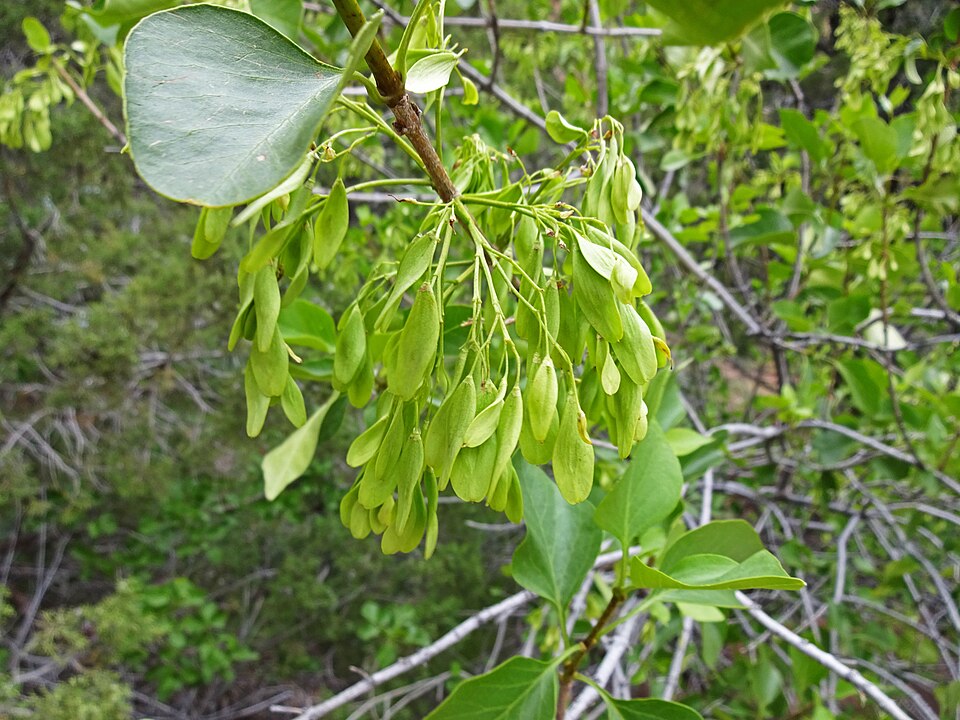
Fraxinus anomalus, known as Singleleaf Ash or Single-leaf Ash, is one of the most botanically unusual members of the ash genus — and one of the most ecologically valuable small trees of Utah’s canyon country. The “anomalous” quality that gives it both its scientific and common name is immediately apparent to any botanist: while virtually all other ash trees bear compound (pinnate) leaves with multiple leaflets, Singleleaf Ash bears mostly simple, undivided leaves — a single rounded to oval blade on each leafstalk. This character alone makes it instantly recognizable among the 45-odd ash species of North America, and gives the tree a distinctive, somewhat un-ash-like appearance that often surprises even experienced naturalists encountering it for the first time.
Growing naturally in the canyon-and-mesa country of the Colorado Plateau, Singleleaf Ash occupies rocky slopes, canyon walls, and pinyon-juniper woodlands at moderate elevations. It is a small to medium tree — usually 10 to 20 feet tall — with grayish-brown furrowed bark and a somewhat open, irregular crown. In fall, the foliage turns yellow to orange-purple before dropping, contributing seasonal color to the canyon landscape. The winged fruits (samaras) are produced abundantly on female trees and provide important late-season food for birds and small mammals — a nutritional contribution highlighted in the regional plant list.
Singleleaf Ash is a valuable addition to native plant landscapes throughout the Four Corners region. It is more drought tolerant than most of its ash relatives, capable of surviving on the limited rainfall of canyon-country slopes. The tree is relatively fast-growing by canyon standards, propagates readily from seed or cuttings, and provides both structure (small tree canopy) and food (seeds) that is difficult to source from other natives in the region. As habitat diversity and native seed sources become increasingly important for canyon country restoration, Singleleaf Ash is gaining recognition as a key component of regional native plant landscapes.
Identification
Singleleaf Ash is a deciduous small tree or large shrub, typically 10 to 20 feet tall, with a spreading, somewhat irregular crown. The overall form is open and somewhat rounded. Mature trees develop attractive grayish-brown bark with shallow furrows and flat ridges. The tree is most readily identified by its unusual simple leaves — a feature unique in the genus.
Bark
The bark of young trees is smooth and gray-brown; with age it becomes shallowly furrowed and ridged, with flat, interlocking gray-brown plates similar to (but less deeply furrowed than) other ash species. The inner bark is pale yellowish when cut. Twigs are gray-brown, slender, and four-angled (quadrangular in cross-section) — a useful identification character when leaves are absent.
Leaves
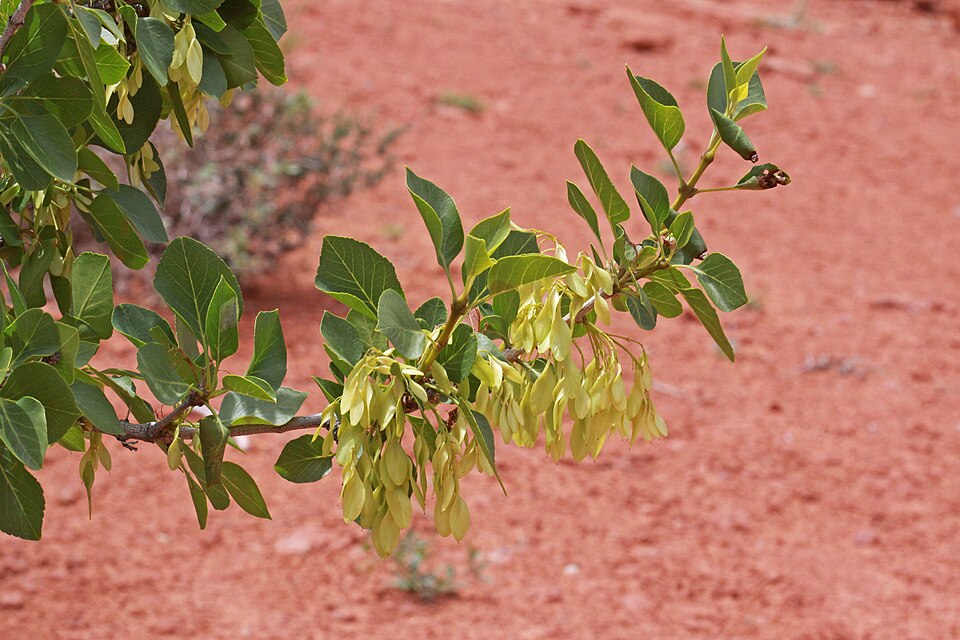
The leaves are the definitive identification character: simple (undivided), broadly oval to rounded or kidney-shaped, 1 to 3 inches long and nearly as wide, with slightly wavy margins that may be finely toothed toward the tip. The upper surface is dark green and somewhat glossy; the lower surface is paler. The leafstalk (petiole) is 1/4 to 3/4 inch long, winged at the base — another distinctive character. While the leaves are predominantly simple, occasional compound leaves with 3–5 leaflets may appear on the same tree, particularly on vigorous new growth, reflecting the tree’s evolutionary derivation from compound-leaved ancestors. Fall color is yellow to orange-purple.
Flowers & Fruit
Like other ashes, Singleleaf Ash is typically dioecious (separate male and female trees), with small, inconspicuous purplish flowers appearing in early spring before the leaves emerge. The flowers are wind-pollinated and produce no nectar, but they are among the earliest available pollen sources in the canyon landscape. The fruit is the classic ash samara — a winged seed, 3/4 to 1 1/4 inches long, with a small seed body and a broad, paddle-shaped wing. The samaras hang in dense clusters from female trees, maturing from green to tan-brown in late summer to fall. They remain on the tree into winter, providing extended food resources for birds and small mammals.
Quick Facts
| Scientific Name | Fraxinus anomalus |
| Family | Oleaceae (Olive) |
| Plant Type | Deciduous Small Tree / Large Shrub |
| Mature Height | 20 ft (typically 10–20 ft) |
| Sun Exposure | Full Sun |
| Water Needs | Moderate |
| Bloom Time | March – April (before leaf-out) |
| Flower Type | Small purplish, wind-pollinated (dioecious) |
| Fruit | Winged samaras, tan-brown, August–October; persisting to winter |
| Fall Color | Yellow to orange-purple |
| USDA Hardiness Zones | 4–9 |
Native Range
Fraxinus anomalus is native to the canyon country of the Colorado Plateau, with a range centered on Utah and extending into adjacent Colorado, Arizona, Nevada, New Mexico, and Wyoming. It is primarily a plant of the Four Corners region — the intersection of Utah, Colorado, Arizona, and New Mexico — where it is most abundant and most frequently encountered. The species has a disjunct distribution, occurring in widely scattered canyon-and-mesa populations separated by unsuitable lowland habitats.
Within its range, Singleleaf Ash is characteristic of rocky canyon slopes, cliff bases, talus fields, and pinyon-juniper woodland margins at elevations between 4,000 and 7,500 feet. It grows in both sandstone and limestone substrates, often in very shallow, rocky soils that would be inadequate for larger trees. It occupies canyon aspects ranging from shaded north-facing walls to exposed south-facing slopes, though it tends to be most abundant on the slightly moister north-facing and canyon-bottom positions. It is drought tolerant compared to most ash relatives, but it does require more moisture than the extremely xeric species that dominate the most exposed canyon positions.
In Utah’s canyon country, Singleleaf Ash is a reliable indicator of the “transition zone” between the hot, dry canyon floor communities and the cooler, moister pinyon-juniper woodlands above. It frequently occurs alongside Utah Juniper, Cliffrose, Singleleaf Pinyon, and various shrubs of the canyon-scrub community. In some areas, it forms small grove-like stands in protected canyon amphitheaters where soil depth and moisture availability are slightly better than average.
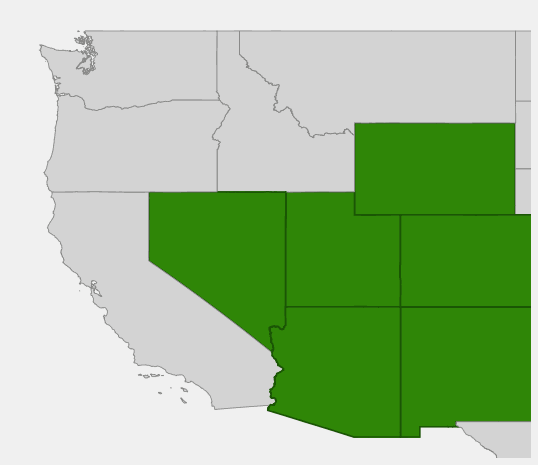
📋 Regional plant lists featuring Singleleaf Ash: Utah
Growing & Care Guide
Singleleaf Ash is an underused gem for Four Corners region landscapes. It offers small tree structure, attractive simple leaves, good fall color, and high wildlife value in a tough, drought-adapted package.
Light
Full sun is preferred — Singleleaf Ash performs best with 6–8+ hours of direct sun daily. In its natural canyon habitat, it grows most vigorously on exposed slopes and canyon rims. It tolerates partial shade but growth is slower and fall color less vibrant in shaded positions.
Soil & Water
Singleleaf Ash is more drought tolerant than most ash species, adapted to the rocky, thin soils of canyon slopes. It grows in sandy, gravelly, rocky, or stony soils with good to excellent drainage. Avoid heavy clay or poorly drained sites. Once established (typically after 2–3 years), it can survive on rainfall alone in areas receiving 10–16 inches annually. In garden settings or during establishment, deep monthly watering in summer supports healthy growth. It tolerates a wide range of soil pH and both sandstone and limestone parent materials.
Planting Tips
Start from seed collected from local canyon-country populations when possible, to ensure genetic adaptation to your specific conditions. As noted in the batch data, Singleleaf Ash propagates readily from both seed and hardwood cuttings. Seeds require stratification (cold-moist period of 60–90 days) before germination. Plant container-grown trees in spring or fall; water regularly the first two seasons, then reduce to deep monthly watering or natural rainfall. Mulch the root zone with gravel or bark.
Pruning & Maintenance
Little pruning is required beyond removal of dead or crossing branches in late winter. Singleleaf Ash naturally develops a pleasant open, spreading form. If multi-stemmed growth is not desired, remove suckers and lower stems while the tree is young to encourage a single-trunk form. The tree is generally pest and disease resistant, though like all ashes it is theoretically susceptible to the invasive Emerald Ash Borer (EAB) — a concern to monitor as EAB continues to spread westward from the Midwest.
Landscape Uses
- Small specimen tree for canyon-country landscapes and rock gardens
- Wildlife food planting — abundant samaras for birds and small mammals
- Canyon restoration — excellent for rocky slope revegetation
- Botanical curiosity — the unique simple leaves are a conversation piece
- Native hedgerow — can be grown as a dense multi-stemmed screen
- Fall color — yellow to orange-purple fall display in desert setting
Wildlife & Ecological Value
Singleleaf Ash provides important wildlife resources in the canyon-country communities it inhabits — particularly valued for its abundant seed production, as highlighted in the regional plant list.
For Birds
The abundant samaras (winged seeds) are a significant food source for birds throughout late summer, fall, and winter. Evening Grosbeaks, Pine Siskins, and various sparrows are documented consumers of ash seeds in canyon country. As a small tree, Singleleaf Ash provides nesting sites for cavity-nesting birds when older specimens develop hollow trunk sections, and the broad, spreading canopy provides protected nesting sites for open-cup nesters. The early spring flowers, though wind-pollinated, also attract the insects that foraging songbirds depend on during breeding season.
For Mammals
As noted in the batch data, the winged seeds of Singleleaf Ash are consumed by various mammals. Chipmunks (Cliff and Uinta Chipmunks common in Utah canyon country) harvest samaras from the ground and from low-hanging clusters. Gray Squirrels and Fox Squirrels also take ash seeds where their ranges overlap. The dense multiple stems of mature Singleleaf Ash stands provide structural cover for cottontail rabbits, small rodents, and other mammals that inhabit rocky canyon settings.
For Pollinators
While wind-pollinated and lacking nectar, the early flowering Singleleaf Ash provides pollen for native bees and other early-season pollinators emerging in late winter and early spring. In the canyon communities where it grows, very few plants are in bloom in March and early April, making ash pollen a particularly important early resource.
Ecosystem Role
Singleleaf Ash fills an important ecological niche as a small to mid-sized tree in canyon communities that are otherwise dominated by shrubs and junipers. The shade it provides under its canopy creates microhabitats with reduced temperature and evaporation, supporting plants and animals unable to tolerate the full exposure of surrounding canyon slopes. As a deciduous tree, its rapidly decomposing leaf litter adds organic material to the typically thin, nutrient-poor soils of canyon country, supporting the microbial communities and invertebrates that underpin the local food web.
Cultural & Historical Uses
Singleleaf Ash was known and used by the Indigenous peoples of the Colorado Plateau — the ancestral and contemporary Hopi, Diné (Navajo), Southern Paiute, and Ute peoples among others. The straight, hard wood was valued for making arrow shafts, digging sticks, and tool handles. Unlike many Plateau plants, the wood of Singleleaf Ash is relatively dense and hard for its size, making it suitable for applications requiring strength and durability. The wood also makes good fuel and was used in fires for cooking and warmth in a landscape where firewood could be scarce.
Medicinally, ash bark and leaf preparations were used in traditional practices for various purposes. The inner bark of ash species (including Singleleaf Ash) contains compounds with anti-inflammatory properties, and bark decoctions were used to treat skin conditions, rheumatism, and fevers in some traditional medicine systems. The leaves were sometimes used as fodder for horses and livestock in the canyon country, particularly in the context of winter foraging when other vegetation was scarce.
From a botanical history perspective, Singleleaf Ash has been the subject of considerable taxonomic interest because of its highly unusual simple leaves. It has been suggested that simple leaves evolved as a drought adaptation — reducing the leaf surface area per unit stem and simplifying the leaf’s hydraulic architecture in ways that may improve drought tolerance. The species exemplifies the evolutionary flexibility of the ash genus, demonstrating how dramatically leaf morphology can diverge even within a single genus in response to environmental pressures. It is classified in the section Fraxinus of genus Fraxinus, along with most other North American ash species, but its leaf morphology sets it apart from all of them.
Frequently Asked Questions
Why does Singleleaf Ash have simple leaves when other ashes have compound leaves?
This is one of the most interesting botanical questions about the species. Most researchers believe that simple leaves evolved from compound leaves as a drought adaptation. Simpler leaf architecture may reduce water loss and hydraulic vulnerability in dry canyon environments. Some trees may still show occasional compound leaves with 3–5 leaflets, particularly on new growth — a “remnant” of the ancestral compound-leaf form.
How can I tell Singleleaf Ash from other canyon country trees?
The simple, rounded to oval leaves with slightly wavy margins are distinctive — no other common canyon-country tree has exactly this leaf form. Additionally, the winged samaras (ash seeds) hanging in dense clusters are unmistakable. The grayish-brown, shallowly furrowed bark and opposite branching pattern (leaves and branches in opposite pairs) are also consistent ash-family characteristics.
Is Singleleaf Ash threatened by Emerald Ash Borer?
All North American ash trees are potentially susceptible to the invasive Emerald Ash Borer (EAB), which has caused catastrophic ash mortality in the eastern and midwestern United States. As of 2026, EAB has not been reported in Utah’s canyon country, but monitoring continues. The relatively remote and dry conditions of the Colorado Plateau may provide some protection, as EAB prefers the more humid conditions of eastern forest ash stands.
How do I propagate Singleleaf Ash from seed?
Collect seeds (samaras) in fall when they turn tan-brown and begin to drop. Stratify at 35–40°F in moist sand or perlite for 60–90 days (simulate winter conditions). After stratification, sow at room temperature. Germination typically occurs within 2–4 weeks of warming. Grow seedlings in well-drained media; transplant to larger containers before roots become pot-bound.
Can Singleleaf Ash grow in my climate?
Singleleaf Ash is best suited to the Colorado Plateau and Four Corners region: Utah, Colorado, Arizona, Nevada, New Mexico, Wyoming. If you live in this region at elevations of 4,000–7,500 feet, it is an excellent choice. It is not recommended for very hot, low-elevation desert climates (below 3,000 feet) or very wet climates (Pacific Northwest, Southeast). It is hardy to USDA Zone 4 (-20°F).

Looking for a nursery that carries Singleleaf Ash?
Browse our native plant nursery directory: Utah