Snowbell (Styrax americanus)
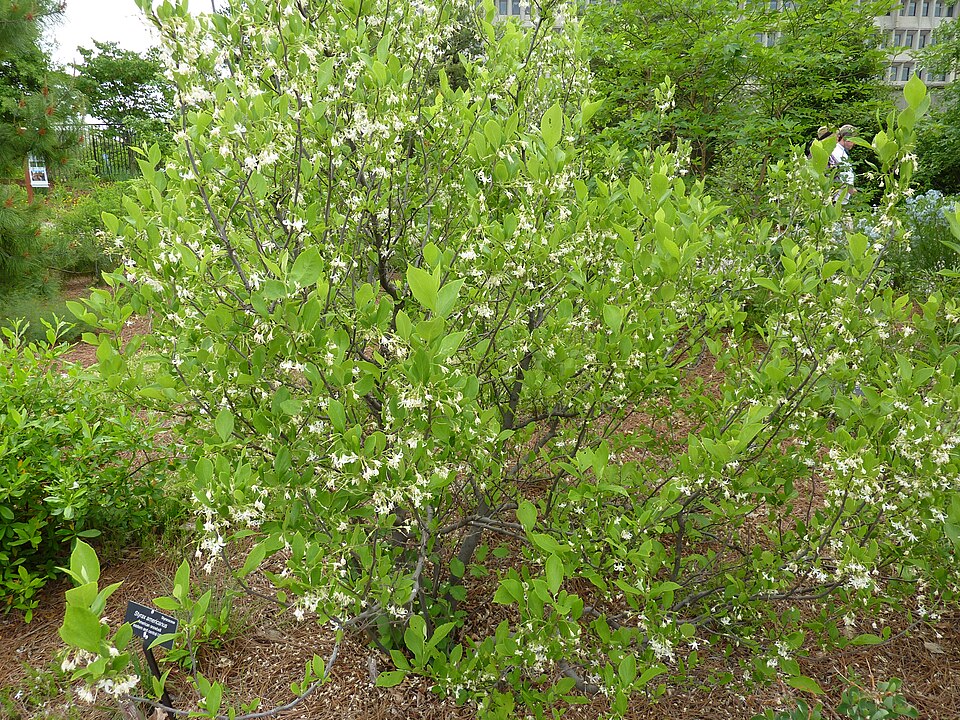
Styrax americanus, commonly known as American Snowbell or American Storax, is a charming native deciduous shrub or small tree of the southeastern United States, belonging to the Styracaceae (storax) family. Growing to about 10 feet tall, Snowbell is most celebrated for the extraordinary beauty of its spring flowers: small, pure-white, five-petaled bells that hang gracefully in clusters from arching branches in April and May, transforming the plant into a cascade of white for several weeks. The flowers are lightly fragrant and attract early-season native bees and other pollinators.
Snowbell is native to the Coastal Plain and lower Piedmont of the Southeast, growing in the understory of wet bottomland forests, along stream banks and pond margins, and in moist flatwoods. It is a plant of semi-shade and moisture — at home in the dappled light beneath taller trees, where its graceful arching form and spectacular spring flowers create a memorable display. Compared to its close relative Japanese Snowbell (Styrax japonicus), the American species is underutilized in landscaping despite being equally beautiful and far more ecologically appropriate for southeastern gardens.
For gardeners seeking a refined, wildlife-friendly shrub for moist, shaded spots in the landscape, American Snowbell is a superb choice. It requires little care once established, provides excellent pollinator support in spring, produces fruit valued by birds and small mammals, and offers attractive yellow fall color — making it a four-season garden plant of considerable merit. Its modest size and graceful habit make it well-suited to small and medium residential landscapes throughout the Southeast.
Identification
American Snowbell is a deciduous shrub or small tree reaching 6 to 10 feet tall, with a spread of 6 to 8 feet. The overall form is broadly rounded to vase-shaped, with multiple arching stems and a fine-textured branching pattern that is attractive even in winter. The shrub has a light, airy quality — not dense or formal — that makes it blend beautifully into naturalistic garden settings.
Bark & Stems
The bark on older stems is gray-brown, relatively smooth, and lightly textured. Young stems are slender, grayish to reddish-brown, and often slightly zigzag in growth pattern — a subtle but characteristic feature. The wood is relatively soft. In winter, the fine-textured branching pattern and small oval buds are the primary identifying features.
Leaves
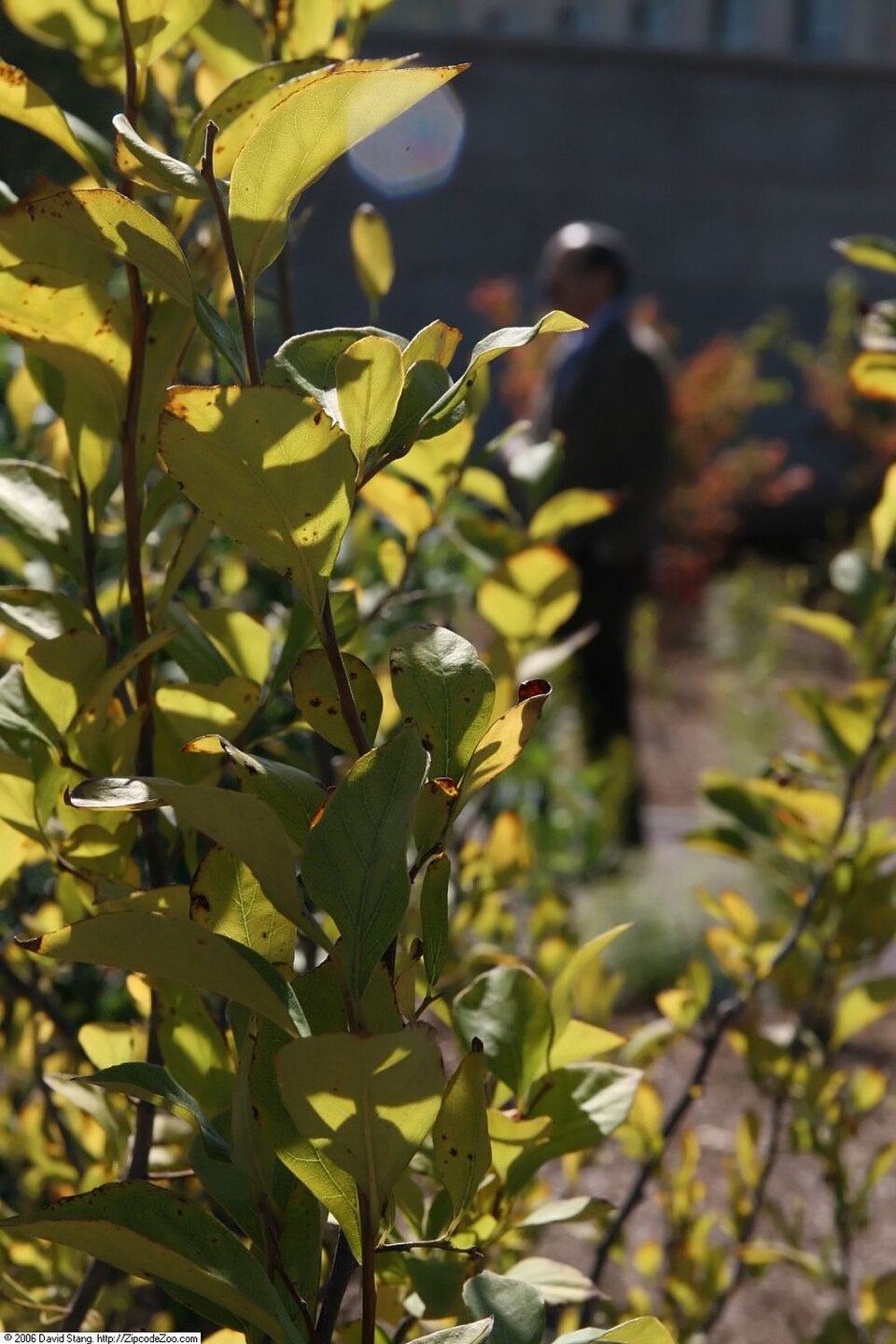
The leaves are alternate, simple, deciduous, and 1 to 3 inches long, elliptic to oblong-obovate in shape. The upper surface is medium green; the underside is paler and may be sparsely hairy on the veins. Leaf margins are entire or have a few shallow teeth near the tip. In autumn, the foliage turns yellow, providing a pleasant if brief fall color display. Leaves are often somewhat clustered near branch tips, giving the plant a characteristic appearance.
Flowers & Fruit
The flowers are the defining glory of this plant. Each bloom is ½ to ¾ inch long — a narrow, five-petaled white bell with reflexed petals that expose a cluster of yellow anthers, forming an elegant pendant shape. Flowers are produced in small clusters (racemes) of 3–6 blooms along the previous year’s branches, hanging gracefully below the emerging new leaves in April and May. The display typically lasts 2–4 weeks. Flowers are lightly fragrant. The fruit is a small, dry, one-seeded drupe, ¼ to ½ inch in diameter, with a persistent calyx at the base, ripening to gray-brown in summer and fall.
Quick Facts
| Scientific Name | Styrax americanus |
| Family | Styracaceae (Storax) |
| Plant Type | Deciduous Shrub / Small Tree |
| Mature Height | 10 ft |
| Sun Exposure | Full Sun to Part Shade |
| Water Needs | Moderate to High |
| Bloom Time | April – May |
| Flower Color | White |
| USDA Hardiness Zones | 6–9 |
Native Range
American Snowbell is native to the southeastern United States, ranging from the Coastal Plain and lower Piedmont of Virginia and Maryland southward through the Carolinas, Georgia, and Florida, westward through Alabama, Mississippi, Louisiana, Arkansas, and into East Texas, and northward in the Mississippi Valley through Tennessee, Kentucky, and into southern Missouri. It grows at low to moderate elevations throughout this range, always in association with moist or wet soils.
The species is characteristic of bottomland hardwood forests, floodplain forests, stream margins, and the edges of ponds and wetlands throughout the coastal plain and lower Piedmont. It grows in the understory of these forests, typically in conditions of partial to moderate shade. Associated trees and shrubs include sweetbay magnolia (Magnolia virginiana), Virginia willow (Itea virginica), swamp azalea (Rhododendron viscosum), coastal plain willow (Salix caroliniana), swamp rose (Rosa palustris), and buttonbush (Cephalanthus occidentalis).
American Snowbell is most showy and abundant in floodplain forests where seasonal flooding maintains the moist soil conditions it prefers. It is also found along the well-shaded banks of small woodland streams, where the humidity and consistent soil moisture create ideal growing conditions. In the drier portions of its range, it is more restricted to riparian habitats; in the moister coastal plain, it grows more broadly across the landscape.
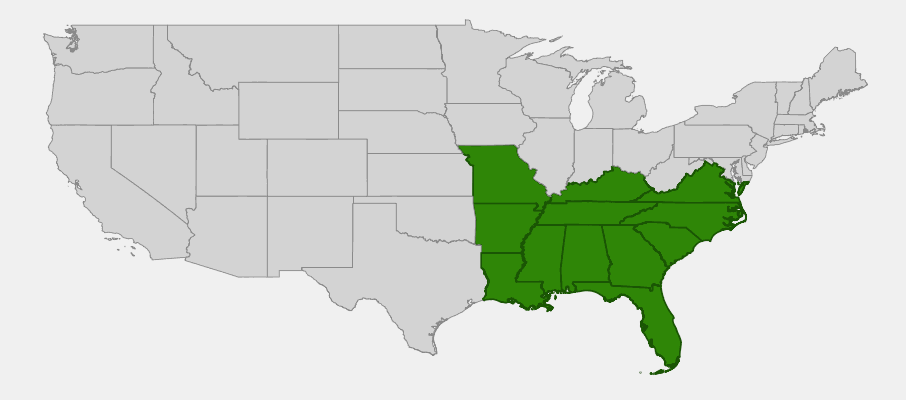
📋 Regional plant lists featuring Snowbell: Alabama, Georgia & Mississippi
Growing & Care Guide
American Snowbell is a refined, low-maintenance shrub for moist garden sites. Its primary requirement is consistent soil moisture — it does not tolerate prolonged drought once established. Given adequate moisture and appropriate light, it requires essentially no care and provides outstanding ornamental and wildlife value.
Light
Snowbell grows well in partial shade — the conditions of its natural woodland habitat — but also tolerates full sun when moisture is adequate. In full sun, watering during dry periods is more important. The showiest flowering typically occurs in partial shade or with some sun exposure; in deep shade, flowering may be reduced. Morning sun with afternoon shade is often ideal in the hotter parts of its range.
Soil & Water
Consistently moist, slightly acidic, well-drained to seasonally wet soil is ideal. American Snowbell grows naturally in soils that are moist year-round and briefly flooded in winter or early spring. It will not thrive in dry, well-drained upland soils without supplemental irrigation. Mulching deeply with organic material helps maintain soil moisture. In rain gardens, bioswales, and other wet or seasonally moist situations, it performs excellently. Soil pH of 5.0–6.5 is preferred.
Planting Tips
Plant in fall or early spring. Space shrubs 6–8 feet apart for naturalistic groupings. American Snowbell combines beautifully with other moisture-loving native shrubs: Virginia willow, swamp azalea, buttonbush, and itea make natural companions. The plant grows slowly to moderately — do not expect rapid establishment. Water regularly during the first two growing seasons. Once established, it is long-lived and persistent.
Pruning & Maintenance
Snowbell requires little pruning. Remove dead or damaged branches in late winter. If renewal pruning is desired, cut a few oldest stems to the ground every 3–4 years to encourage vigorous new growth from the base. Avoid heavy pruning, which is rarely needed and can delay flowering. The plant is naturally pest- and disease-resistant.
Landscape Uses
- Rain gardens and wet borders — superb for moist to seasonally wet sites
- Woodland garden specimen — a standout in spring flower
- Stream or pond edge planting — thrives in natural waterside conditions
- Understory shrub beneath taller trees in moist settings
- Native plant collections and botanic gardens
- Foundation or border shrub in sheltered, moist locations
Wildlife & Ecological Value
American Snowbell provides layered ecological value across seasons, supporting pollinators, birds, and the broader forest invertebrate community.
For Birds
The small drupes produced in summer and fall are consumed by various native songbirds including thrushes and vireos. The dense branching structure provides cover and nesting sites for small birds. The canopy supports the larval stages of native moths and butterflies, which are essential food for songbirds feeding nestlings.
For Pollinators
American Snowbell’s spring flowers are an excellent source of nectar and pollen for native bees, honeybees, bumblebees, and numerous beneficial insects. The blooms open at a critical time in early to mid-spring when many pollinators are just emerging or establishing early-season colonies. The flowers are particularly attractive to native mining bees and small native bees that take advantage of accessible, cup-shaped blooms.
For Mammals
White-tailed deer browse the foliage of Snowbell, and small mammals such as raccoons and opossums may consume the fruits. The shrubby growth habit provides cover for small mammals and ground-nesting birds in the moist forest understory.
Ecosystem Role
As a component of the moist woodland and streamside shrub layer, American Snowbell contributes to the structural complexity of bottomland forests. Its shallow root system helps stabilize streambanks and moist slopes. Its leaf litter — produced in large quantities by a well-established specimen — enriches the soil and supports invertebrate communities that form the base of the forest food web. The plant’s early spring bloom is an important phenological event in moist forest habitats, providing food resources for early-emerging invertebrates and serving as an early nectar source for pollinators migrating through the landscape.
Cultural & Historical Uses
American Snowbell and other members of the Styrax genus have a long history of use for the aromatic resin called “storax” or “benzoin” extracted from their bark. While the most commercially important storax comes from Asian species — particularly Styrax benzoin and Styrax tonkinensis — the American species was also utilized by Indigenous peoples and early European settlers for similar purposes. The resin, extracted by wounding the bark, is fragrant and was used as an incense, a fixative in perfumery, a medicinal expectorant, and an ingredient in traditional healing preparations.
Various Eastern and Southeastern tribes used preparations from the bark and stems of American Snowbell for medicinal purposes, including treatments for skin conditions and as a fragrant component of ceremonial smoke. Early European colonists, familiar with the value of Old World storax, recognized the related American species and collected the resin for similar uses. The common name “storax” reflects this connection to the commercially important Asian species.
In the modern garden, American Snowbell has gained recognition primarily as an ornamental plant — the exquisite spring flowers and graceful form have made it a sought-after specimen in native plant gardens and restored natural areas. Its relative scarcity in the nursery trade has historically limited its use, but as native plant gardening grows in popularity and nursery production increases, Snowbell is becoming more available and more widely appreciated for the beauty and ecological value it brings to southeastern landscapes.
Frequently Asked Questions
How is American Snowbell different from Japanese Snowbell?
Japanese Snowbell (Styrax japonicus) is a closely related Asian species that is very popular in landscaping. The two species look similar, but Japanese Snowbell is slightly larger and more tree-like, while American Snowbell is more shrubby. American Snowbell is the native choice for southeastern US gardens — ecologically appropriate and equally beautiful, while supporting local wildlife that depends on native plant hosts.
Does Snowbell attract hummingbirds?
While hummingbirds may occasionally visit the flowers, Snowbell is primarily pollinated by native bees. The tubular white flowers are more typical of bee-pollinated species than hummingbird-pollinated ones. For hummingbird attraction, companion plants like Indian Pink are a better choice.
Will Snowbell grow in a container?
It can be grown in a large container (15+ gallons) with regular watering and fertilizing, but it performs best in the ground. Container growing is useful for temporary display or for gardeners in marginal hardiness zones who want to overwinter it indoors.
How long does Snowbell bloom?
The bloom period typically lasts 2–4 weeks in April–May, varying by location and year. Individual flowers are short-lived, but the plant produces new blooms continuously throughout the flowering season, maintaining a good display for the full period.
Is Snowbell deer resistant?
Not reliably — white-tailed deer will browse Snowbell, particularly the tender new growth in spring. In areas with high deer pressure, protection may be needed during establishment. Mature, well-established shrubs generally recover from moderate browsing, but significant deer damage can substantially reduce the spring flower display.

Looking for a nursery that carries Snowbell?
Browse our native plant nursery directory: Alabama · Georgia · Mississippi