Sourwood (Oxydendrum arboreum)
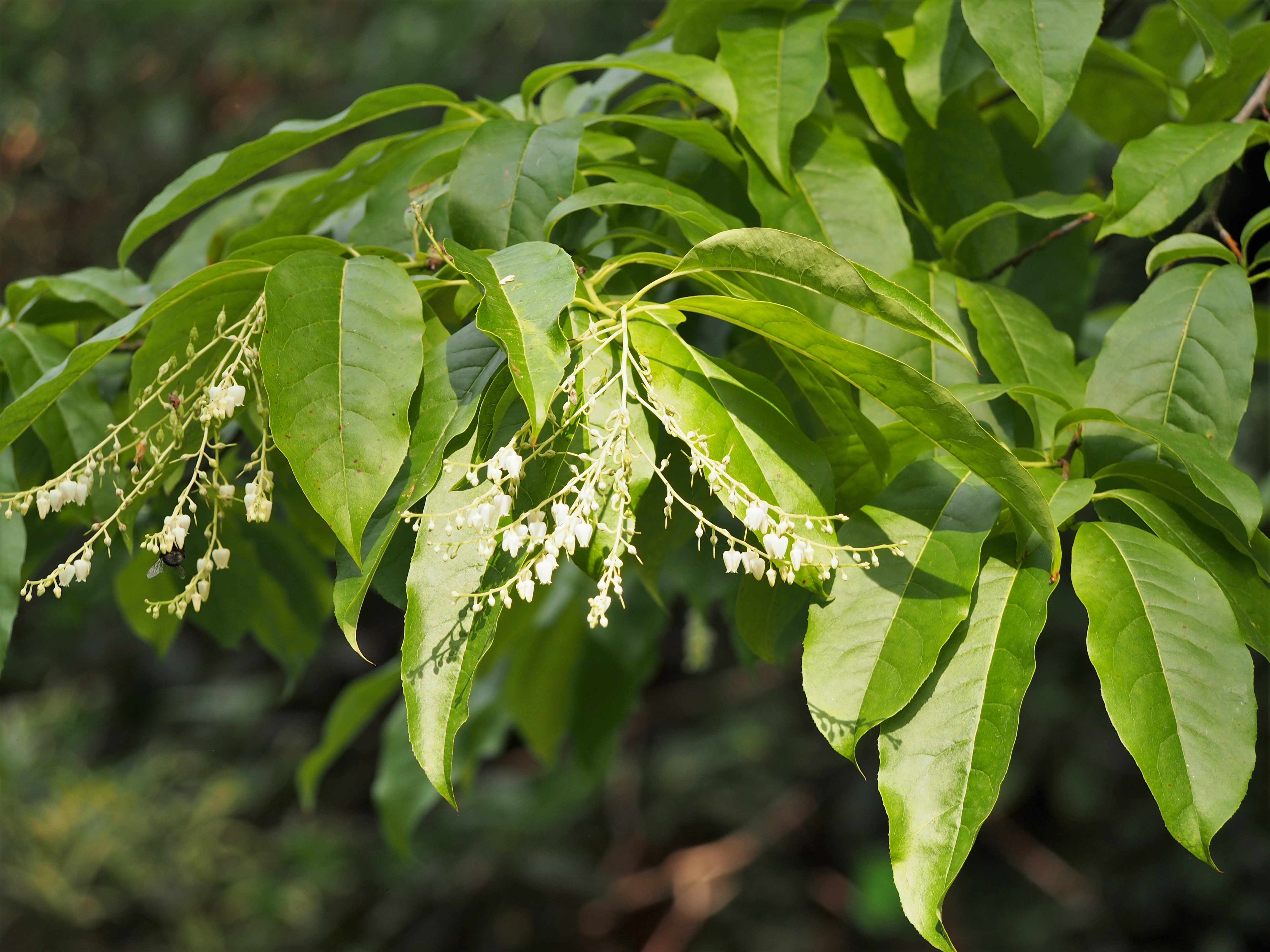
Oxydendrum arboreum, commonly known as Sourwood, Sorrel Tree, or Lily-of-the-Valley Tree, stands as one of the most distinctive and beloved native trees of the eastern United States. This striking member of the heath family (Ericaceae) derives its name from the distinctive sour taste of its leaves and twigs, which Indigenous peoples and early settlers chewed to quench thirst on long journeys. The tree’s elegant drooping clusters of tiny white bell-shaped flowers, so reminiscent of lily-of-the-valley blooms, create one of nature’s most spectacular summer flowering displays.
Growing as a slender, graceful tree reaching 20 to 60 feet tall, Sourwood thrives in the acidic soils of mixed hardwood and pine forests across the southeastern United States. Its smooth, gray bark develops into distinctive furrows with age, while its glossy, lance-shaped leaves provide stunning fall color ranging from brilliant yellow and orange to deep red and purple. The tree produces some of the most prized honey in North America — sourwood honey is renowned for its delicate, complex flavor and commands premium prices throughout the region.
What sets Sourwood apart from other native flowering trees is its remarkable adaptability and year-round beauty. In spring, new leaves emerge with a fresh green color; summer brings forth the magnificent flower displays that can last for weeks; autumn delivers exceptional fall color; and winter reveals the tree’s elegant branching structure and persistent seed capsules. For gardeners and landscapers seeking a native tree that offers four-season interest with relatively low maintenance requirements, Sourwood represents an outstanding choice that also provides significant ecological value to native wildlife.
Identification
Sourwood is readily identified by its combination of distinctive features that make it unmistakable throughout the seasons. The tree typically grows 20 to 60 feet tall with a narrow, pyramidal crown when young, gradually developing a more rounded form with age. Its slender trunk rarely exceeds 2 feet in diameter, and the overall form is graceful and refined rather than massive or imposing.
Bark
Young Sourwood trees have smooth, grayish bark that gradually develops into distinctive deep furrows separated by flat-topped ridges as the tree matures. The mature bark is thick and deeply grooved, with a reddish-brown to gray color that provides an attractive winter feature. The bark pattern is unique enough that experienced tree enthusiasts can identify Sourwood from the bark alone, especially when combined with the tree’s characteristic growth form.
Leaves
The leaves are simple, alternate, and deciduous, ranging from 3 to 8 inches long and 1 to 3 inches wide. They are elliptical to lance-shaped with finely serrated margins and a prominent midrib. The upper surface is glossy dark green, while the underside is slightly paler. New spring growth often shows a reddish tinge before maturing to full green. The leaves have a distinctive sour taste when chewed — hence the common name — and turn brilliant colors in fall, ranging from yellow and orange to scarlet and deep purple, often with multiple colors appearing on the same tree.
Flowers & Fruit
Sourwood’s most spectacular feature is its summer flower display. The flowers appear in June and July as drooping, one-sided clusters (panicles) that can reach 4 to 10 inches long. Each cluster contains dozens of tiny, urn-shaped white flowers that strongly resemble lily-of-the-valley blooms. Individual flowers are about ¼ inch long with five small petals fused into a bell shape. The flowers are fragrant and rich in nectar, making them highly attractive to bees and other pollinators.
The fruit develops as small, dry, five-valved capsules that split open to release numerous tiny seeds with papery wings. The seed capsules persist on the tree through winter, adding textural interest to the bare branches. The seeds are dispersed by wind, and while Sourwood can reproduce from seed, successful germination requires specific conditions including acidic soil and adequate moisture.
Quick Facts
| Scientific Name | Oxydendrum arboreum |
| Family | Ericaceae (Heath) |
| Plant Type | Deciduous Tree |
| Mature Height | 20–30 ft |
| Sun Exposure | Full Sun to Full Shade |
| Water Needs | Moderate to Low |
| Bloom Time | June – August |
| Flower Color | Creamy White |
| USDA Hardiness Zones | 5–9 |
Native Range
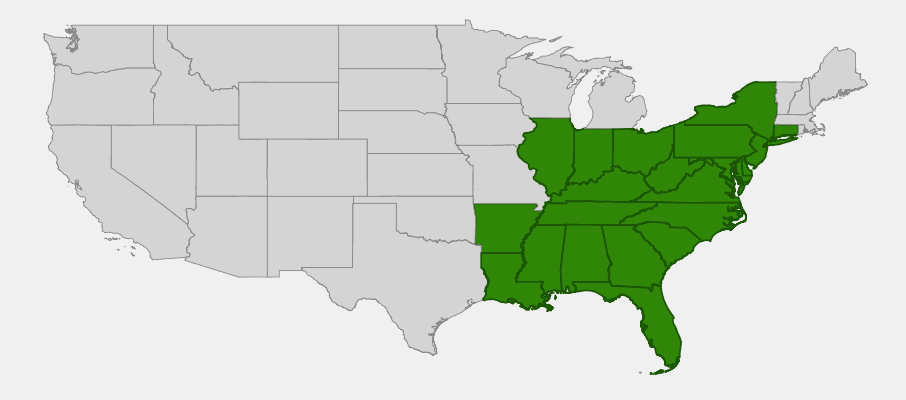
Sourwood is native to the eastern United States, with its primary range extending from southern Pennsylvania and New Jersey south to northern Florida and west to southern Illinois, eastern Oklahoma, and eastern Louisiana. The species reaches its greatest abundance and largest size in the Appalachian Mountains, where it forms a characteristic component of mixed deciduous forests, often growing alongside oaks, hickories, and pines. In the mountainous regions of North Carolina, Tennessee, Virginia, and West Virginia, Sourwood can be found at elevations ranging from valley floors to mountain slopes up to 4,000 feet.
The natural habitat of Sourwood includes well-drained, acidic soils in partial to full sunlight. It commonly grows on rocky slopes, ridge tops, and forest edges where competition from larger canopy trees is reduced. In its native range, Sourwood is often associated with other acid-loving plants including Mountain Laurel (Kalmia latifolia), Rhododendrons, and various blueberry species. The tree shows remarkable adaptability within its range, thriving in both full sun and partial shade conditions, though flowering tends to be most prolific in sunnier locations.
Climate change and habitat fragmentation have had some impact on Sourwood populations, particularly at the northern and western edges of its range. However, the species remains common throughout most of its native distribution and is not considered threatened. Its value as both an ornamental tree and honey source has led to cultivation well beyond its natural range, though it performs best in areas with acidic soils and adequate summer moisture.
📋 Regional plant lists featuring Sourwood: North Carolina & South Carolina
Growing & Care Guide
Sourwood is considered one of the more challenging native trees to establish successfully, but with proper site selection and care, it can become a stunning centerpiece in the landscape. The key to success lies in understanding and replicating the tree’s natural growing conditions, particularly its requirement for acidic, well-drained soil and consistent moisture during establishment.
Light
Sourwood demonstrates remarkable adaptability to light conditions, thriving in everything from full sun to partial shade. In its native forest habitat, young trees often begin life in partial shade and gradually receive more sunlight as they mature. For landscape applications, the tree performs well in full sun locations, where flowering tends to be most abundant, but it also makes an excellent understory tree in partially shaded sites. Avoid deep shade locations, as this will significantly reduce flowering and may lead to sparse branching.
Soil & Water
The most critical factor for Sourwood success is soil acidity. The tree absolutely requires acidic soil with a pH between 4.5 and 6.0, and performs best in the 5.0 to 5.5 range. Clay soils should be amended with organic matter to improve drainage, as Sourwood cannot tolerate wet feet or waterlogged conditions. The ideal soil is a well-drained, acidic loam enriched with organic matter such as leaf mold or aged compost. Mulching with acid-forming materials like pine needles, oak leaves, or shredded bark helps maintain soil acidity and moisture retention.
Water requirements are moderate, with established trees showing good drought tolerance once their root systems are well-developed. However, consistent moisture during the first 2-3 years after planting is crucial for establishment. Avoid both drought stress and overwatering — the soil should remain evenly moist but never soggy.
Planting Tips
Plant Sourwood in early spring or early fall when temperatures are moderate and rainfall is typically more reliable. Choose nursery stock carefully — Sourwood has a taproot and can be challenging to transplant, so look for container-grown plants or professionally dug balled-and-burlapped specimens. Dig the planting hole only as deep as the root ball but twice as wide, and avoid adding limestone or alkaline amendments to the backfill soil.
Space trees at least 15-20 feet from buildings and other large plants to accommodate their eventual size and ensure good air circulation. In woodland settings, Sourwood can be planted closer together for a naturalistic grove effect.
Pruning & Maintenance
Sourwood requires minimal pruning and should be pruned sparingly, if at all. Remove dead, diseased, or crossing branches in late winter while the tree is dormant. Avoid heavy pruning, as Sourwood is slow to recover from major cuts and has a naturally attractive form that needs little shaping. Young trees may benefit from light pruning to establish a strong central leader, but mature trees should be left to develop their natural branching pattern.
The tree is relatively pest and disease-free, though it can occasionally be affected by scale insects or fungal leaf spots in humid conditions. Good air circulation and avoiding overhead watering help prevent most disease issues.
Landscape Uses
Sourwood excels in several landscape applications:
- Specimen tree — showcase its four-season beauty as a focal point
- Woodland gardens — naturalistic plantings with other native understory species
- Acidic soil gardens — companion to rhododendrons, azaleas, and mountain laurel
- Wildlife gardens — flowers attract pollinators, seeds feed birds
- Fall color displays — exceptional autumn foliage color
- Small space gardens — compact size suitable for urban lots
- Pollinator gardens — valuable nectar source for bees and butterflies
Wildlife & Ecological Value
Sourwood provides exceptional value to native wildlife throughout its range, serving as both a food source and habitat component for numerous species. The tree’s long blooming period and abundant nectar production make it particularly valuable for pollinators, while its seeds, leaves, and bark support various other wildlife species throughout the year.
For Birds
Many bird species utilize Sourwood for both food and nesting habitat. The small seeds are consumed by finches, chickadees, nuthatches, and other songbirds, particularly during winter months when other food sources become scarce. The tree’s branching structure provides excellent nesting sites for smaller birds, and its relatively open crown allows for easy access while still offering protection from predators. Woodpeckers occasionally visit to search for insects in the bark crevices.
For Mammals
White-tailed deer browse on Sourwood foliage, particularly young shoots and leaves, though the tree is not considered a preferred browse species. Squirrels and chipmunks collect and cache the seeds for winter food storage. Bears have been observed eating the leaves and young shoots in some areas, though this is not a primary food source for them.
For Pollinators
Sourwood is renowned as one of the most important native nectar sources in the eastern United States. The tree’s flowers are visited by numerous bee species, including both native solitary bees and honeybees. Sourwood honey is considered among the finest varieties produced in North America, prized for its light color, delicate flavor, and ability to resist crystallization. The flowers also attract butterflies, moths, and beneficial insects such as flower flies and wasps, contributing to the overall pollinator community in areas where the tree is present.
Ecosystem Role
In forest ecosystems, Sourwood serves as an important understory and midstory component that adds structural diversity to woodland habitats. Its acidic leaf litter contributes to maintaining the acidic soil conditions preferred by many native forest plants, including various wildflowers, ferns, and ericaceous shrubs. The tree’s presence often indicates healthy, acidic forest soils that support diverse plant communities adapted to these conditions.
Cultural & Historical Uses
Sourwood has a rich history of use by Indigenous peoples and early European settlers in the southeastern United States. The Cherokee, Creek, and other southeastern tribes recognized the tree’s distinctive properties and incorporated it into both their daily lives and traditional medicine systems. The sour-tasting leaves and inner bark were chewed to alleviate thirst during long journeys, and the tree became known among some groups as the “thirst tree” or “travelers’ friend.”
Cherokee traditional medicine utilized various parts of the Sourwood tree for treating different ailments. The inner bark was used to make teas for treating stomach ailments and fever, while the leaves were sometimes applied as poultices for treating wounds and skin conditions. The sour taste that gives the tree its common name comes from oxalic acid compounds in the leaves and bark, the same compounds that give wood sorrel and rhubarb their characteristic tartness.
Early European settlers quickly learned of Sourwood’s uses from Indigenous peoples and incorporated the tree into their own folk medicine traditions. The inner bark was used to make bitter tonics believed to aid digestion and treat fever, while the leaves were chewed to produce saliva during periods of water scarcity. Some settlers also discovered that the wood, while not particularly durable, burned hot and clean, making it useful for specialized applications such as heating ovens for bread baking.
The most celebrated historical use of Sourwood, however, is as a source of premium honey. By the late 1800s, beekeepers in the Appalachian region had discovered that hives placed near Sourwood groves during the summer flowering period produced honey of exceptional quality. Sourwood honey became highly prized for its pale amber color, delicate floral taste, and slow crystallization properties. This reputation continues today, with authentic Sourwood honey commanding premium prices and being considered one of the finest varietal honeys produced in North America.
In modern times, Sourwood has gained recognition as both an ornamental landscape tree and a conservation species. Its spectacular summer flowers, outstanding fall color, and four-season interest have made it increasingly popular among gardeners and landscape designers seeking native alternatives to exotic flowering trees. Conservation organizations promote Sourwood planting as a way to support native pollinators and maintain the genetic diversity of this important Appalachian species.
Frequently Asked Questions
Why is my Sourwood not flowering?
Poor flowering in Sourwood is usually caused by insufficient sunlight, alkaline soil, or transplant shock. The tree needs at least 4-6 hours of direct sunlight daily for good flower production, and soil pH must be below 6.0. Young trees may take 5-10 years to begin flowering reliably, and recently transplanted trees often skip flowering for a year or two while establishing new root systems.
Can Sourwood grow in clay soil?
Sourwood can grow in clay soil if it’s acidic and has been amended for better drainage. Heavy clay that stays waterlogged will kill the tree. Improve clay soils by incorporating organic matter like compost, pine bark, or aged leaf mold, and consider planting on a slight slope or raised bed to ensure drainage.
Is Sourwood difficult to transplant?
Yes, Sourwood has a reputation for being challenging to transplant due to its taproot system and sensitivity to root disturbance. Purchase container-grown specimens when possible, plant during cool weather, maintain consistent moisture during establishment, and avoid disturbing the root zone. Expect slower establishment compared to other native trees.
How long does it take for Sourwood to reach mature size?
Sourwood is a slow to moderate-growing tree, typically adding 12-18 inches of height per year under favorable conditions. It may take 15-25 years to reach its full mature height of 20-30 feet in landscape settings. Trees grown in optimal conditions in their native range can grow somewhat faster and reach larger ultimate sizes.
Is Sourwood honey really that special?
Yes, genuine Sourwood honey is considered among the finest varietals in North America. It has a light amber color, complex floral flavor with hints of spice, and remains liquid longer than most honey types. However, true single-source Sourwood honey is rare and expensive, as it requires hives located in areas with large populations of blooming Sourwood trees and careful timing of harvest.

Looking for a nursery that carries Sourwood?
Browse our native plant nursery directory: North Carolina · South Carolina