Squarestem Spikerush (Eleocharis quadrangulata)
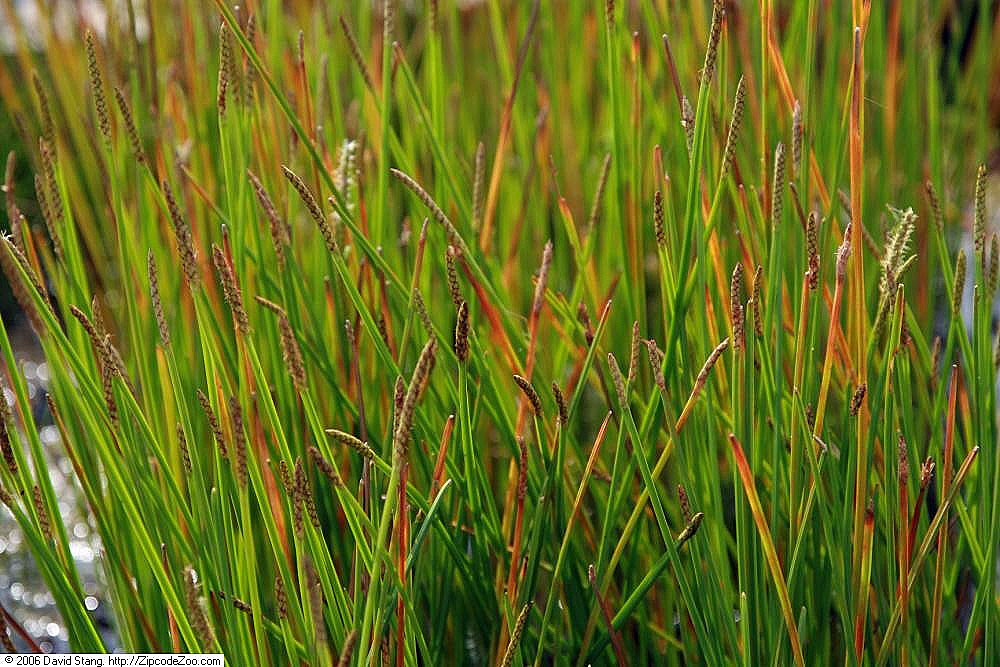
Squarestem spikerush is a freshwater-margin perennial that makes clean vertical lines rather than a mass of broad leaves. Each green stem ends in a narrow spikelet, and the stem itself has the four-angled shape named in both its common and scientific names. In a water garden, a stand can look spare and architectural while still being part of a living, seasonally changing shoreline.
Eleocharis quadrangulata is a sedge, despite the word rush in its common name. It spreads by rhizomes and is best understood as an emergent aquatic: roots and lower stems occupy wet ground or shallow water while the photosynthetic stems stand in the air. It is not an underwater aquarium plant and is not a dry-land substitute for ornamental fountain grasses.
Garden use should be tied to regional origin and real hydrology. The species is native in much of eastern North America, including the Delaware–New Jersey–New York region, but is rare in parts of its northern range. A legacy listing in our Hawaii table does not establish Hawaiian nativity. The table now warns that it is not native to Hawaii, and this guide recommends locally appropriate propagated material rather than moving plants between distant wetlands.
Identification
Four-angled Stems
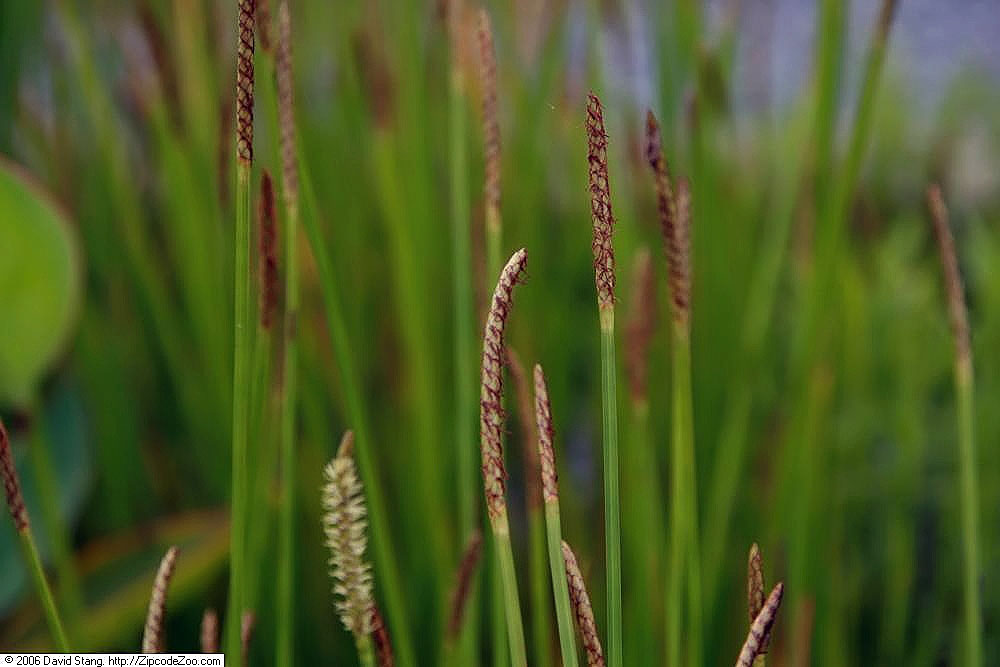
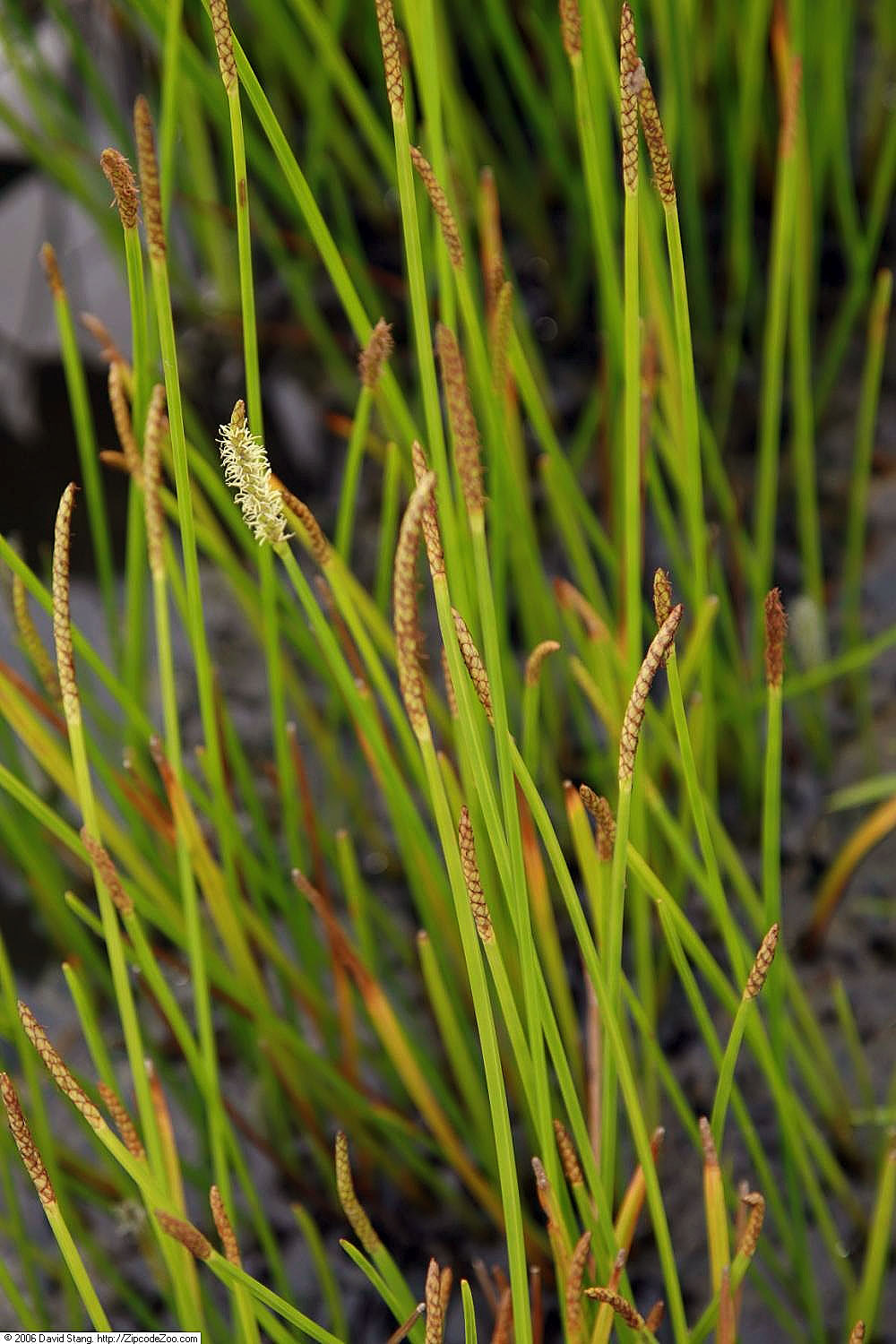
The green culms are sharply four-angled in cross-section, a useful field character among the many round-stemmed spikerushes. They are slender and upright, generally about 1–3½ feet tall across the botanical range. Feel and inspect a stem gently rather than crushing a wild plant. Size varies with growing conditions, so a two-foot specimen does not establish a separate variety.
Leaves and Rhizomes
Most visible green growth consists of stems, not broad leaf blades. Leaves are reduced largely to sheaths around the stem bases. Underground rhizomes connect shoots and allow a colony to expand. That growth pattern explains why a small nursery clump can occupy a larger pond shelf with time, and why pulling a few stems is not a reliable way to remove an established colony.
Flowers and Spikelets
A single elongated spikelet caps a fertile stem. Its closely overlapping scales change from fresh pale tones to straw or brown as the flowers and fruits mature. Tiny reproductive structures can be visible during bloom, but the plant does not produce showy petals. Look at both the stem cross-section and the spikelet; either one alone can be misleading in a mixed wetland stand.
Fruit and Similar Species
The fruit is a small achene topped by a persistent style base, often called a tubercle. Mature fruit characters are important in technical keys. Native Plant Trust contrasts squarestem spikerush with Eleocharis equisetoides, which has more circular stems and internal cross-partitions. A name on a photograph should be checked against these distinctions before using it as a model for wild identification.
Quick Facts
| Scientific Name | Eleocharis quadrangulata; synonym Scirpus quadrangulatus |
| Family | Cyperaceae — sedge family |
| Plant Type | Rhizomatous perennial emergent aquatic |
| Mature Height | Approximately 1–3½ ft (30–105 cm) |
| Mature Spread | Forms expanding colonies by rhizomes |
| Growth Rate | Seasonal; expansion depends on water and open space |
| Sun Exposure | Full sun; tolerates some partial shade |
| Water Needs | High; saturated ground or shallow standing water |
| Soil Type | Wet shoreline or pond-margin substrate |
| Soil pH | Use site-adapted stock; avoid assuming one universal pH requirement |
| Bloom Time | Growing season, usually summer; varies regionally |
| Flower Color | Small pale flowers in green to straw-brown spikelets |
| Fall Color | Green stems age to tan or brown |
| Fruit | Tiny achenes beneath spikelet scales |
| Deer Resistant | Not a guaranteed browse-resistant planting |
| USDA Hardiness Zones | Regional provenance and water regime matter; verify local suitability |
Native Range
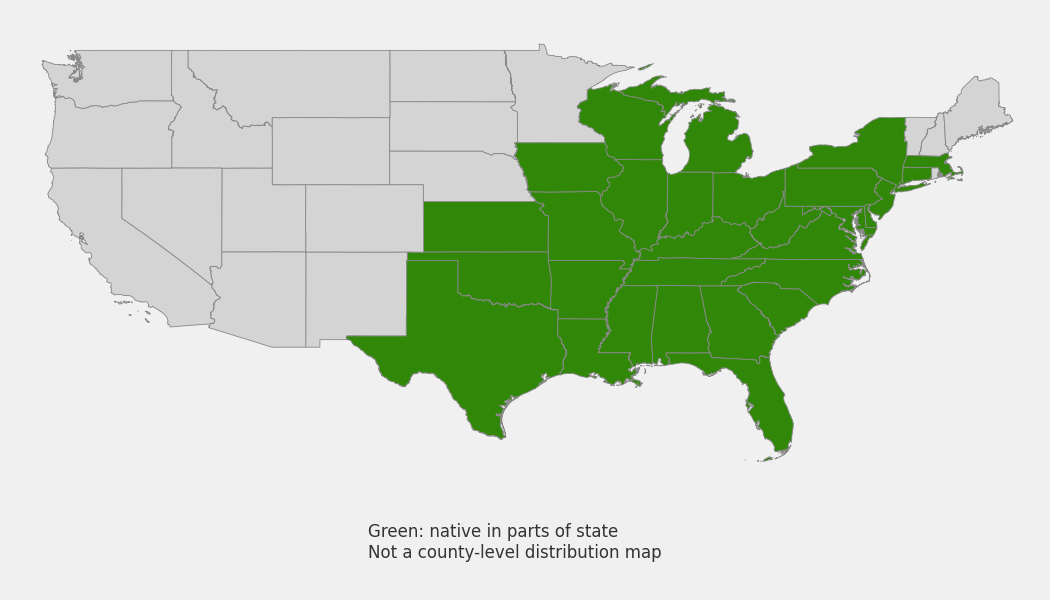
NatureServe describes a native eastern North American range extending from Ontario and Massachusetts west toward Wisconsin, and south to Florida, Texas, and central Mexico. The species is often local even inside this broad outline. New England occurrences are restricted and rare; a wide national distribution should never be read as permission to collect from a small northern population.
The status of western populations is not uniform among references. NatureServe treats California and Oregon as naturalized, while Calflora labels the species native in California. The older New England conservation plan also distinguishes uncertain or probable California nativity from introduced Oregon populations. To avoid representing a contested origin as settled fact, this guide’s native map shades the eastern and central range and leaves California and Oregon unshaded, with this explicit qualification.
It grows in shallow freshwater settings such as pond and lake margins, marshes, and slow-water shores. Some records come from artificial or disturbed waterbodies, but that does not make every drainage ditch a suitable garden site. Hawaii is outside the documented native range. For a restoration project, consult a local flora and conservation program rather than relying on the broad map alone.
📋 Regional plant list: Delaware, Southern New Jersey and Long Island
Growing & Care Guide
Light
A bright, open pond edge is a good starting point. Shade from overhanging trees can reduce the openness that favors a strong stand, even where the ground remains wet. Plan for the eventual size of neighboring shrubs. In a small pond, keep the spikerush visible against an uncluttered background so the thin upright stems do not disappear visually into taller vegetation.
Soil and Water
Plant in saturated substrate or shallow water, with young shoots emerging above the surface. Do not mistake its aquatic habit for a requirement to submerge the entire plant. Water levels in natural habitats fluctuate, but prolonged drying of a small garden container can be much harsher than a seasonal drawdown in a large wetland. Check the moisture of the root mass, especially during hot weather.
Planting Tips
Obtain nursery-grown stock with a full scientific label and, where possible, regional provenance. Place the root mass firmly enough that fish, water movement, or maintenance work will not dislodge it. Start in a manageable section of the pond shelf, leaving room for rhizome growth. Avoid importing soil or plant material from a wild waterbody, which may bring invasive fragments or unwanted aquatic organisms.
Pruning and Maintenance
Remove damaged or collapsed stems selectively. A complete close cut is rarely needed simply to keep the plant attractive, and old stems contribute structure around the pond. Work from stable footing to avoid compacting or churning the margin. If growth is weak, review water depth, seasonal drying, and shade before adding nutrients; fertilizer in a pond can encourage algae without solving the original problem.
Propagation
Rhizome division is a practical way to increase an established garden colony. Retain sound roots and living buds, keep divisions damp, and return them promptly to a suitable wet substrate. Seed propagation may be appropriate for specialist projects, but do not assume an easily produced seed means an easily established population. Conservation literature highlights the difference between mature-plant survival and successful recruitment from seed.
Containing a Colony
This is not a stationary sculpture. Rhizomes can move into adjacent space, so use a suitable aquatic container if a small water feature needs firm boundaries. Inspect the container periodically rather than assuming roots will stay inside forever. In a larger naturalistic garden, leave enough room for the colony and avoid placing delicate, slow-growing plants immediately against its edge.
Conservation-minded Use
Where the species is rare, a garden planting should not be confused with conserving the local wild population. Do not introduce nursery material into a natural pond or transplant plants between sites without appropriate expertise. Hydrology, genetic origin, associated organisms, and permission all matter. A clearly labeled ornamental planting can educate visitors without becoming an unauthorized restoration experiment.
Landscape Uses
- An upright native accent in a shallow freshwater water garden within its range
- A contained pond-shelf colony where rhizome spread can be monitored
- An educational planting illustrating sedge stems and terminal spikelets
- A specialist wetland project using locally appropriate stock and ecological guidance
Wildlife & Ecological Value
Pollinators
Like many sedges, this species has small, inconspicuous flowers rather than a nectar show. Add appropriate flowering wetland plants if pollinator feeding is the main design objective. The spikerush complements those flowers with a different growth form and sheltered surfaces, helping diversify the physical habitat around the water.
Birds
A patch of emergent vegetation can provide cover and foraging structure around shallow water. Seed and invertebrate use varies among birds and sites, so this guide does not promise a particular visitor. Preserve a mixture of open water, lower vegetation, and taller cover rather than filling an entire small pond with one species.
Aquatic and Shoreline Animals
Stems create a transition between the water and air, and submerged lower portions add structure to the shallow margin. Keep garden maintenance gentle and avoid unnecessary chemical applications around the water. Any wildlife value depends on the wider conditions of the pond; plant choice cannot compensate for poor water quality or repeated disturbance.
Wetland Processes
A rhizomatous colony adds roots and stems to wet ground and participates in the shoreline community. It should not be sold as a stand-alone solution to polluted runoff, bank failure, or invasive-plant dominance. Diagnose those problems at the site scale. In natural habitats, preserving the water regime and preventing destructive disturbance are more important than adding ornamental quantities of spikerush.
Cultural & Historical Uses
The species was originally described under Scirpus quadrangulatus and later placed in Eleocharis. The epithet refers to the angled stems, a feature that remains useful even as botanical classifications change. The common names squarestem, four-angled spikerush, and square-stemmed spikesedge all point to this same plant when paired with its scientific name.
In New England, conservation work has focused on its limited populations and the conditions needed for persistence and recruitment. Those regional concerns coexist with a broad national range. A plant can be secure overall and still warrant careful protection at the edge of its distribution, especially where only a few wetland sites remain.
For most gardeners its value is ornamental structure, habitat diversity, and an opportunity to learn about freshwater plants. No medicinal or culinary use is recommended here. Keep planting records, labels, and source information so that future gardeners know what was introduced to the pond and do not mistake nursery stock for a newly discovered wild population.
Frequently Asked Questions
Why is it called a rush if it is a sedge?
Common names do not always follow plant families. Eleocharis is in Cyperaceae, the sedge family. The full scientific name and the terminal spikelet are more useful than the everyday word rush when buying or identifying it.
Can it grow in deep water?
It is an emergent plant for wet ground and shallow water, not a fully submerged aquatic. Start with shoots above the surface and a secure root mass. Increase depth only with advice suited to the stock and the particular pond.
Is it native to California?
References disagree. Calflora says native, while NatureServe treats western populations as naturalized. This guide explains the disagreement and does not shade California as unambiguously native; use current local botanical guidance for restoration decisions.
Is it a Hawaiian native?
No documented native Hawaiian range is supported by the sources used here. The Hawaii-table entry has a visible warning. It should not be substituted for a Hawaiian sedge simply because it tolerates wet soil.
Why not collect a small piece from a wild pond?
A small piece may come from a rare population, and moving wetland plants can move other organisms or damage habitat. Nursery-propagated, correctly labeled material is the appropriate starting point for a garden water feature.
Sources & Further Reading
- Native Plant Trust Go Botany — square-stemmed spikesedge
- NatureServe — Eleocharis quadrangulata
- New England Wild Flower Society — conservation and research plan
- Calflora — California nativity treatment
- TORCH herbarium portal — Eleocharis quadrangulata
Find Native Plants
Ask growers about nursery propagation and regional provenance. Browse our DE native plant nurseries, NJ native plant nurseries, NY native plant nurseries directory for suppliers. Explore the native nursery finder.