Star Anise (Illicium floridanum)
Illicium floridanum, commonly known as Florida Anise, Star Anise Bush, or Stinking Laurel, is one of the most exotic-looking native shrubs of the American Southeast — a plant that seems to belong in a tropical rainforest rather than a southern woodland. A member of the Schisandraceae family (formerly placed in its own family Illiciaceae), this broadleaf evergreen shrub is native to a narrow coastal range from Georgia and Florida through Alabama, Mississippi, and Louisiana, where it grows in moist, shaded woodland ravines and streamside forests.
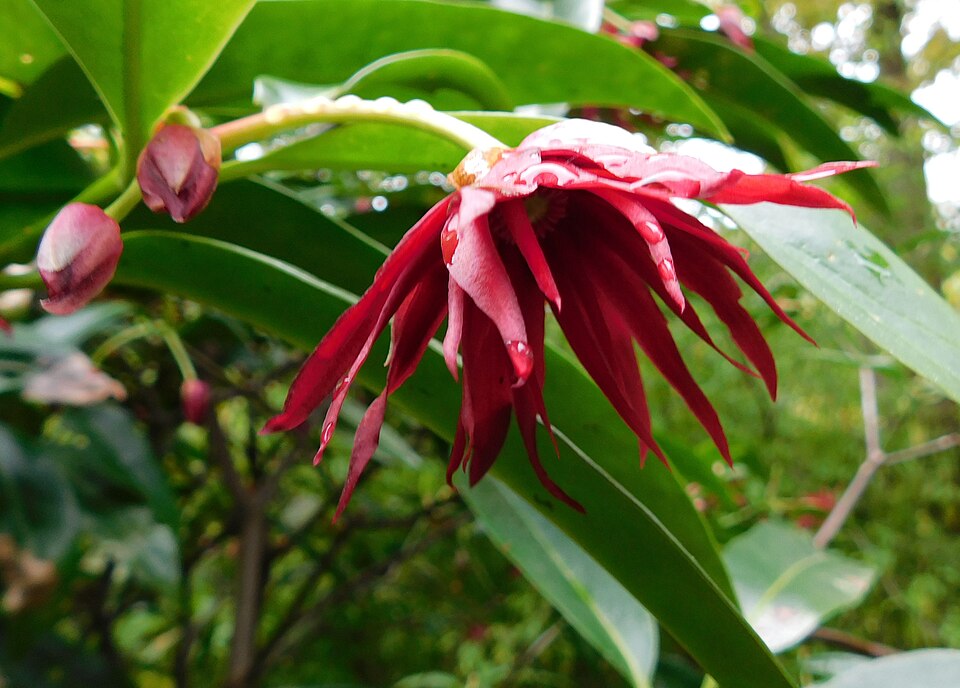
What makes Florida Anise unmistakable is its extraordinary spring flowers: dark maroon to deep red, star-shaped blooms with 20–30 narrow petals radiating from the center like a sea anemone. These curious, dark-colored flowers are among the most unusual in the native eastern flora. They appear in spring (April–May) amid the plant’s glossy, lance-shaped evergreen leaves and emit a distinctively fishy or slightly unpleasant scent — a characteristic that has earned the plant its less flattering common names (“stinking laurel,” “purple anise”) while also deterring deer. The leaves themselves are intensely fragrant when crushed, producing a strong anise-like aroma.
Florida Anise is a superb native plant for shaded, moist gardens throughout the Southeast. Its year-round glossy evergreen foliage, unusual flowers, dense habit, and exceptional deer resistance make it highly desirable for challenging shaded sites. It pairs naturally with mountain laurel, native azaleas, and ferns in woodland garden settings, and its dense, evergreen mass makes it excellent for screening and privacy hedges in appropriate conditions.
Identification
Florida Anise is a dense, multi-stemmed evergreen shrub reaching 6 to 10 feet tall, occasionally to 15 feet in optimal conditions. It spreads slowly by root suckers to form thickets. The overall form is upright and broadly rounded, with densely clothed stems that provide excellent year-round screening. The plant has a distinctly tropical appearance due to its large, lustrous leaves and unusual flowers.
Bark & Stems
The bark on older stems is grayish-brown and smooth to lightly textured. Young stems are green to reddish-brown, somewhat succulent in appearance, and carry the characteristic anise fragrance when broken. The stems are moderately stout. Root suckers emerge from the base of established plants, gradually creating a thicket of upright stems.
Leaves
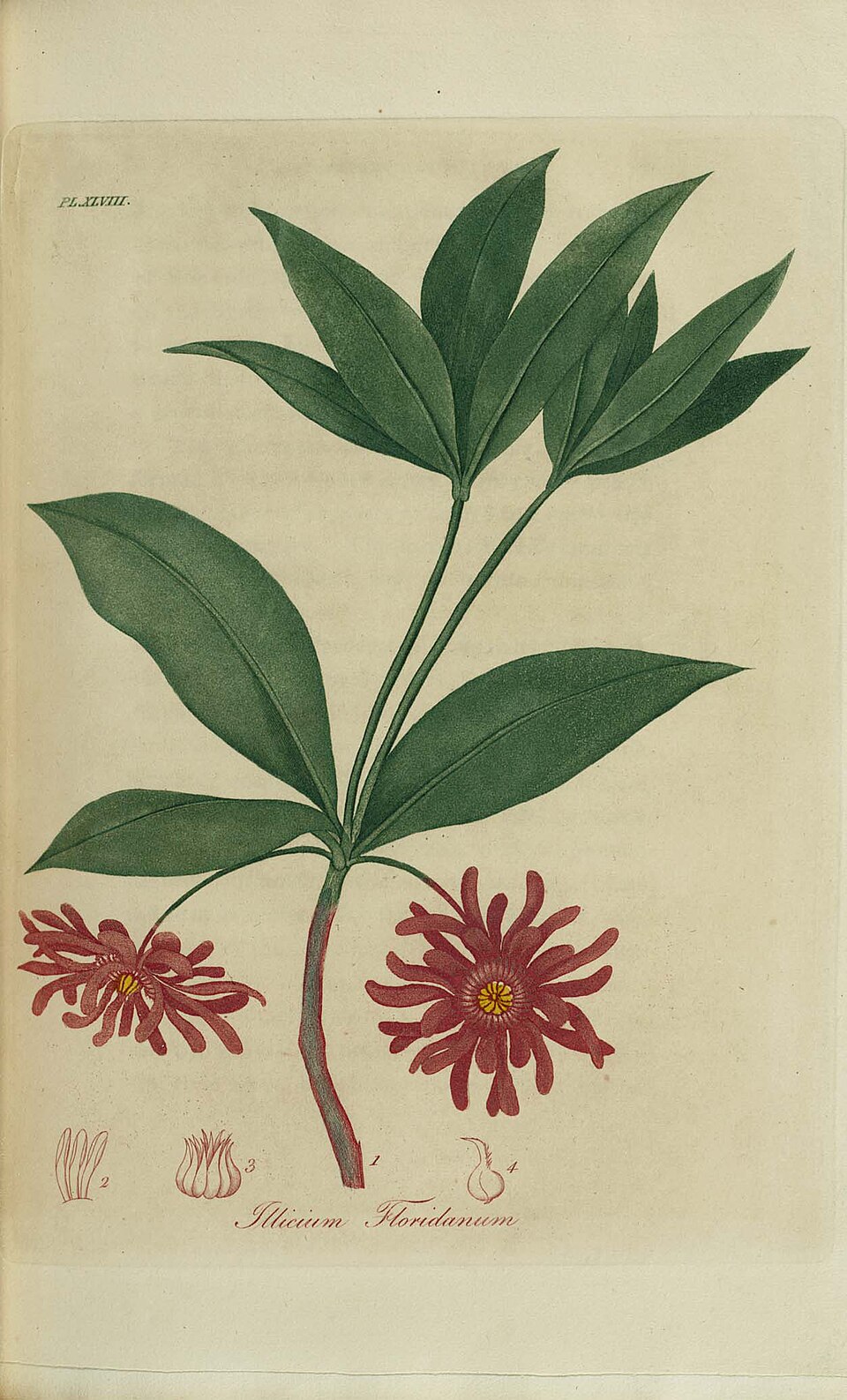
The leaves are alternate, simple, evergreen, and 3 to 6 inches long, lance-shaped to elliptic with an entire margin and pointed tip. The upper surface is a lustrous, deep dark green with a highly reflective quality; the underside is a paler matte green. Leaves are strongly aromatic when crushed — producing an intense anise-like scent from which the plant takes its common name. This aromatic quality is caused by essential oils that also function as a feeding deterrent for many herbivores, including deer.
Flowers & Fruit
The flowers are among the most unusual in the native southeastern flora. Each bloom is 1 to 1.5 inches across, with 20–34 narrow, strap-like tepals (not differentiated into petals and sepals) of deep maroon to dark red, occasionally pinkish. The central portion contains numerous yellow-green stamens and pistils arranged in a distinctive star pattern. Flowers appear in spring (April–May) in leaf axils on the previous season’s growth, often produced prolifically enough to make a striking visual display against the dark foliage. The scent of the flowers is unpleasant to humans but may attract the beetles that serve as pollinators. The fruit is a distinctive star-shaped aggregate of follicles (seedpods) that somewhat resembles the culinary star anise (Illicium verum), though the two species are entirely different.
Quick Facts
| Scientific Name | Illicium floridanum |
| Family | Schisandraceae (Star Anise) |
| Plant Type | Broadleaf Evergreen Shrub |
| Mature Height | 8 ft |
| Sun Exposure | Part Shade to Full Shade |
| Water Needs | Low to Moderate |
| Bloom Time | April – May |
| Flower Color | Dark maroon to deep red |
| USDA Hardiness Zones | 7–9 |
Native Range
Florida Anise has a relatively restricted native range confined to the coastal plain and gulf coast lowlands of the Deep South. It is native to the Florida panhandle and adjacent Georgia, southern Alabama, Mississippi, and southeastern Louisiana — with the greatest concentration of populations in the gulf-slope ravines and seepage slopes of the Florida Panhandle and adjacent Alabama and Mississippi. This geography reflects its preference for moist, sheltered, acidic habitats protected from temperature extremes.
In its natural habitat, Florida Anise grows in the understory of ravine forests and beech-magnolia forests — humid, sheltered ecosystems developed in the deep ravines and seepage slopes of the Gulf Coastal Plain. These forests are among the most floristically diverse habitats in the region and contain a number of disjunct Appalachian plant species alongside characteristic coastal plain species. Florida Anise grows alongside American beech (Fagus grandifolia), Southern magnolia (Magnolia grandiflora), Florida maple (Acer saccharum subsp. floridanum), mountain laurel (Kalmia latifolia), and native azaleas.
The species is considered rare in parts of its range and is protected in some states. The destruction of ravine forest habitats through development and alteration of hydrology has reduced populations in some areas. As a result, conservation-minded gardeners in the Southeast are encouraged to cultivate nursery-propagated Florida Anise rather than collecting wild plants. Planting it in appropriate garden conditions contributes to the horticultural and ecological awareness of this remarkable and botanically ancient species.
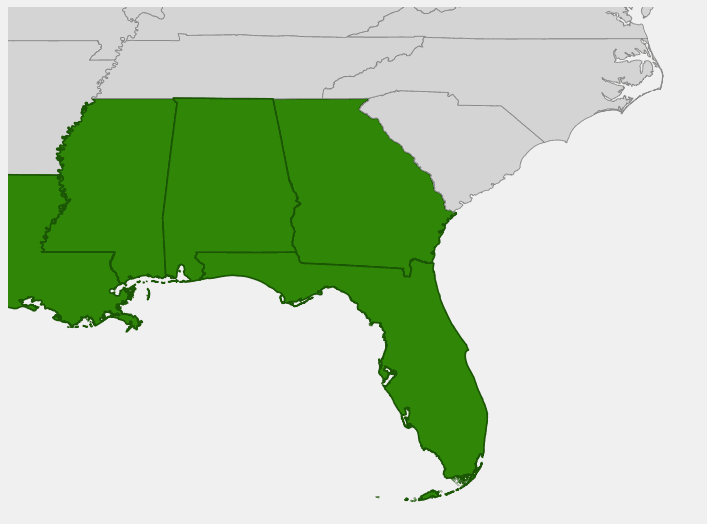
📋 Regional plant lists featuring Star Anise: Alabama, Georgia & Mississippi
Growing & Care Guide
Florida Anise is a surprisingly adaptable garden plant that performs well in shaded, moist sites throughout the Southeast and beyond. Given appropriate conditions, it is essentially maintenance-free and provides outstanding year-round value.
Light
Florida Anise thrives in partial to full shade — conditions that mimic the ravine forests where it grows naturally. In too much sun, the foliage may yellow or scorch, and the plant is more susceptible to stress and decline. It is one of the most shade-tolerant native evergreen shrubs for the Southeast, succeeding in the deep shade of mature trees where many other shrubs struggle. Dappled light or bright indirect light is ideal; direct morning sun is acceptable in cooler parts of its range.
Soil & Water
Moist, acidic, humus-rich soil is ideal — conditions approximating the rich ravine forest soils of its native habitat. It grows well in loamy or clay-loam soils with good organic matter content and a pH of 4.5–6.5. While it prefers moist conditions, it tolerates brief dry periods once established — its Low-to-Moderate water needs reflect the fact that it naturally grows in sites with consistent subsurface moisture rather than standing water. Avoid alkaline soils and locations with poor drainage. Mulching deeply with leaf mold or organic material is strongly recommended.
Planting Tips
Plant in fall or early spring. Florida Anise establishes slowly but becomes long-lived once settled. Space shrubs 4–6 feet apart for a dense screen, 6–8 feet for natural groupings. It pairs beautifully with mountain laurel, native azaleas (especially Rhododendron austrinum), ferns, and trilliums in shaded woodland garden designs. Always purchase nursery-propagated plants — wild collecting of this rare species is not appropriate and may be illegal.
Pruning & Maintenance
Florida Anise requires minimal pruning. Lightly trim in late spring after flowering to maintain desired size and shape. The plant responds well to selective pruning to remove older, woodier stems and encourage fresh new growth from the base. It is naturally pest- and disease-free in appropriate conditions. Its deer resistance reduces one of the most common maintenance challenges in southeastern gardens.
Landscape Uses
- Shaded foundation planting — superb evergreen shrub for the north side of buildings
- Privacy screen or hedge in shaded areas — maintains dense, evergreen mass
- Woodland garden specimen with outstanding year-round foliage and spring flowers
- Rain garden and moist shade plantings in sheltered locations
- Deer-resistant landscape — an excellent choice where deer pressure is high
- Native plant collections for botanical interest and unusual flower forms
Wildlife & Ecological Value
Florida Anise plays an important ecological role in the ravine forest communities where it naturally occurs, providing structure, cover, and food resources across seasons.
For Birds
The dense, evergreen mass of Florida Anise provides exceptional year-round cover for birds — nesting habitat, roosting cover, and escape from predators. The fruit is consumed by some birds, though the plant is not a primary fruiting plant for wildlife. The insect community supported by the plant’s canopy and leaf litter is a more important food source for insectivorous birds, particularly warblers and vireos that forage through dense evergreen understory.
For Pollinators
Florida Anise flowers are pollinated primarily by beetles — a primitive pollination system that reflects the ancient botanical lineage of the genus Illicium. The unpleasant scent of the flowers attracts beetles that may be seeking decaying organic matter. While not a major bee-pollinated plant, it contributes to habitat diversity and provides nesting and foraging microhabitats for various invertebrates in the forest floor and lower shrub layer.
For Mammals
The strong aromatic compounds in the leaves and stems make Florida Anise highly deer-resistant — a significant ecological function and garden advantage. Deer avoid it reliably, making it one of the few native evergreen shrubs that provides excellent cover without being grazed away. Small mammals use the dense evergreen thickets for cover and nesting.
Ecosystem Role
In ravine forest communities, Florida Anise is a structural keystone of the shrub layer. Its dense, shade-tolerant evergreen mass contributes to the year-round canopy complexity that characterizes these rare and diverse forest types. As a representative of one of the most ancient flowering plant lineages — the magnolia-relative Schisandraceae — Florida Anise carries significant botanical and evolutionary interest, representing a living link to the origins of angiosperm diversity in the Gulf Coast region.
Cultural & Historical Uses
While Florida Anise (Illicium floridanum) is the North American species, the genus Illicium has a rich ethnobotanical history worldwide. The Chinese star anise (Illicium verum) is the source of the familiar culinary spice and anise-scented essential oil. Florida Anise is NOT edible and is in fact toxic — all parts of the plant contain anisatin and related compounds that cause seizures and other neurological effects. Despite the superficial resemblance of its fruit to edible star anise, Illicium floridanum should never be consumed.
Indigenous peoples of the Gulf Coast likely recognized the strongly aromatic nature of Florida Anise leaves and used the plant in ceremonial or medicinal contexts, though specific detailed ethnobotanical records are limited. The essential oils in the leaves — which produce the characteristic anise-like scent when crushed — have been studied for their complex chemistry, which includes not only anise-scented compounds but also the neurotoxic sesquiterpene anisatin. This chemical complexity reflects the plant’s ancient botanical lineage and its development of chemical defenses against herbivores.
In horticulture, Florida Anise has been cultivated as an ornamental since at least the 18th century, when it was introduced to European botanical gardens as a botanical curiosity from the American Southeast. It remains a plant that generates significant horticultural interest due to its exotic appearance, unusual flowers, and excellent garden performance in shade. The cultivar ‘Halley’s Comet’ and other selections have been developed for the ornamental trade, featuring improved flowering or foliage characteristics.
Frequently Asked Questions
Is Florida Anise the same as the star anise used in cooking?
No. Culinary star anise comes from Illicium verum, a Chinese species. Florida Anise (Illicium floridanum) is North American and is NOT edible — all parts of the plant are toxic. Despite the family resemblance (both are in the genus Illicium) and the similar fruit shape, never consume any part of Florida Anise.
Why do the flowers smell bad?
The flowers emit a fishy or slightly unpleasant odor to attract beetles for pollination — a primitive pollination system associated with the ancient lineage of the plant. The leaves, by contrast, smell pleasantly of anise when crushed. Many people find the flowers striking despite the scent, especially when viewed up close.
Is Florida Anise truly deer resistant?
Yes — it is among the most reliably deer-resistant native evergreen shrubs for the Southeast. The aromatic compounds in the leaves and stems deter deer effectively. This makes it an outstanding choice for landscapes with high deer pressure where maintaining evergreen cover is challenging.
Can Florida Anise grow in Zone 6?
It can survive in sheltered Zone 6 locations, particularly with protection from winter winds and in favorable microclimates. However, it is best suited to Zones 7–9 where it occurs naturally. In Zone 6, plant it in a protected south-facing location and mulch heavily in winter.
How large does Florida Anise get in the garden?
In cultivation, it typically reaches 6–8 feet tall and spreads 4–6 feet in most garden settings, though old specimens in optimal conditions can reach 10–12 feet. Growth rate is moderate — expect 12–18 inches per year under good conditions. Pruning can easily control size and shape.

Looking for a nursery that carries Star Anise?
Browse our native plant nursery directory: Alabama · Georgia · Mississippi