Sticky Geranium (Geranium viscosissimum)
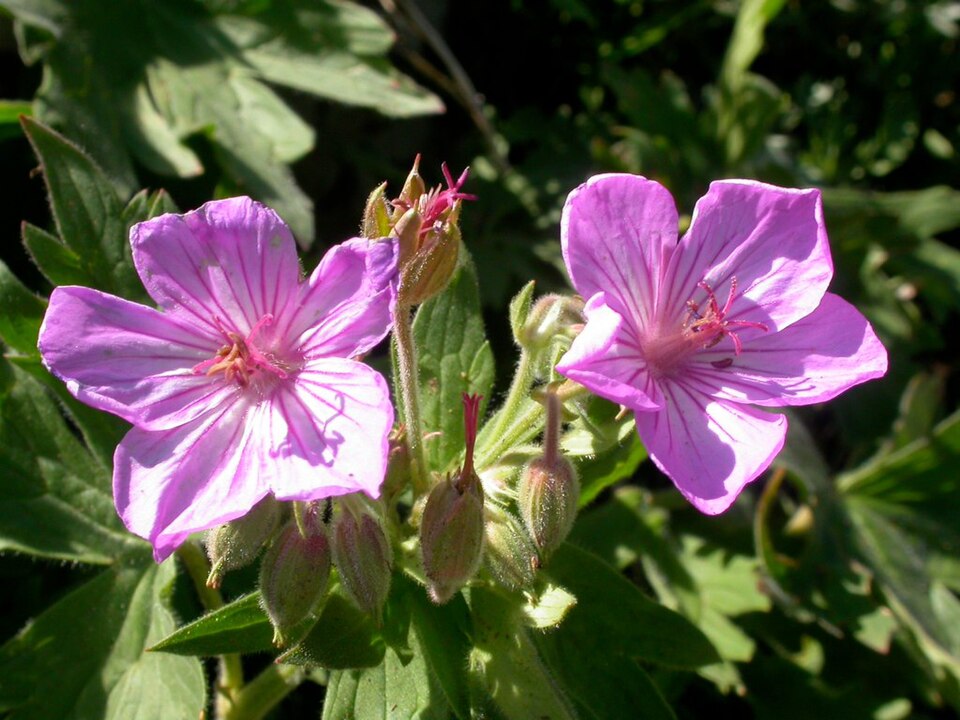
Geranium viscosissimum, commonly known as Sticky Geranium or Sticky Purple Geranium, is one of the most beautiful and ecologically valuable wildflowers of the Rocky Mountain West. This robust native perennial wildflower graces mountain meadows, forest openings, and shrubby hillsides from northern California through the Pacific Northwest and into the northern Rocky Mountains, producing large, showy pink-to-lavender flowers with distinctive dark purple veins from late spring through mid-summer. The plant’s common name derives from the sticky glandular hairs that cover the stems and foliage — a feature that traps small insects and provides a modest defense against leaf-eating pests.
Sticky Geranium is a plant of remarkable versatility, thriving in full sun or partial shade and tolerating a range of soil conditions from dry rocky slopes to moderately moist meadow soils. It is found at elevations from valley bottoms to subalpine zones, making it one of the most widely encountered wildflowers in mountain states like Montana and Wyoming. In these states, it blooms prolifically in June and July, creating spectacular displays in undisturbed meadows and open forests. The flowers are critical resources for many native bees and butterflies during these peak bloom months.
Despite its beauty and ecological importance, Sticky Geranium remains underutilized in native plant gardens, overshadowed by showier introduced species. It is, however, an excellent garden plant — long-lived, naturally pest-resistant, attractive to pollinators, and producing attractive foliage that persists attractively through the growing season even after flowering ends. It deserves much wider use in rocky mountain region native plant gardens and restoration projects.
Identification
Sticky Geranium is an erect to sprawling perennial, typically growing 1.5 to 3 feet tall and equally wide from a strong taproot and woody crown. Multiple stems arise from the crown, and the entire above-ground plant — stems, leaves, and sepals — is covered with conspicuous glandular hairs that are sticky to the touch, giving the plant its common name.
Leaves
The leaves are deeply palmately divided, typically with 5 to 7 lobes, each lobe further toothed or incised at the tip, giving the leaf a complex, attractive shape reminiscent of a maple leaf but more deeply cut. Leaves are 2 to 4 inches wide, medium to dark green above with a somewhat rough texture from glandular hairs. Basal leaves are long-stalked; stem leaves are opposite and become sessile (stalkless) near the top of the plant. In fall, the foliage often turns attractive shades of orange and red before dying back.
Flowers & Fruit
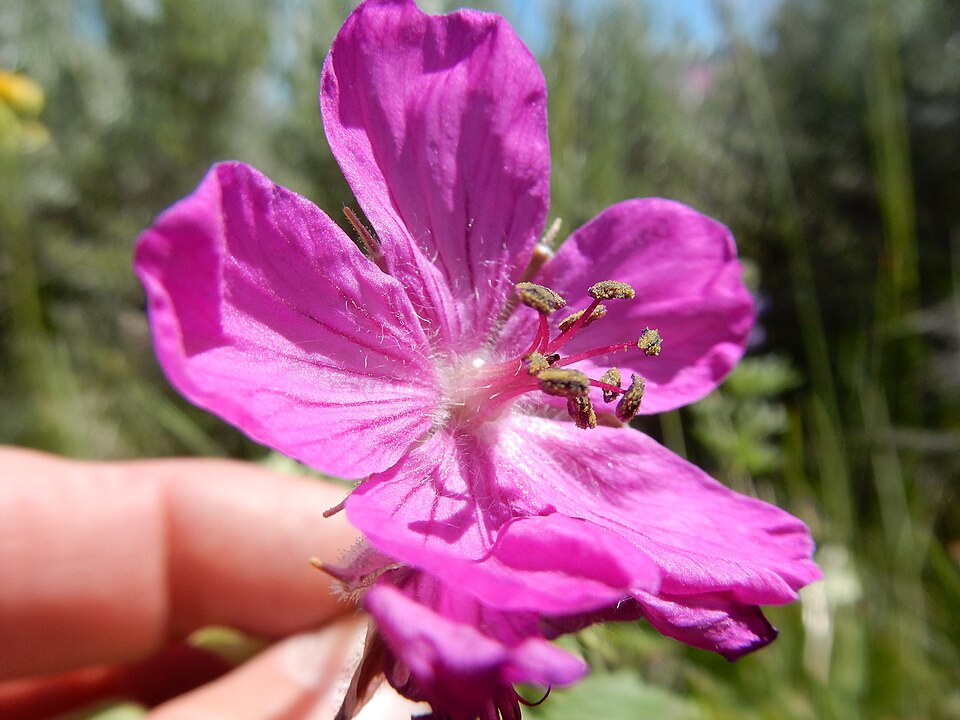
The flowers are the plant’s most striking feature: five broad petals, typically bright pink to pale lavender-pink (occasionally nearly white), each petal with distinctive darker pink or purple veins that act as nectar guides for pollinators. Individual flowers are 1 to 1.5 inches across — large for a geranium — and held in loose pairs at the tips of branching stems. Flowering occurs from late May through July at lower elevations, extending into August at high elevations.
The fruit is a distinctive long-beaked capsule — the “crane’s bill” for which the geranium family (Geraniaceae) is named. Each capsule has 5 chambers and a long, upward-pointing beak 1 to 1.5 inches long. At maturity, the beak splits explosively, propelling the seeds several feet from the parent plant. The ripe capsules are attractive in their own right and make interesting additions to dried flower arrangements.
Quick Facts
| Scientific Name | Geranium viscosissimum |
| Family | Geraniaceae (Geranium) |
| Plant Type | Native Perennial Wildflower |
| Mature Height | 2–3 ft |
| Sun Exposure | Part Shade to Full Sun |
| Water Needs | Moderate |
| Bloom Time | May – August (elevation-dependent) |
| Flower Color | Pink to lavender-pink with dark purple veins |
| Soil Type | Well-drained; loamy to rocky; tolerates dry to moderate moisture |
| Notable Feature | Sticky glandular hairs on all above-ground parts |
| USDA Hardiness Zones | 3–8 |
Native Range
Sticky Geranium is native to western North America, distributed primarily in the Rocky Mountain and Pacific Northwest regions. It occurs from southern British Columbia south through Idaho, Montana, Wyoming, Colorado, and Utah to Nevada, California, Oregon, and Washington. It is one of the more common wildflowers in the montane and subalpine zones of the northern Rocky Mountains, where it grows abundantly in disturbed meadows, clearcuts, roadsides, and open forest understories.
In Montana and Wyoming, Sticky Geranium is found throughout the mountainous regions and adjacent foothills, typically in areas with moderate moisture and good drainage. It grows along forest edges, in aspen groves, in dry to moist mountain meadows, and on open slopes with big sagebrush at lower elevations. Elevational range spans from around 2,500 feet in valley settings to above 9,000 feet in subalpine habitats — one of the widest vertical ranges of any native wildflower in the region.
Sticky Geranium is commonly associated with other mountain wildflowers including arrowleaf balsamroot (Balsamorhiza sagittata), lupines (Lupinus spp.), Indian paintbrush (Castilleja spp.), blue flax (Linum lewisii), and yarrow (Achillea millefolium). It frequently colonizes disturbed sites — roadsides, burned areas, and logged forests — where it can be one of the most abundant early successional wildflowers for several decades after disturbance.
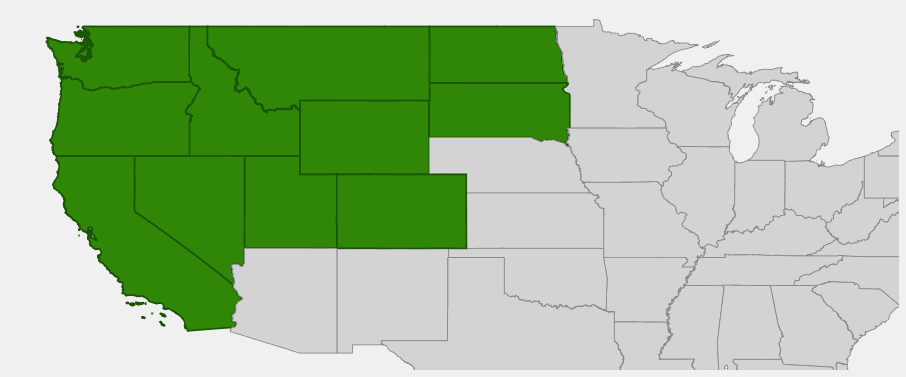
📋 Regional plant lists featuring Sticky Geranium: Montana & Wyoming
Growing & Care Guide
Sticky Geranium is a rewarding and relatively easy native wildflower to grow in the appropriate climate. It is best suited to Rocky Mountain and Pacific Northwest gardens in USDA Zones 3–8, where cool-season moisture patterns match its natural requirements. Once established, it is long-lived, self-seeding, and largely maintenance-free.
Light
Sticky Geranium is highly adaptable to light conditions, growing successfully in part shade to full sun. In hotter, lower-elevation sites, afternoon shade is beneficial — the flowers last longer and the foliage stays fresher through the summer heat. In cooler mountain climates, full sun produces the most prolific flowering. Avoid deep, dense shade — plants will be spindly and flower poorly without adequate light.
Soil & Water
Sticky Geranium grows well in a range of well-drained soils, from lean, rocky substrates to moderately fertile loam. It does not tolerate wet or poorly drained conditions. Moderate moisture is ideal during the growing season — consistent but not excessive. In hot, dry climates, supplemental irrigation during summer drought will extend the bloom period and prevent premature die-back. In moist mountain climates, no supplemental water is typically needed after establishment.
Planting Tips
Plant from container stock or direct-seed in fall or early spring. Fall seeding mimics natural dispersal and allows seeds to stratify over winter for spring germination. Space plants 18 to 24 inches apart — they will spread slowly via reseeding to fill in gaps over time. Sticky Geranium grows from a deep taproot and does not transplant well once established, so choose planting locations carefully. Mulching with wood chips or gravel helps retain moisture and suppress weeds during establishment.
Pruning & Maintenance
Sticky Geranium requires minimal maintenance. After the main flush of bloom, cut plants back by one-third to encourage a second flush of flowering in late summer. In fall, leave the seed heads — the crane’s-bill capsules provide interest and allow self-seeding for colony establishment. Cut back old stems in early spring before new growth emerges. The plant is generally pest- and disease-resistant; the sticky glandular hairs deter many leaf-chewing insects.
Landscape Uses
- Mountain meadow gardens — combines beautifully with arrowleaf balsamroot, lupines, and paintbrush
- Forest edge plantings — thrives in the transition zone between open sun and tree shade
- Pollinator gardens — excellent nectar source for native bees and butterflies
- Rock gardens — attractive with rocky mulch in well-drained sites
- Naturalistic borders — long bloom period with attractive foliage
- Revegetation of disturbed sites — fast-establishing in appropriate climates
Wildlife & Ecological Value
Sticky Geranium provides exceptional ecological value in Rocky Mountain ecosystems, primarily through its abundant, nectar-rich flowers that support a diverse community of pollinators throughout its long bloom season.
For Birds
The seeds are consumed by Mourning Doves, various sparrows, and small finches in late summer and fall. The dense clumps of foliage provide nesting material and low-level cover for ground-feeding birds. In burned or disturbed areas, where Sticky Geranium is often one of the first plants to reestablish, it provides critical early-succession cover for bird species that prefer open habitats.
For Mammals
White-tailed and mule deer browse the foliage, though the sticky hairs make it somewhat less palatable than smooth-leaved alternatives. Black bears occasionally consume the flowers and foliage in early summer. Small mammals including deer mice and voles use the dense clumps for cover and consume fallen seeds.
For Pollinators
Sticky Geranium is an outstanding pollinator plant, particularly important for native bees. The large, open flowers with prominent nectar guides are visited by bumblebees (several Bombus species), sweat bees (Halictidae), and various native mining bees (Andrenidae). Several native bee species are specialist visitors (oligoleges) on geranium species, meaning they depend on Geranium pollen for feeding their larvae. Butterflies including Painted Ladies, Western Tiger Swallowtails, and fritillaries regularly visit the flowers. The plant’s extended bloom season — often 6 to 8 weeks — makes it especially valuable compared to wildflowers with shorter blooming windows.
Ecosystem Role
In mountain meadows and forest openings, Sticky Geranium is an important early-succession species that establishes quickly after disturbance and provides initial soil stabilization and nectar resources while slower-establishing shrubs and trees recover. Its deep taproot improves soil structure and accesses subsoil moisture, contributing to the plant community’s resilience during drought. In the context of climate change, Sticky Geranium’s wide elevational range and ability to establish on disturbed sites makes it a climate-resilient species well-suited for restoration work across a broad range of future conditions.
Cultural & Historical Uses
Sticky Geranium has a rich history of use among Indigenous peoples of the Rocky Mountain region. The Blackfoot people used a tea made from the roots and leaves to treat sore throats and colds, and a poultice of the mashed leaves was applied to wounds, bruises, and skin irritations. The plant’s astringent properties — derived from tannins in the leaves and roots — made it a useful medicinal plant across many nations.
The Shoshone and Paiute peoples used the roots of Geranium viscosissimum to treat gastrointestinal complaints, and the plant was used in various preparations to treat venereal diseases in several Pacific Northwest nations. The Nez Perce used root tea as a wash for eye infections and inflammations. In all of these applications, the astringent and antimicrobial properties of the plant’s chemical compounds were being exploited — properties that modern phytochemical research has confirmed are due to the plant’s significant tannin and flavonoid content.
Some Indigenous groups also used the stems and leaves of Sticky Geranium for their insect-trapping properties — rubbing the sticky stems on skin or clothing to catch and remove lice or other crawling insects. The geranium family as a whole has a long history in European herbal medicine, and Geranium viscosissimum shares many of the medicinal properties attributed to the better-known European cranesbills. Today, Sticky Geranium is primarily appreciated for its ornamental and ecological value, though herbalists and foragers still recognize its medicinal properties.
Frequently Asked Questions
Why is it called Sticky Geranium?
The plant is named for the dense covering of glandular hairs on its stems, leaves, and flower sepals. These hairs are sticky to the touch and trap small insects. The Latin species name viscosissimum — meaning “very sticky” — reflects this characteristic. The glandular hairs may help deter leaf-chewing insects and may provide limited nutrition from trapped invertebrates.
Is Sticky Geranium the same as common garden geranium (Pelargonium)?
No. The colorful “geraniums” sold as annual bedding plants are actually Pelargonium species from South Africa, not true geraniums. True geraniums (Geranium spp.) are a distinct genus. Sticky Geranium (Geranium viscosissimum) is a hardy native perennial wildflower very different in appearance and growth habits from the tender Pelargoniums sold in garden centers.
Will Sticky Geranium grow at lower elevations?
Yes, with some care. Sticky Geranium can be grown at lower elevations outside its natural mountain range, but it performs best in climates with cool summers and moderate moisture. In hot, humid climates it often struggles. In the Pacific Northwest lowlands, it can succeed with afternoon shade and good drainage. In the continental US, it works well in cooler northern gardens (Zones 3–6).
Does Sticky Geranium spread aggressively?
Sticky Geranium spreads primarily by seed, not by rhizomes or runners. Under favorable conditions, it will self-seed and gradually expand its presence in the garden, but it does not typically become aggressive or weedy. Remove spent flower heads before seed dispersal if you want to limit spread. The plant forms a clump that enlarges slowly over time but does not produce spreading runners.
How do you tell Sticky Geranium from Richardson’s Geranium?
Both are native Rocky Mountain geraniums, but they can be distinguished by flower color and habitat. Sticky Geranium (G. viscosissimum) has bright pink to lavender-pink flowers with dark veins. Richardson’s Geranium (G. richardsonii) has white to pale pink flowers with much lighter or absent veining. Both have sticky hairs, but Sticky Geranium is covered with noticeably more abundant glandular hairs. Richardson’s Geranium typically prefers moister, shadier habitats.