
Tree Seaside Tansy (Borrichia arborescens)
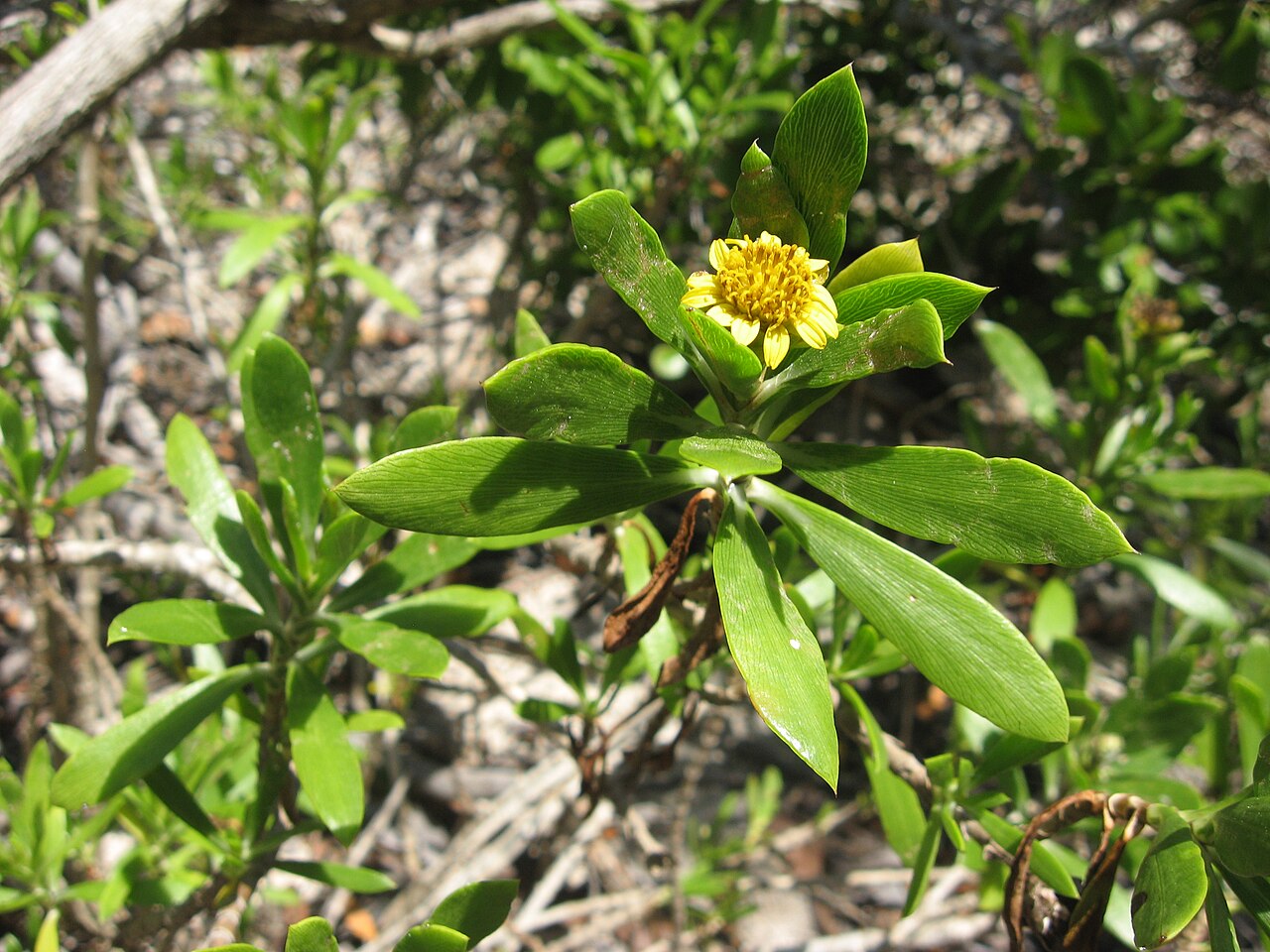
Borrichia arborescens, called Tree Seaside Tansy by USDA and tree seaside oxeye in the Atlas of Florida Plants, is a sturdy, evergreen shrub of tropical shorelines. In the United States it grows wild only in southern Florida, mainly in the Florida Keys and along the southern coast of the mainland. It reaches about 2 to 5 feet tall and produces yellow daisy-like flower heads about an inch across nearly all year.
It is a close relative of the more widespread Sea Oxeye Daisy (Borrichia frutescens), which grows in salt marshes from Virginia to Texas. The two are easy to tell apart: tree seaside tansy has smooth, bright green leaves, while sea oxeye has silvery-gray, fuzzy leaves, often with small teeth. Where they grow together in South Florida they sometimes hybridize, producing plants with intermediate features.
Tree seaside tansy belongs to the aster family (Asteraceae). It tolerates salt spray, salty soil, wind, drought and occasional tidal flooding, which makes it one of the best native shrubs for seaside gardens in South Florida. It is regularly available from native nurseries in the region.
Identification
Tree seaside tansy is easy to recognize as a Borrichia by its thick, opposite leaves and yellow, oxeye-like flowers. The main question is whether you are looking at it, sea oxeye or a hybrid.
Stems & Habit
It is a much-branched, rounded shrub, usually 2 to 5 feet tall and as wide or wider, with stiff, woody stems that are leafy toward the tips. Older plants become dense mounds, and stems that touch moist ground can root, so plants slowly spread into thickets.
Leaves
The leaves are opposite, thick and somewhat fleshy, narrowly elliptic to spoon-shaped, about 1 to 3 inches long. They are bright to dark green and smooth (or nearly hairless) on both surfaces, usually with smooth edges. This is the key difference from sea oxeye, whose leaves are densely covered in silvery hairs and often toothed near the base. Plants with grayish but only partly hairy leaves may be hybrids, sometimes called Borrichia × cubana.
Flowers
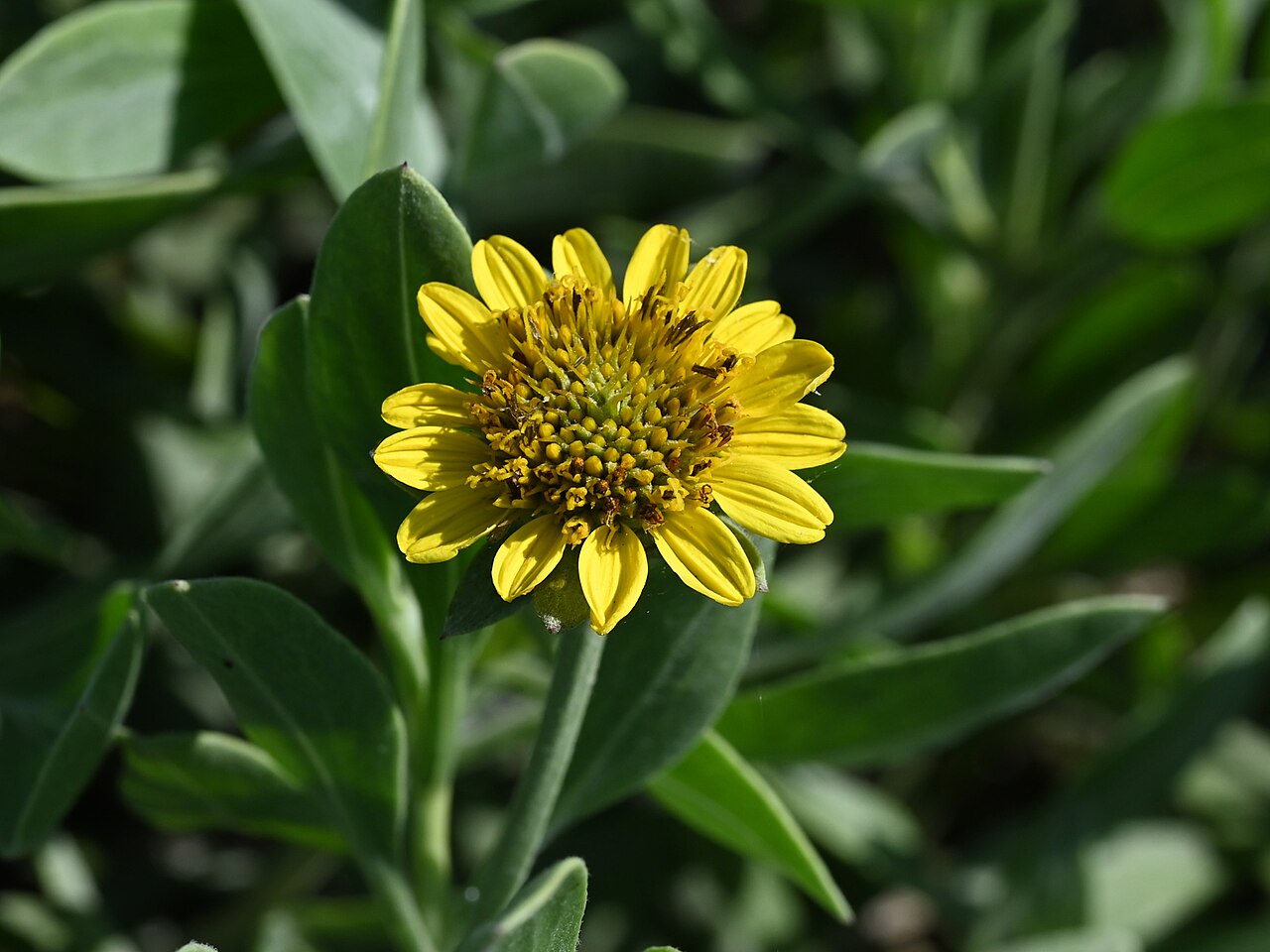
The flower heads are borne singly at the ends of branches on short stalks. Each head is about ¾ to 1¼ inches across, with 7 to 15 short yellow ray flowers, often notched at the tip, around a yellow to yellow-brown disk. The bracts around the head are blunt or only slightly pointed; those of sea oxeye end in stiff, sharp points. Flowering can occur in every month in South Florida, with a peak in late spring and summer.
Fruit & Seeds
After flowering the head becomes a firm, rounded, brown seed head studded with stiff chaffy scales. It contains small, angled achenes (cypselae) with a short crown at the top, which fall near the parent plant or are carried by water. Dry seed heads often remain on the plant for months.
Quick Facts
| Scientific Name | Borrichia arborescens |
| Family | Asteraceae (aster family) |
| Plant Type | Evergreen shrub |
| Mature Height | 2–5 ft |
| Mature Spread | 3–6 ft; slowly forms thickets |
| Growth Rate | Moderate |
| Sun Exposure | Full sun |
| Water Needs | Low; very drought tolerant, also tolerates brief tidal flooding |
| Soil Type | Sand, marl, crushed limestone and rocky coastal soils |
| Soil pH | About 7.0–8.5 (tolerates alkaline, salty soils) |
| Bloom Time | Year-round, peaking in late spring and summer |
| Flower Color | Yellow rays with a yellow to brownish disk |
| Fall Color | None; evergreen |
| Fruit | Round, bristly seed head with small achenes |
| Deer Resistant | Moderate |
| USDA Hardiness Zones | 10–11 |
Native Range
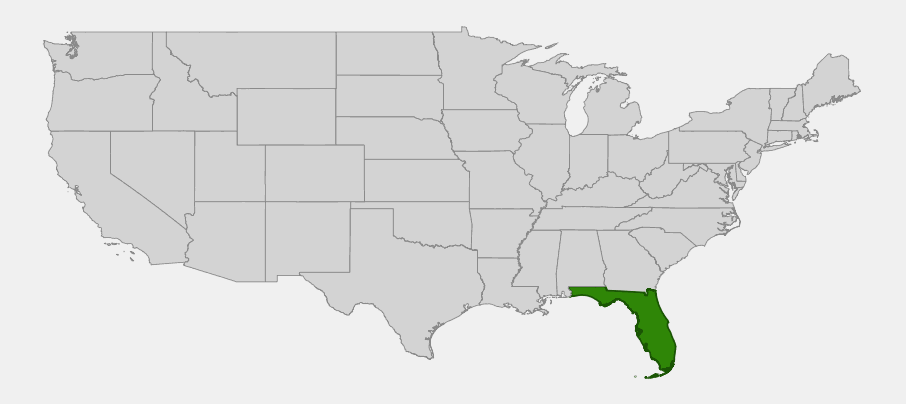
In the United States, USDA PLANTS records tree seaside tansy as native in Florida, Puerto Rico and the U.S. Virgin Islands. In Florida it is a plant of the southern coasts, especially the Florida Keys and the coastal mainland of Monroe and Miami-Dade Counties, including the Flamingo area of Everglades National Park. Beyond the United States it ranges through the Bahamas, the Greater and Lesser Antilles, and parts of the Caribbean coast of Mexico and Central America.
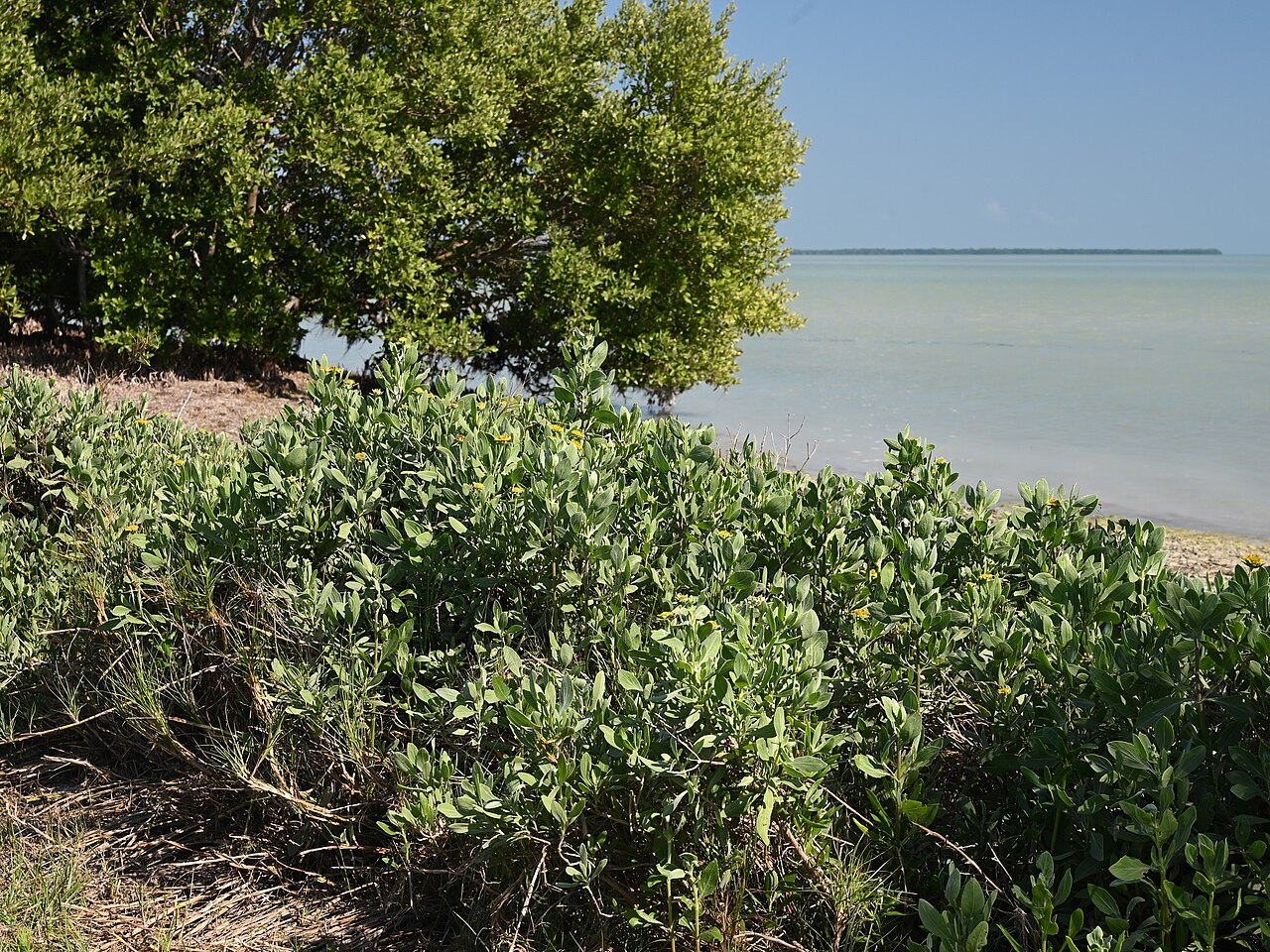
It grows on the upper edges of beaches and dunes, coastal rock barrens, the landward fringes of mangrove swamps, salt flats, and coastal hammock edges, typically within reach of salt spray. It often grows with buttonwood, saltwort, sea purslane, bay cedar and seashore dropseed.
Tree seaside tansy is not state-listed and is fairly common within its limited Florida range. Like other coastal plants, it is affected by development of the shoreline, invasive shrubs, and storm surge, from which it usually recovers by resprouting.
📋 Regional plant lists featuring Tree Seaside Tansy: North & South Florida
Growing & Care Guide
Tree seaside tansy is one of the easiest and most dependable native shrubs for coastal gardens in South Florida. It is regularly available from native plant nurseries in Miami-Dade, Broward, Palm Beach and Monroe Counties. It is hardy only in about zones 10 and 11; a hard frost damages it, though established plants usually resprout.
Light
Plant it in full sun. In shade it becomes leggy and flowers sparsely.
Soil & Water
It grows in nearly any well-drained soil, including beach sand, marl and crushed limestone fill, and tolerates salty soil and salt spray. Water regularly for the first few months after planting; afterward it needs no irrigation in South Florida. It also tolerates occasional saltwater flooding, which makes it useful along seawalls and canals.
Planting Tips
Space plants 3 to 4 feet apart for a low informal hedge or mass planting. It works well as a front-line shrub facing the ocean, in parking-lot islands, and in hot, dry spots where other shrubs struggle. Avoid fertilizer, which produces soft, sprawling growth.
Pruning & Maintenance
Prune lightly once or twice a year to keep it compact, removing old seed heads if you prefer a tidier look. It can be sheared into a low hedge but looks best and flowers more when pruned informally. Old, woody plants can be cut back hard in spring and will regrow.
Propagation
It roots readily from stem cuttings taken in spring or summer, and branches that touch the ground can be layered. Seed from ripe heads also germinates, though cuttings are faster.
Landscape Uses
- Seaside gardens: a front-line shrub that handles salt spray, wind and sand
- Low hedges and mass plantings: dense, evergreen and easy to keep 2–4 ft tall
- Butterfly gardens: a year-round nectar source in South Florida
- Shoreline and dune restoration: on upper beaches, rock barrens and mangrove fringes within its range
- Hot, dry urban sites: parking lots, medians and streetside beds near the coast
Wildlife & Ecological Value
Because it flowers almost continuously, tree seaside tansy is a reliable source of food for coastal insects in South Florida, and its thickets give cover to small animals on otherwise exposed shores.
For Pollinators
The flowers are visited by many bees, wasps, flies and butterflies, including hairstreaks, skippers and sulphurs. Small butterflies often perch on the flower heads to drink nectar from the disk flowers.
For Birds
Its dense branches provide cover for small birds such as the Florida prairie warbler, which lives in coastal mangroves and shrub thickets. Migrating songbirds forage for insects in coastal shrubs like this in spring and fall.
For Mammals
It is not an important food plant for mammals. In the lower Keys, coastal shrub thickets provide cover for small mammals and, where they occur, Key deer.
Ecosystem Role
Tree seaside tansy helps stabilize sand and rocky soil on upper beaches and mangrove edges, where few other plants grow. It traps blowing sand and leaf litter and slowly builds soil. It recovers from storm damage by resprouting from the base, making it an important plant in the natural recovery of coastlines after hurricanes.
Cultural & Historical Uses
The genus Borrichia honors Ole Borch (Olaus Borrichius), a seventeenth-century Danish physician, chemist and botanist. Tree seaside tansy was first described as Buphthalmum arborescens by Linnaeus in the eighteenth century and later moved to Borrichia by Augustin Pyramus de Candolle.
The common names reflect old comparisons with European plants: “oxeye” refers to the oxeye daisies (Buphthalmum, literally “ox eye” in Greek), and “tansy” to the yellow-flowered European tansy. Neither is a close relative. Across the Caribbean, Borrichia species have been used in folk medicine, but such uses are not well documented for Florida.
In South Florida, tree seaside tansy has become a staple of native landscaping on barrier islands and in the Keys, where it replaces non-native hedges with a plant that survives salt, storms and drought and supports local wildlife.
Frequently Asked Questions
What is the difference between tree seaside tansy and sea oxeye daisy?
Tree seaside tansy (Borrichia arborescens) has smooth, bright green leaves and blunt flower bracts, and grows in South Florida and the Caribbean. Sea Oxeye Daisy (B. frutescens) has fuzzy, silvery-gray leaves, sharp-tipped bracts and a much wider range along the Atlantic and Gulf coasts. Hybrids with intermediate leaves occur where they meet.
Can tree seaside tansy grow in north or central Florida?
It is a tropical plant hardy only in about zones 10–11. It can be grown in protected coastal sites a little farther north but may be killed back by frost. Sea oxeye daisy is a better choice for colder areas.
Is it salt tolerant?
Yes. It tolerates salt spray, salty soil and brief flooding by seawater, and it is one of the best native shrubs for the first row of plants facing the ocean.
Does it bloom all year?
In South Florida it can flower in any month, with the heaviest bloom in late spring and summer.
Is tree seaside tansy invasive?
No. It is native to South Florida. It can slowly spread by rooting stems and seedlings in a garden, but it is easy to control by pruning.

Looking for a nursery that carries Tree Seaside Tansy?
Browse our native plant nursery directory: Florida