
Turks Cap Lily (Lilium superbum)
Lilium superbum, commonly known as Turks Cap Lily or American Turks-cap Lily, is one of the most spectacular native wildflowers of eastern North America, producing towering spikes of brilliant orange and yellow flowers that can reach 8 feet tall in ideal conditions. This member of the Liliaceae (lily) family earned its distinctive name from the recurved (backward-curving) petals that form a “turban” shape, resembling the traditional Turkish cap or turban, with the flowers appearing to dangle like exotic ornaments from the tall, sturdy stems.
Growing naturally in wet meadows, stream edges, and moist woodland openings, Turks Cap Lily is a true giant among wildflowers, typically reaching 4 to 6 feet tall in garden settings but capable of growing much taller in optimal wild conditions. Each plant can produce 10 to 40 nodding orange flowers, each adorned with dark purple-brown spots and prominent stamens, creating one of the most breathtaking displays in the native flora. The flowers bloom in midsummer, providing crucial nectar for butterflies, bees, and hummingbirds during the peak growing season.
What makes Turks Cap Lily particularly valuable in modern landscapes is its ability to bring dramatic height, color, and wildlife value to moist garden areas that can be challenging to plant effectively. This native gem requires specific conditions to thrive — morning sun with afternoon shade and consistently moist soil — but rewards patient gardeners with an unparalleled display that serves as the crown jewel of any native plant garden.
Identification
Turks Cap Lily is unmistakable when in bloom, producing tall, unbranched stems that can reach 4 to 6 feet in cultivation (up to 8 feet in ideal wild conditions). The entire plant has an architectural, statuesque quality that makes it a dramatic focal point in any garden setting.
Stems
The stem is tall, straight, and sturdy, typically green to purple-green in color and smooth in texture. Unlike many lilies, the stem is unbranched and grows directly from a large, white, scaly bulb buried deep in the soil. The stem is strong enough to support the weight of numerous large flowers without staking, though very tall specimens may benefit from protection from strong winds.
Leaves
The leaves are arranged in distinctive whorls (circular arrangements) around the stem, with 3 to 8 leaves per whorl and typically 3 to 5 whorls per stem. Individual leaves are lance-shaped, 2 to 6 inches long and ½ to 1½ inches wide, with smooth margins and parallel venation typical of monocots. The leaves are bright green, smooth-textured, and have a distinctive three-nerved pattern. The whorled leaf arrangement is one of the plant’s most identifying features even before flowering.
Flowers
The flowers are the plant’s glory and most distinctive feature. Each bloom is 2 to 4 inches across when fully open, with six petals that curve strongly backward (recurved) to create the characteristic “turk’s cap” shape. The petals are typically bright orange to orange-red with darker orange or red coloring at the base, and are heavily spotted with dark purple-brown or maroon spots that become more numerous toward the center. Six prominent stamens extend beyond the petals, with dark reddish-brown anthers that add to the flower’s exotic appearance. The flowers are nodding (hanging downward) and are arranged in a loose, pyramid-shaped cluster at the top of the stem. A single mature plant can produce 10 to 40 flowers, creating a spectacular display that lasts 2 to 3 weeks in midsummer.
Fruit & Seeds
Following successful pollination, the flowers develop into upright, 6-sided seed capsules that are 1 to 2 inches long and green when young, turning brown at maturity. The capsules split open along six lines to reveal numerous flat, brown seeds arranged in overlapping layers. The seeds are wind-dispersed and require specific conditions for germination, including a period of cold stratification.
Quick Facts
| Scientific Name | Lilium superbum |
| Family | Liliaceae (Lily) |
| Plant Type | Herbaceous Perennial (from bulb) |
| Mature Height | 4–6 ft |
| Sun Exposure | Full Sun to Part Shade |
| Water Needs | Moderate |
| Bloom Time | July – August |
| Flower Color | Orange and yellow with dark spots |
| USDA Hardiness Zones | 3–9 |
Native Range
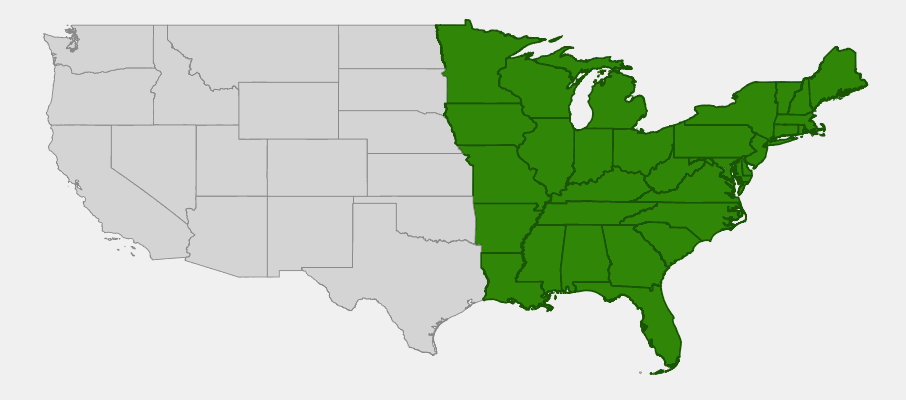
Turks Cap Lily has one of the broadest natural ranges of any North American lily, extending from southeastern Canada south to northern Florida and Georgia, and west to Minnesota, Iowa, and Arkansas. The species is most abundant in the Appalachian Mountains and Great Lakes regions, where it thrives in moist meadows, wet prairies, and the edges of marshes and streams.
In its natural habitat, Turks Cap Lily is found in a variety of wetland and semi-wetland environments, including sedge meadows, wet prairies, marsh edges, boggy areas, and moist woodland openings. It often grows in areas that flood periodically but are not permanently saturated, and it particularly thrives in locations with rich, organic soil and protection from harsh afternoon sun. The species is commonly associated with other moisture-loving plants like Cardinal Flower (Lobelia cardinalis), Wild Bergamot (Monarda fistulosa), and various sedges and grasses.
Unfortunately, Turks Cap Lily populations have declined significantly throughout much of its range due to habitat loss, particularly the draining and development of wetlands. The plant is now rare or extirpated in many areas where it was once common, making conservation efforts and cultivation of this spectacular native all the more important.
📋 Regional plant lists featuring Turks Cap Lily: North Carolina & South Carolina
Growing & Care Guide
Turks Cap Lily is more demanding than many native plants, requiring specific conditions to thrive, but it rewards patient gardeners with one of the most spectacular wildflower displays available. Success depends on understanding and providing the moist, partially shaded conditions this lily requires.
Light
Turks Cap Lily performs best with morning sun and afternoon shade, particularly in southern regions where hot afternoon sun can stress the plant. In cooler northern climates, it can tolerate more sun, but consistent moisture becomes even more critical. The ideal situation provides 4-6 hours of morning sunlight followed by filtered shade or dappled light during the hottest part of the day. Too much shade will result in weak, spindly growth and poor flowering.
Soil & Water
This is where Turks Cap Lily is most particular. It absolutely requires consistently moist soil and will not tolerate drought conditions. The soil should be rich in organic matter, well-draining but never dry, and slightly acidic to neutral (pH 5.5-7.0). The plant thrives in areas that mimic its native wetland habitats — think bog gardens, rain gardens, or areas near water features. If your soil doesn’t stay naturally moist, regular irrigation during dry periods is essential. However, while the plant needs consistent moisture, it doesn’t tolerate standing water or waterlogged conditions.
Planting Tips
Plant bulbs in fall, 4-6 inches deep in loose, organic-rich soil. Choose a location with reliable moisture and morning sun/afternoon shade. If planting multiple bulbs, space them 12-18 inches apart. The bulbs are large (2-3 inches across) and should never be allowed to dry out completely. If purchasing bulbs, plant them immediately upon receipt. Turks Cap Lily is also occasionally available as container plants from specialty native plant nurseries.
Mulching & Maintenance
Apply a thick layer (3-4 inches) of organic mulch around the plants to help maintain consistent soil moisture and keep roots cool. Good mulch options include shredded leaves, aged compost, or bark chips. Avoid pulling or disturbing the soil around the plants, as the bulbs and roots are easily damaged. Remove spent flower stalks in fall or early spring, but leave the foliage to die back naturally to nourish the bulb for next year’s growth.
Landscape Uses
Turks Cap Lily’s specific requirements limit its landscape applications, but where it can be successfully grown, it provides unmatched impact:
- Rain gardens — perfect for consistently moist depressions
- Bog gardens — thrives in artificial bog conditions
- Water garden edges — excellent near ponds or streams
- Moist wildflower meadows — creates dramatic focal points
- Woodland edges — where moisture and partial shade combine
- Native plant collections — showcase piece for serious native gardeners
- Butterfly gardens — major nectar source during peak summer
Wildlife & Ecological Value
Turks Cap Lily provides exceptional wildlife value, serving as a crucial nectar source during midsummer when many other flowers have finished blooming.
For Birds
Ruby-throated Hummingbirds are frequent visitors to Turks Cap Lily flowers, drawn by the abundant nectar and the flower’s tubular shape that accommodates their long beaks and tongues. The lily’s midsummer blooming period coincides with peak hummingbird activity, making it an essential component of hummingbird gardens. The seeds are occasionally consumed by finches and other seed-eating birds.
For Pollinators
The flowers attract a wide variety of pollinators including large butterflies (particularly swallowtails), native bees, bumblebees, and various other beneficial insects. The flowers produce copious amounts of pollen and nectar, with the nodding flower orientation requiring pollinators to work actively to access the rewards, ensuring good pollen transfer. The bright orange color and spotted pattern serve as landing guides for pollinators.
For Specialist Wildlife
Several specialized insects depend on native lilies, including certain moths and beetles whose larvae feed exclusively on lily species. By growing Turks Cap Lily, gardeners support these specialized relationships that are crucial for maintaining biodiversity in native ecosystems.
Ecosystem Role
In its native wetland habitats, Turks Cap Lily serves as an indicator species for healthy, diverse wetland plant communities. Its presence often indicates high-quality habitat that supports numerous other rare and specialized plants. The plant’s deep bulbs help stabilize soil in wet areas, while its tall stems provide structure in wetland plant communities.
Cultural & Historical Uses
Turks Cap Lily has held significance for both Indigenous peoples and European settlers throughout American history, though it was more valued for its beauty and symbolic meaning than for practical uses. Various Eastern Woodland tribes, including the Ojibwe and Potawatomi, recognized the plant’s striking beauty and incorporated it into cultural and ceremonial contexts, though specific traditional uses varied among different groups.
The bulbs were occasionally used by some Indigenous groups as a food source, typically roasted or boiled, though they required careful preparation and were generally considered a famine food rather than a dietary staple. The plant’s medicinal uses were limited, with some groups using preparations from the bulbs for treating wounds or stomach ailments, but these applications were not widespread.
Early European colonists were immediately struck by the lily’s spectacular appearance, and it became one of the first American wildflowers to be introduced to European gardens in the 17th century. The plant was cultivated in botanical gardens and estate gardens throughout Europe, where it was prized as an exotic curiosity and a symbol of the New World’s natural abundance.
During the Victorian era, when flower symbolism was at its peak, Turks Cap Lily came to represent passion, pride, and wealth due to its dramatic appearance and brilliant colors. The lily appeared in numerous botanical illustrations and was often featured in decorative arts of the period. However, its demanding growing requirements meant it was primarily confined to serious botanical collections rather than general garden use.
In the 20th and 21st centuries, Turks Cap Lily has gained renewed appreciation among native plant enthusiasts and conservationists who recognize its important role in supporting native wildlife and its value as an indicator of healthy wetland ecosystems. Modern cultivation efforts focus on preserving genetic diversity and reintroducing the species to areas where it has been lost due to habitat destruction.
Frequently Asked Questions
Why won’t my Turks Cap Lily bulbs come up?
Turks Cap Lily bulbs can be slow to establish and may take 2-3 years to produce their first flowers. They’re also sensitive to drying out, poor drainage, or being planted too shallow. Ensure bulbs are planted 4-6 inches deep in consistently moist, organic-rich soil. If bulbs were allowed to dry out before planting, they may not be viable.
Can Turks Cap Lily be grown in regular garden soil?
This lily really requires consistently moist conditions to thrive. While it might survive in regular garden soil with frequent irrigation, it performs best in naturally moist areas like rain gardens, bog gardens, or areas near water features. If your garden doesn’t have naturally moist conditions, consider creating a dedicated wet area or choose a different native lily species.
How long does it take for Turks Cap Lily to bloom from seed?
Growing from seed is challenging and slow. Seeds require cold stratification and may take 4-7 years to produce flowering-sized bulbs. Seeds also have low germination rates and specific requirements. For most gardeners, purchasing bulbs or plants from reputable native plant sources is much more practical.
Is Turks Cap Lily the same as Tiger Lily?
No, these are different species. Tiger Lily (Lilium lancifolium) is an Asian species that has naturalized in North America and is commonly grown in gardens. Turks Cap Lily (Lilium superbum) is our native species. Both have orange, spotted flowers, but Turks Cap Lily has whorled leaves and typically grows much taller.
When should I divide Turks Cap Lily bulbs?
These lilies rarely need division and actually prefer to be left undisturbed. If division is necessary (overcrowding, moving the plant), do it in early fall after the foliage has died back. Be extremely careful not to damage the bulb or roots, and replant immediately. Never let the bulbs dry out during the process.

Looking for a nursery that carries Turks Cap Lily?
Browse our native plant nursery directory: North Carolina · South Carolina