Vanilla Grass (Hierochloe odorata)
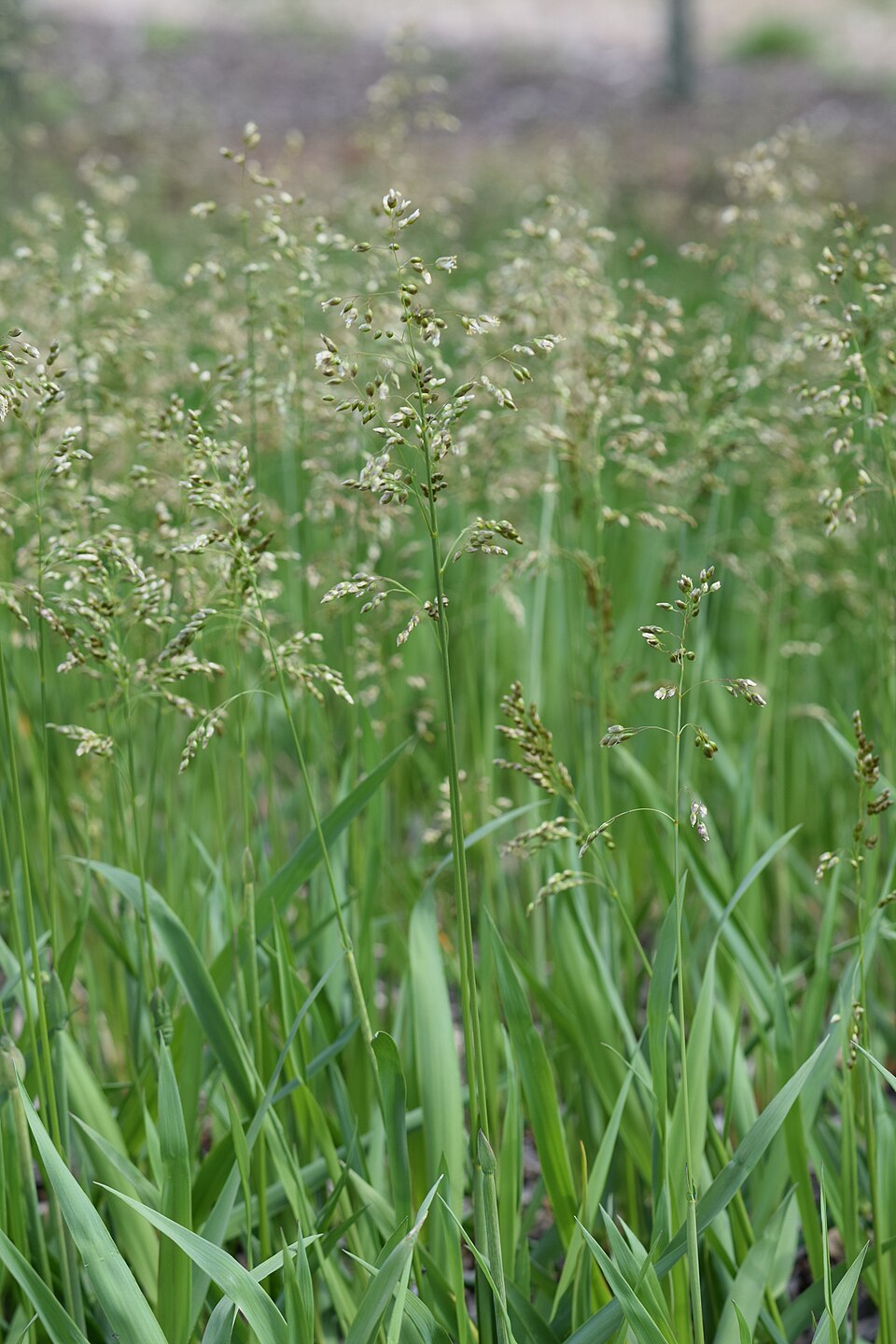
Hierochloe odorata (syn. Anthoxanthum nitens), commonly known as Vanilla Grass, Sweetgrass, or Holy Grass, is one of the most sacred and culturally significant plants in the indigenous traditions of North America — a fragrant, fast-spreading perennial grass whose braided leaves have been used in ceremonial contexts from Alaska to the Great Plains for thousands of years. Growing 1 to 2 feet tall in dense, rhizomatous colonies, Vanilla Grass produces slender, bright green leaves that contain coumarin — the same compound that gives tonka beans and new-mown hay their characteristic sweet, vanilla-like scent. The fragrance is released most intensely when the leaves are dried, crushed, or burned, making this one of the few North American grasses that is primarily cultivated for its aromatic properties rather than forage or ornament.
The name Hierochloe comes from the Greek hieros (sacred) and chloe (grass) — “sacred grass” — a name that reflects the plant’s deep ceremonial significance across many cultures where it grows. In Native American traditions, Sweetgrass is one of the four sacred plants (along with sage, cedar, and tobacco) used in smudging ceremonies for purification, prayer, and spiritual protection. The braided bundles of dried Sweetgrass that have become widely recognized cultural symbols are made from the long, flexible leaves of this species, harvested sustainably in late summer when the coumarin content is highest.
As a garden plant, Vanilla Grass offers multiple values: an excellent soil stabilizer for wet, open areas; an attractive, fine-textured groundcover or meadow grass; a strongly fragrant accent plant; and an ecologically important native grass that supports multiple wildlife species. It spreads by rhizomes to form large, solid mats over time, making it effective for erosion control on moist slopes and streambanks — one of its most important practical applications in Alaska and across its circumpolar range.
Identification
Hierochloe odorata is a loosely tufted to mat-forming perennial grass growing 12 to 24 inches (30–60 cm) tall, spreading extensively by creeping rhizomes to form large colonies. The plant is deciduous to semi-evergreen depending on climate, with leaves that often persist and remain fragrant through winter even in Alaska.
Leaves
The leaves are the plant’s most important identification feature. They are linear, flat to slightly rolled, 3 to 10 mm wide and up to 20 inches (50 cm) long — broader and longer than most native grasses of similar stature. The leaf surface is smooth, slightly lustrous, and bright yellowish-green, aging to a straw color when dried. The classic vanilla scent is immediately apparent when the leaves are crushed or broken, produced by coumarin concentrated in the leaf tissue. The leaf sheaths are smooth and often slightly purplish near the base. The ligule (junction between blade and sheath) is membranous, 2–5 mm long.
Flowers & Seedheads
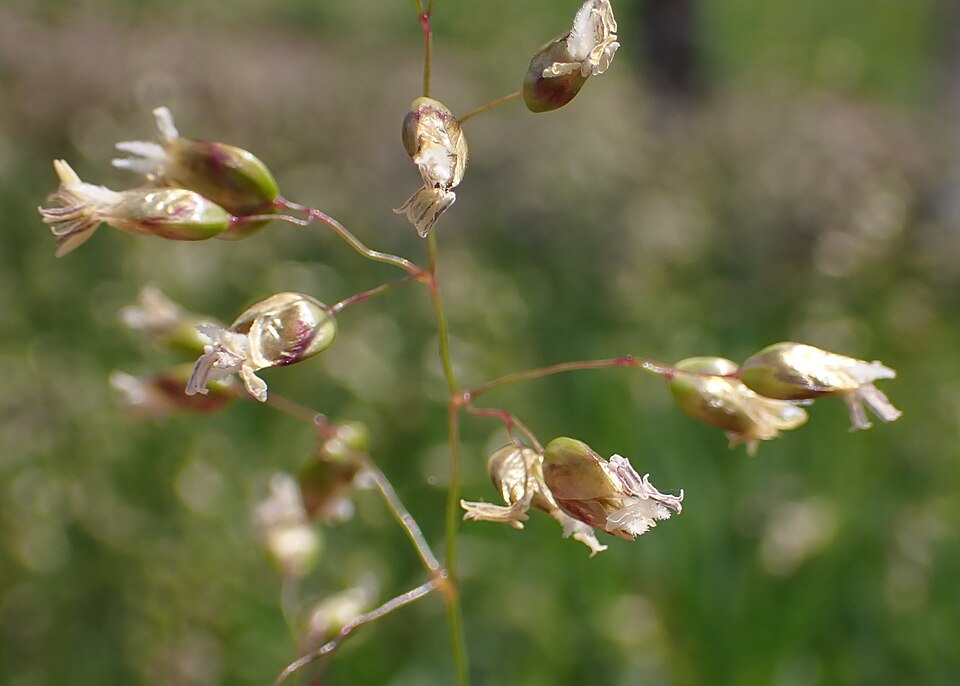
The inflorescence is an open, spreading panicle (loosely branched seedhead) 3 to 6 inches (7–15 cm) long, produced in early spring (April–June), often before most other grasses have fully leafed out. Each spikelet contains 3 florets — 1 bisexual floret and 2 staminate (male-only) florets — an unusual arrangement that distinguishes this genus. The spikelets are glossy, golden-bronze when mature, and the open panicle has a light, airy appearance. The plant is wind-pollinated and seed production is variable — the species relies heavily on vegetative spread via rhizomes.
Rhizomes
The creeping rhizomes are white to pale yellow, slender, and extend 12–24 inches or more from the parent plant, sending up new shoots at intervals. This vigorous rhizomatous spread is responsible for the plant’s ability to form extensive, dense mats and its value as a soil stabilizer. In the garden, these rhizomes allow the plant to spread readily into adjacent areas — desirable in naturalistic settings, but requiring management in formal plantings.
Quick Facts
| Scientific Name | Hierochloe odorata (syn. Anthoxanthum nitens) |
| Family | Poaceae (Grass) |
| Plant Type | Perennial Grass / Groundcover |
| Mature Height | 1–2 ft |
| Sun Exposure | Full Sun |
| Water Needs | High |
| Bloom Time | April – June |
| Fragrance | Strong vanilla-like scent from coumarin; intensifies when dried or burned |
| Spreads By | Creeping rhizomes; spreads quickly |
| USDA Hardiness Zones | 2–8 |
Native Range
Hierochloe odorata has a circumboreal distribution — it occurs across the northern hemisphere in both North America and Eurasia, making it one of the most geographically widespread grass species in the world. In North America, it ranges from Alaska east across the entire boreal and subarctic zone to Newfoundland, and south through the Rocky Mountains, Great Lakes region, and northeastern states to the mid-Atlantic coast. It is native to nearly every state north of the 40th parallel, as well as several more southern states in the Appalachians and the Great Plains.
In Alaska, Vanilla Grass occurs throughout much of the state wherever suitable moist, open habitat exists — along stream margins, in wet meadows, in open boreal forest understory, on tidal flats, and in disturbed moist areas. It is particularly abundant in the Interior and Southcentral regions, growing in the transition zones between wetlands and upland vegetation. It frequently colonizes roadside ditches and other disturbed moist sites, taking advantage of the open conditions and moist soils created by road construction.
The plant’s ecological success across such a wide range reflects its rhizomatous growth strategy — rather than competing for seed germination opportunities, it invests in vegetative expansion, gradually spreading outward from established colonies to colonize new ground. This strategy is particularly effective in disturbed habitats where mineral soil is exposed, and contributes to the plant’s practical value for erosion control and streambank stabilization.
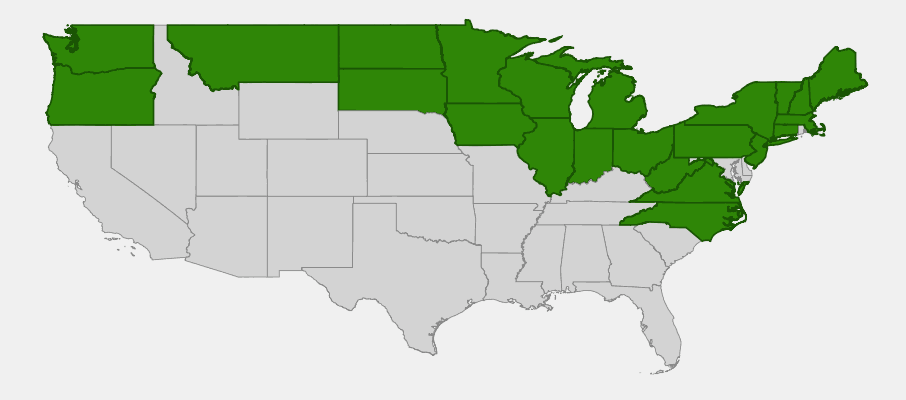
📋 Regional plant lists featuring Vanilla Grass: Alaska
Growing & Care Guide
Vanilla Grass is an easy-care, adaptable native grass that rewards the gardener with attractive foliage, early spring interest from its golden seedheads, and an extraordinary fragrance that makes every brush past the plant a small sensory delight. The key considerations are providing moist soil and managing its spread.
Light
Vanilla Grass performs best in full sun, which encourages compact, upright growth and maximum fragrance production. In partial shade, it grows more loosely and may spread more aggressively as rhizomes extend in search of better light. In deep shade, it declines and loses competitive vigor. For best ornamental and aromatic performance, site it in a location with at least 6 hours of direct sun per day.
Soil & Water
Consistent moisture is Vanilla Grass’s most important cultural requirement. It naturally grows in moist to wet soils — along streambanks, in wet meadows, and at the edges of marshes and bogs — and does not tolerate drought. In the garden, it performs best with consistently moist to occasionally wet soil. It is an excellent choice for naturally wet areas of the yard, bioswales, rain gardens, and pond edges. It tolerates seasonal flooding and saturated soils far better than most ornamental grasses. The soil does not need to be particularly rich — it grows in lean, moist soils throughout its native range.
Planting Tips
Plant divisions or container-grown plants in early spring or fall. Divisions are the most reliable way to establish Vanilla Grass — simply divide an existing clump, ensuring each division has several culms (stems) with attached rhizome sections, and plant at the same depth it was growing before. Space plants 18–24 inches apart for a groundcover effect; the rhizomes will fill in gaps within 1–2 seasons. Seed germination is possible but can be erratic — seeds need cold stratification (60 days at 40°F) for reliable germination. Water thoroughly at planting and maintain consistent moisture until established.
Pruning & Maintenance
Cut Vanilla Grass back to 2–3 inches in late winter or early spring before new growth begins to rejuvenate the planting and maintain a tidy appearance. This is also the best time to divide and replant any portions that have become too dense or are spreading beyond their intended area. The cut leaves, even dried, retain their vanilla fragrance for months — consider bundling them for indoor use as a natural air freshener. Vanilla Grass has no serious pest or disease problems and requires no fertilization.
Landscape Uses
- Fragrant accent plant near paths, seating areas, or entry points where the scent can be appreciated
- Moist meadow groundcover in open, sunny wet areas
- Streambank and wetland edge stabilizer — one of the best native grasses for this purpose
- Rain garden and bioswale planting — tolerates wet-dry cycles
- Ceremonial garden for those honoring Indigenous plant traditions
- Wildlife garden — nesting habitat and seed source for birds
Wildlife & Ecological Value
While Vanilla Grass is less productive for wildlife than some larger native grasses, it contributes meaningfully to the ecological function of moist meadow and streamside communities.
For Birds
The early-maturing seedheads of Vanilla Grass are consumed by various seed-eating birds including sparrows, juncos, and finches. The dense mat-forming growth provides nesting cover for ground-nesting birds including Savannah Sparrows, Song Sparrows, and various warblers that nest low in wet meadow vegetation. Bobolinks, where present, use Vanilla Grass meadows as nesting habitat. The leaves also provide structural material for nests built by nearby species.
For Mammals
Moose, Caribou, and Elk graze Vanilla Grass as part of their diet, particularly in spring when the fresh new growth is nutritious. Small mammals including voles, lemmings, and meadow mice use the dense mats as cover and foraging habitat. In the Great Plains portion of its range, Vanilla Grass is grazed by bison and other large herbivores, though it is not among their preferred species.
For Pollinators
As a wind-pollinated grass, Vanilla Grass does not provide nectar resources for pollinators. However, its early spring pollen is collected by bees for protein, and the dense mat structure provides shelter and nesting sites for solitary ground-nesting bees and wasps.
Ecosystem Role
In moist meadow and streambank ecosystems, Vanilla Grass performs important structural and functional roles. Its rhizomatous mats stabilize soil against erosion, particularly on streambanks subject to periodic flooding and scouring. The dense mat intercepts rainfall and snowmelt, reducing runoff velocity and allowing water to infiltrate into the soil. The accumulated organic matter of old stems and leaves contributes to soil formation and carbon storage. In northern peatland communities, Vanilla Grass is a component of the plant community that contributes to peat accumulation over time.
Cultural & Historical Uses
No native grass in North America has achieved the ceremonial and cultural significance of Vanilla Grass, known most widely as Sweetgrass. Across dozens of Indigenous nations from Alaska to the Great Plains, from the Great Lakes to the Northeast, Sweetgrass holds a sacred place as a ceremonial plant, a craft material, and a connection to spiritual tradition. In many Native American traditions, Sweetgrass is one of the four sacred medicines (along with sage, cedar, and tobacco), used for smudging — the burning of the dried, braided grass to produce fragrant smoke for purification, prayer, and spiritual protection.
The distinctive braided bundles of dried Sweetgrass — three strands representing the mind, body, and spirit in some traditions — have been made for ceremonial and practical purposes for thousands of years. The braiding technique and the knowledge of where to harvest, when to harvest, and how to dry and braid the grass represent living cultural knowledge that has been transmitted across generations in Indigenous communities. The sweet vanilla scent of the burning grass is considered to attract positive spirits and create a sacred space for ceremony. In Alaska, various Athabascan and Yup’ik peoples have used Vanilla Grass as both a practical and ceremonial plant, weaving baskets and other objects from the pliable, fragrant leaves.
Beyond its ceremonial role, Vanilla Grass has practical craft applications that have been practiced for centuries. The flexible, strong leaves are woven into baskets, mats, bags, and decorative objects by Indigenous artisans across its range. Sweetgrass baskets are among the most refined examples of North American Indigenous craft traditions — the Ash-and-Sweetgrass baskets of the northeastern Wabanaki peoples and the coiled Sweetgrass baskets of the Mi’kmaq are internationally recognized as art objects of the highest order. The demand for authentic Sweetgrass baskets has created both economic opportunity and sustainability challenges, as wild populations of the plant have declined in many areas due to overharvesting, habitat loss, and changing hydrology. Sustainable cultivation of Vanilla Grass, and ethical sourcing of wild-harvested material, are important conservation issues for this culturally significant plant.
Frequently Asked Questions
What makes Vanilla Grass smell like vanilla?
The fragrance comes from coumarin — a naturally occurring compound found in the leaves that produces a sweet, vanilla-like scent. Coumarin is also responsible for the pleasant smell of new-mown hay and is found in tonka beans and many other aromatic plants. In Vanilla Grass, coumarin concentrations are highest in the leaves, particularly when they are drying or dried. The fragrance is released most intensely when the leaves are crushed, dried, or burned.
Is Sweetgrass and Vanilla Grass the same plant?
Yes — Vanilla Grass (Hierochloe odorata) is the same species as Sweetgrass, the ceremonial plant of many Indigenous North American peoples. The common name “Vanilla Grass” is used more in Europe and Alaska to emphasize the plant’s fragrance, while “Sweetgrass” is the more common name in the lower 48 and in cultural contexts referring to its ceremonial use. The plant also goes by Holy Grass, Mary’s Grass, and Seneca Grass.
Can I harvest my garden Vanilla Grass for smudging?
Yes, but if you are not part of the Indigenous cultural traditions for which Sweetgrass is a sacred plant, approach this with cultural sensitivity and awareness. The plant can certainly be harvested from a garden plant and dried for its fragrance. When harvesting, take no more than one-third of the leaves at a time to allow the plant to recover. Harvest in late summer when coumarin content is highest — after the seeds have matured. Dry in small bundles hung upside-down in a well-ventilated area.
Will Vanilla Grass take over my garden?
In moist, sunny conditions, Vanilla Grass will spread steadily via rhizomes. The spread is gradual enough to be manageable — unlike some invasive species, it does not spread explosively. A simple root barrier (12 inches deep) will prevent rhizome spread if you need to contain it. Alternatively, plant it in a naturally bounded area (between a path and a stream, for example) where its spread is welcome or self-limiting.
Why is Sweetgrass hard to find at nurseries?
Vanilla Grass is challenging to propagate from seed (seeds have complex dormancy requirements), and vegetative propagation by division is labor-intensive. Many nurseries also do not carry it because its cultural significance makes some people reluctant to treat it as a commodity plant. Specialty native plant nurseries, particularly those with connections to Indigenous communities, are the best sources. Look for nurseries that grow their plants ethically and without wild collection from natural populations.

Looking for a nursery that carries Vanilla Grass?
Browse our native plant nursery directory: Alaska