Violet Ruellia (Ruellia nudiflora)
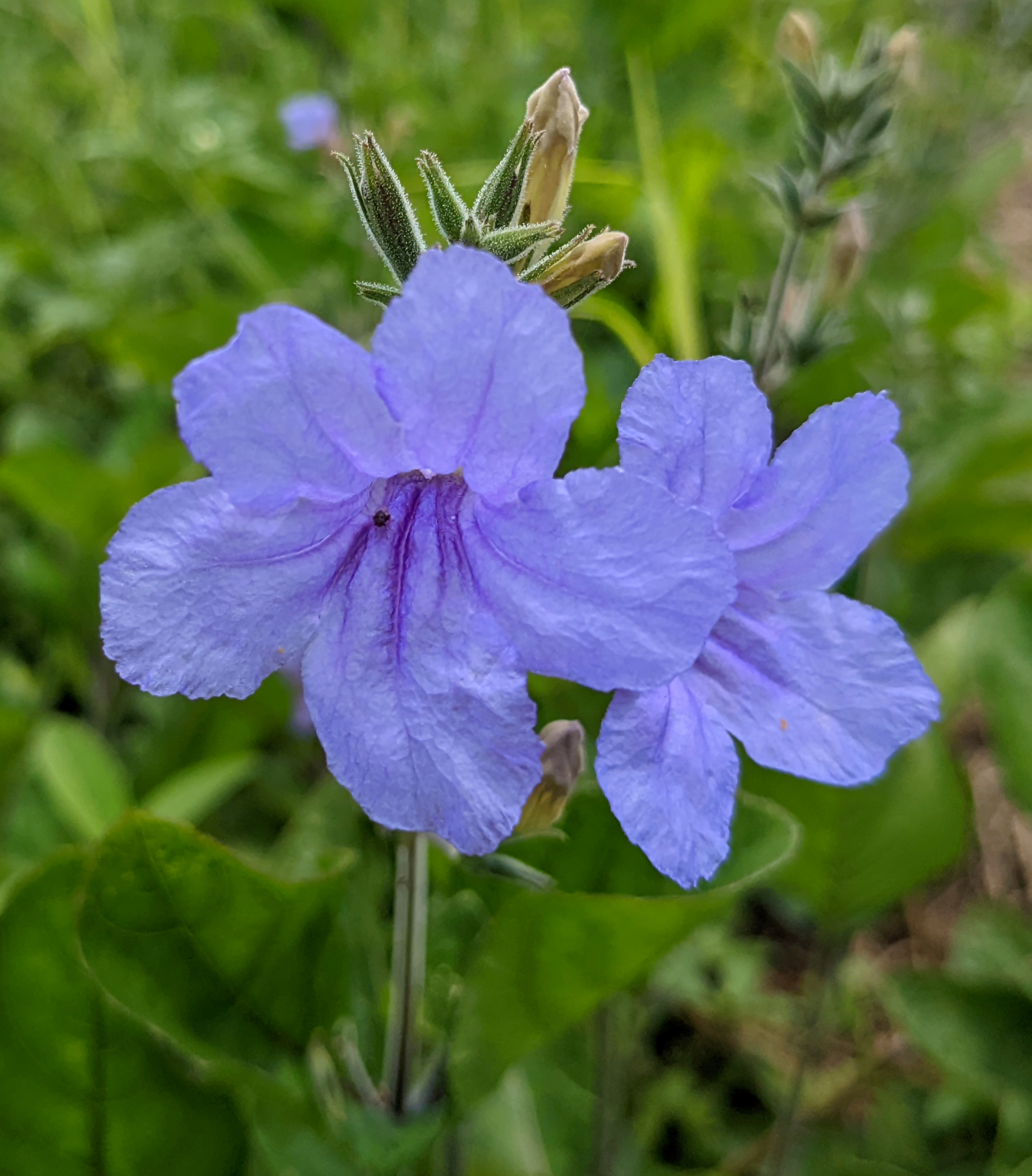
Ruellia nudiflora, commonly known as Violet Ruellia, Common Wild Petunia, or Naked-flowered Ruellia, is a charming native perennial wildflower of the southern United States that produces a succession of showy, violet-purple funnel-shaped flowers from spring through fall. Unlike many native plants that demand full sun and dry conditions, Violet Ruellia is uniquely adapted to shaded, moist desert garden environments — a rare find among native Arizona wildflowers. Its ability to thrive in the shade beneath trees and shrubs, and its beautiful purple flowers with their distinctive long, tubular form, make it especially valuable for the shaded corners of desert gardens where few other flowering natives will grow.
Growing only about 1 foot tall, Violet Ruellia is a compact, ground-level wildflower that spreads by underground rhizomes to form small colonies. The flowers are produced singly or in small clusters, each lasting only one day but followed immediately by new blooms — a characteristic shared with other Ruellia species that ensures a nearly continuous floral display throughout the growing season. The species name “nudiflora” means “naked-flowered,” referring to the flowers that appear to emerge directly from the plant without significant supporting bracts. This low-growing, shade-tolerant native is well-suited for borders, woodland garden edges, and shaded patio containers.
Violet Ruellia is also an important larval host plant for several native butterfly species, including the Mexican Bluewing and various other hairstreaks and skippers associated with Acanthaceae family plants. Its combination of shade tolerance, moderate water needs, prolonged bloom season, and butterfly habitat value makes it a uniquely versatile and ecologically important native wildflower for desert gardens in the southwestern United States.
Identification
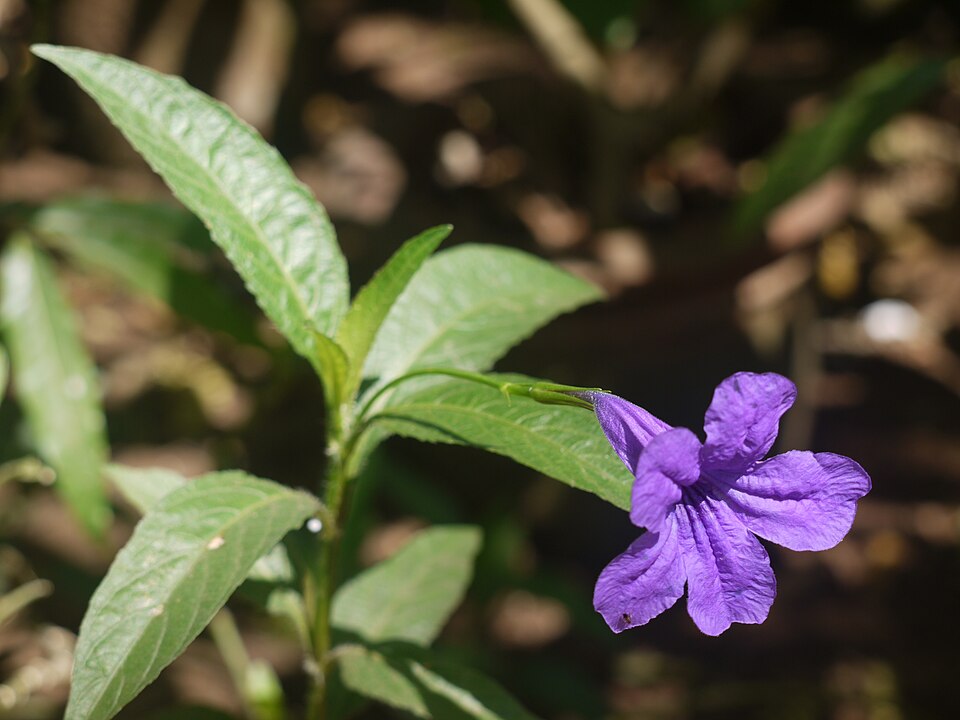
Violet Ruellia is a low-growing perennial herb, typically 8–12 inches tall, with a spreading habit created by rhizomatous underground stems. The plant has an overall lush, somewhat sprawling appearance with relatively large, oval leaves and prominent purple flowers. In frost-free locations, it may retain some foliage through winter; in colder areas, it dies back to the roots and resprouts in spring.
Leaves
The leaves are oval to elliptic, 2–4 inches long, with smooth to wavy margins and a prominent midrib. Leaf surfaces are smooth to slightly hairy, dark green above and paler below. Leaves are arranged oppositely on the stems. The relatively large, soft leaves give the plant a lush appearance that is unusual among desert native plants — reflecting its preference for shaded, slightly moister conditions than typical desert plants. The foliage provides a good textural contrast in mixed plantings with other desert natives.
Flowers & Fruit
The flowers are the plant’s primary ornamental feature — long, tubular, funnel-shaped blooms, 1.5–2 inches long, with five spreading lobes at the mouth that create a wide, open flower face. The color is violet to purple with darker purple veining in the throat. Each flower lasts only one day, but successive buds ensure a nearly continuous display of fresh flowers throughout the growing season (spring through fall). The fruit is a cylindrical capsule containing several seeds that are explosively dispersed when the capsule splits — a clever seed-dispersal mechanism that can project seeds several feet from the parent plant.
Quick Facts
| Scientific Name | Ruellia nudiflora |
| Family | Acanthaceae (Acanthus Family) |
| Plant Type | Perennial Herb |
| Mature Height | 1 ft |
| Sun Exposure | Full Shade |
| Water Needs | Moderate |
| Bloom Time | Spring through Fall |
| Flower Color | Violet to Purple |
| USDA Hardiness Zones | 8–11 |
Native Range
Violet Ruellia is native to the southern and southwestern United States, occurring in Texas, New Mexico, Arizona, Louisiana, and Florida, with its range extending through Mexico into Central America. In the United States, it is most abundant in southern Texas, particularly in the Rio Grande Plains and Edwards Plateau regions, where it grows as a common wildflower in shaded understory habitats beneath live oaks, cedar elms, and other deciduous trees. In Arizona and New Mexico, it occurs in similar shaded canyon and riparian habitats in the Chihuahuan Desert transition zones.
In Texas, Violet Ruellia is one of the most commonly seen native wildflowers in shaded garden settings and naturalized landscapes — it has a long history of cultivation in Texas native plant gardens. It grows naturally in the dappled shade of oak motts, along shaded creek banks, on canyon slopes beneath shrub canopy, and in any shaded, slightly moist microhabitat within its range. In Arizona, it is found in riparian areas and shaded canyon bottoms where moisture and shade provide conditions similar to its eastern range habitats.
The species is also native to Florida and Louisiana, where it grows in moist woodland understory habitats very different from its desert Southwest populations — a testimony to its ecological versatility. Throughout its range, it consistently occupies shaded or semi-shaded habitats with moderate soil moisture, distinguishing it from the full-sun, drought-tolerant plants that dominate most of the Southwest’s native flora.
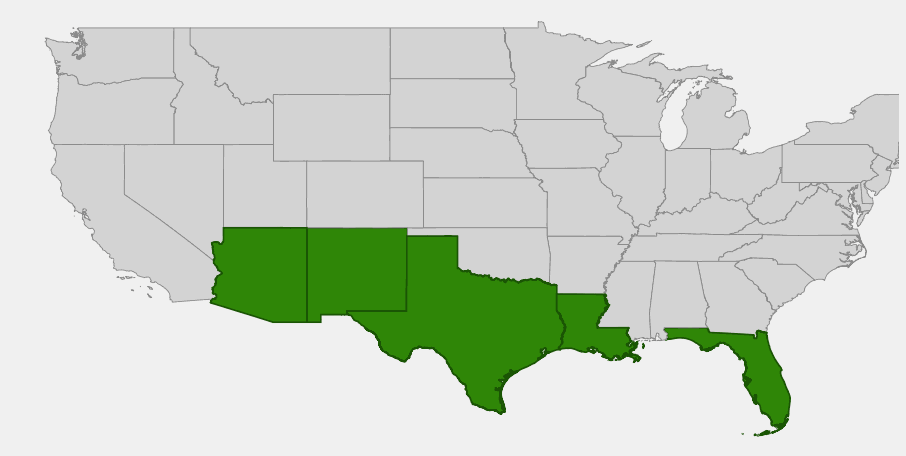
📋 Regional plant lists featuring Violet Ruellia: Arizona
Growing & Care Guide
Violet Ruellia is one of the most rewarding native wildflowers for shaded desert gardens — a long-blooming, low-maintenance perennial that fills the challenging “shade with moderate water” niche beautifully.
Light
Violet Ruellia prefers full shade to part shade — this is one of the few native Arizona wildflowers that actually thrives in shaded conditions. It performs best beneath tree canopy, on north-facing walls or slopes, or in any shaded garden area where more sun-demanding natives fail. It will tolerate some morning sun but should be protected from intense afternoon sun, especially in hotter desert gardens. The shade requirement makes it ideal for areas beneath palo verdes, mesquites, and other desert trees.
Soil & Water
Violet Ruellia prefers moderately fertile, well-drained to moist soil — not as dry as most desert plants, and not waterlogged. Consistent moderate moisture produces the best growth and longest bloom season. Supplement with regular watering (once to twice weekly in summer) in shaded desert gardens. Apply 2–3 inches of organic mulch to conserve moisture and keep roots cool. In areas where it grows naturally in shade, rainfall and natural soil moisture are often sufficient, but in Arizona’s hot summers, supplemental watering is needed.
Planting Tips
Plant in spring after last frost in a shaded location with moderate moisture. Container-grown plants establish readily. Space plants 12–18 inches apart to allow for rhizomatous spread. The explosive seed dispersal mechanism means plants will self-sow somewhat — allow this for naturalization, or collect seeds before pods dehisce. Violet Ruellia combines beautifully with other shade-tolerant native plants like Turk’s Cap and native ferns in shaded border plantings.
Pruning & Maintenance
Cut back spent stems in late winter to encourage vigorous fresh growth. During the growing season, deadheading is not necessary — spent flowers fall cleanly and new buds follow immediately. Trim back spreading rhizomes at colony margins to control spread. No fertilization needed in typical garden soils; a top-dressing of compost in spring helps maintain vigor in impoverished soils. Violet Ruellia is generally pest-free in its native range.
Landscape Uses
- Shaded garden borders — fills the challenging shade niche with flowering color
- Woodland garden understory — naturalistic planting beneath trees
- Hummingbird garden — long-blooming nectar source in shaded settings
- Butterfly garden — larval host for several native butterfly species
- Shaded patio containers — excellent in partially shaded container arrangements
- Native habitat restoration — riparian and woodland understory revegetation
Wildlife & Ecological Value
Violet Ruellia’s shade tolerance and long bloom season give it ecological value in habitat niches where few other native flowering plants function.
For Birds
The tubular, funnel-shaped flowers of Violet Ruellia are visited by hummingbirds — Anna’s, Black-chinned, and Ruby-throated Hummingbirds all visit the flowers for nectar. The plant’s low, dense growth provides ground-level cover for thrushes, towhees, and other birds that forage in shaded woodland understory. The explosively dispersed seeds may be incidentally consumed by birds foraging in the leaf litter.
For Mammals
Violet Ruellia provides ground-level cover for small mammals and lizards in shaded garden habitats. The plant is not known as a significant food source for mammals, though white-tailed deer may occasionally browse the foliage. The rhizomatous spreading habit creates a dense ground cover that shelters small invertebrates and their predators.
For Pollinators
Violet Ruellia is an important larval host plant for several native butterfly species in the Acanthaceae family, including the Mexican Bluewing (Myscelia ethusa) in the southernmost United States and various native skipper species. Adult butterflies, native bees (including sweat bees and small carpenter bees), and hummingbird moths visit the flowers for nectar. The long, tubular flower shape selectively admits pollinators with long tongues, favoring hummingbirds and specialist bees.
Ecosystem Role
In shaded desert riparian and woodland understory habitats, Violet Ruellia plays an important ground-cover role, stabilizing soil, retaining moisture beneath its leaf canopy, and providing a continuous source of nectar and pollen in an otherwise often poorly floral habitat layer. Its rhizomatous spreading habit allows it to form extensive colonies that contribute meaningfully to the structural complexity of shaded plant communities. As a larval host plant for native butterflies, it supports butterfly populations that in turn support insect-eating birds and other predators in the food web.
Cultural & Historical Uses
The genus Ruellia is named for Jean Ruel (1474–1537), a French physician and botanist who served as personal physician to King Francis I of France and wrote one of the earliest comprehensive botanical texts in European history. The genus commemorates his important contributions to early botanical science. Ruellia species are found throughout the Americas, Africa, and Asia, with many used in traditional medicine by Indigenous peoples across their respective ranges.
In Texas and Mexico, where Violet Ruellia is most common and widespread, Indigenous peoples and traditional healers used Ruellia species medicinally. The Aztec and Nahuatl-speaking peoples of Mexico used related Ruellia species in treatments for skin conditions, fevers, and coughs. In traditional Mexican herbal medicine (curanderismo), Ruellia preparations are still sometimes used for respiratory ailments and as a general tonic. The garden Ruellia (Ruellia simplex), an introduced species from Mexico often confused with native Ruellias in Texas and Arizona gardens, is the more commonly cultivated relative.
In modern native plant gardening, Violet Ruellia has become increasingly recognized as one of the best native plants for shaded Texas and Arizona gardens. Native plant societies in both states actively promote it as a superior native alternative to the invasive Mexican Petunia (Ruellia simplex), which has naturalized widely in Florida and parts of Texas and is considered an invasive species in some contexts. Violet Ruellia (Ruellia nudiflora) provides similar ornamental appeal but behaves responsibly in the garden, spreading gently by rhizomes without becoming invasive.
Frequently Asked Questions
What is the difference between Violet Ruellia and Mexican Petunia?
Mexican Petunia (Ruellia simplex, also sold as R. brittoniana) is a non-native introduction from Mexico that is considered invasive in Florida and naturalized in parts of Texas. Violet Ruellia (Ruellia nudiflora) is a true native wildflower of Texas, Arizona, and the Southwest. They look similar, but native Violet Ruellia spreads more gently by rhizomes and does not become invasive. Always check that you’re purchasing the native species from a reputable native plant nursery.
Will Violet Ruellia grow in full shade?
Yes — Violet Ruellia is one of the few native desert wildflowers that actually prefers and thrives in full shade. It grows naturally beneath tree canopy and on north-facing slopes, and it performs better in shaded locations than in full sun. This makes it especially valuable for the challenging shaded areas of desert gardens where most other native plants struggle.
How much water does Violet Ruellia need?
Violet Ruellia needs moderate moisture — more than typical drought-tolerant desert plants but less than a true moisture-loving plant. In shaded garden conditions, water once to twice weekly during summer heat, and less frequently in winter. Apply mulch to conserve moisture. The plant tolerates brief dry periods but looks its best with consistent moderate watering.
Is Violet Ruellia a perennial in Arizona?
Yes — Violet Ruellia is a perennial in USDA Zones 8–11, which includes most of Arizona. In zones 8–9, it may die back partially in winter but resprouts reliably in spring from its rhizome network. In Zone 10–11 (the lowest desert elevations), it may retain foliage through mild winters and bloom nearly year-round.
Will Violet Ruellia attract hummingbirds?
Yes — the tubular purple flowers are excellent hummingbird attractants. In a shaded garden setting where hummingbirds seek shaded feeding stations, Violet Ruellia is particularly valuable. Plant it beneath trees or on a shaded patio where you can observe the hummingbird activity up close.

Looking for a nursery that carries Violet Ruellia?
Browse our native plant nursery directory: Arizona