Snapdragon-vine (Maurandya antirrhiniflora)
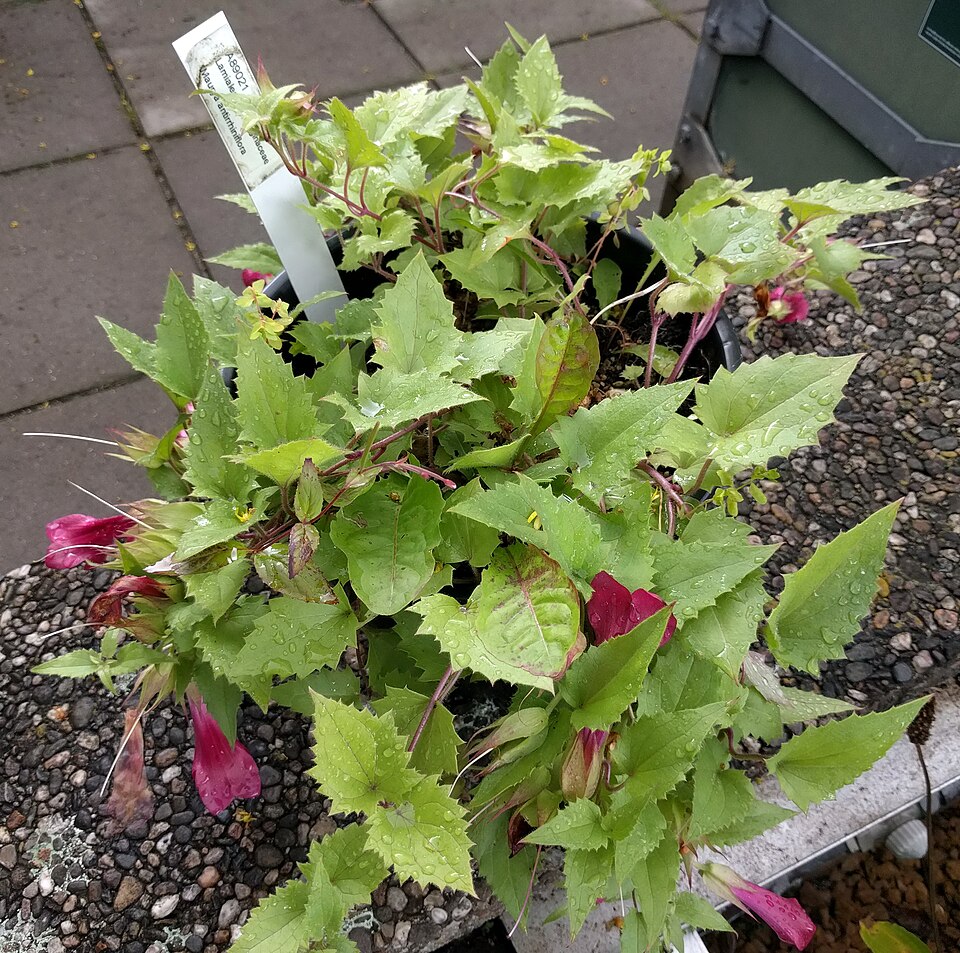
Maurandya antirrhiniflora, commonly known as Snapdragon-vine, Roving Sailor, or Twining Snapdragon, is one of the most delightfully charming native vines of the desert Southwest — a slender, twining perennial vine adorned with an abundance of miniature snapdragon-like flowers in shades of purple, pink, and red that bloom nearly year-round in mild climates. The species name “antirrhiniflora” literally means “with flowers like Antirrhinum” (the snapdragon genus), perfectly describing the vine’s distinctive small flowers that are virtually indistinguishable from tiny garden snapdragons.
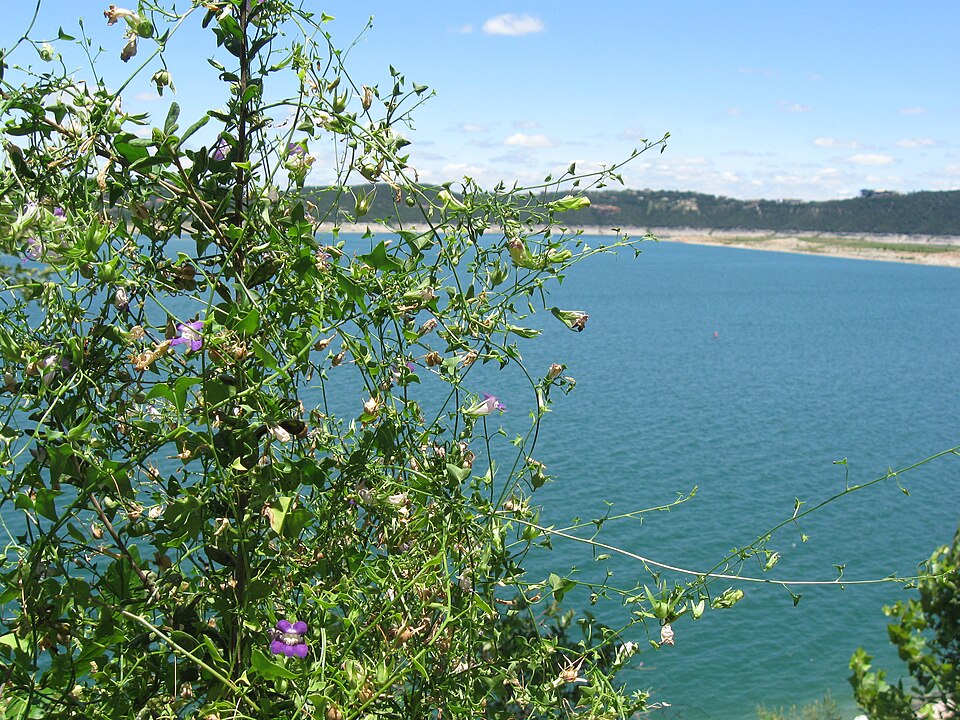
Snapdragon-vine grows 6–10 feet long (sometimes longer with support), climbing by twisting leaf petioles that coil around any available support — twigs, fences, wire, or other plants. Despite its delicate, graceful appearance, this native vine is surprisingly tough and drought-tolerant, adapted to the rocky desert hillsides, canyon walls, and scrublands of its native range in Arizona, New Mexico, Texas, and California. It blooms most profusely from spring through fall but may flower sporadically in all seasons in frost-free locations, earning it a reputation as one of the longest-blooming native plants of the Southwest.
For desert gardeners, Snapdragon-vine is a treasured native plant with few equals for vertical interest, pollinator value, and ornamental appeal. It works beautifully on fences, trellises, chain-link, and over shrubs in naturalistic plantings. Its willingness to grow in hanging baskets — an unusual trait for a native vine — makes it also valued for patio and container gardening. Hummingbirds are particularly attracted to its tubular flowers, making it an essential plant for hummingbird gardens throughout the Southwest.
Identification
Snapdragon-vine is a slender, delicate-looking but tough perennial vine that climbs by twisting its elongated leaf petioles (stalks) around any available support. The stems are thin and wiry, and the plant’s overall appearance is light and airy — it does not create a dense, heavy mass of foliage but instead weaves its way through and over supporting structures with a fine, tracery-like effect.
Stems & Leaves
The stems are hairless to slightly glandular, slender, and branching. Leaves are triangular to arrow-shaped (hastate), about ½–1 inch long, with a distinctive lobed base, and borne on petioles that twist and coil to grasp supports. The leaves are smooth and somewhat succulent in texture, a medium green color. The climbing mechanism — twining petioles rather than tendrils or adventitious roots — is unique and distinctive, allowing the vine to climb delicately through and over other vegetation without damaging it.
Flowers & Fruit
The flowers are the plant’s primary ornamental feature: tubular and two-lipped (bilabiate), ½–¾ inch long, with a distinctive snapdragon appearance. Colors range from purple and violet to pink and occasionally white, with a contrasting white to yellowish palate (the lower lip). Each flower is borne singly on a slender stalk from the leaf axils. Bloom occurs most heavily in spring and fall, with intermittent flowers through summer and (in frost-free climates) winter. The fruit is a small, dry capsule containing numerous tiny seeds that are dispersed by wind and rain. Snapdragon-vine self-seeds readily in suitable conditions.
Quick Facts
| Scientific Name | Maurandya antirrhiniflora |
| Family | Plantaginaceae (Plantain / Figwort Family) |
| Plant Type | Perennial Climbing Vine |
| Mature Height | 10 ft (vine length) |
| Sun Exposure | Full Sun to Part Shade |
| Water Needs | Low (Drought Tolerant) |
| Bloom Time | Spring through Fall (nearly year-round in mild climates) |
| Flower Color | Purple, Violet, Pink (with white/yellow palate) |
| USDA Hardiness Zones | 8–11 |
Native Range
Snapdragon-vine is native to the rocky desert hillsides, canyon walls, scrublands, and open woodlands of the southwestern United States and Mexico. In the United States, it occurs in Arizona, New Mexico, Texas, and California, with most of its US range concentrated in the Chihuahuan and Sonoran Desert regions. It is also widely native throughout the mountains and canyons of Mexico from Baja California through Sonora, Chihuahua, and beyond.
In Arizona, Snapdragon-vine occurs throughout the Sonoran Desert and into the desert transition zones, climbing on rocky slopes, canyon walls, desert shrubs, and fence lines at elevations from near sea level to about 5,000 feet. It is most commonly found in rocky, well-drained canyon habitats where it can climb through native shrubs. In New Mexico and Texas (particularly the Trans-Pecos region), it grows in similar rocky, semi-arid habitats in the Chihuahuan Desert zone. In California, it is found in coastal sage scrub, chaparral, and Mojave Desert canyon communities.
The species demonstrates a broad tolerance for different desert subregions and climatic conditions within its native range — from the hot, humid coastal conditions of Baja California to the cold desert conditions of higher elevation New Mexico canyons. This adaptability makes it one of the more reliable native vines for cultivation across a range of desert Southwest garden conditions.
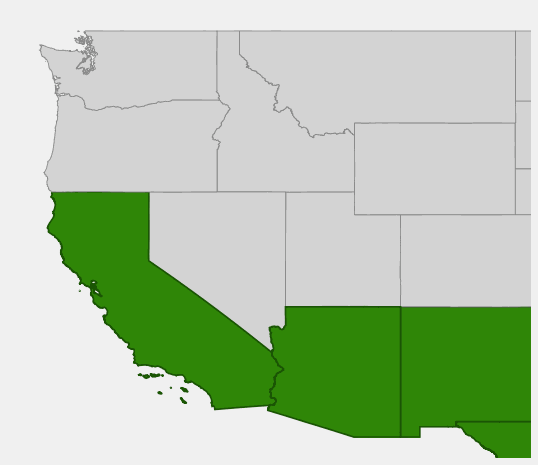
📋 Regional plant lists featuring Snapdragon-vine: Arizona
Growing & Care Guide
Snapdragon-vine is one of the most rewarding native vines for desert gardens — easy to grow, long-blooming, and especially attractive to hummingbirds. It excels in containers as well as in-ground plantings.
Light
Snapdragon-vine grows well in full sun to part shade. It actually benefits from afternoon shade in the hottest, lowest-elevation desert gardens, where it produces more flowers and stays looking better through the summer. In cooler desert locations (above 3,000 ft elevation), full sun is ideal. This shade flexibility makes it useful in a wider range of garden exposures than most desert natives.
Soil & Water
Well-drained soil is important — Snapdragon-vine is drought-tolerant and adapted to rocky, lean desert soils. It will not tolerate wet or waterlogged conditions. Once established, it needs only occasional deep watering in the driest months. In areas with summer monsoon rains, supplemental irrigation is rarely needed. Container plants dry out more quickly and need more frequent watering, but still require good drainage to prevent root rot.
Planting Tips
Plant in spring after the last frost, or in fall for mild desert climates. Provide a trellis, fence, or other support structure before planting — the vine will immediately begin climbing. Seeds can be started indoors in early spring or sown directly outdoors after last frost. Self-sown seedlings appear reliably around established plants and can be left in place or transplanted. Space plants 3–4 feet apart on a trellis, or plant singly for patio containers. Hanging baskets are an excellent option — use a well-drained cactus mix and a large basket for best results.
Pruning & Maintenance
Snapdragon-vine is low-maintenance. Cut back hard (to 6–12 inches) in late winter or early spring to encourage fresh, vigorous growth and abundant new flowering. Remove dead or frost-damaged stems at this time as well. During the growing season, tip-prune occasionally to encourage bushy branching. The vine may die back to the roots after hard frosts but reliably resprouts in spring. No fertilization needed.
Landscape Uses
- Trellis and fence planting — naturally climbs chain-link, wire, and wooden trellises
- Hummingbird garden — one of the best native vines for attracting hummingbirds
- Hanging baskets — excellent for patio containers and hanging displays
- Naturalistic over-shrub planting — weaves gracefully through desert shrubs
- Rock garden vertical element — climbs over boulders and rocky slopes
- Pollinator garden — long bloom season sustains hummingbirds and bees
Wildlife & Ecological Value
Snapdragon-vine is particularly valuable for hummingbirds and long-tongued pollinators, with a bloom season that extends through most of the year in mild desert climates.
For Birds
Snapdragon-vine is one of the best native plants for attracting hummingbirds in the desert Southwest. The tubular, two-lipped flowers are perfectly shaped for hummingbird feeding, and Anna’s, Black-chinned, Costa’s, and Broad-billed Hummingbirds all visit the flowers regularly. The vine is particularly valuable in winter and early spring when other nectar sources are scarce. The fine, twining stems also provide perching sites for small birds.
For Mammals
The plant’s small size and delicate structure do not provide significant mammal habitat, though its flowers are occasionally visited by larger insects whose activity supports insect-eating bats in the area. Deer occasionally browse the foliage in areas with high deer pressure, but the vine is generally not a preferred browse species.
For Pollinators
In addition to hummingbirds, Snapdragon-vine attracts specialist long-tongued native bees that can access the tubular flower interior, as well as butterflies and hummingbird moths. The long bloom season — nearly year-round in frost-free locations — makes it an especially important sustained nectar source. In cooler climates, it bridges the gap between summer and fall blooming seasons when other nectar sources are transitioning.
Ecosystem Role
As a climbing vine, Snapdragon-vine creates additional vegetation structure in the vertical dimension, increasing habitat complexity in desert scrub and canyon communities. Its ability to grow through and over other plants without causing significant damage makes it a benign companion to native shrubs, adding flowering interest and pollinator value to established desert plant communities. The vine’s prolific self-seeding helps it colonize rocky slopes and canyon walls, contributing to plant community diversity in challenging habitats.
Cultural & Historical Uses
Snapdragon-vine is a plant of great botanical interest and was recognized early by Spanish explorers and missionaries in the Sonoran Desert region. The genus Maurandya is named for Catalina Pancratia Maurandy (or Maurandya), an 18th-century Spanish botanical illustrator associated with the Botanical Garden of Cartagena, Spain — one of the relatively rare instances of a plant genus named for a woman in the era of classic botanical exploration. The naming reflects the tradition of honoring botanists and botanical patrons through the Linnaean system of plant nomenclature.
Indigenous peoples of the Sonoran Desert and Trans-Pecos region, including the Tohono O’odham and the Mescalero Apache, were aware of and used the flowers and stems of Snapdragon-vine in traditional cultural contexts. The plant’s beautiful flowers were used decoratively, and the vine’s climbing habit made it useful as a natural binding material in traditional construction and craft. Some sources report mild medicinal uses of related Maurandya species in traditional Mexican herbal medicine, though specific uses for M. antirrhiniflora are less well documented than for other native plants of the region.
In modern horticulture, Snapdragon-vine has attracted increasing interest both within and outside its native range. It has been cultivated in European botanical gardens since at least the 19th century, appreciated for its charming flowers and vigorous climbing habit. Within the American Southwest, native plant nurseries have increasingly made it available to desert gardeners, recognizing its exceptional value as a hummingbird plant, a hanging basket specimen, and a low-water vertical element for desert gardens and patios. Its naturally compact scale and delicate appearance make it one of the most appealing of the Southwest’s native vines.
Frequently Asked Questions
Will Snapdragon-vine survive frost?
Snapdragon-vine is perennial in USDA Zones 8–11, where it may die back to the ground after freezing temperatures but reliably resprouts from the root system. In Zone 7 and colder, treat it as an annual or overwinter container plants indoors. The roots can survive temperatures to about 20°F (-7°C) in well-drained soil.
How do I grow Snapdragon-vine in a hanging basket?
Use a large (12–16 inch) hanging basket with a very well-draining cactus or succulent mix. Plant 2–3 vines per basket for a full effect. Water when the top inch of soil dries out — more frequently than in-ground plants but still allowing the soil to dry between waterings. Place in bright light with some afternoon shade in hot climates. Cut back by half in late winter to refresh the plant.
Does Snapdragon-vine attract hummingbirds?
Yes — Snapdragon-vine is one of the best native plants for hummingbirds in the desert Southwest. The tubular two-lipped flowers are perfectly shaped for hummingbird feeding. Anna’s, Black-chinned, and Costa’s Hummingbirds are regular visitors. Plant it near a patio or window where you can enjoy watching the hummingbird activity.
How long does Snapdragon-vine bloom?
In mild desert climates (Zone 9–11), Snapdragon-vine can bloom nearly year-round with only brief breaks during the coldest winter weeks. In Zone 8, it typically blooms from March through November. This exceptionally long bloom season is one of its most valuable ornamental features.
Can I grow Snapdragon-vine from seed?
Yes — Snapdragon-vine grows readily from seed sown after the last frost date, either directly outdoors or started indoors 6–8 weeks before transplanting. Self-sown seedlings also appear reliably around established plants. The plant’s prolific seeding and easy germination make it simple to propagate and naturalize in suitable garden conditions.

Looking for a nursery that carries Snapdragon-vine?
Browse our native plant nursery directory: Arizona