Wild Hydrangea (Hydrangea arborescens)
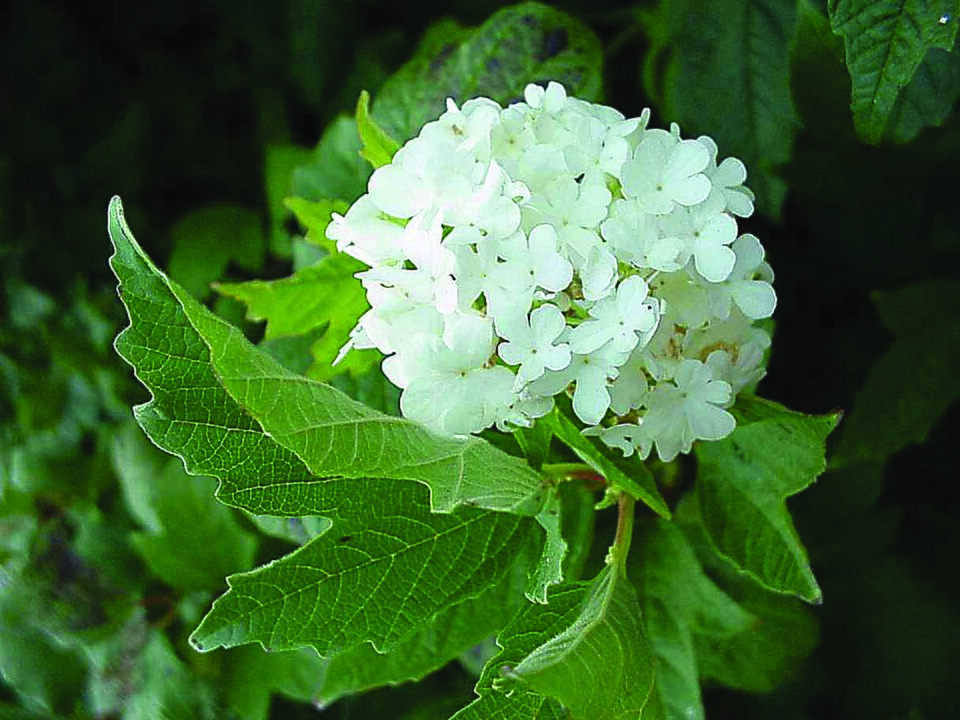
Hydrangea arborescens, commonly known as Wild Hydrangea, Smooth Hydrangea, or Sevenbark, is a deciduous shrub that brings spectacular summer color to woodland gardens and naturalistic landscapes throughout its native eastern North American range. This charming member of the Hydrangeaceae family is celebrated for its massive, dome-shaped clusters of creamy white to greenish-white flowers that bloom from June through July, creating striking displays that can reach 6 to 12 inches across. The common name “Sevenbark” refers to the plant’s distinctive peeling bark that reveals multiple layers of different colors as it exfoliates.
Growing naturally as an understory shrub in deciduous forests, Wild Hydrangea thrives in the dappled shade and rich, moist soils typical of its woodland habitat. Reaching 3 to 6 feet in both height and spread, this native shrub forms rounded, somewhat open clumps that blend beautifully into naturalized plantings. Its simple, opposite leaves are oval to heart-shaped with serrated margins, emerging bright green in spring and maintaining their lush appearance throughout the growing season before turning yellow-green in fall.
What makes Wild Hydrangea particularly valuable in native plant gardening is its adaptability and wildlife benefits. Unlike many of its Asian hydrangea relatives commonly planted in American gardens, Wild Hydrangea evolved alongside local ecosystems and supports native pollinators including bees, butterflies, and beneficial insects. Its preference for part shade to full shade conditions makes it an excellent choice for challenging spots where many flowering shrubs struggle, and its moderate water needs make it more drought-tolerant once established than most other hydrangeas.
Identification
Wild Hydrangea is a medium-sized deciduous shrub that typically grows 3 to 6 feet tall and equally wide, occasionally reaching up to 8 feet in ideal conditions. The plant forms a rounded, somewhat open habit with multiple stems arising from the base. One of its most distinctive features is the bark, which peels and exfoliates to reveal multiple layers of different colored bark underneath — giving rise to its common name “Sevenbark.” The youngest branches are green, becoming brown with age.
Bark
The most identifying characteristic of Wild Hydrangea is its exfoliating bark that peels in thin, papery layers to reveal different colors beneath. On mature stems, the outer bark is grayish-brown and peels away to show lighter brown, tan, or even reddish inner bark. This creates a mottled, multi-layered appearance that is particularly noticeable in winter when the leaves have fallen. Young stems are smooth and green, gradually developing the characteristic peeling bark as they mature.
Leaves
The leaves are simple, opposite, and broadly oval to heart-shaped, measuring 3 to 8 inches long and 2 to 6 inches wide. Each leaf has a serrated (toothed) margin and a pointed tip, with prominent veining that creates a textured appearance. The upper surface is bright to medium green and may have a slightly rough texture, while the underside is paler and often somewhat fuzzy to the touch. Leaves emerge in late spring and maintain their green color until fall, when they turn yellow-green before dropping.
Flowers & Fruit
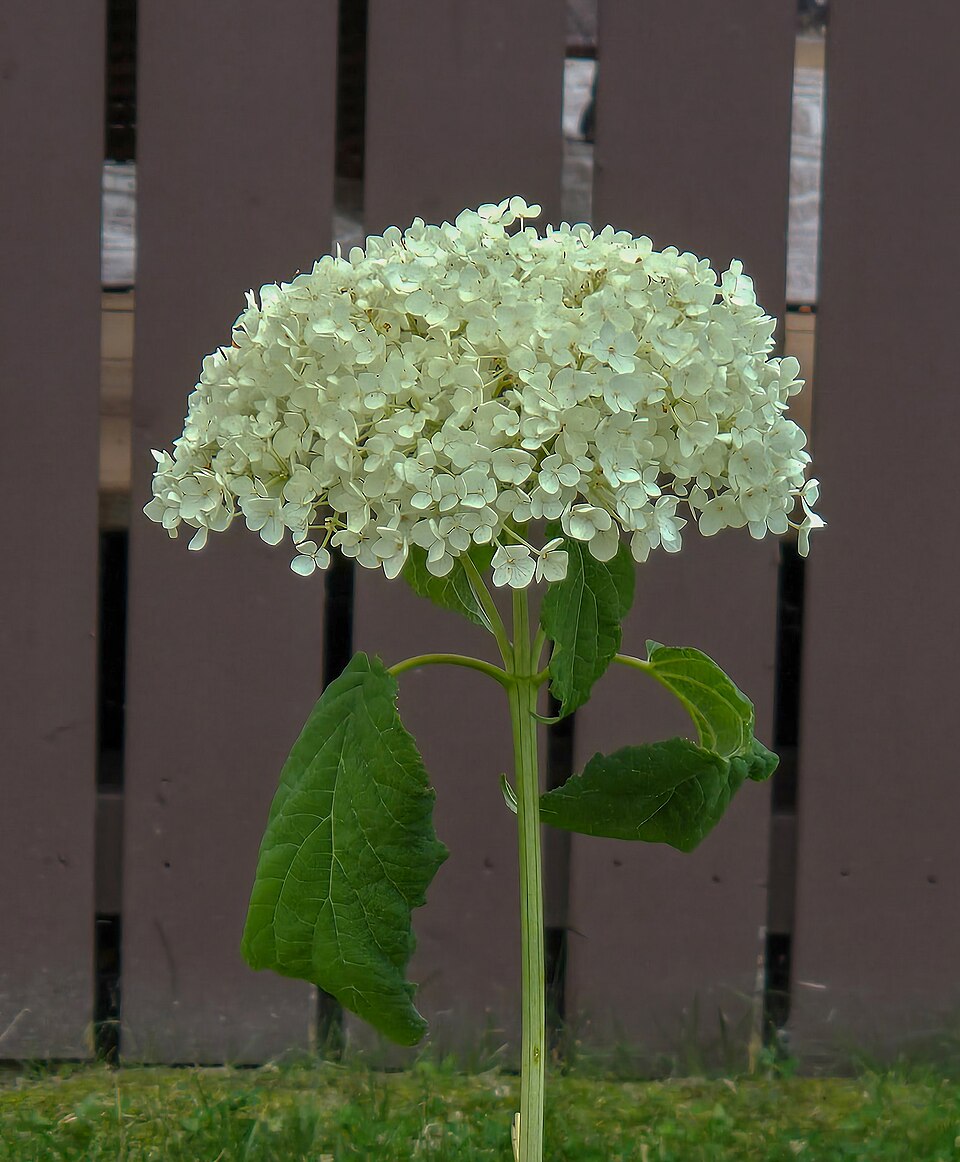
The flowers are Wild Hydrangea’s crowning glory — large, flat-topped to slightly rounded clusters (corymbs) that can measure 4 to 12 inches across. Each cluster contains numerous small, greenish-white to creamy white flowers that bloom from June through July, sometimes extending into August. The individual flowers are small, about ¼ inch across, but the sheer number creates an impressive display. Unlike the large, sterile flowers of many cultivated hydrangeas, Wild Hydrangea’s flowers are mostly fertile and highly attractive to pollinators.
The flower clusters typically start greenish-white and gradually fade to brown as they age, persisting into fall and providing architectural interest in the winter landscape. Following the flowers, small capsules develop containing tiny seeds that are dispersed by wind. While not particularly ornamental, the seed heads add textural interest to winter arrangements and provide food for birds.
Quick Facts
| Scientific Name | Hydrangea arborescens |
| Family | Hydrangeaceae (Hydrangea) |
| Plant Type | Deciduous Shrub |
| Mature Height | 3–6 ft |
| Sun Exposure | Part Shade to Full Shade |
| Water Needs | Moderate |
| Bloom Time | June – July |
| Flower Color | Greenish-white to creamy white |
| USDA Hardiness Zones | 3–9 |
Native Range
Wild Hydrangea has a substantial native range across much of eastern North America, extending from southern New York and Pennsylvania south to northern Florida and Georgia, and west to eastern Oklahoma and Texas. The species is particularly abundant throughout the Appalachian Mountains, Ozark Mountains, and southeastern coastal plains, where it thrives in the rich, moist soils and filtered light of deciduous and mixed forests. Its range closely follows that of other classic eastern woodland wildflowers, reflecting its adaptation to temperate forest conditions.
Throughout its native range, Wild Hydrangea typically grows as an understory shrub in deciduous forests, often along stream banks, in ravines, and on north-facing slopes where moisture levels remain more consistent. It’s commonly found in association with other native woodland plants like Wild Ginger, Trilliums, Bloodroot, and Christmas Fern. The species shows a preference for well-drained but moisture-retentive soils with high organic content — the type of rich woodland soil created by centuries of leaf litter decomposition.
Elevation-wise, Wild Hydrangea can be found from near sea level in coastal areas to elevations of over 4,000 feet in the southern Appalachian Mountains. This broad elevation tolerance reflects its adaptability to different climate conditions within its range, though it consistently seeks out the cool, moist microenvironments provided by forest cover and proximity to water sources.
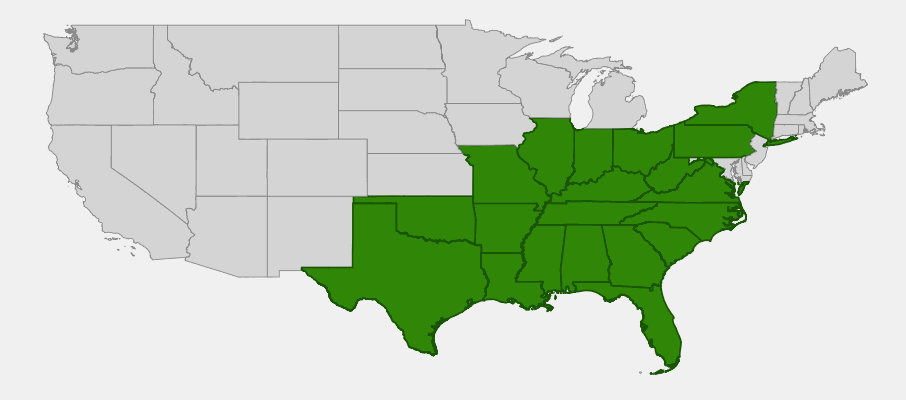
📋 Regional plant lists featuring Wild Hydrangea: North Carolina & South Carolina
Growing & Care Guide
Wild Hydrangea is one of the most rewarding native shrubs to grow, offering spectacular summer flowers, interesting bark texture, and excellent wildlife value with relatively minimal care requirements. Its preference for shade makes it particularly valuable for woodland gardens and other challenging sites where flowering shrubs are often difficult to establish.
Light
Wild Hydrangea performs best in part shade to full shade conditions, tolerating everything from bright dappled sunlight to fairly deep shade. In its native habitat, it typically grows under the canopy of larger trees where it receives filtered light throughout the day. While it can tolerate morning sun, it generally prefers protection from intense afternoon sunlight, which can cause leaf scorch and reduce flowering. In northern regions, it may tolerate more sun, while in southern areas, more shade is beneficial.
Soil & Water
Wild Hydrangea thrives in rich, well-drained but consistently moist soils with high organic content — the type of soil found naturally in deciduous forests. It prefers slightly acidic to neutral soil (pH 5.5–7.0) and benefits greatly from the addition of compost or leaf mold. Good drainage is important to prevent root rot, but the soil should retain moisture during dry periods. Once established, Wild Hydrangea shows good drought tolerance, though flowering and overall appearance are best with consistent moisture.
Planting Tips
Plant Wild Hydrangea in spring or fall when temperatures are moderate. Choose a location that mimics its native woodland habitat — sheltered from strong winds and protected from intense afternoon sun. Dig the planting hole no deeper than the root ball but 2-3 times as wide. Amend heavy clay soils with compost to improve drainage, and amend sandy soils with organic matter to improve moisture retention. Water thoroughly after planting and apply a 2-3 inch layer of organic mulch.
Pruning & Maintenance
Wild Hydrangea requires minimal pruning and is quite low-maintenance once established. Since it blooms on new wood (current year’s growth), any pruning should be done in late winter or very early spring before new growth begins. Remove dead, damaged, or crossing branches, and thin overcrowded stems to improve air circulation. The plant can be cut back hard if renovation is needed, as it responds well to severe pruning by producing vigorous new growth.
Landscape Uses
Wild Hydrangea’s versatility and beauty make it valuable in many garden settings:
- Woodland gardens — perfect for naturalizing in shaded areas
- Shade borders — provides summer color where few other plants bloom
- Native plant gardens — supports local wildlife and pollinators
- Rain gardens — tolerates periodic flooding and wet conditions
- Erosion control — stabilizes soil on slopes and stream banks
- Foundation plantings — attractive near buildings in shaded locations
- Cut flower gardens — flowers excellent for fresh and dried arrangements
Wildlife & Ecological Value
Wild Hydrangea provides significant ecological benefits, supporting a variety of native wildlife species and contributing to the health of woodland ecosystems. As a native plant that evolved alongside local fauna, it offers resources that many non-native ornamental plants cannot provide.
For Birds
While Wild Hydrangea doesn’t produce berries like some native shrubs, it provides valuable nesting habitat and supports the insects that many birds depend on for food. The dense branching structure offers secure nesting sites for smaller songbirds, while the large flower clusters attract numerous insects during blooming season. Birds such as Carolina Wrens, Indigo Buntings, and various warbler species benefit from both the shelter and insect prey associated with the shrub. In winter, the persistent dried flower heads may provide some seeds for finches and other small birds.
For Mammals
White-tailed deer occasionally browse on Wild Hydrangea, though it’s not among their preferred foods, making it somewhat deer-resistant in most situations. Small mammals like chipmunks and squirrels may use the dense branching for shelter and nesting. The plant’s root system and leaf litter contribute to soil ecosystem health, supporting the invertebrate communities that many small mammals depend on for food.
For Pollinators
Wild Hydrangea is particularly valuable for native pollinators, with its abundant small flowers providing nectar and pollen resources during the mid-summer blooming period when many spring wildflowers have finished flowering. Native bees, including bumblebees, sweat bees, and mining bees, are frequent visitors to the flower clusters. Butterflies such as American Ladies, Red Admirals, and various skippers also visit the flowers. Unlike many ornamental hydrangea cultivars that have largely sterile flowers, Wild Hydrangea’s fertile flowers provide actual food resources for pollinators.
Ecosystem Role
As an understory shrub, Wild Hydrangea helps create the layered structure that characterizes healthy deciduous forests. It provides an intermediate canopy layer between the herbaceous wildflowers on the forest floor and the tree canopy above, creating diverse microhabitats for various wildlife species. The plant’s leaf litter contributes organic matter to woodland soils, supporting soil microorganisms and invertebrate communities. Its extensive fibrous root system helps prevent soil erosion, particularly important on slopes and near waterways where it naturally occurs.
Cultural & Historical Uses
Wild Hydrangea has a rich history of use by Indigenous peoples across its native range, who recognized and utilized its medicinal properties long before European colonization. The Cherokee, Creek, and other southeastern tribes used various parts of the plant to treat kidney and bladder problems, giving rise to one of its historical common names, “kidney-bush.” The root bark was particularly prized for its diuretic properties and was prepared as teas or poultices for treating urinary tract issues, kidney stones, and bladder infections.
The Cherokee also used Wild Hydrangea root bark to treat stomach problems and as a “blood medicine” to cleanse the system. Preparations made from the plant were sometimes used externally to treat wounds, burns, and eye infections. The distinctive peeling bark that gives the plant its “Sevenbark” name was often collected and dried for medicinal use, with different layers believed to have varying potencies.
European settlers learned of these uses from Indigenous peoples and incorporated Wild Hydrangea into their own folk medicine practices. By the 19th century, it had found its way into formal medical texts and was listed in the United States Pharmacopoeia as a treatment for kidney and urinary tract disorders. The plant was sometimes cultivated specifically for medicinal purposes, though it never achieved the commercial importance of some other native medicinal plants.
In addition to its medicinal uses, Wild Hydrangea’s strong, flexible stems were sometimes used for basket making and other crafts by both Indigenous peoples and early settlers. The wood, while not particularly durable, could be fashioned into small tools and handles. However, it was primarily valued for its healing properties rather than as a source of materials.
Today, Wild Hydrangea is appreciated primarily as an ornamental plant, though some herbalists still recognize its traditional medicinal applications. Modern research has identified compounds in the plant that support its historical use as a diuretic, though it should be noted that any medicinal use should be undertaken only with proper knowledge and professional guidance. The plant’s greatest value today lies in its contribution to native plant gardens, ecological restoration, and wildlife habitat.
Frequently Asked Questions
How does Wild Hydrangea differ from Asian hydrangea species commonly sold in nurseries?
Wild Hydrangea is native to North America and evolved to support local ecosystems, while most garden hydrangeas (like H. macrophylla and H. paniculata) are Asian species. Wild Hydrangea blooms on new wood, making it easier to prune, tolerates more shade, and provides actual nectar for pollinators rather than just showy sterile flowers. It’s also generally more drought-tolerant once established.
Will Wild Hydrangea flower in full shade?
Wild Hydrangea can flower in full shade, though the bloom display may be somewhat less prolific than in brighter conditions. It’s one of the few flowering shrubs that will reliably bloom in fairly deep shade, making it valuable for challenging woodland locations. Even in deep shade, you can expect a good show of flowers, just perhaps not quite as massive as in brighter spots.
How can I tell Wild Hydrangea apart from cultivated varieties?
Wild Hydrangea typically has smaller, more delicate flower clusters composed of many small fertile flowers, whereas cultivated varieties often have larger clusters with mostly large, sterile “showy” flowers. The native species also has the characteristic peeling “sevenbark” on older stems and a more open, natural growth habit compared to the denser, more compact forms of many cultivars.
Is Wild Hydrangea deer resistant?
Wild Hydrangea has moderate deer resistance — deer may occasionally browse it, especially when other food sources are scarce, but it’s generally not a preferred food. In areas with heavy deer pressure, some protection may be needed for young plants, but established shrubs typically suffer minimal damage.
When should I prune my Wild Hydrangea?
Prune Wild Hydrangea in late winter or very early spring before new growth begins, as it blooms on new wood. Unlike mophead hydrangeas that bloom on old wood and require careful timing, Wild Hydrangea is very forgiving about pruning timing. You can even cut it back quite hard if renovation is needed, and it will bloom the same year on new growth.

Looking for a nursery that carries Wild Hydrangea?
Browse our native plant nursery directory: North Carolina · South Carolina