
Wild Plum (Prunus americana)
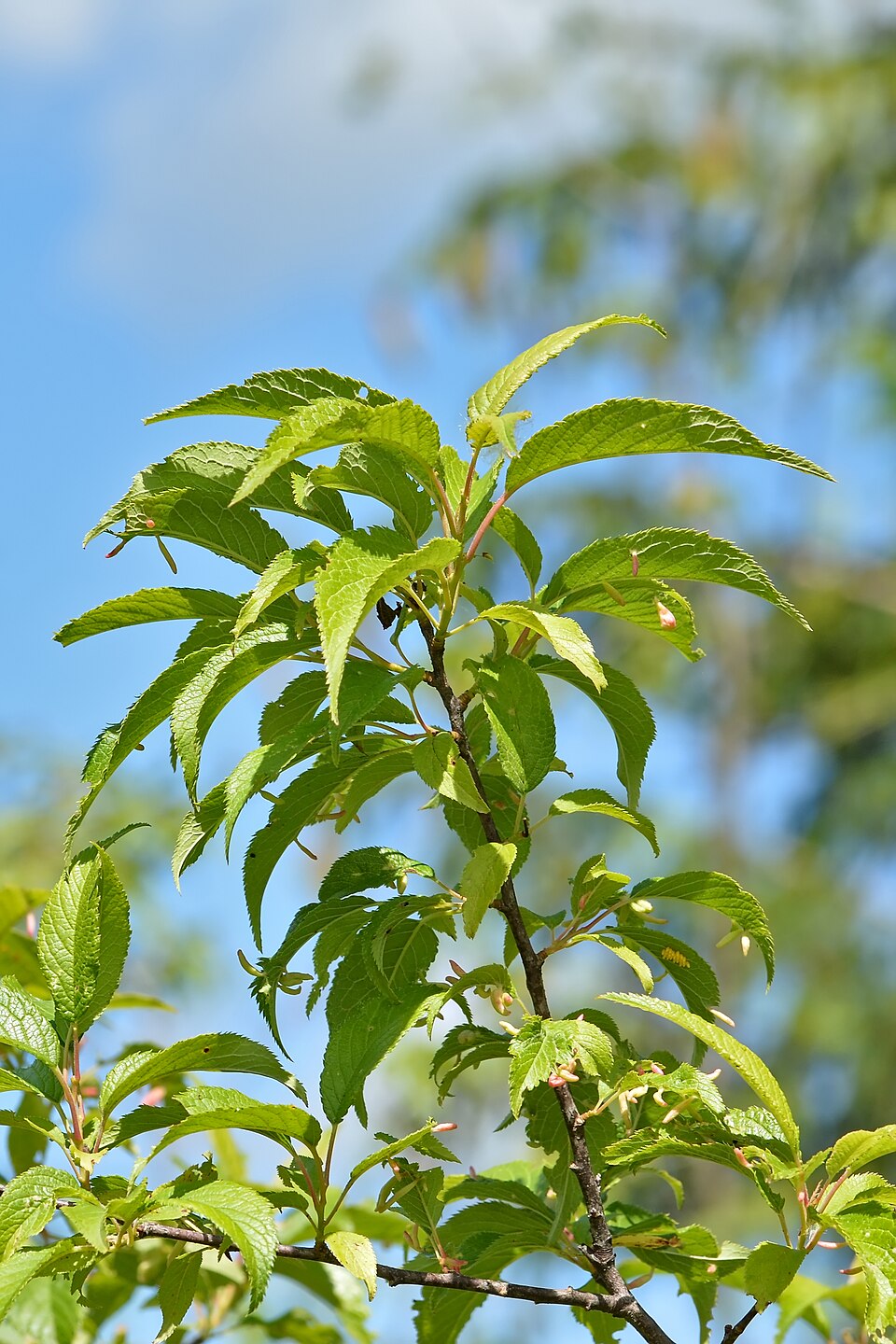
Prunus americana, commonly known as Wild Plum or American Plum, is a hardy native deciduous tree that stands as one of North America’s most widespread and ecologically valuable fruit-bearing species. This member of the Rosaceae (rose) family creates spectacular spring displays with masses of fragrant white flowers that emerge before the leaves, transforming entire hillsides and stream valleys into clouds of pristine white blossoms. The common name “Wild Plum” perfectly captures its untamed nature — this resilient species colonizes abandoned farmland, forms dense thickets along fence rows, and spreads through root suckers to create wildlife-rich shrublands across the continent.
Growing naturally from the Rocky Mountains to the Atlantic Coast and from Canada to the Gulf of Mexico, Wild Plum demonstrates remarkable adaptability to diverse climatic conditions and soil types. It reaches 20 to 35 feet tall with a broadly spreading crown, producing small but flavorful red to yellow fruits that ripen in late summer. These tart-sweet plums have sustained both wildlife and human populations for millennia — Indigenous peoples dried them for winter food, early settlers made preserves and jellies, and today they remain prized by foragers and wildlife enthusiasts alike.
Beyond its fruit production, Wild Plum serves as a cornerstone species in North American ecosystems. The early spring flowers provide critical nectar when few other plants are blooming, the dense branching structure offers nesting sites for songbirds, and the fruit feeds everything from wild turkeys to black bears. Its tendency to form thickets makes it invaluable for erosion control and wildlife habitat restoration, while its drought tolerance and cold hardiness make it an excellent choice for sustainable landscaping across much of the continent.
Identification
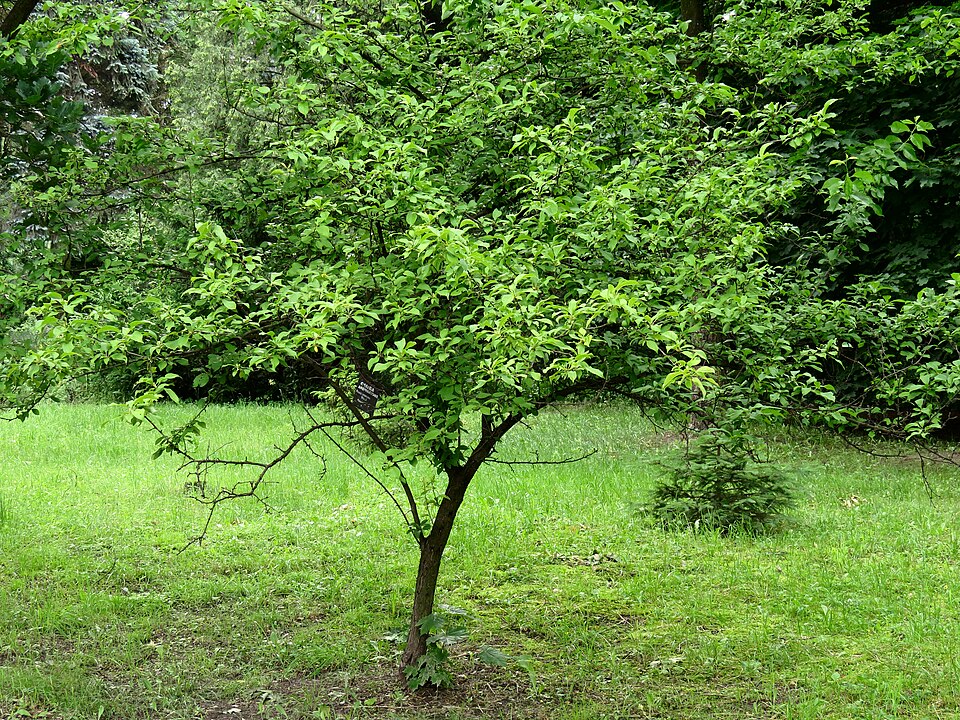
Wild Plum typically grows as a large shrub or small tree, reaching 20 to 35 feet tall with an equal or greater spread. The growth habit is often multi-stemmed and thicket-forming, creating dense colonies through root suckers. The crown is broadly rounded and somewhat irregular, with branches that may be slightly zigzagged and armed with occasional short spur shoots.
Bark
The bark on young twigs is smooth and reddish-brown to gray-brown, becoming darker and developing shallow furrows with age. On mature trunks, the bark is dark brown to nearly black with irregular shallow fissures and narrow flat ridges. The bark has a slight bitter almond scent when scratched or broken, characteristic of the Prunus genus.
Leaves
The leaves are simple, alternate, and deciduous, measuring 2 to 4 inches long and 1 to 2 inches wide. They have an oval to ovate shape with a pointed tip and rounded base. The leaf margins are sharply serrated with fine teeth. The upper surface is dark green and smooth, while the underside is paler and may have fine hairs along the midrib and veins. Two small glands are often present at the base of the leaf blade where it meets the petiole. In autumn, the foliage turns attractive shades of yellow to orange-red before dropping.
Flowers & Fruit
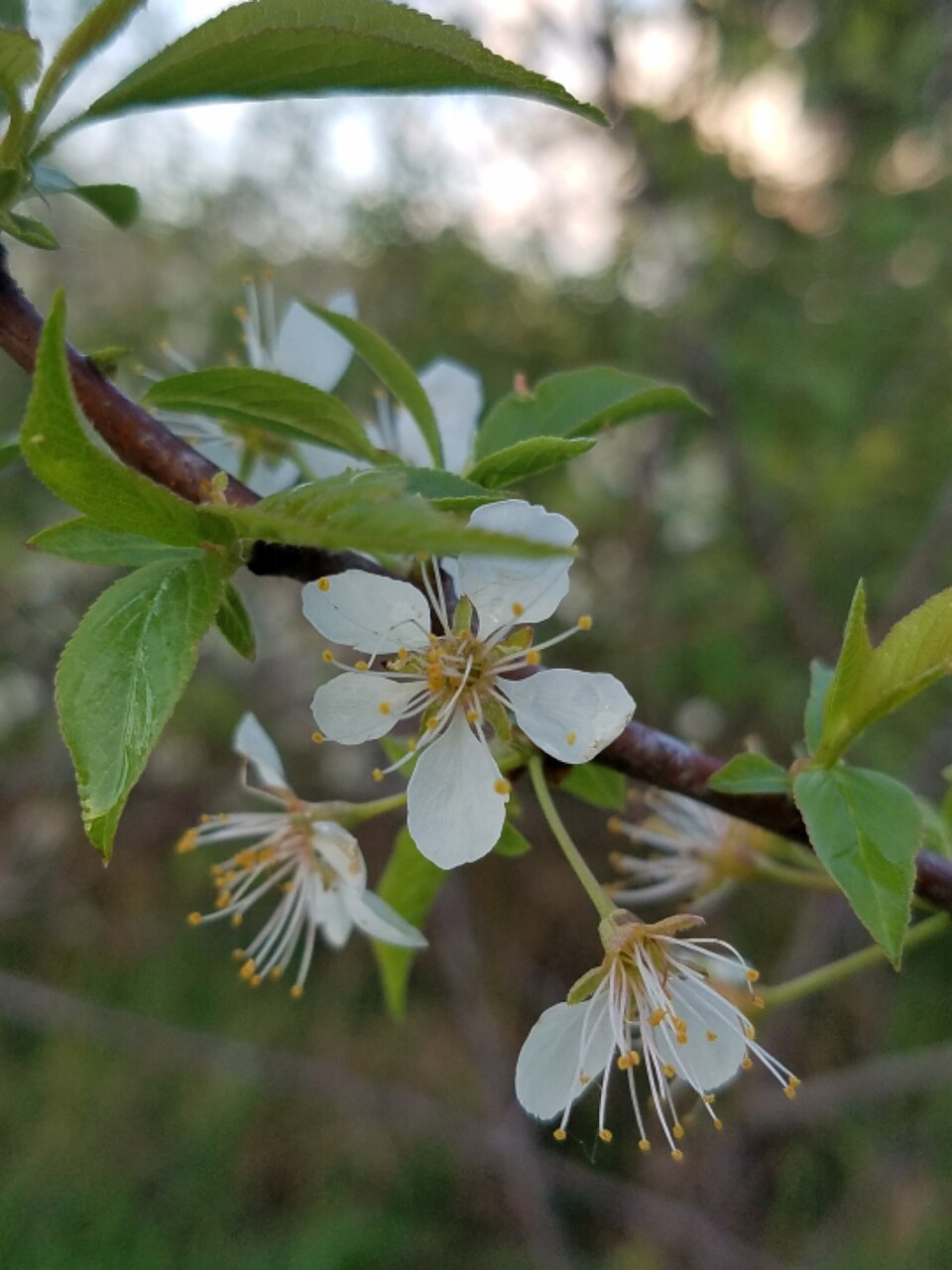
The flowers are the Wild Plum’s most striking feature, appearing in early spring before the leaves emerge. They are white, fragrant, and ¾ to 1 inch across with five rounded petals and numerous stamens. The flowers appear in clusters of 2 to 5 from buds along the previous year’s growth, creating a spectacular mass bloom effect. The sweet fragrance can be detected from considerable distances and is particularly strong in the evening.
The fruit is a drupe, ¾ to 1 inch in diameter, with smooth skin that ranges from bright red to yellow or occasionally blue-purple, often with a waxy bloom. The flesh is yellow, juicy, and tart to sweet, surrounding a large, flattened pit. Fruits ripen from mid to late summer and are eagerly consumed by wildlife, though they can also be harvested for human use in jams, jellies, and wine.
Quick Facts
| Scientific Name | Prunus americana |
| Family | Rosaceae (Rose) |
| Plant Type | Deciduous Tree / Large Shrub |
| Mature Height | 20–35 ft |
| Sun Exposure | Full Sun to Part Shade |
| Water Needs | Low to Moderate |
| Bloom Time | April – May |
| Flower Color | White |
| USDA Hardiness Zones | 3–8 |
Native Range
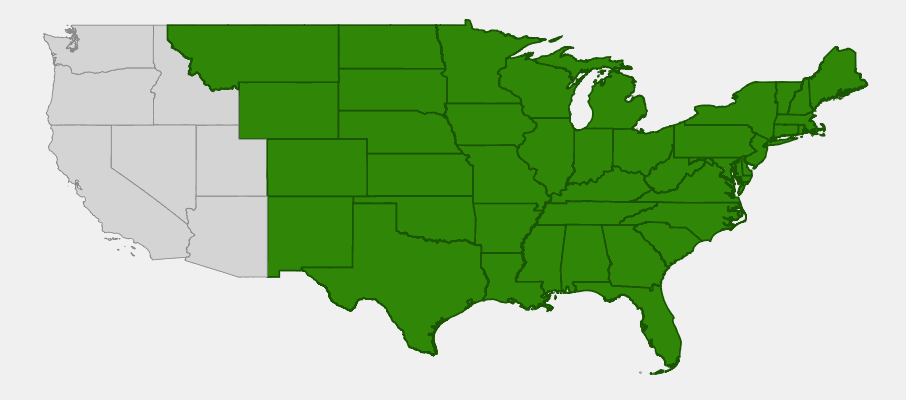
Wild Plum has one of the most extensive native ranges of any North American tree species, stretching from southern Canada south to northern Mexico and from the Rocky Mountains east to the Atlantic Coast. This remarkable distribution encompasses prairies, woodlands, stream valleys, and forest edges across most of the continental United States and southern Canada. The species is particularly abundant in the Great Plains and eastern deciduous forests, where it often forms extensive thickets in abandoned agricultural areas.
In its natural habitat, Wild Plum typically grows along stream banks, in open woodlands, prairie edges, and disturbed areas. It thrives in the transitional zones between forests and grasslands, where it plays a crucial ecological role in succession and habitat diversity. The species demonstrates exceptional adaptability to climate extremes, from the hot summers and cold winters of the northern Plains to the humid conditions of the southeastern coastal plain.
This broad distribution reflects Wild Plum’s remarkable tolerance for diverse soil conditions and climatic extremes. It can be found growing in everything from heavy clay to sandy soils, from slightly acidic to alkaline conditions, and from areas receiving 15 inches of annual precipitation to those receiving over 50 inches. This adaptability has made it a valuable species for restoration projects across much of North America.
📋 Regional plant lists featuring Wild Plum: North Dakota, South Dakota & Western Minnesota
Growing & Care Guide
Wild Plum is one of the easiest native trees to establish and grow, making it an excellent choice for both novice and experienced gardeners. Its natural hardiness and adaptability mean it requires minimal care once established, while its attractive flowers, fruit, and wildlife value provide season-long interest in the landscape.
Light
Wild Plum performs best in full sun but tolerates partial shade quite well. In full sun, it produces more abundant flowers and fruit, develops denser branching, and maintains better disease resistance. In partial shade, it may become somewhat more open in growth habit but still flowers and fruits adequately. Avoid deep shade, where flowering and fruiting will be significantly reduced.
Soil & Water
This adaptable species grows in a wide range of soil types, from heavy clay to sandy loam, and tolerates both slightly acidic and alkaline conditions (pH 6.0-8.0). Good drainage is preferred but not essential — Wild Plum can handle periodic flooding and drought with equal ease. Once established, it is quite drought tolerant, though consistent moisture will improve growth and fruit production. It’s particularly well-suited to challenging sites where other fruit trees might struggle.
Planting Tips
Plant Wild Plum in spring after the last frost or in fall 6-8 weeks before hard freeze. Choose a sunny location with room for the tree to spread — remember that it naturally forms colonies through root suckers. Space individual trees 15-20 feet apart, or plant closer if you want to encourage thicket formation for wildlife habitat. Water regularly the first year to establish a deep root system.
Pruning & Maintenance
Wild Plum requires minimal pruning beyond removing dead, damaged, or crossing branches in late winter. If you want to maintain a single-trunk tree form, remove suckers regularly. For wildlife habitat or natural landscaping, allow some suckering to create a more naturalistic colony. The species is generally pest and disease resistant, though it may occasionally be affected by black knot fungus or aphids.
Landscape Uses
Wild Plum’s versatility makes it valuable for many landscape applications:
- Wildlife gardens — exceptional four-season wildlife value
- Erosion control on slopes and stream banks
- Windbreaks and privacy screens when allowed to sucker
- Edible landscaping — fruit for jams, jellies, and fresh eating
- Prairie restoration and naturalized areas
- Pollinator gardens — early nectar source for bees
- Specimen tree for spring flower display
- Hedge or barrier planting with seasonal interest
Wildlife & Ecological Value
Wild Plum stands among the most valuable native plants for supporting North American wildlife, providing critical resources across multiple seasons and supporting an incredible diversity of species from insects to large mammals.
For Birds
Over 45 species of birds consume Wild Plum fruits, including Northern Cardinals, Blue Jays, American Robins, Cedar Waxwings, Wild Turkeys, Ruffed Grouse, and Mourning Doves. The dense branching structure provides excellent nesting sites for songbirds, particularly catbirds, mockingbirds, and brown thrashers. During migration, the early spring flowers attract insects that fuel insectivorous birds, while the late summer fruit provides essential energy for fall migration.
For Mammals
Black bears, raccoons, opossums, squirrels, and chipmunks all rely on Wild Plum fruits for late-summer nutrition. White-tailed deer browse the twigs and foliage, particularly in winter when other food sources are scarce. Rabbits and other small mammals find shelter in the dense thickets, while the root system provides habitat for various ground-dwelling creatures. Even livestock will consume fallen fruit and browse the foliage when available.
For Pollinators
The early spring bloom makes Wild Plum critically important for pollinators emerging from winter dormancy. Native bees, honeybees, butterflies, and beneficial wasps all visit the abundant nectar-rich flowers. The timing is particularly crucial for early-emerging native bee species that depend on tree blossoms for their first major nectar source of the year. Some specialist bee species are specifically adapted to Prunus flowers.
Ecosystem Role
As a pioneer species, Wild Plum plays a crucial role in ecological succession, helping to transform disturbed areas into more diverse plant communities. Its nitrogen-fixing bacterial associates help improve soil fertility, while its extensive root system helps prevent erosion and improve soil structure. The dense thickets it forms provide corridors for wildlife movement across the landscape and create microhabitats that support diverse plant and animal communities.
Cultural & Historical Uses
Wild Plum holds a prominent place in the cultural history of North America, serving as both sustenance and medicine for Indigenous peoples long before European settlement. Numerous tribes across the continent — including the Lakota, Cherokee, Ojibwe, and many Plains tribes — incorporated Wild Plum into their seasonal food cycles. The fruit was eaten fresh in late summer, but more importantly, it was dried and stored for winter consumption, providing essential vitamins during the lean months.
Native American uses extended far beyond nutrition. The bark was used medicinally to treat diarrhea, stomach ailments, and mouth sores, while the root bark served as a remedy for kidney and bladder problems. The thorny branches were sometimes used in the construction of fish weirs and defensive barriers around villages. During ceremonies, the fragrant spring blossoms symbolized renewal and the promise of abundance to come.
European settlers quickly adopted Wild Plum into their frontier diet, using the tart fruit for preserves, jellies, wine, and dried leather. Pioneer women prized Wild Plum jelly for its beautiful color and unique flavor, while the wine became a staple in many frontier households. The predictable fruiting made Wild Plum thickets valuable landmarks and seasonal gathering places for scattered rural communities. Even today, many rural families maintain traditional Wild Plum harvesting sites passed down through generations.
In modern times, Wild Plum has found renewed appreciation among foragers, permaculture enthusiasts, and conservation-minded gardeners. The fruit makes excellent preserves, syrups, and fermented beverages, while the tree itself serves as a low-maintenance addition to food forests and wildlife gardens. Its cultural significance continues through Native American communities, where traditional harvesting and preparation methods are still practiced and passed on to younger generations.
Frequently Asked Questions
Are Wild Plums safe to eat?
Yes, Wild Plum fruits are completely safe and edible when ripe. They’re quite tart when eaten fresh but make excellent jams, jellies, and preserves. However, like all stone fruits, the pits contain compounds that can be toxic if consumed in large quantities, so avoid eating the seeds.
How long does it take for Wild Plum to produce fruit?
Trees typically begin producing fruit 3-5 years after planting, with full production reached around 7-10 years. However, fruit production can vary significantly based on growing conditions, pollination, and weather during blooming.
Do I need more than one tree for fruit production?
While Wild Plum can self-pollinate to some degree, cross-pollination with another tree significantly increases fruit set and quality. For best results, plant at least two different Wild Plum trees or ensure there are other Prunus species nearby.
How do I control suckering if I want just one tree?
Remove root suckers as soon as they appear by cutting them off at ground level or, better yet, digging down and removing them from the root. Regular mowing around the tree will also keep suckers under control. However, consider that the natural thicket formation provides exceptional wildlife habitat.
When is the best time to harvest Wild Plums?
Harvest when fruits are fully colored and yield slightly to gentle pressure, typically in late August through September depending on your location. Underripe fruits are very tart, while overripe fruits become mushy quickly. The fruit is ready when it easily separates from the branch with a gentle twist.

Looking for a nursery that carries Wild Plum?
Browse our native plant nursery directory: North Dakota · South Dakota · Minnesota