
Yellow Root (Xanthorhiza simplicissima)
Xanthorhiza simplicissima, commonly known as Yellow Root, Yellowroot, or Shrub Yellow Root, is a distinctive low-growing native shrub of the southeastern Appalachian Mountains that offers exceptional value for challenging garden situations. This unique member of the Ranunculaceae (buttercup) family is the sole species in its genus, making it truly one-of-a-kind in North American flora. The plant earned its common name from its bright yellow inner bark and roots, which have been used medicinally for centuries and give the plant its distinctive identification feature.
Growing naturally along stream banks, in rich mountain coves, and on moist, shaded slopes, Yellow Root is a low-growing deciduous shrub reaching just 2 feet tall but spreading readily by underground rhizomes to form extensive colonies. In spring, before the leaves fully emerge, the plant produces drooping clusters of small, plum-colored flowers that add subtle beauty to the early woodland garden. However, the real show comes in autumn when the compound leaves turn brilliant shades of orange, yellow, and purple, creating one of the most spectacular fall displays of any native understory shrub.
What makes Yellow Root particularly valuable in modern landscapes is its unmatched ability to thrive in deep shade, wet soils, and challenging conditions where few other plants will grow, while providing outstanding fall color and serving as an excellent groundcover for naturalizing large areas. This tough native gem is perfect for erosion control on slopes, understory plantings beneath trees, and any location that needs a reliable, low-maintenance shrub with exceptional seasonal interest.
Identification
Yellow Root is easily recognized by its low, spreading growth habit and distinctive compound leaves. The plant typically grows 1 to 2 feet tall but can spread indefinitely through underground rhizomes, forming extensive colonies over time.
Growth Habit & Stems
Yellow Root grows as a colony-forming shrub with numerous upright to slightly arching stems arising from creeping underground rhizomes. The stems are slender, brownish, and somewhat woody at the base, becoming more herbaceous toward the tips. The most distinctive identification feature is the bright yellow color revealed when the bark or roots are scratched or cut — this yellow interior is immediately recognizable and gives the plant its common name.
Leaves
The leaves are alternate and pinnately compound, typically consisting of 3 to 5 leaflets arranged along a central stalk. Each leaflet is 1½ to 3 inches long, oval to lanceolate in shape, with deeply serrated (toothed) margins that give the foliage a delicate, fern-like appearance. The leaflets are bright green during the growing season with a smooth, somewhat glossy texture. The compound leaf structure and serrated margins help distinguish Yellow Root from other low-growing shrubs in its native habitat.
Flowers
The flowers appear in early spring (April to May) before or just as the leaves are emerging, creating a distinctive timing that helps with identification. The individual flowers are small, about ¼ inch across, and arranged in drooping, branched clusters (panicles) that hang from the branch tips. Each flower has 5 small, plum-colored to brownish-purple petals and numerous stamens, giving them a delicate, understated appearance. While not showy from a distance, the flowers have an intricate beauty when viewed up close and provide early-season nectar for emerging pollinators.
Fruit
The fruits are small, inflated follicles (seed pods) that develop in late summer and split open when mature to release the seeds. The fruits are not particularly ornamental but help with plant identification and provide some wildlife value. Each fruit contains 1-2 small, dark seeds.
Fall Color
Yellow Root’s autumn display is truly spectacular and often its most distinctive feature. The compound leaves turn brilliant combinations of orange, yellow, red, and purple, often with multiple colors on the same plant or even the same leaf. The fall color typically begins in mid to late October and can persist for several weeks, making it one of the most reliable sources of autumn color in shaded woodland gardens.
Quick Facts
| Scientific Name | Xanthorhiza simplicissima |
| Family | Ranunculaceae (Buttercup) |
| Plant Type | Deciduous Shrub (Colony-forming) |
| Mature Height | 2 ft |
| Sun Exposure | Full Sun to Part Shade |
| Water Needs | Moderate to High |
| Bloom Time | April – May |
| Flower Color | Plum-colored to purple-brown |
| USDA Hardiness Zones | 4–9 |
Native Range
Yellow Root has a relatively limited native range, being endemic to the Appalachian Mountains and adjacent regions of the southeastern United States. Its natural distribution extends from southern New York and Pennsylvania south through the mountains of Virginia, West Virginia, Kentucky, Tennessee, North Carolina, South Carolina, and northern Georgia and Alabama. The species reaches its greatest abundance in the southern Appalachians, where it thrives in the cool, moist conditions of mountain streams and coves.
In its native habitat, Yellow Root is found primarily along stream banks, in rich mountain coves, and on moist, north-facing slopes where it benefits from consistent moisture and protection from harsh sun and wind. It often grows in association with other moisture-loving Appalachian natives like Wild Ginger (Asarum canadense), Bloodroot (Sanguinaria canadensis), and various fern species. The plant shows a particular affinity for areas with rich, organic soil and reliable moisture, though it can tolerate periodic flooding and drought once established.
While Yellow Root remains relatively secure throughout its native range, populations have been impacted by development, logging, and changes to watershed hydrology in some areas. The plant’s limited natural distribution and specific habitat requirements make it important to conserve existing populations and include it in native plant gardens where appropriate conditions can be provided.
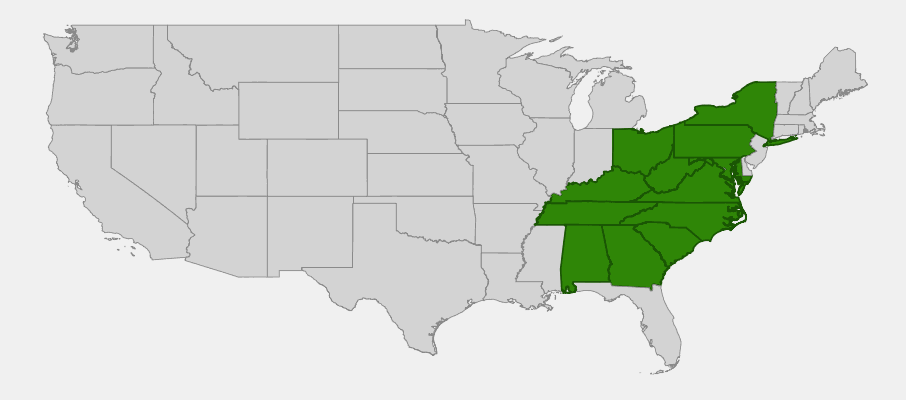
📋 Regional plant lists featuring Yellow Root: North Carolina & South Carolina
Growing & Care Guide
Yellow Root is an excellent low-maintenance shrub that thrives in conditions that challenge many other plants, making it invaluable for difficult garden situations. Once established, it requires minimal care and provides reliable performance year after year.
Light
Yellow Root is remarkably adaptable to different light conditions, thriving in everything from full sun to deep shade, though it performs best with morning sun and afternoon shade or filtered light throughout the day. In deep shade, the plant may become somewhat more open in habit but will still provide good groundcover and excellent fall color. In full sun, particularly in hot climates, it requires more consistent moisture and may benefit from mulching to keep roots cool.
Soil & Water
This native shrub prefers moist, well-draining soil rich in organic matter, conditions that mimic its native mountain stream habitat. It thrives in slightly acidic to neutral soil (pH 5.0-7.0) but is adaptable to various soil types including clay, loam, and rocky soils. Yellow Root has moderate to high water needs and appreciates consistent moisture, particularly during establishment and dry periods. However, established plants show good drought tolerance, especially when grown in shadier locations with good mulch coverage.
Planting Tips
Plant Yellow Root in fall or early spring when temperatures are mild and moisture is more reliable. Choose a location with reliable moisture and some protection from harsh afternoon sun, especially in southern regions. Space plants 2-3 feet apart if planting multiple specimens, keeping in mind that the plant will spread over time to fill in gaps. The shrub transplants well from container stock and is increasingly available from native plant nurseries specializing in Appalachian flora.
Maintenance & Pruning
Yellow Root is virtually maintenance-free once established. The plant requires no regular pruning, though dead or damaged stems can be removed in late winter or early spring. If size control is needed, the spreading can be managed by removing outer shoots, but this is rarely necessary in most landscape situations. The plant benefits from a 2-3 inch layer of organic mulch to maintain soil moisture and suppress weeds, especially during the first few years after planting.
Propagation
Yellow Root is easily propagated by division of the rhizomes in fall or early spring. Simply dig up sections of the colony with both roots and shoots attached, and replant immediately. The plant also grows readily from root cuttings and can be propagated from seed, though seed propagation is slower and requires specific conditions.
Landscape Uses
Yellow Root’s unique characteristics make it valuable in many challenging landscape applications:
- Groundcover — excellent for large areas needing low-maintenance coverage
- Slope stabilization — rhizomes help prevent erosion on banks and slopes
- Woodland gardens — perfect understory plant for naturalistic settings
- Rain gardens — tolerates periodic flooding and moisture fluctuations
- Shade gardens — thrives where few other flowering shrubs succeed
- Stream edges — ideal for naturalistic water garden borders
- Fall color gardens — spectacular autumn display in challenging sites
- Wildlife gardens — provides habitat and food for native species
Wildlife & Ecological Value
While Yellow Root may seem modest in appearance, it provides important ecological services and supports various wildlife species, particularly in its native Appalachian forest ecosystems.
For Pollinators
The early spring flowers provide crucial nectar and pollen for emerging native bees, small butterflies, and other beneficial insects at a time when few other sources are available. The timing of the bloom, coinciding with the emergence of many overwintering pollinators, makes Yellow Root particularly valuable for supporting early-season pollinator activity in woodland settings.
For Birds
While the seeds are small and not a major food source for birds, the dense, low growth habit provides excellent cover for ground-dwelling birds and small mammals. The colonies create protected spaces where birds can forage for insects and other food items while remaining sheltered from predators. Various songbirds may use the flexible stems and foliage for nesting material.
For Small Wildlife
The extensive underground rhizome system and dense surface growth create ideal habitat for small mammals, amphibians, and reptiles. Salamanders, in particular, benefit from the cool, moist conditions created by Yellow Root colonies, while small mammals use the dense growth for cover and travel corridors along stream banks and through woodland areas.
Ecosystem Role
Yellow Root plays a crucial role in stream bank stabilization and erosion control through its extensive rhizome system. The plant helps maintain soil integrity along waterways while creating habitat complexity in riparian zones. Its leaf litter decomposes readily, contributing organic matter to the soil and supporting the complex web of soil organisms that form the foundation of forest ecosystem health. As a native groundcover that can form extensive colonies, Yellow Root also helps suppress invasive species in sensitive woodland areas.
Cultural & Historical Uses
Yellow Root holds a significant place in traditional Appalachian medicine and Cherokee ethnobotany, with a history of use that extends back centuries before European contact. The Cherokee and other southeastern tribes recognized the medicinal properties of the bright yellow roots and inner bark, using carefully prepared extracts for a variety of ailments including digestive issues, infections, and wounds. The plant’s Cherokee name translates roughly to “yellow medicine,” reflecting its importance in traditional healing practices.
The most notable traditional use was as a treatment for various digestive ailments, with the yellow root being prepared as a tea or tincture. The bright yellow color of the roots, caused by the alkaloid berberine, was seen as a signature indicating the plant’s medicinal properties — a common belief in traditional plant medicine. Cherokee healers also used Yellow Root preparations for treating sore throats, mouth ulcers, and external wounds, applications that may have had some scientific basis given the antimicrobial properties of berberine.
European settlers in the Appalachian region learned of Yellow Root’s medicinal uses from Indigenous peoples and incorporated it into their own folk medicine traditions. During the 18th and 19th centuries, the plant became an important component of Appalachian folk remedies, often called “yellowroot tea” or “yellowroot tonic.” The roots were typically harvested in fall or early spring when the concentration of active compounds was highest, then dried for year-round use.
In early American pharmacology, Yellow Root was recognized as a source of berberine, an alkaloid compound with known antimicrobial and anti-inflammatory properties. However, with the development of modern pharmaceuticals and concerns about potential toxicity, the plant’s medicinal use has largely been discontinued except in some traditional folk medicine contexts. Today, any medicinal use should be approached with caution and professional supervision.
Beyond its medicinal applications, Yellow Root was occasionally used for dyeing, with the bright yellow roots and bark providing a natural yellow dye for textiles and crafts. This use was never as widespread as its medicinal applications but represents another way that Appalachian communities utilized this distinctive native plant.
Frequently Asked Questions
How fast does Yellow Root spread?
Yellow Root spreads at a moderate pace, typically expanding 6-12 inches per year through underground rhizomes. The spreading rate depends on growing conditions — it spreads faster in moist, rich soil and more slowly in drier or poorer conditions. While it forms colonies over time, it’s not aggressively invasive and can be managed through occasional division or removal of outer shoots.
Can Yellow Root grow in dry conditions?
While Yellow Root prefers consistently moist conditions, established plants show good drought tolerance, especially when grown in shadier locations. However, plants grown in dry conditions may be smaller, less vigorous, and provide less spectacular fall color than those grown with adequate moisture. For best performance, ensure regular watering during dry spells, especially in the first few years after planting.
Is Yellow Root deer resistant?
Yellow Root shows good resistance to deer browsing, likely due to the bitter alkaloids in its foliage and stems. While no plant is completely deer-proof, Yellow Root is typically left alone even in areas with heavy deer pressure, making it a good choice for woodland gardens where deer damage is a concern.
When is the best time to divide Yellow Root?
The best time for division is in early spring before new growth begins or in fall after the foliage has dropped. Divisions are easy to make — simply dig up sections of the colony with both roots and shoots attached. Each division should have several healthy shoots and a portion of the rhizome system. Replant immediately and water well until established.
Why are my Yellow Root leaves turning yellow in summer?
Premature yellowing of leaves during the growing season usually indicates stress, most commonly from drought, excessive heat, or poor drainage. Yellow Root prefers consistent moisture and some protection from harsh afternoon sun. If the plant is in full sun, ensure adequate watering and consider providing some afternoon shade. Waterlogged conditions can also cause yellowing, so ensure good drainage.

Looking for a nursery that carries Yellow Root?
Browse our native plant nursery directory: North Carolina · South Carolina