Yellowwood (Cladrastis kentuckea)
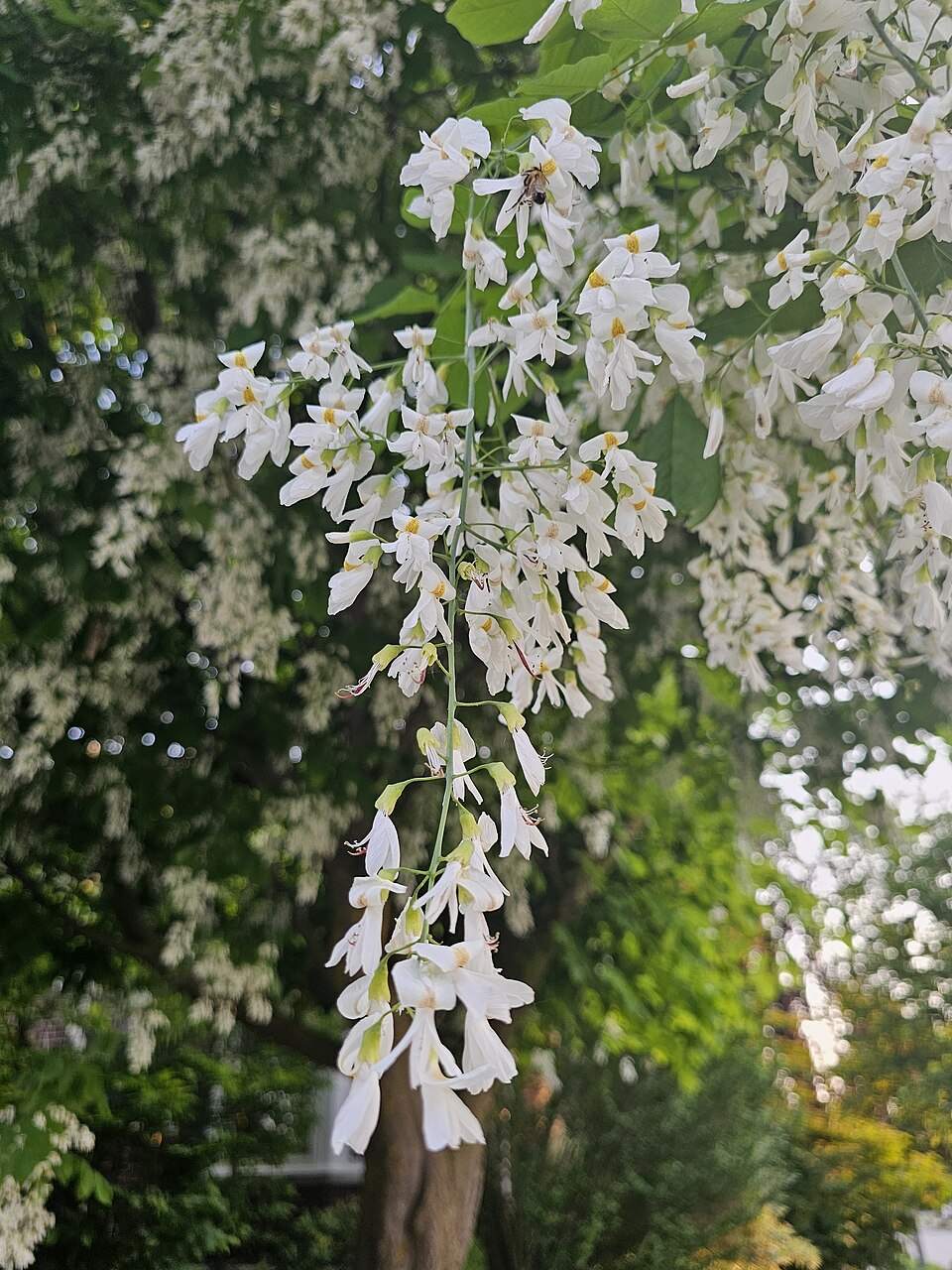
Cladrastis kentuckea, commonly known as Yellowwood, American Yellowwood, or Kentucky Yellowwood, is one of North America’s most magnificent native flowering trees and arguably its best-kept secret. This member of the legume family (Fabaceae) produces one of the most spectacular floral displays of any native tree — massive, drooping clusters of fragrant white flowers that cascade from the branches like natural chandeliers, creating a breathtaking sight that rivals any exotic ornamental.
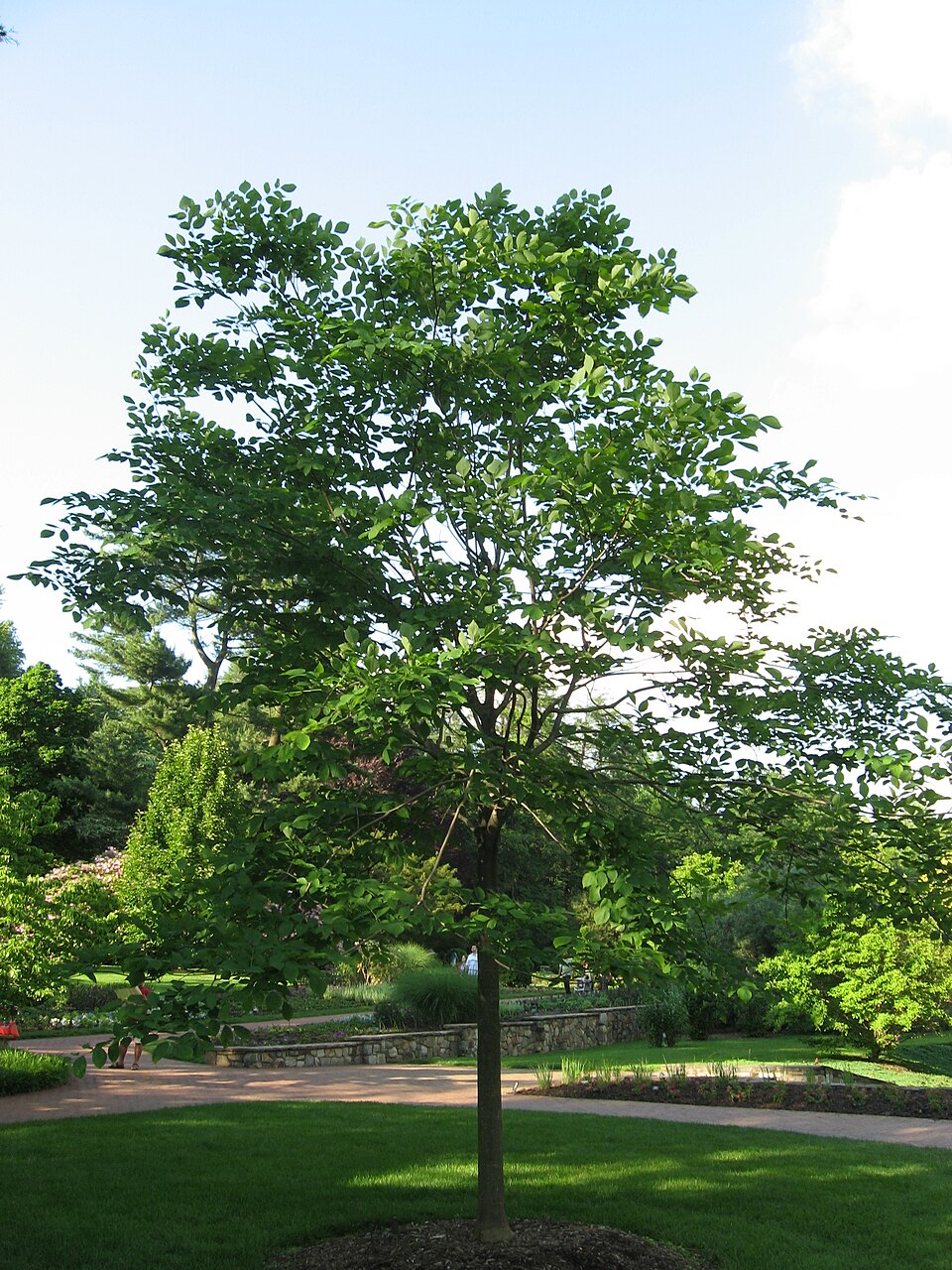
Reaching 30 to 50 feet tall with an elegant, rounded crown and smooth, beech-like bark, Yellowwood is a true aristocrat among native trees. Its compound leaves create a refined, almost tropical appearance during the growing season, while the brilliant golden-yellow fall color provides a stunning finale to the year. The tree gets its common name from the bright yellow heartwood, historically prized for making yellow dye and fine furniture.
Despite its outstanding ornamental qualities, Yellowwood remains relatively unknown in the landscape trade, making it an exceptional choice for gardeners seeking a truly unique native tree. Its moderate size, excellent urban tolerance, and spectacular seasonal displays make it perfect for residential landscapes, while its ecological value and rarity in cultivation make it a conservation priority for native plant enthusiasts throughout its range in the southeastern and south-central United States.
Identification
Yellowwood is a medium-sized deciduous tree that typically grows 30 to 50 feet tall with a spread of 25 to 35 feet, developing an elegant, rounded to broad-spreading crown with age. The tree often develops a distinctive, picturesque silhouette with somewhat drooping branches that give it a graceful, almost weeping appearance.
Bark
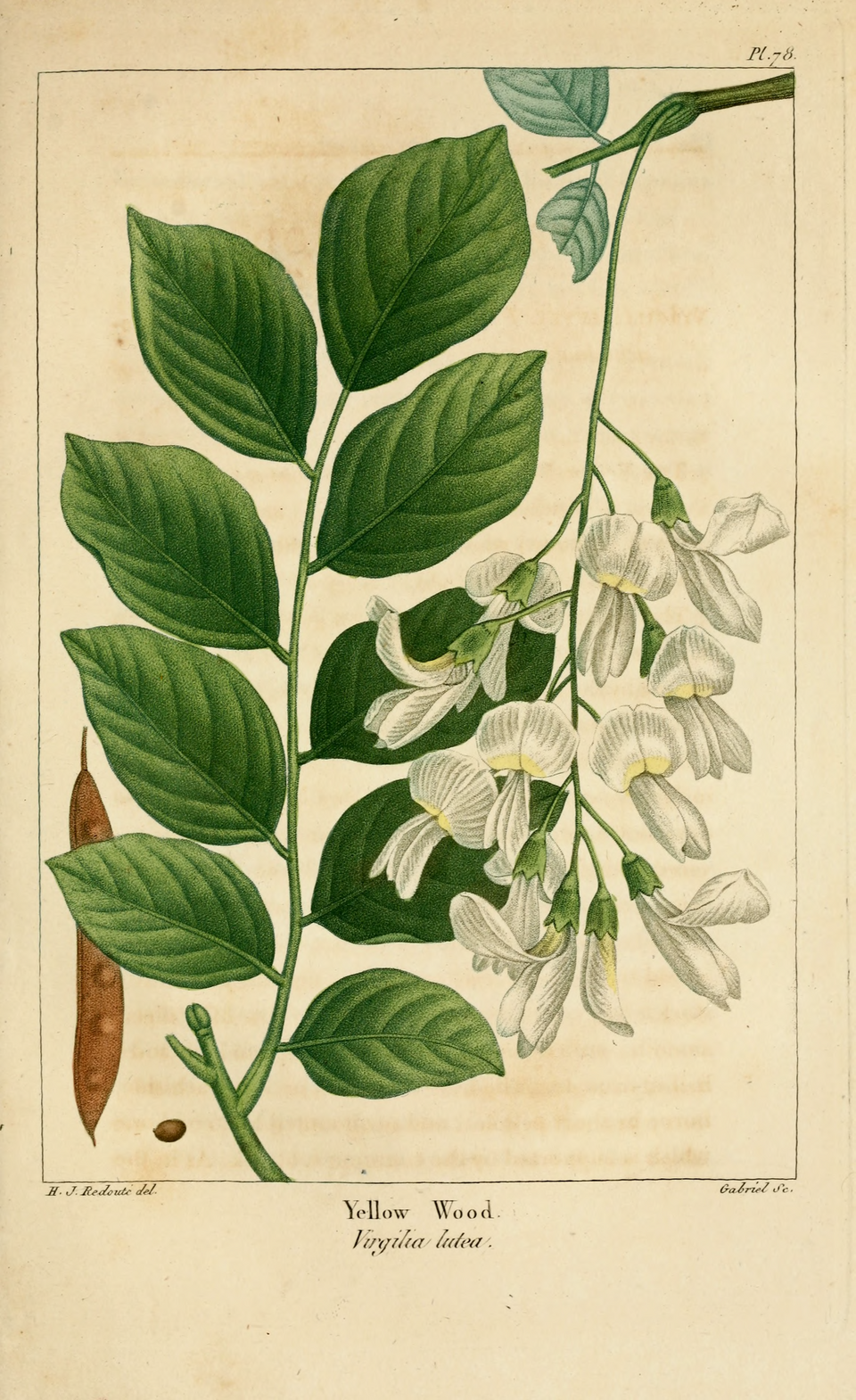
One of Yellowwood’s most distinctive features is its smooth, silvery-gray bark that closely resembles that of American Beech. The bark remains relatively smooth throughout the tree’s life, developing only shallow furrows and minor flaking with great age. This smooth bark provides excellent winter interest and helps distinguish Yellowwood from other native trees. The inner bark and wood are bright yellow, giving the tree its common name and historically making it valuable for producing yellow dye.
Leaves
The leaves are pinnately compound, 8 to 12 inches long, with 5 to 11 (usually 7 to 9) oval leaflets arranged alternately along the rachis. Each leaflet is 2 to 4 inches long, smooth-margined (entire), and bright green with a somewhat glossy surface. The leaves have an almost tropical appearance and create a fine-textured canopy that provides excellent dappled shade. In autumn, the foliage transforms into a spectacular golden-yellow display that is among the finest of any native tree.
Flowers
The flowers are the tree’s crowning glory — produced in massive, drooping panicles (clusters) 8 to 14 inches long and nearly as wide, appearing in late spring to early summer after the leaves have fully emerged. Each individual flower is about 1 inch long, white, and pea-like in structure with a sweet, honeysuckle-like fragrance that can perfume an entire garden. The flowers are incredibly abundant, covering the entire tree in a spectacular white display that lasts 2 to 3 weeks.
Fruit
The fruit is a flattened legume pod 2 to 4 inches long containing 2 to 6 dark brown seeds. The pods mature in late summer to early fall and split open to release the seeds. While not particularly ornamental, the pods provide food for wildlife and can be collected for propagation purposes. Fruiting is often irregular, with heavy flowering and fruiting years alternating with lighter years.
Quick Facts
| Scientific Name | Cladrastis kentuckea (syn. C. lutea) |
| Family | Fabaceae (Legume) |
| Plant Type | Deciduous Tree |
| Mature Height | 30–50 ft |
| Sun Exposure | Full Sun to Part Shade |
| Water Needs | Moderate |
| Bloom Time | May – June |
| Flower Color | White |
| USDA Hardiness Zones | 4–8 |
Native Range
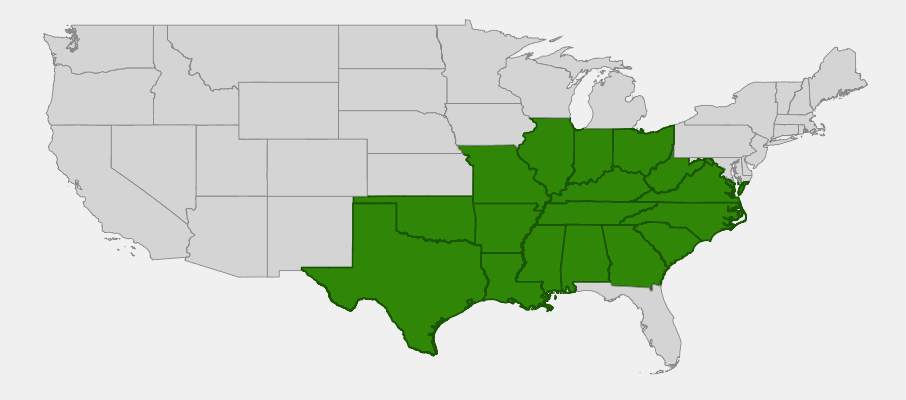
Yellowwood has a relatively limited native range concentrated in the southeastern and south-central United States, where it grows scattered through the mixed hardwood forests of the Appalachian Mountains and their foothills. The species is most common in Kentucky, Tennessee, North Carolina, and northern Alabama and Georgia, with smaller populations extending west into Arkansas, Missouri, and eastern Oklahoma, and north into southern Indiana, Illinois, and Ohio.
In its natural habitat, Yellowwood typically grows on rich, well-drained soils of coves, slopes, and protected valleys, often in association with other valuable hardwood species like Tulip Tree, White Oak, Sugar Maple, and American Beech. It shows a preference for limestone-derived soils and is often found on north-facing slopes where soil moisture is more consistent. The species appears to be naturally rare throughout much of its range, occurring as scattered individuals or small groves rather than forming extensive populations.
Yellowwood’s limited natural distribution and scattered occurrence have made it one of the rarest native trees in cultivation, despite its outstanding ornamental qualities. Conservation efforts are important for maintaining genetic diversity within the species, and cultivation of Yellowwood from local seed sources helps preserve the genetic heritage of this remarkable native tree while introducing more gardeners to its exceptional beauty.
📋 Regional plant lists featuring Yellowwood: North Carolina & South Carolina
Growing & Care Guide
Yellowwood is surprisingly adaptable and easy to grow once established, though it requires patience as young trees may take several years to reach flowering maturity. Its moderate size and excellent urban tolerance make it suitable for a wide range of landscape applications.
Light
Yellowwood performs best in full sun to partial shade, with at least 6 hours of direct sunlight for optimal growth and flowering. In full sun, the tree develops a denser crown and flowers more abundantly, while in partial shade it tends to be more open and may have reduced flowering. The species tolerates some shade better than many flowering trees, making it suitable for woodland gardens and partially shaded locations.
Soil & Water
This adaptable tree grows well in a wide range of well-drained soils, from sandy loam to clay, but performs best in rich, moist, slightly alkaline to neutral soil (pH 6.5–7.5). It shows good tolerance for limestone-derived soils and urban conditions including compacted soil and air pollution. Once established, Yellowwood is quite drought tolerant, though consistent moisture produces the best growth and appearance. Avoid poorly drained or consistently wet soils.
Planting Tips
Plant Yellowwood in spring or fall, giving it plenty of space to develop its characteristic spreading crown. Young trees may be slow to establish and can take 10–15 years to begin flowering heavily. Choose a location where the tree can reach its mature size without interference from buildings or power lines. The smooth bark is somewhat thin and can be damaged by mechanical injury, so protect young trees from lawn mowers and string trimmers.
Pruning & Maintenance
Yellowwood requires minimal pruning and generally develops excellent structure naturally. Remove any dead, damaged, or crossing branches in late winter while dormant. The wood is somewhat brittle, so avoid creating weak branch attachments through improper pruning. Young trees may benefit from light structural pruning to establish a strong central leader and well-spaced main branches. Once established, the tree is largely maintenance-free.
Landscape Uses
Yellowwood’s unique characteristics make it valuable for special landscape applications:
- Specimen tree — outstanding focal point for larger properties
- Shade tree — moderate size suitable for residential lots
- Street tree — tolerates urban conditions and fits under power lines
- Native plant gardens — rare native tree with exceptional beauty
- Woodland gardens — tolerates partial shade better than most flowering trees
- Conservation plantings — helps preserve genetic diversity of rare native species
- Four-season gardens — provides spring flowers, summer shade, fall color, winter bark interest
Wildlife & Ecological Value
While not as heavily utilized by wildlife as some native trees, Yellowwood provides important ecological benefits and supports several species of specialized wildlife.
For Pollinators
The abundant, fragrant flowers are highly attractive to a variety of pollinators including honeybees, native bees, and butterflies. The large flower clusters provide an important nectar source during late spring when many other trees have finished blooming. The sweet fragrance can attract pollinators from considerable distances, making even a single tree valuable for supporting local pollinator populations.
For Birds
Birds utilize Yellowwood primarily for nesting sites and shelter rather than food. The broad, spreading crown provides excellent nesting habitat for songbirds, while the smooth bark may be used by nuthatches and other bark-gleaning species for insect foraging. The seeds are occasionally consumed by ground-feeding birds, though they’re not a preferred food source.
For Other Wildlife
Small mammals may occasionally browse the foliage or consume the seeds, though Yellowwood is not considered a major wildlife food source. The tree’s value lies more in providing habitat structure and supporting the insects that many wildlife species depend on. As a member of the legume family, Yellowwood can fix nitrogen in the soil, potentially benefiting other plants in the ecosystem.
Ecosystem Role
As a relatively rare native tree, every Yellowwood in cultivation contributes to the conservation of genetic diversity within the species. The tree’s role in natural ecosystems is that of a canopy species in rich hardwood forests, contributing to the complex vertical structure that supports diverse wildlife communities. Its nitrogen-fixing ability may benefit associated plants, and its deep taproot helps prevent soil erosion on slopes.
Cultural & Historical Uses
Yellowwood holds a unique place in American history, both for its practical uses and its role in early botanical exploration. The bright yellow heartwood was highly prized by Indigenous peoples and early settlers for making a brilliant yellow dye — one of the few sources of clear yellow dye available from native North American plants. Cherokee, Creek, and other southeastern tribes used the wood for making tools, bows, and decorative items, valuing both its strength and beautiful color.
European settlers quickly adopted the use of Yellowwood for dye-making, and the wood became commercially valuable during the 18th and 19th centuries. The inner bark was also used medicinally by some tribes for treating various ailments, though it was not as widely used as many other medicinal plants. The wood itself was prized by furniture makers and woodworkers for its fine grain, durability, and distinctive color, though the tree’s rarity limited its commercial exploitation.
Botanically, Yellowwood has an interesting nomenclatural history. It was first described scientifically by the famous botanist André Michaux during his explorations of the American Southeast in the 1780s and 1790s. The species was originally named Cladrastis lutea (lutea meaning yellow), but was later renamed Cladrastis kentuckea to reflect its association with Kentucky, where some of the finest specimens were found. This name change reflects the tree’s strong connection to the Kentucky landscape and its role as an emblem of southeastern Appalachian forests.
In modern times, Yellowwood has gained recognition as one of America’s finest native ornamental trees, though it remains relatively rare in cultivation. Its exceptional beauty has made it a favorite among knowledgeable gardeners and landscape architects, and several cultivars have been selected for superior flowering or growth characteristics. The tree has become something of a “connoisseur’s tree” — appreciated by those who understand native plants but still largely unknown to the general public. This makes every Yellowwood planting an opportunity to introduce others to the remarkable beauty and value of native trees.
Frequently Asked Questions
Why isn’t my Yellowwood flowering?
Young Yellowwood trees can take 10–15 years to reach flowering maturity, so patience is essential. Additionally, the species tends to have irregular flowering cycles, with heavy bloom years alternating with lighter years. Ensure your tree is getting adequate sunlight (at least 6 hours per day) and avoid excessive nitrogen fertilization, which can promote leaf growth at the expense of flowers.
Is Yellowwood related to the Chinese Yellowwood I see in nurseries?
While they share the same genus name, American Yellowwood (Cladrastis kentuckea) and Chinese Yellowwood (Cladrastis sinensis) are different species. The American species is native to the southeastern United States and has white flowers, while the Chinese species has pink to pale yellow flowers. For ecological value and regional authenticity, choose the American native species.
Are the branches really weak and prone to breaking?
While Yellowwood wood is somewhat brittle compared to oaks or maples, properly grown trees with good structure are generally quite sturdy. Problems usually arise from poor pruning practices that create weak branch attachments or from storm damage to mature trees. Proper structural pruning when young helps develop strong branching patterns.
Can I collect seeds from my Yellowwood to grow more trees?
Yes, but seed production is often irregular, and germination can be challenging. Collect seeds from mature pods in fall, scarify them (nick the hard seed coat), and stratify in moist sand in the refrigerator for 30–60 days before spring planting. Germination rates are typically low, and seedlings grow slowly, but this helps preserve the genetic diversity of this rare native species.
Is Yellowwood suitable for small yards?
At 30–50 feet tall and 25–35 feet wide at maturity, Yellowwood is better suited to larger residential properties or public spaces. However, its moderate size makes it more appropriate for residential use than many other large shade trees. Consider your property’s mature landscape needs and choose accordingly — the tree’s outstanding beauty may justify the space it requires.

Looking for a nursery that carries Yellowwood?
Browse our native plant nursery directory: North Carolina · South Carolina