
Organic Pest Control for Ferns: Effective Strategies for Healthy Growth
Last updated: September 8, 2026
Ferns deal with pests like aphids, scale insects, and spider mites. These bugs can really mess up their delicate fronds.
Organic pest control relies on natural methods to protect ferns without harsh chemicals, so your garden stays healthier overall. You’ll avoid harming beneficial insects and won’t end up with a bunch of chemicals in your soil.
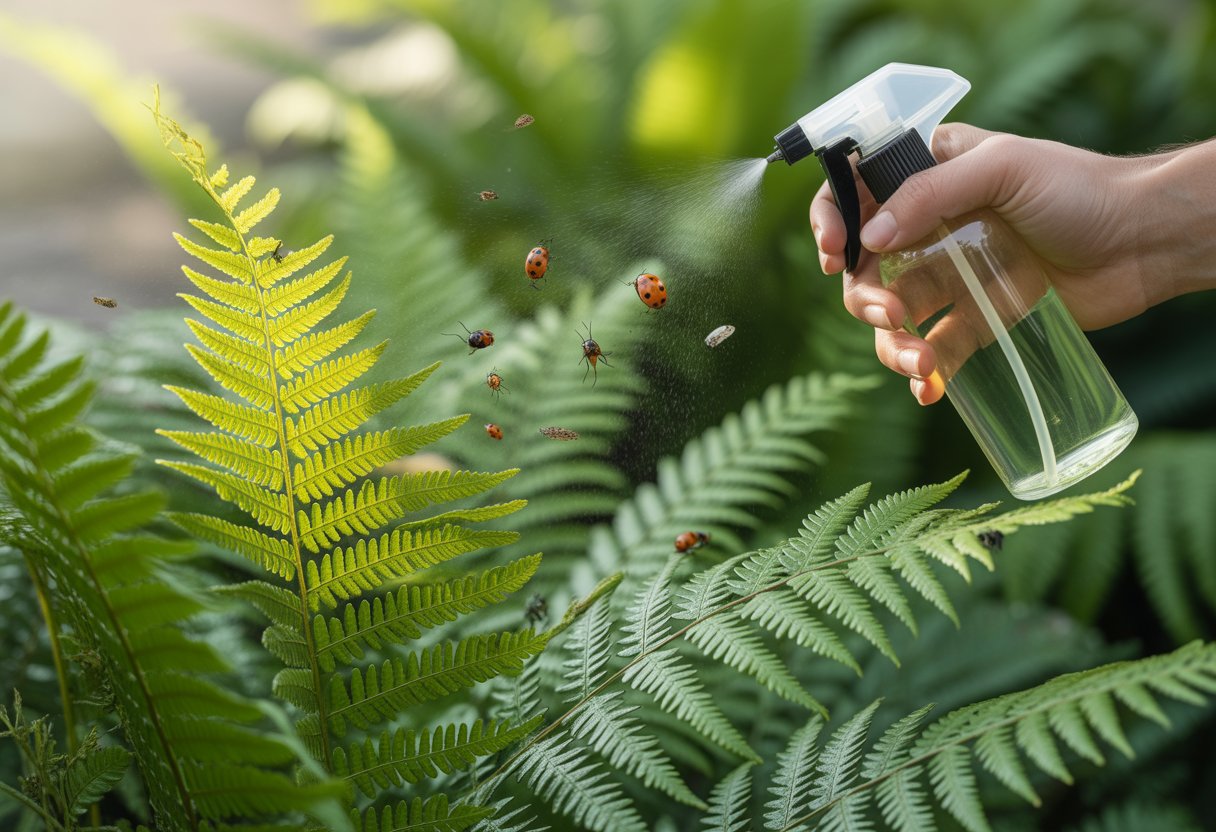
If you want to keep ferns happy, organic pest control means using natural predators, insecticidal soaps, and just keeping your plants as healthy as possible. These strategies help control pests and keep your ferns looking good.
Understanding Common Fern Pests
Lots of insects go after ferns. Some target fronds, others go for roots or rhizomes.
Knowing exactly which pest is bugging your fern makes it way easier to get rid of them without hurting the plant.
Identifying Aphids and Root Aphids
Aphids are tiny, soft insects that usually hang out on new frond tips. You’ll often spot them grouped together, leaving behind sticky honeydew that can invite mold.
Root aphids, on the other hand, hide out in the soil near roots and rhizomes. They’re sneaky, feeding on root sap and weakening the plant.
Both types can make fronds look twisted or yellow. If you see sticky spots or curled leaves, grab a magnifying glass and check closely.
Recognizing Mealybugs and Mites
Mealybugs look like little white fuzz balls on fronds or around rhizomes. Their waxy coating means you’ll probably need to pick them off as well as treat them.
Mites are even tinier and tough to spot. They leave speckled marks on fronds and, if there are enough of them, can cause the leaves to drop.
Both pests love warm, dry spots. Flip leaves over and check around rhizomes often—if you spot them, insecticidal soap or neem oil can help.
Dealing with Flies, Whiteflies, and Beetles
Fungus gnats and other flies show up in overly wet soil. Their larvae munch on roots and rhizomes, which isn’t great for your ferns.
Whiteflies hide underneath fronds and look like tiny white moths when you disturb them. They suck sap, yellow the leaves, and leave sticky honeydew behind.
Beetles aren’t as common, but you’ll notice them by the holes they chew in fronds. Their larvae can go after roots too. Picking them off and keeping things tidy helps cut down on beetles.
Other Insects Affecting Ferns
Scale insects latch onto fronds and rhizomes and look like little bumps. They suck sap and leave behind honeydew, which attracts mildew.
Thrips scrape the surface of fronds, leaving silvery or pale patches. They breed fast, so you’ll want to keep an eye out.
Leaf miners tunnel through fronds, leaving winding trails. If you spot their damage early, remove those fronds to stop them from spreading.
Organic Pest Control Methods for Ferns
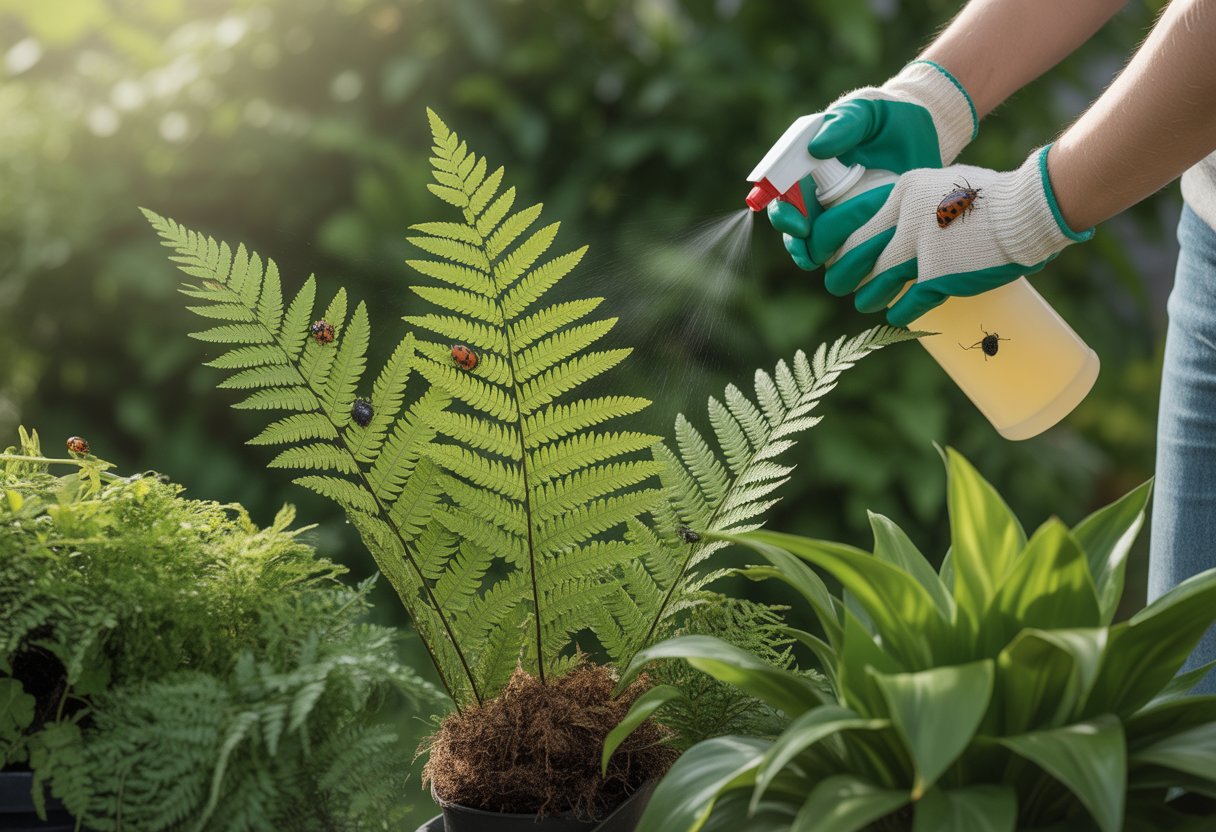
Keeping ferns healthy with organic pest control means mixing good plant care, natural remedies, and letting nature lend a hand. If you combine prevention, targeted treatments, and helpful bugs, you can keep pests in check without hurting your plants or the environment.
Prevention and Healthy Garden Practices
Healthy ferns just don’t get bothered by pests as much. Watering matters—a lot. Too much or too little water stresses ferns and invites bugs like aphids or spider mites.
Try to water evenly, letting soil dry a bit between waterings. Check your ferns regularly for sticky spots or weird coloring, and snip off any dead fronds right away.
Good airflow and light keep humidity down and discourage fungal pests. Don’t cram your ferns together; give them space to breathe.
Utilizing Neem Oil and Ready-to-Use Solutions
Neem oil works well as an organic pesticide for ferns. It messes with pest feeding and breeding but doesn’t hurt the good insects.
Ready-to-use neem sprays make life easier. They’re pre-mixed, so just spritz them on leaves and stems. Always follow the label—too much can burn the leaves.
These sprays work best if you catch pests early and keep at it every week or two during an outbreak. Used right, neem oil is safe for indoor ferns.
Encouraging Beneficial Insects
Ladybugs, lacewings, and predatory mites are great at eating up fern pests. Bringing these good bugs into your garden helps keep things balanced.
You can plant companion flowers or set up insect hotels to attract them. Skip harsh pesticides so you don’t accidentally wipe out your helpers.
If you grow ferns indoors, you can buy small colonies of beneficial insects or just keep things clean and avoid broad sprays.
Companion Plants for Pest Control
Some plants repel pests or attract helpful insects when you grow them near ferns. Marigolds and nasturtiums are famous for keeping away aphids and nematodes.
Herbs like basil and mint release oils that bugs don’t like. Try growing them in pots or garden beds close to your ferns.
Companion planting keeps pests down without chemicals and adds a little variety. Just make sure your chosen companions don’t hog all the water or nutrients.
Special Considerations for Outdoor and Indoor Ferns
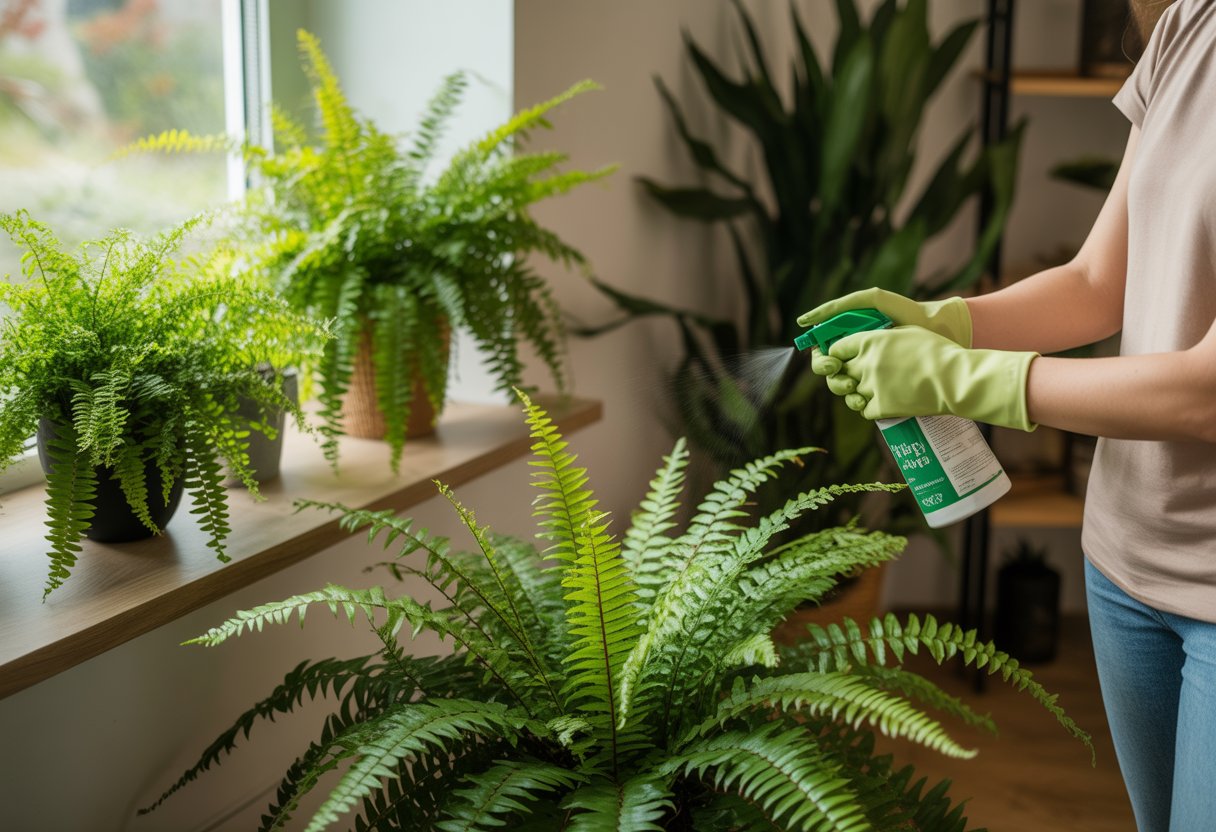
Pest control for ferns changes depending on whether they’re inside or outside. You’ll want to be careful not to bring bugs in or out, and keep your veggie patch safe from any treatments.
Protecting Houseplants and Ostrich Fern
Indoor ferns often get hit by spider mites, mealybugs, and scale. Spraying with neem oil or insecticidal soap usually does the trick and won’t mess up your indoor air.
Ostrich ferns in the garden can attract slugs and aphids. Use organic slug bait and encourage ladybugs to keep pests down. Stay away from strong chemicals inside so you don’t hurt sensitive plants or pets.
Organic Pest Control for Ferns in Vegetable Gardens
If your ferns share space with veggies, you need pest control that’s safe for edible plants. Garlic and chili sprays work on aphids and caterpillars without risking your harvest.
Row covers help block leaf-eating bugs but still let in sun and rain. Planting marigolds or nasturtiums nearby can confuse pests and keep them away from your ferns and veggies.
Keep checking your plants so you can catch problems early.
Managing Fern Pests Among Tomatoes and Other Vegetables
When ferns grow near tomatoes or other veggies, pests like whiteflies and aphids can jump between plants and spread diseases. Bringing in lacewings helps with pest control naturally.
Skip broad pesticides near food crops—nobody wants that on their tomatoes. Instead, spot-treat with insecticidal soap or neem oil, and prune off badly infested fronds.
Integrated Management and Pest Prevention Tips
Keeping ferns healthy means sticking to good habits and not going overboard with chemicals. If you get the basics right, your ferns will stay strong and pests won’t stand much of a chance.
Cultural Controls and Proper Watering
Ferns do best with deep, even watering—just don’t drown them. Too much water rots roots and attracts pests, but they still like humidity.
Change up your watering routine based on the season and how well your soil drains. Watering early in the day helps leaves dry out before night, which cuts down on fungal problems.
Cut off dead or damaged fronds to keep pests from settling in. Good airflow helps too.
Healthy soil makes ferns tougher against bugs. Organic mulch keeps moisture in and weeds down, so you won’t need herbicides. Glance over your ferns often and act fast if you spot trouble.
Selective Use of Fungicides and Herbicides
Fungicides should target the specific fungal pathogens that attack fern fronds. Only use them when you really need to, or resistance will become a problem.
Go for organic fungicides like neem oil or copper-based products. They’re usually easier on the environment, which honestly feels better in the long run.
Pick herbicides with care, since ferns have those delicate, shallow roots. Spot-treat weeds right around the ferns; don’t just spray everything and hope for the best.
Always stick to the label instructions. If you overdo it, you’ll throw off the garden’s balance and the ferns might get weaker and end up with even more pests.
Keep an eye on how treatments work. If things seem off, don’t be afraid to switch up your approach.
 Looking for a nursery that carries native ferns?
Browse our native plant nursery directory

How long did it take you all to see results? I planted some back in March and nothing yet.
Deer can definitely be a challenge! Look into deer-resistant varieties for your area. Fencing also helps if it’s a serious problem. -Plant Native Team