
Our Picks for the 5 Best Insect Nets for Garden Beds: Protect Your Plants Effectively
We independently select all products and services. If you click through links we provide, Plant Native may earn a commission with no extra cost to you.
Last updated: November 14, 2026
Insect nets for garden beds are essential tools for protecting plants from pests and ensuring bountiful harvests. These protective barriers allow sunlight, air, and water to reach plants while keeping harmful insects at bay.
Garden bed insect nets come in various sizes and materials, offering an eco-friendly alternative to chemical pesticides.
Using insect nets can significantly reduce crop damage and increase yield. They create a physical barrier that prevents flying pests like aphids, whiteflies, and cabbage moths from laying eggs on plants. This method of pest control is particularly effective for organic gardeners who want to avoid synthetic chemicals in their food production.
When choosing an insect net for garden beds, consider the mesh size, durability, and ease of installation.
The mesh size should be small enough to keep out target pests but large enough to allow pollinators access to flowers. Durability is crucial for withstanding weather conditions and repeated use.
We tested numerous insect nets to find the best options for protecting garden beds from unwanted pests.
Best Insect Nets for Garden Beds
We’ve carefully evaluated and selected the top insect nets to protect your garden beds from pests. Our picks offer durability, easy installation, and effective coverage to keep your plants safe without hindering their growth. These nets provide a chemical-free solution for organic gardening enthusiasts and those looking to minimize pesticide use.
Our top pick

- Ultra-fine 0.04-inch mesh blocks small insects
- You can water and liquid-feed straight through the mesh
- Two nets per pack; cut to any size and reuse year after year
Cons
- Needs stakes, hoops or stones to hold it in place
- Lightweight mesh can snag on sharp edges
- Each sheet is only 5 ft wide
RIFNY’s two-pack of 5 x 10 ft ultra-fine netting is an inexpensive way to cover a couple of raised beds or small fruit bushes. The 0.04-inch mesh keeps out insects as well as birds and rabbits, and water passes straight through, so the net can stay on when you irrigate. Store it folded out of the sun and it can be reused for several seasons.
Most versatile

- Light, tear-resistant PE material
- Air, water and light pass through; no need to remove it to water
- Easy to cut to size and fold away
Cons
- Needs stakes or soil to secure the edges
- Single 10 x 5 ft sheet covers only one small bed
- No hoops or clips included
The RAINFLOW net is the cheapest way to cover one raised bed. Its 60-mesh PE fabric keeps out insects and birds while letting rain and sunlight reach your plants, and you can cut it to fit anything from a row of brassicas to a fruit bush. Its versatility makes it a true Swiss Army knife for your garden.
Best heavy-duty option
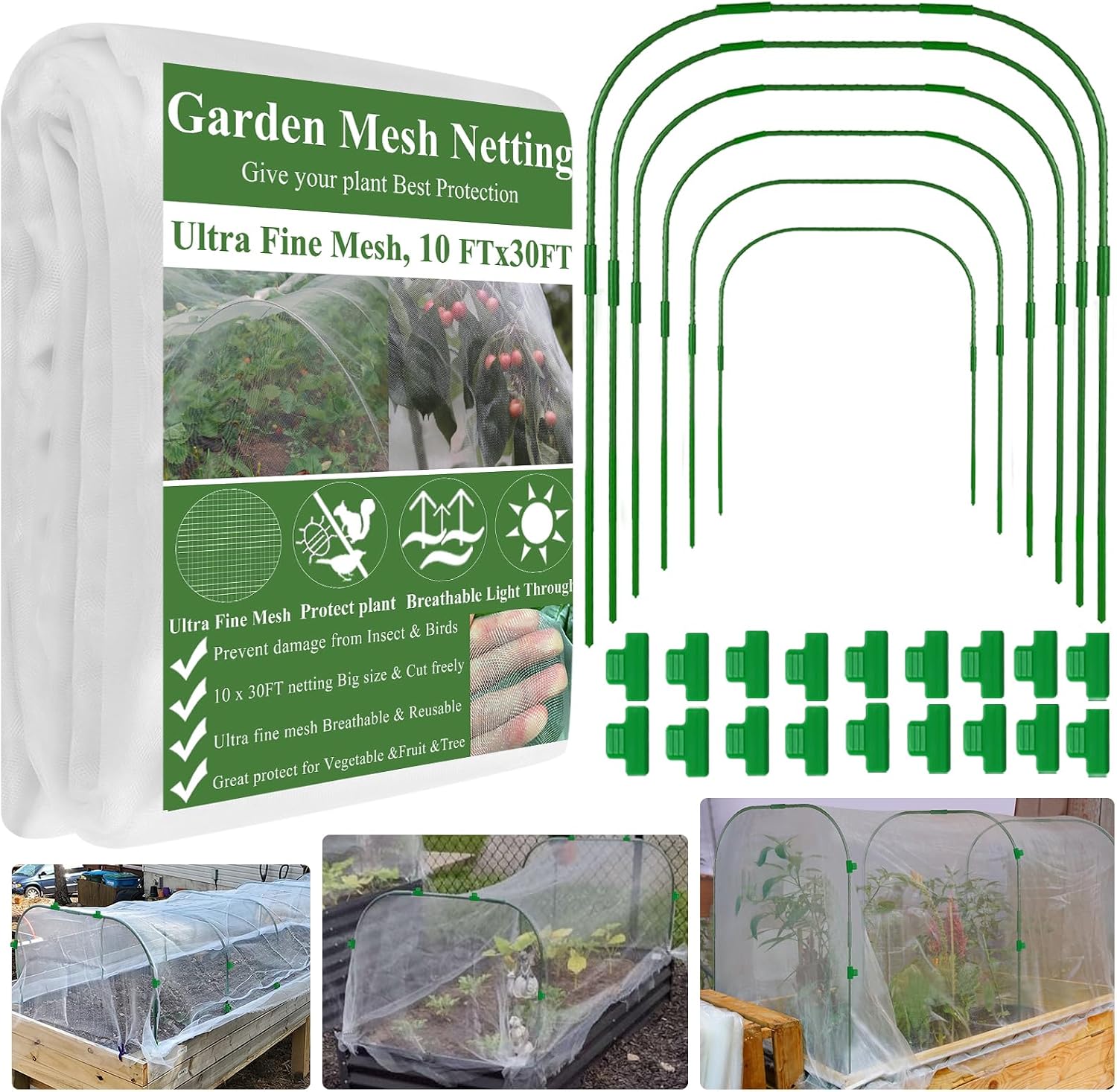
- Includes hoops, connectors and clips, so the net stays off the plants
- Fine 0.8 x 1 mm mesh keeps out most insects, birds and animals
- Large 10 x 30 ft net can be cut to size
Cons
- Hoops have to be assembled from tubes and connectors
- Hoop frame fits beds about 3 ft wide
- Costs more than netting alone
The WYRJXYB kit is the most complete setup here: the six plastic-coated steel hoops hold the 10 x 30 ft net above your crops, and the 18 clips fasten it to the frame. The fine mesh keeps out insects as well as birds and small animals, and rain and light still get through. It’s built to take a beating and keep performing.
Best for lawns
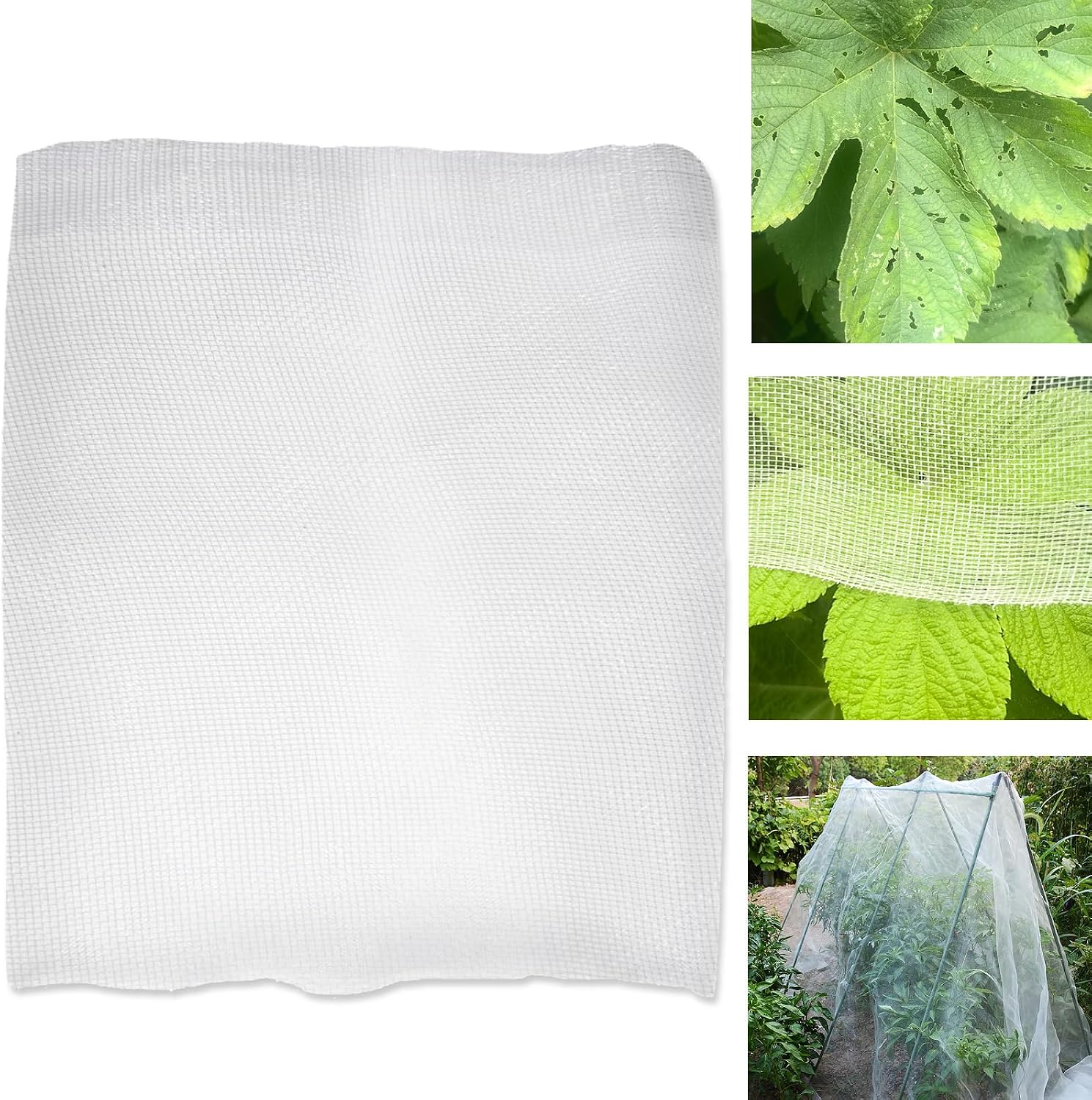
- Fine 0.8-1 mm mesh keeps out small insects
- UV-resistant PE lets light, air and water through
- Edges are cut cleanly with a tight selvedge
Cons
- Single 5 x 12 ft sheet covers one bed
- Can tear if snagged on sharp objects
- No hoops, clips or stakes included
Gardeningwill’s 5 x 12 ft netting is a lightweight, low-cost cover for a single vegetable bed or a few fruiting shrubs. The 0.8-1 mm mesh is fine enough for small insects, the PE is UV resistant, and the cut edges are finished so they don’t unravel. Lay it over hoops or directly on plants, and pin the edges with soil, stones or clips.
Also great

- Ultra-fine 0.04-inch mesh for comprehensive pest control
- Large 10 x 33 ft size covers several beds or a fruit tree
- Sunlight, air and water pass through
Cons
- Needs hoops or a frame to keep it off plants
- Large sheet is awkward to handle alone
- Fewer ratings than the other picks
Garmeinea’s 10 x 33 ft net covers several raised beds or a small orchard tree in one piece. It has the same 0.04-inch mesh as our top pick, and it can be cut to size. Leave enough slack for the plants to grow, then bury the edges or pin them down.
Buying Guide
When selecting an insect net for your garden beds, several key factors should be considered. We’ve compiled this guide to help you make an informed decision.
Material
The net’s material impacts its durability and effectiveness. Look for options made from:
- Nylon or polyester for strength
- UV-resistant fabrics to withstand sun exposure
- Fine mesh to keep out small insects
Size and Coverage
Ensure the net fits your garden beds properly. Measure your beds and choose a net that provides:
- Full coverage of plants
- Extra material for securing edges
- Adjustable options for different bed sizes
Ease of Use
A user-friendly design makes installation and maintenance simpler. Consider nets with:
- Drawstring closures
- Zipper openings for plant access
- Lightweight construction for easy handling
Durability
Garden nets should withstand various weather conditions. Look for:
- Reinforced edges to prevent tearing
- Weather-resistant coatings
- Strong stitching at seams
Visibility
Clear or light-colored nets allow sunlight to reach plants while still providing protection.
We recommend choosing nets that offer:
- High light transmission
- Minimal plant growth interference
- Easy monitoring of plant health
By focusing on these key features, we can select an insect net that effectively protects our garden beds and promotes healthy plant growth.
We independently select all products and services. If you click through links we provide, Plant Native may earn a commission with no extra cost to you. As an Amazon Associate I earn from qualifying purchases.
Decent overview. If you’re just starting out this covers the basics well enough.
You’re right that soil prep is crucial — we should probably expand on that. Thanks for the feedback! -Plant Native Team
Thank you for the information