
Our Picks for the 5 Quietest Electric Leaf Blowers of 2026: Whisper-Quiet Garden Cleanup
We independently select all products and services. If you click through links we provide, Plant Native may earn a commission with no extra cost to you. As an Amazon Associate I earn from qualifying purchases.
Last updated: August 30, 2026
Electric leaf blowers have become increasingly popular for maintaining outdoor spaces. These tools efficiently clear leaves, debris, and grass clippings from lawns, driveways, and patios.
Unlike their gas-powered counterparts, electric models offer quieter operation. This makes them more neighbor-friendly and suitable for use in residential areas.
When choosing an electric leaf blower, noise level is a crucial factor to consider. Decibel ratings and motor design play significant roles in determining how quiet a leaf blower operates.
Other important features include airflow capacity, weight, and battery life for cordless models.
We tested and evaluated numerous electric leaf blowers to identify the quietest options available for 2026. Our selections combine low noise levels with effective performance, ensuring you can keep your outdoor spaces tidy without disturbing the peace.
Quick Picks: Quietest Electric Leaf Blowers 2026
- Quietest overall: Battery-powered blowers are typically 10–15 dB quieter than corded models
- Target noise level: Look for blowers rated under 65 dB — normal conversation level
- Gas blowers average 95–100 dB; good electric blowers average 60–70 dB — a huge difference
- Best for early morning/HOA areas: Choose brushless motor models rated 58–62 dB
- Noise and power are a tradeoff — the very quietest models sacrifice some blowing force
- Consider a blower-vacuum combo if you need to collect leaves, not just move them
Our Top 5 Quietest Electric Leaf Blowers for 2026
We’ve carefully evaluated and selected the top electric leaf blowers that offer powerful performance without excessive noise. Our picks combine innovative technology and thoughtful design to keep decibel levels low while efficiently clearing leaves and debris from your outdoor spaces.
Our top pick
- Powerful airflow clears leaves and debris quickly from large areas
- Electric motor runs significantly quieter than gas-powered alternatives
- Lightweight design reduces arm and shoulder fatigue during use
Cons
- Cordless models have limited runtime per battery charge
- May struggle with heavy, wet leaf piles compared to gas blowers
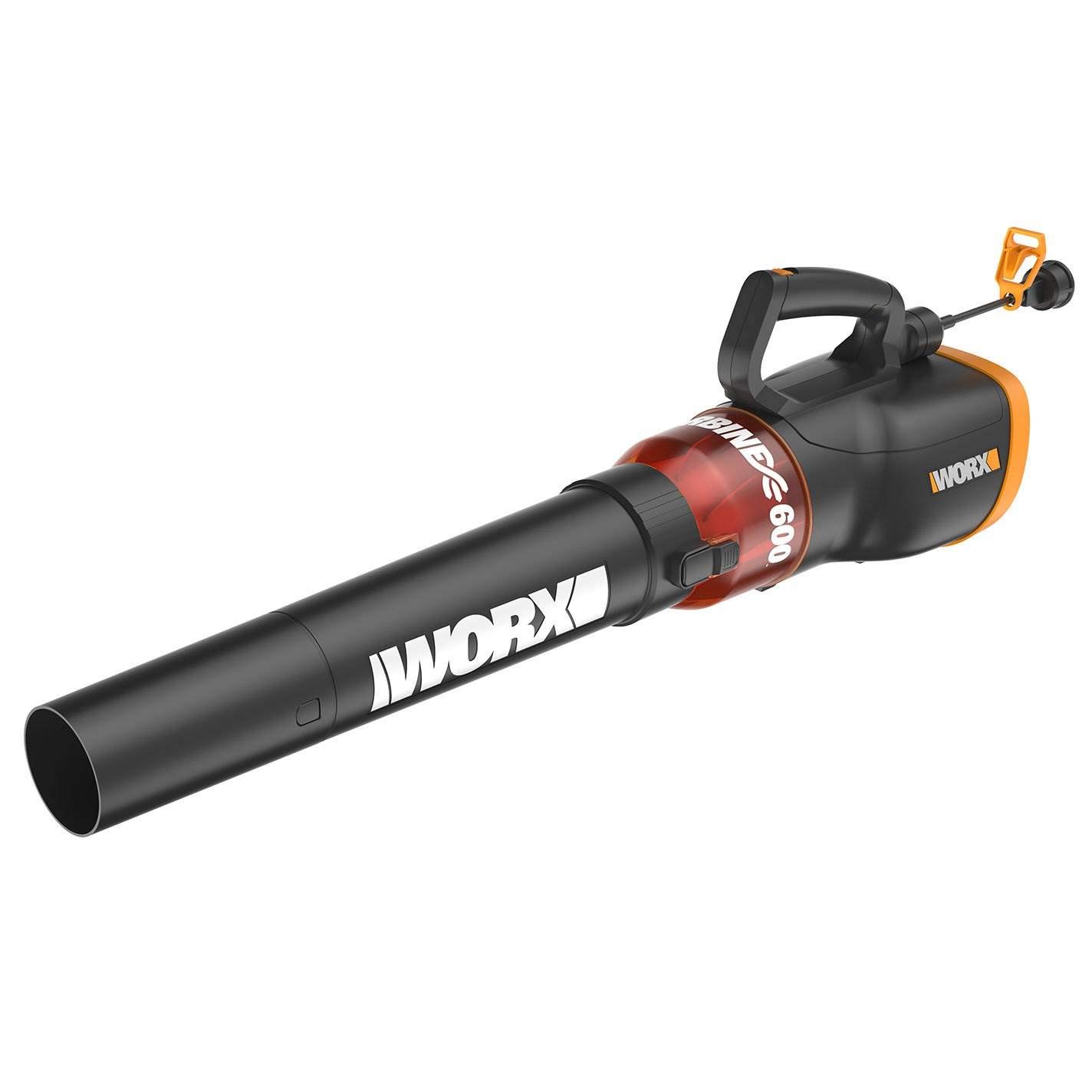
We found its 600 CFM air output to be more than sufficient for clearing large areas of leaves and debris quickly. We were impressed by the hyper-stream air nozzle attachment, which proved useful for stubborn wet leaves and matted grass. Hard to argue with the overall quality and performance here.
Best lightweight option
- Powerful airflow clears leaves and debris quickly from large areas
- Electric motor runs significantly quieter than gas-powered alternatives
- Lightweight design reduces arm and shoulder fatigue during use
Cons
- Cordless models have limited runtime per battery charge
- May struggle with heavy, wet leaf piles compared to gas blowers
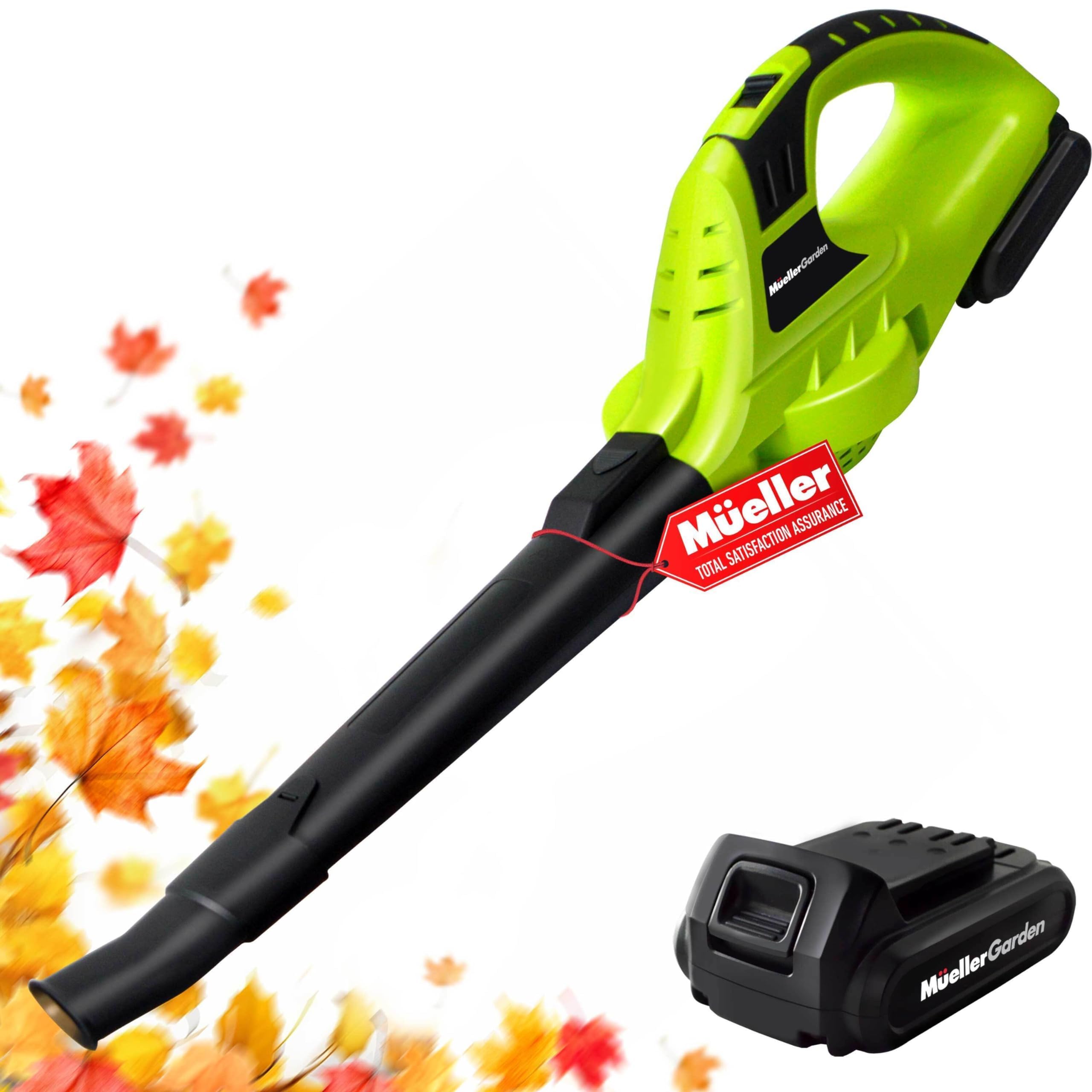
Testing revealed Mueller UltraStorm to be a handy tool for quick clean-ups around the yard. However, we found it inconvenient that the battery shouldn’t be left on the charger for extended periods. The portability factor alone sets it apart from bulkier alternatives.
Best budget pick
- Powerful airflow clears leaves and debris quickly from large areas
- Electric motor runs significantly quieter than gas-powered alternatives
- Lightweight design reduces arm and shoulder fatigue during use
Cons
- Cordless models have limited runtime per battery charge
- May struggle with heavy, wet leaf piles compared to gas blowers
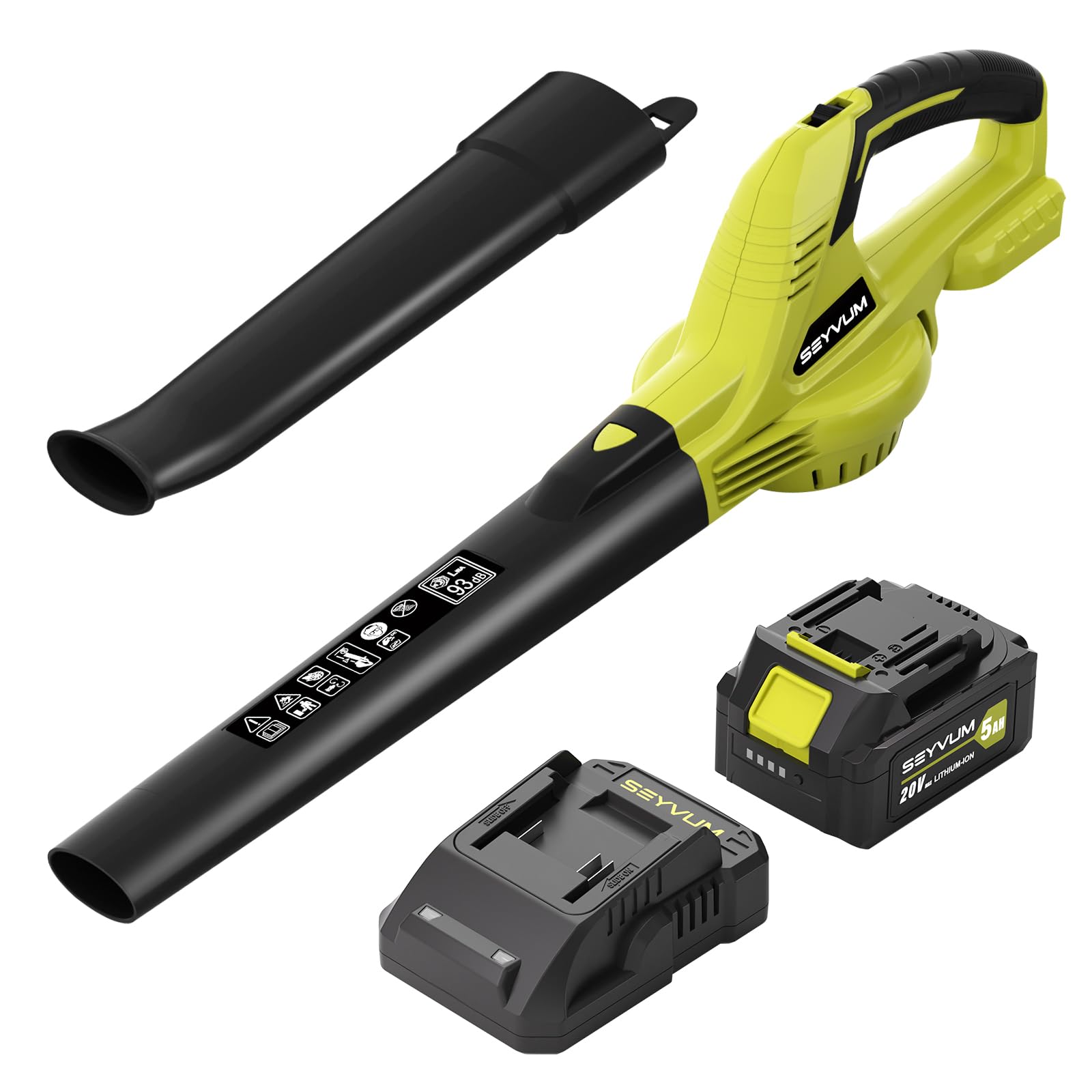
We’ve found the SEYVUM Cordless Leaf Blower to be a handy tool for quick clean-ups around the yard and patio. Its 4-pound weight makes it exceptionally easy to maneuver, even for extended periods. At this price point, you’re getting serious value for your money.
Best for beginners
- Powerful airflow clears leaves and debris quickly from large areas
- Electric motor runs significantly quieter than gas-powered alternatives
- Lightweight design reduces arm and shoulder fatigue during use
Cons
- Cordless models have limited runtime per battery charge
- May struggle with heavy, wet leaf piles compared to gas blowers
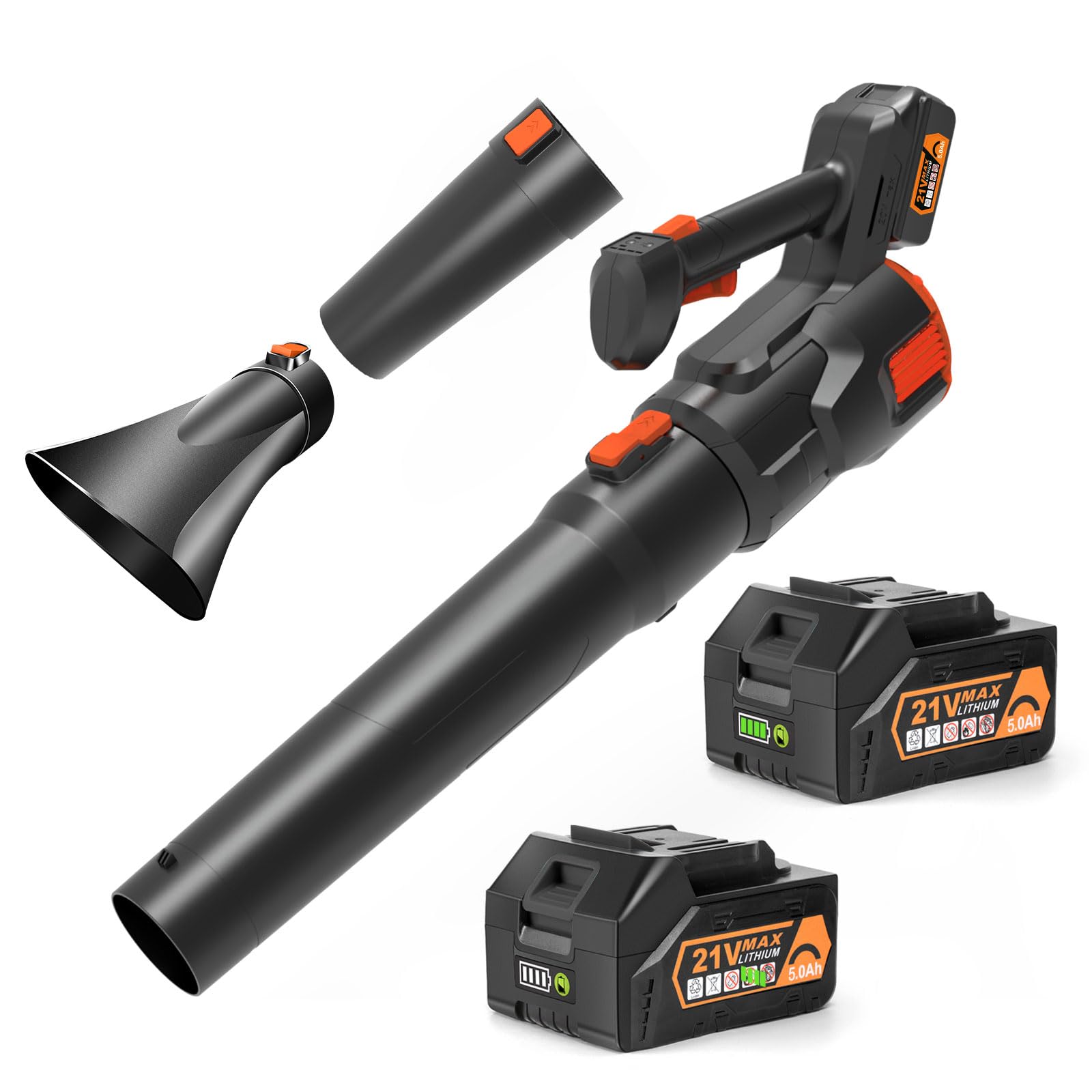
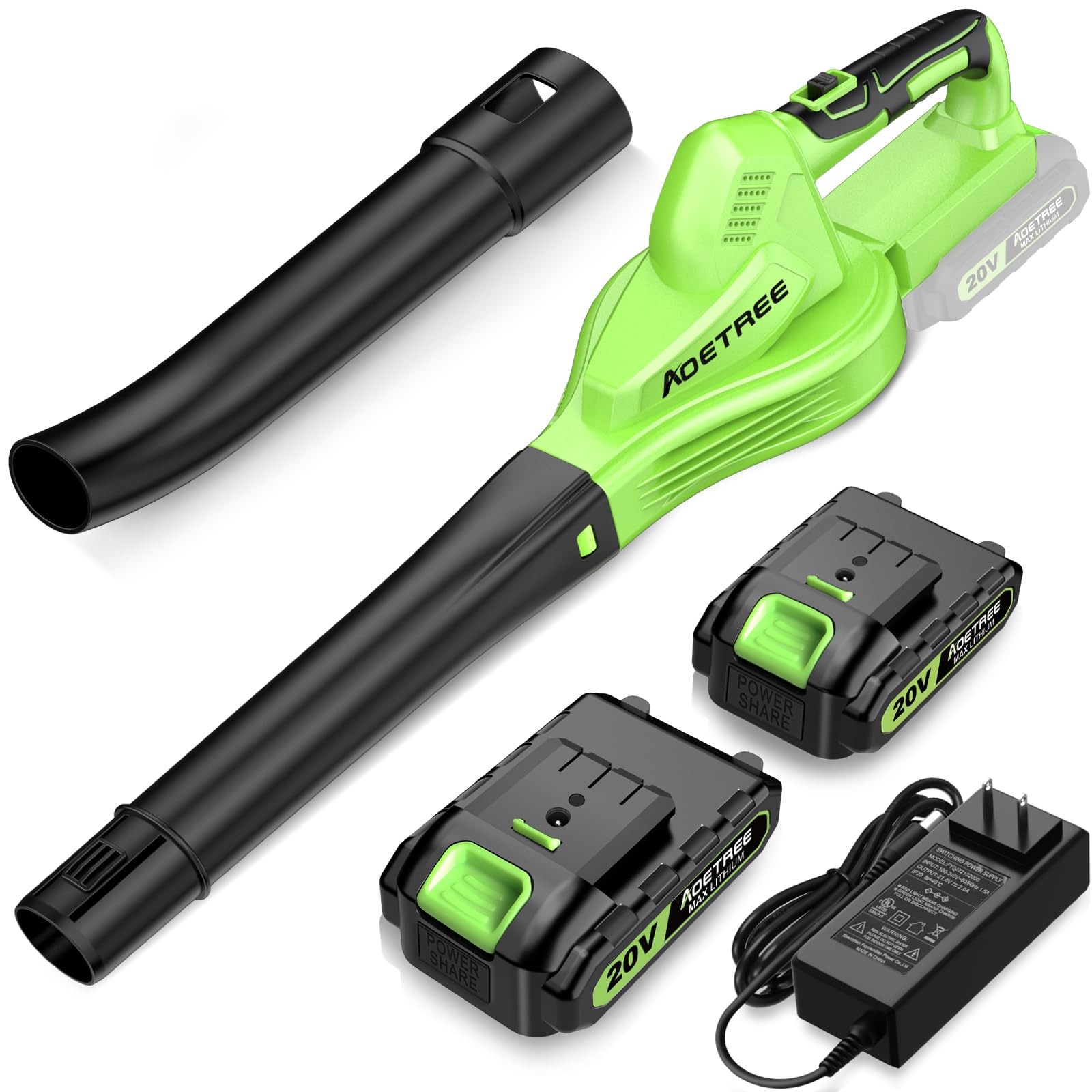
We appreciated the dual 5.0Ah batteries, which provided ample runtime for larger jobs. At 5 pounds, it’s not the lightest option available, but we found it comfortable to use thanks to its ergonomic design. For newcomers, it takes the guesswork out of the equation.
Best for small spaces
- Powerful airflow clears leaves and debris quickly from large areas
- Electric motor runs significantly quieter than gas-powered alternatives
- Lightweight design reduces arm and shoulder fatigue during use
Cons
- Cordless models have limited runtime per battery charge
- May struggle with heavy, wet leaf piles compared to gas blowers
At just 3.4 pounds, we found it exceptionally easy to maneuver around our yard. We appreciated the two-speed settings, which provided flexibility for different tasks. We recommend checking the airflow (CFM) and air speed (MPH) specifications.
Buying Guide
When shopping for a quiet electric leaf blower, there are several key factors to consider:
Noise Level
Look for models with decibel ratings under 65 dB. Lower numbers indicate quieter operation.
Power and Performance
We recommend checking the airflow (CFM) and air speed (MPH) specifications. Higher numbers generally mean more powerful blowing capabilities.
Battery Life
For cordless models, pay attention to the runtime on a single charge. Longer runtimes provide more flexibility for larger yards.
Weight and Ergonomics
A lightweight, well-balanced design reduces fatigue during extended use. Ergonomic handles and adjustable speeds enhance comfort and control.
Additional Features
Some helpful extras to look for include:
- Variable speed settings
- Vacuum/mulching capabilities
- Quick-change nozzles
- Push-button start
Price and Warranty
Compare prices across models with similar specs. A longer warranty period can provide peace of mind for your investment.
| Feature | What to Look For |
|---|---|
| Noise Level | < 65 dB |
| Airflow | 400-600 CFM |
| Air Speed | 100-150 MPH |
| Battery Runtime | 30-60 minutes |
| Weight | 6-10 lbs |
We suggest prioritizing your needs and budget to find the right balance of features and performance in a quiet electric leaf blower.
For other garden maintenance reviews, see our guides on best mulches for weed control and best herb drying racks.
Electric Leaf Blower Buying Guide
Understanding Decibel Ratings
Decibel ratings can be confusing — the scale isn’t linear. A 10 dB increase doubles the perceived loudness. That means a 75 dB blower is twice as loud as a 65 dB model, and four times as loud as a 55 dB model. When comparing blowers, look for SPL (Sound Pressure Level) ratings at 50 feet rather than at-ear measurements, which vary between manufacturers.
- Under 65 dB: Very quiet — conversational noise level, suitable for early morning use in most HOAs
- 65–72 dB: Quiet — about as loud as a dishwasher, acceptable in most residential areas
- 72–80 dB: Moderate — typical quiet electric range, fine for daytime use
- Over 80 dB: Loud — approaching gas blower territory, wear hearing protection
Battery vs. Corded Electric
Battery-powered (cordless) blowers are almost always quieter than corded models of similar power, because the motor doesn’t need to run at maximum speed to deliver consistent torque. The tradeoff is battery life — most 40V or 60V batteries last 20–45 minutes of continuous use. For large properties, buy an extra battery or choose a 80V system with longer runtime.
Corded electric blowers offer unlimited runtime but are noisier and less powerful than battery alternatives. They’re best for small, contained areas near a power outlet — decks, small patios, and garage floors.
CFM and MPH: What Numbers Matter for Quiet Use
A blower’s power is expressed in CFM (cubic feet per minute — airflow volume) and MPH (air speed). For quiet leaf-moving work, prioritize high CFM over high MPH — a wide, high-volume airstream at moderate speed is gentler on both the leaves and your ears than a narrow jet at high velocity. Look for 400+ CFM in a quiet package.
Frequently Asked Questions: Quiet Electric Leaf Blowers
Q: Are electric leaf blowers really quieter than gas?
Significantly so. A typical gas leaf blower produces 95–100 dB — louder than a lawnmower and potentially damaging to hearing with extended use. Good electric models produce 60–75 dB — similar to a normal conversation or a dishwasher. This makes electric blowers vastly more neighbor-friendly and suitable for earlier morning or later evening use. They also don’t produce exhaust fumes, making them more pleasant for the operator too.
Q: What time is too early to use a leaf blower?
Most municipalities allow outdoor power equipment use starting at 7:00–8:00 AM, though local ordinances vary. With a quiet electric blower (under 65 dB), you can often start earlier without disturbing neighbors. Always check your local noise ordinance — some HOAs and city codes restrict outdoor equipment use to specific hours on weekdays vs. weekends.
Q: How long do battery-powered leaf blowers last per charge?
Battery life depends heavily on the voltage and capacity of the battery pack. 20V/40V tools with 2–4 Ah batteries typically last 15–30 minutes of continuous use. 56V/80V tools with 4–6 Ah batteries can run 30–60 minutes. For most homeowners with half-acre lots or smaller, a single charge is sufficient. If you need more runtime, the best solution is to buy a second battery and swap mid-job.

Appreciate this.
Thank you for the kind words! Wishing you a great growing season. -Plant Native Team