
Pollinator Friendly Switchgrass for Ohio Enhancing Habitat and Biodiversity
Last updated: September 8, 2026
Ohio’s landscapes are starting to see a real uptick in interest around switchgrass. People are drawn to it as a sustainable, low-maintenance plant that quietly supports local ecosystems.
Switchgrass offers essential habitat and food for a bunch of pollinators—bees, butterflies, you name it. These pollinators are honestly crucial for Ohio’s agriculture, even if we sometimes take them for granted.
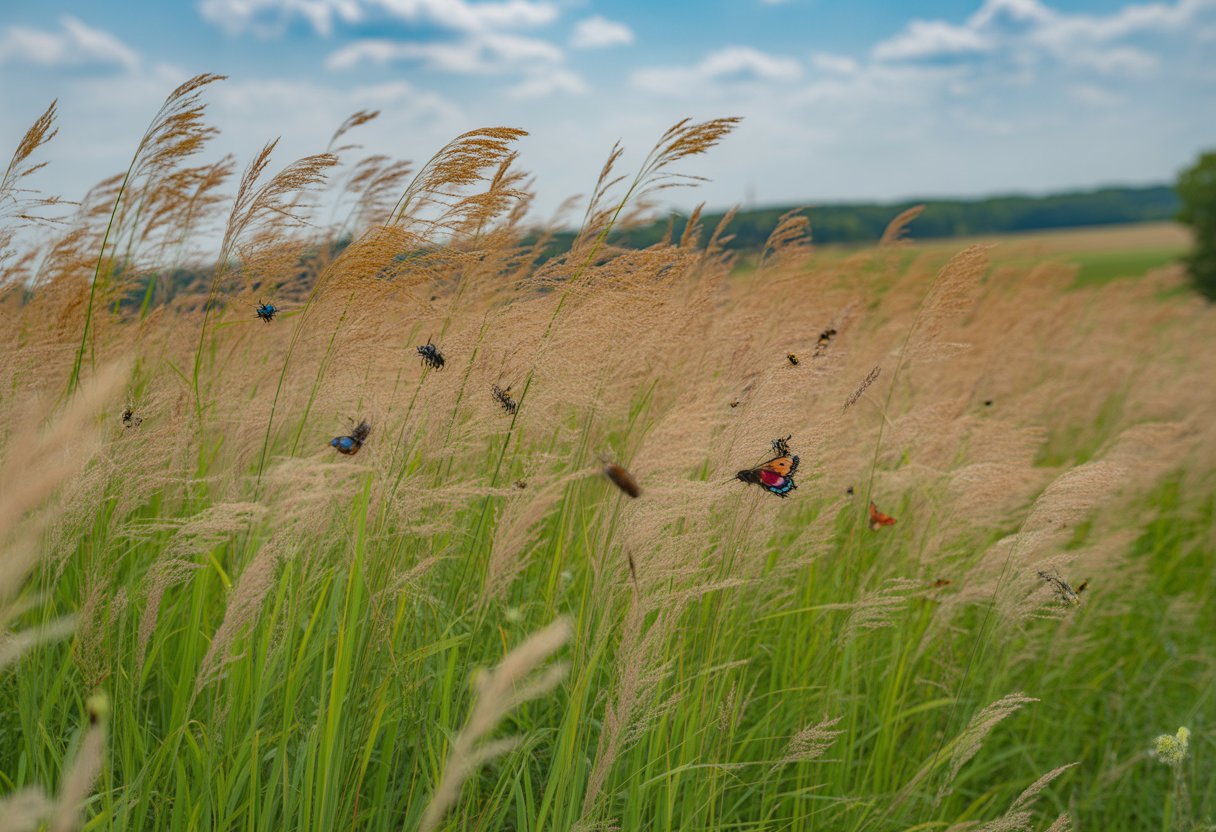
Switchgrass varieties that fit Ohio’s climate can create pollinator-friendly habitats, boosting biodiversity and keeping pollinator populations healthier. Its dense growth and seasonal blooms offer shelter and nectar all season long, so it’s a practical pick for conservation work in the region.
Understanding Pollinator Friendly Switchgrass
Switchgrass helps pollinators through its growth style, regional fit, and the specific varieties out there. Its structure gives pollinators a home, and different cultivars have their own perks for native pollinators across Ohio’s prairies.
Biology and Identification
Switchgrass (Panicum virgatum) is a perennial, warm-season native grass. It grows in upright clumps, usually between 3 and 6 feet tall, with slender, green to bluish-green leaves.
Flower panicles pop up in mid to late summer, forming open, airy clusters that pollinators can actually access. The flowering tops have small spikelets that produce pollen and draw in helpful insects.
Even though Panicum virgatum mainly relies on wind for pollination, it still provides nectar and shelter for bees, butterflies, and other insects. Its deep, fibrous roots boost soil health and offer overwintering spots for pollinators.
Native Range and Adaptation
Switchgrass grows natively across much of North America, Ohio included. It handles a wide range of soil types, from sandy to loamy, and puts up with both wet and dry spots.
Its ability to adapt to Midwest climates makes it a solid choice for restoring native prairie habitats. In Ohio, switchgrass fits right in with native prairie systems and warm-season grass communities.
Its seasonal growth lines up with when local pollinators are most active. The plant’s toughness supports landscape stability, which is great for insects.
Switchgrass Varieties for Pollinators
Some switchgrass cultivars do a better job supporting pollinator diversity by offering longer flowering periods and more complex habitat. Here are a few that work well in Ohio:
| Variety | Flowering Time | Height (ft) | Pollinator Benefits |
|---|---|---|---|
| Cave-in-Rock | Mid to late summer | 4 to 6 | Long bloom period, sturdy for nesting bees |
| Blackwell | Mid summer | 3 to 5 | Dense foliage, attracts butterflies |
| Nebraska | Late summer | 4 to 6 | Extended flowering, supports native bees |
Picking region-adapted varieties really helps with attracting pollinators and preserving Ohio’s native grasslands.
Establishing Switchgrass for Ohio Landscapes
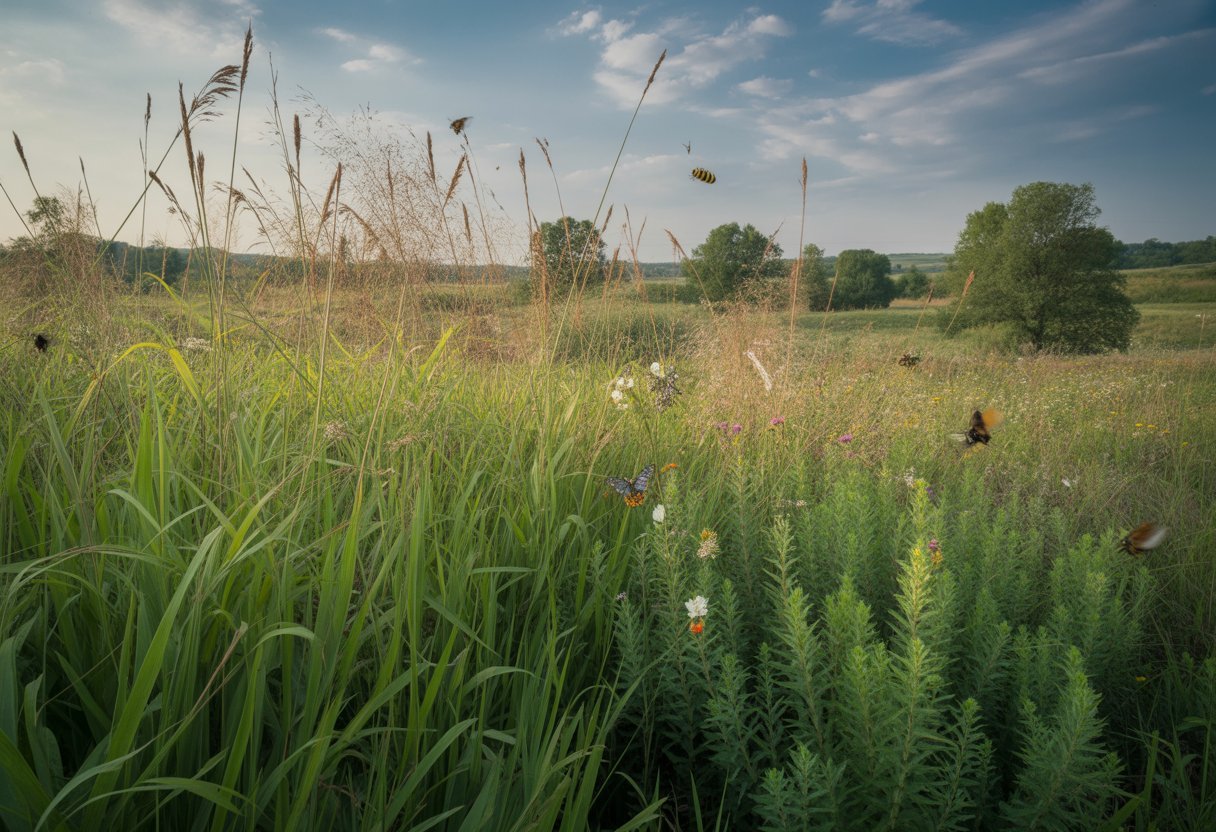
Getting switchgrass started in Ohio takes some thought about site conditions, soil prep, seeding methods, and companion plants. Each of these matters for both the grass and the pollinators that rely on it.
Site Selection and Sunlight Requirements
Switchgrass grows best in full sun, needing at least six to eight hours of direct sunlight a day. If you plant it in partial shade, you’ll probably see weaker growth and fewer seeds.
Look for prairies, open fields, or woodland edges where sunlight isn’t blocked. Avoid spots with heavy shade from big trees or buildings.
For Ohio, picking a sunny area gives you stronger plants and supports pollinators that depend on switchgrass and wildflowers.
Soil Conditions and Preparation
Switchgrass handles a lot of soils but really shines in medium to wet soils that drain well. It actually does better with wet feet than a lot of other native grasses.
Start by removing the current vegetation to cut down on competition. You can till or use herbicide to get a clean seedbed.
Soil moisture at planting matters a lot. Keeping things moist helps seeds sprout and roots get established.
Try to keep soil pH near neutral (6.0-7.5) for best nutrient availability.
Seeding Rate and Germination
You’ll want the right seeding rates—usually 3 to 6 pounds of pure live seed (PLS) per acre. Less than that, and you might get spotty coverage; too much, and it can get crowded.
Most people seed in early spring when the soil’s warming up, since that helps with germination. Plant seeds shallow, about ¼ inch deep, so they don’t dry out.
Using a drill seeder set for native grass seed helps spread them evenly. Firm seed-to-soil contact boosts the odds of seeds taking off.
Companion Species for Pollinator Support
Mixing switchgrass with native wildflowers and other prairie grasses makes the habitat way better for pollinators. Good companions include:
- Aster, goldenrod, and coneflower – keep nectar coming late in the season.
- Common milkweed and swamp milkweed – monarch butterflies love these.
- Indian grass, little bluestem, and Virginia wild rye – add structure.
- Agastache – bees and hummingbirds go wild for the fragrant blooms.
A balanced mix keeps pollinators active and the plant community diverse. Picking species that bloom at different times means there’s always food around.
Supporting Pollinators, Birds, and Wildlife
Switchgrass creates valuable habitat for all kinds of species. It’s not just about pollinators—birds and mammals benefit too, and that’s huge for Ohio’s biodiversity.
Pollinator Interactions and Diversity
Switchgrass supports native bees, butterflies, and plenty of other insects. Sure, it’s mostly wind-pollinated, but its structure gives pollinators a place to perch and forage.
Bumblebees often use switchgrass for shelter during chilly spells. Warm-season native grasses like switchgrass also make room for insects that lay eggs on or near grasses.
When you mix switchgrass with a variety of flowering plants, insect diversity really jumps. That’s good news for pollinator populations, since it means resources are available all season.
Birds, Mammals, and Habitat Benefits
Switchgrass stands give ground-nesting birds like quail and pheasants the cover they need. The dense stems help protect nests from predators and harsh weather.
Small mammals—rabbits, deer, and the like—use switchgrass patches for shelter and food. These stands stabilize soil and cut down on erosion, which keeps habitats in better shape.
Birds feed on the seeds from mature switchgrass in late summer and fall. That extra food supports both migrating and year-round birds when they need it most.
Seasonal Interest and Flowering Partners
Switchgrass blooms in mid to late summer, showing off pale, airy panicles above green leaves. It looks great with late-blooming wildflowers like purple coneflower, black-eyed Susan, and goldenrod.
These partners bring bold color and attract even more pollinators, especially when switchgrass itself isn’t putting on much of a floral show. Yellows, purples, golds—they all add visual pop.
Planting switchgrass with these flowers keeps nectar and habitat available from midsummer into fall. That’s a win for insects and other wildlife.
Managing and Maintaining Switchgrass in Ohio
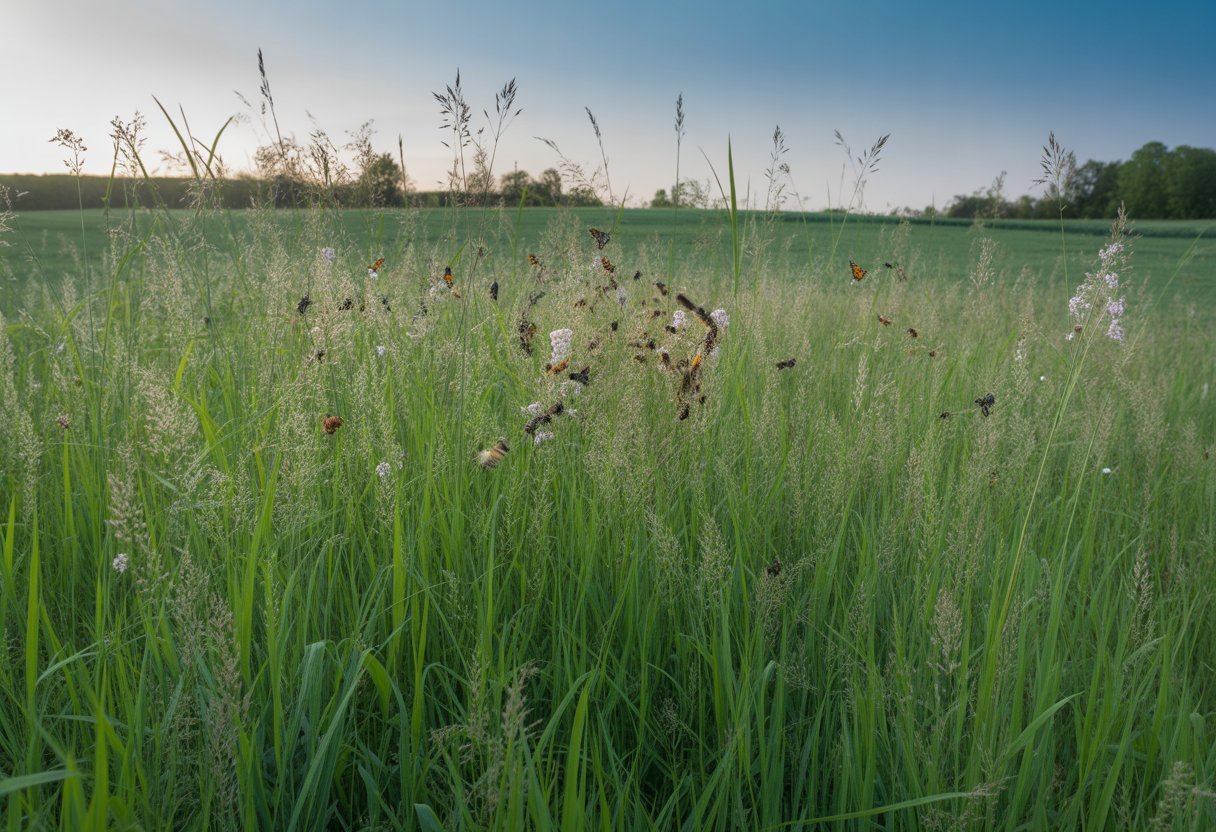
Switchgrass needs some specific management to really thrive in Ohio’s conditions. It’s tough but low-maintenance, which makes it a favorite for farmers and landscapers.
Drought Tolerance and Erosion Control
Switchgrass is drought-tolerant, thanks to its deep, fibrous roots that find moisture during dry spells. This reliability is great for Ohio, where summer droughts can sneak up on you.
Those roots also hold soil in place, making switchgrass a solid pick for erosion control on slopes and riverbanks. It’s especially handy for rough or disturbed land.
When you plant switchgrass in buffers or along contours, you help limit soil loss and improve watershed health—especially when you mix in other natives.
Minimal Maintenance Practices
Switchgrass doesn’t need much fussing over once it’s established. In most of Ohio, you can skip irrigation and fertilizer.
A yearly mow or a controlled burn in late winter encourages new growth and clears out dead stuff. That sort of mimics natural prairie cycles and keeps pollinator habitats healthy.
Weeds usually aren’t a big problem after switchgrass gets going. Still, it’s smart to check early on so weeds don’t slow things down.
Utilizing Switchgrass for Biomass and Landscaping
Switchgrass works well as a biomass crop. Farmers harvest it for bioenergy or use it as animal bedding.
Ohio growers like its steady yields. They also appreciate that it stands up to drought.
As an ornamental, switchgrass adds tall, flowing stems and colorful seed heads in late summer. Landscapers in Virginia and Pennsylvania often pick it for its unique texture and low water needs.
It’s not just practical—it looks good, too. If you want something sustainable that doesn’t need much water or fuss, switchgrass might fit the bill.
Helpful article, thanks!
We appreciate that, George! Happy gardening! 🌿 -Plant Native Team