
Tools Every Nevada Gardener Needs for Successful Desert Gardening
Last updated: August 19, 2026
Gardening in Nevada isn’t easy. The dry climate and tricky soil can throw even experienced folks for a loop.
To really get anywhere, you’ll want tools that fit these conditions. Essential tools include a sturdy trowel, a reliable watering system, and soil testing kits to manage the arid environment effectively.
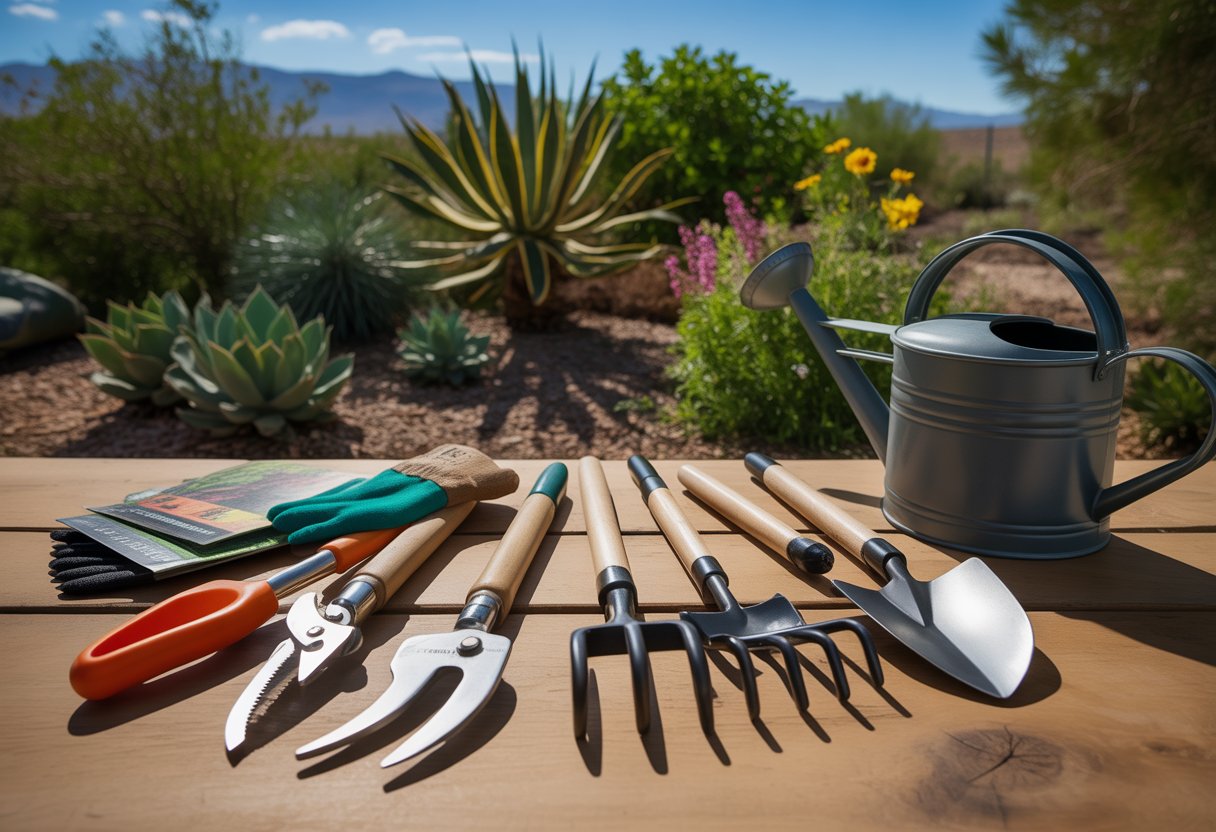
Irrigation equipment matters a lot here. It helps you save water and keeps your plants alive in the heat.
You’ll also want tools that loosen up the soil and help you keep an eye on moisture. Trust me, these make desert gardening a lot more manageable.
Essential Gardening Tools for Nevada Climates
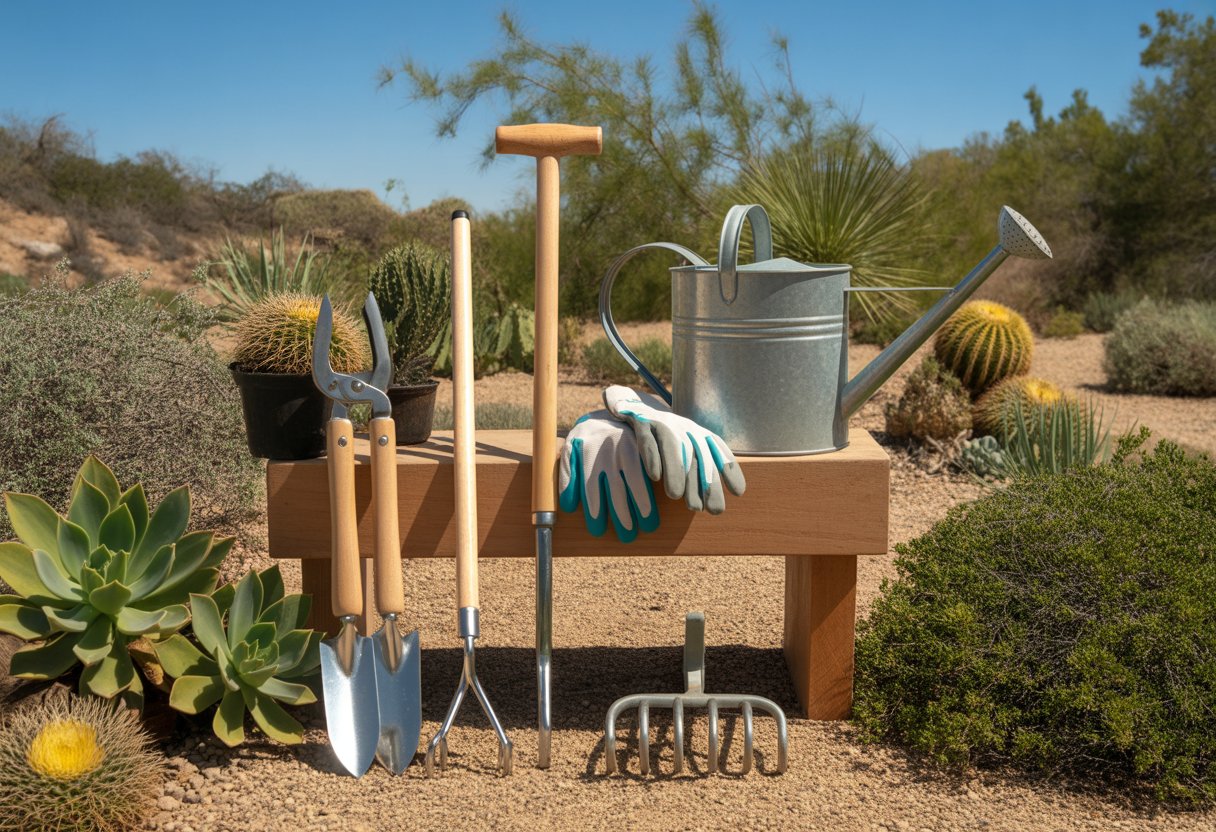
Nevada’s desert soil is tough. The sun can be relentless, so you can’t just use any old garden tools.
If you pick equipment that’s up to the challenge, you’ll work faster and protect your hands (and sanity) out there.
Choosing the Right Gloves
Gloves in Nevada need to breathe but also protect. Thick leather is great for sharp rocks and thorny plants.
Synthetic gloves with mesh panels are a lifesaver when it’s hot. Reinforced palms and fingertips really help if you’re always digging.
Water-resistant gloves are handy for early watering or surprise rain. Make sure they fit well so you can still handle delicate plants.
Trowels and Pruners for Tough Desert Soil
You’ll need sturdy trowels made from stainless or carbon steel. Sharp blades cut through hard ground and don’t rust as fast.
For pruning, sharp bypass pruners are best for live branches, and anvil pruners can handle deadwood. Keep them sharpened—it makes a big difference.
Ergonomic handles help when you’re out there for hours. Rocky soil will wear you out if your tools aren’t comfortable.
Investing in High-Quality Garden Tools
Good tools save you time and frustration. Stainless steel or carbon steel handles the wet soil and fertilizers without corroding.
Wood or fiberglass handles feel solid and absorb some shock. Personally, I’d skip plastic—they just don’t last.
Brands that offer solid warranties usually make better tools. Store your gear well, and it’ll last for years, even in the dust.
Soil Health and Enrichment
Keeping soil healthy in Nevada is a whole project by itself. You’ll need to add nutrients and improve the texture if you want anything to grow.
Organic matter, nutrient balance, and good composting habits are the name of the game.
Using Compost and Organic Matter
Compost is a must here. Nevada’s soil is dry and sandy, and it’s just not very rich.
Mixing in compost boosts water retention and brings in helpful microbes. It also slowly releases nutrients like nitrogen and potassium, so your plants don’t starve.
A 2–3 inch layer of well-aged compost every year works wonders. Mix it in before you plant—your soil (and plants) will thank you.
The Role of Fertilizer in Nevada Gardens
Fertilizers fill in the gaps and give plants a quick boost. Nitrogen is usually what’s missing here, since it helps with leafy growth.
Check the N-P-K ratio on the bag so you know what you’re adding. Sandy soils might need lighter, more frequent feedings to avoid washing nutrients away.
Always test your soil first. Too much fertilizer can backfire, hurting your plants and even polluting groundwater.
Compost Bins and Efficient Composting
Compost bins make it easier to handle kitchen scraps and yard waste. Aerated bins cut down on odor and speed things up.
A good pile needs a mix of “green” scraps (like veggies) and “brown” stuff (dead leaves or paper). This balance helps everything break down and keeps nutrients cycling.
Turn your compost now and then to keep it fluffy. Shade helps keep the pile from drying out or overheating, which keeps those helpful microbes happy.
Watering and Moisture Retention Strategies
Watering right is half the battle in Nevada. Combining smart irrigation with moisture-saving tricks can really stretch your water and keep plants thriving.
Selecting the Best Sprinkler Systems
Most Nevada gardeners go with drip irrigation or low-flow sprinklers. These systems send water right to the roots, not all over the place.
Drip systems also cut down on evaporation—super important here. Timers and soil moisture sensors help you water at cooler times and avoid overdoing it.
Adjustable nozzles mean you can target different garden spots. Targeted watering saves water and keeps stress off your plants.
Effective Mulch for Nevada Gardens
Mulch is a game-changer for moisture. Organic mulches like bark or straw slowly break down and feed the soil while holding in water.
If you prefer, inorganic mulches like gravel or fabric also help with evaporation and weeds, but they don’t feed the soil. A 2-4 inch layer around your plants keeps roots cool and moist.
Just remember to top up your mulch now and then—it doesn’t last forever.
Managing Pests and Supporting Plant Health
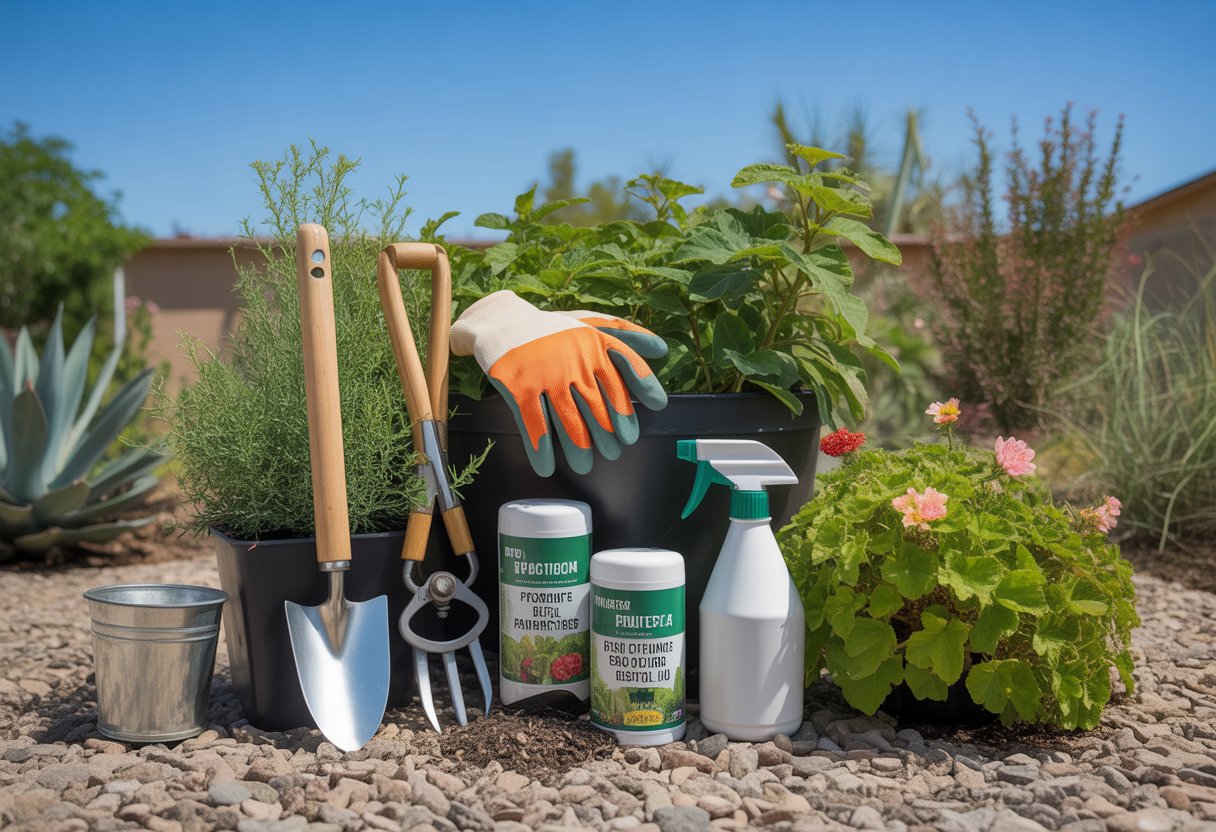
Pest control in Nevada isn’t about blasting everything with chemicals. Careful monitoring and targeted action keep plants healthy and let beneficial bugs stick around.
Integrated Pest Management Approaches
Integrated Pest Management (IPM) is all about prevention first. You start by figuring out which pests you’re dealing with, then keep an eye on their numbers.
Rotate your crops, water properly, and pick resistant varieties to make your garden less attractive to troublemakers. Bringing in helpful insects like ladybugs or predatory mites keeps pest populations in check.
Physical barriers, traps, and handpicking pests mean you don’t have to reach for chemicals as often. If you do need pesticides, only use them when pests get out of control.
Choosing Safe Insecticides and Pesticides
Pick insecticides that are safe for your plants and pollinators. Organic choices like neem oil, insecticidal soap, or pyrethrin sprays work on common pests like aphids.
Spray early or late in the day to avoid harming bees. Stick to spot treatments instead of blanket spraying.
Always wear gloves and avoid spraying when it’s windy. Store chemicals safely—nobody wants surprises. Mixing these practices helps you manage pests and protect your little garden ecosystem.
When to Use Professional Exterminators
Sometimes, pest infestations just get out of hand. If you’re dealing with stubborn insects or pests like termites, it’s probably time to call in the pros.
Exterminators have access to strong pesticides and gear that regular gardeners just don’t. They’ll track down the source of the problem and suggest ways to keep it from coming back.
If you want to stay on the right side of Nevada’s pesticide rules, hiring a licensed professional is the way to go. And honestly, if you’ve already tried everything and the pests are still winning—or your plants are at risk—it’s smart to get a consultation.
 Looking for a nursery that carries native plants in Nevada?
Browse our native plant nursery directory: Nevada
I work at a garden center and customers ask about this all the time. Good resource to share.
We appreciate that, Nick! Happy gardening! 🌿 -Plant Native Team
I’ve seen conflicting advice on this topic. This seems reasonable though.
Fair point, David. Every garden is different and results can definitely vary by region. Thanks for sharing your experience! -Plant Native Team