
Top 5 Professional Automatic Greenhouse Vent for High-Volume Production Efficiency and Reliability
We independently select all products and services. If you click through links we provide, Plant Native may earn a commission with no extra cost to you.
Last updated: November 8, 2026
Automatic greenhouse vents keep temperature and humidity in check inside growing spaces. Good ventilation matters in greenhouses—it helps maintain optimal conditions for plant growth and helps prevent problems like mold, heat stress, or stagnant air.
- Automatic vents open and close without electricity — they use thermal wax that expands with heat
- Most units open at around 65–75°F and are adjustable via a knurled nut
- Can lift 15–30 lbs depending on model — ensure the vent cover is within this weight range
- Install on roof vents for best passive ventilation — hot air rises and exits through top
- Replace the thermal cylinder every 3–5 years as the wax eventually loses effectiveness
Automatic vents open and close based on temperature, so you don’t have to do it all by hand. That’s a big deal for efficiency, especially when you’re busy or managing a big operation.
For high-volume production, professional automatic vents need to be tough, precise, and reliable. Most of these use sturdy materials, strong actuators, and work well with large-scale setups.
Picking the right vent means you get steady airflow, which can boost yields and help manage resources better. It’s not always obvious, but small differences in vent quality add up fast in a big greenhouse.
When you’re shopping for an automatic greenhouse vent, consider things like material quality, how far it opens, actuator type, and whether it’s easy to install. Size and response time matter too, since they affect how quickly you get fresh air moving.
We researched the details and tested a bunch of professional automatic greenhouse vents to find what actually works for large-scale growers.
Top 5 Professional Automatic Greenhouse Vents
We put together this list of the best automatic greenhouse vents for high-volume production. These picks focus on reliable performance, solid construction, and efficient climate control for bigger growing operations.
Our top pick

- Solar-powered—no electricity needed
- Durable anodised aluminum and recycled plastic
- Fits metal and wooden greenhouse structures
Cons
- Some brands may need extra fittings
- Higher price than basic openers
- Max window opening height is 30 cm
With over 6 kg of lifting force and corrosion-resistant construction, it’s a strong option for growers managing several vents, and it’s designed for straightforward installation on most frames. It’s the rare product that delivers on virtually every front.
Best aluminum option

- Rust-resistant aluminum and stainless steel build
- Solar heat sensitivity means it adjusts automatically
- Stepless adjustment for precise window angles
Cons
- Cylinder needs a chill-and-reset step before installation
- 15 lb limit restricts bigger windows
- Single spring has less lifting force than dual-spring models
The aluminum and stainless steel build is made for humid greenhouse conditions, and the opener responds to temperature swings on its own. Running a few of these together across multiple windows helps keep airflow steady.
Best automatic option

- Simple, no-electricity mechanism
- Fits most Canopia by Palram greenhouses
- Opens and closes automatically with temperature shifts
Cons
- Designed for Canopia models; other frames may need adapting
- Not much control over opening temp range
- Limited specs published on the listing
It’s a set-it-and-forget-it upgrade for Canopia owners—no constant adjustments needed. Mounting it on a greenhouse that isn’t a Palram can take some adapting. It works best alongside other climate controls, and it’s worth checking after storms.
Best solar-powered option
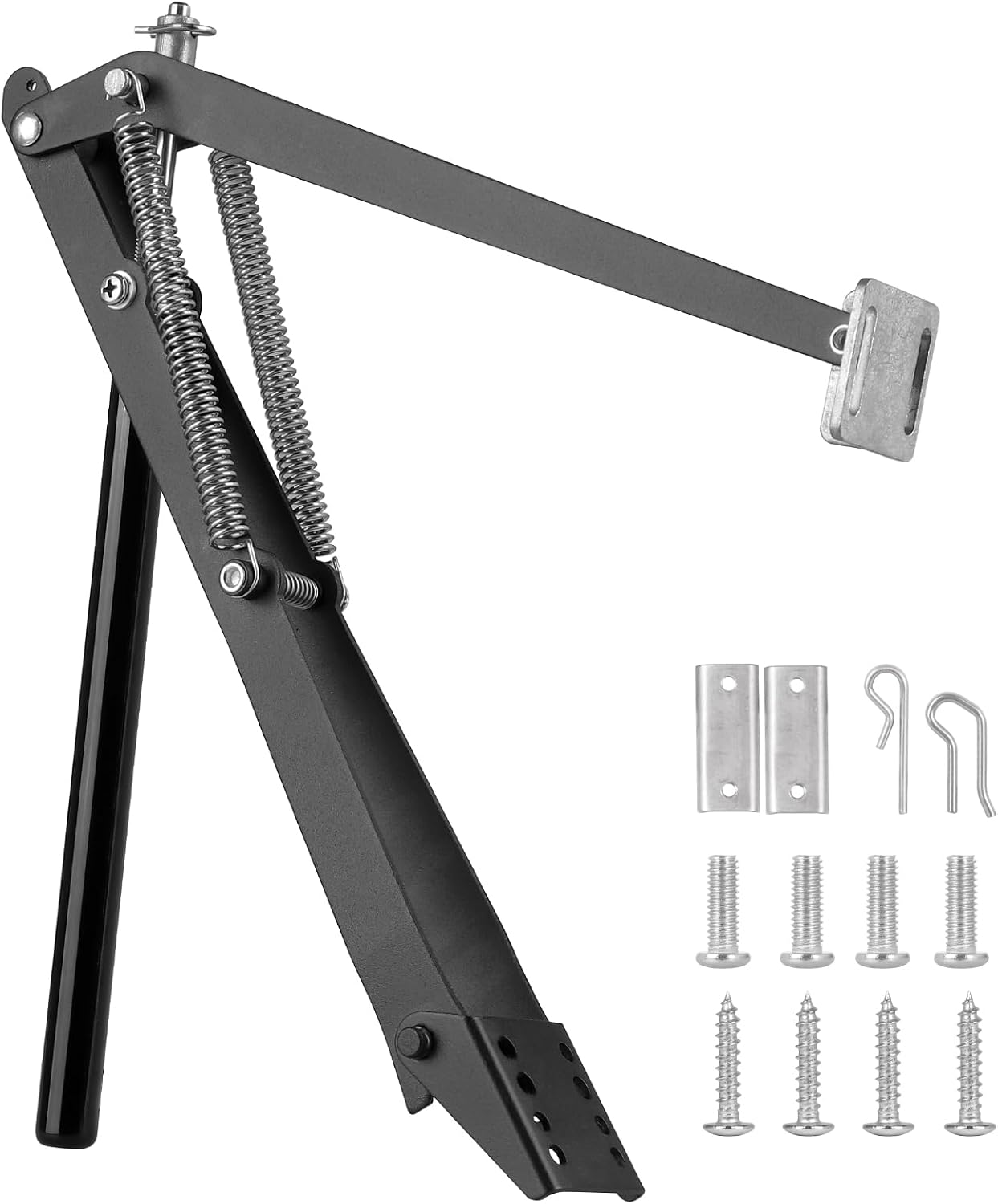
- Solar-powered—no batteries or wiring
- Dual springs handle windows up to 33 lb
- Rust-proof aluminum alloy and stainless steel with screws and brackets included
Cons
- Single unit per pack
- Tricky fit on non-standard frames
- Fewer ratings than established brands
With double the spring force of single-spring openers and an 18-inch opening, it suits heavier vent windows. For hands-off temperature venting across a range of greenhouse frames, it does the job and makes sense for high-volume growers.
Best for large areas

- Controls up to 4 fans with WiFi app automation
- Moves 3,425 CFM—great for big spaces
- IP44-rated frame with steel shutters handles dust and moisture
Cons
- Expensive compared with passive vent openers
- Noticeably loud at 65 dBA
- Needs wall mounting and power
Dynamic temperature, humidity and VPD programming for up to four fans makes this a true climate-control system, and the 20-inch shutter fan really moves air on hot days. For larger spaces, the extra capacity and reach really pay off.
Buying Guide
When you’re picking out an automatic greenhouse vent for high-volume production, reliability and efficiency really matter. The vent needs to react to temperature changes fast to keep plants safe and growing well.
Durability is key here. Materials that resist corrosion and wear—think metal parts or tough plastics—usually hold up better in humid, sometimes harsh greenhouse conditions.
The opening and closing mechanism should work smoothly and quickly. If it sticks or lags, you risk overheating your plants or missing that perfect ventilation window.
Energy source is another thing to weigh. Some vents run on hydraulic or electric systems, while others use solar power. It’s worth thinking about what fits your setup and sustainability goals.
Size and compatibility with your greenhouse structure can’t be ignored. If the vent doesn’t fit right, you won’t get good airflow and might end up with leaks.
| Feature | What to Look For | Why It Matters |
|---|---|---|
| Material | Corrosion-resistant metals or plastics | Longer lifespan |
| Mechanism | Smooth, reliable, fast operation | Prevents plant stress |
| Power Source | Electric, hydraulic, or solar | Matches energy resources |
| Size | Appropriate for greenhouse openings | Ensures effective ventilation |
| Maintenance | Easy to clean and repair | Minimizes downtime |
We put a lot of weight on ease of installation and regular maintenance. If a vent is tricky to install or hard to service, it can drive up labor and costs.
finding the right vent is a balancing act. But when you get it right, you save time and keep your greenhouse humming along.
Frequently Asked Questions
How do automatic greenhouse vents work without electricity?
Automatic greenhouse vent openers use a cylinder filled with a thermal wax compound. When the temperature rises above a set point, the wax expands and pushes a piston outward, which opens the vent. When the temperature drops, the wax contracts, allowing a spring to close the vent. The entire mechanism requires no power source — it’s a purely mechanical, self-regulating system.
What temperature do automatic greenhouse vents open at?
Most standard automatic vent openers begin opening at approximately 65–75°F (18–24°C) and are fully open by 80°F. The exact opening temperature is adjustable on most models via a temperature-adjustment nut. Set it according to your specific crop requirements — most vegetables and seedlings prefer temperatures between 65–80°F, so the default range works well for typical greenhouse applications.
How many automatic vents does a greenhouse need?
A general guideline is to have ventilation area equal to at least 15–20% of the floor area. For a small hobby greenhouse (8×10 feet), two roof vents with automatic openers typically provides adequate ventilation. Larger greenhouses may need one vent per 5–8 linear feet of ridge. Supplementing with a passive side vent or small circulation fan improves airflow distribution significantly.
We independently select all products and services. If you click through links we provide, Plant Native may earn a commission with no extra cost to you. As an Amazon Associate I earn from qualifying purchases.

We have a small backyard in Richmond and space is tight. Some of these ideas might actually work for us.