
Top 5 Trellises for Supporting Climbing Vegetables: Essential Garden Structures
We independently select all products and services. If you click through links we provide, Plant Native may earn a commission with no extra cost to you.
Last updated: November 7, 2026
Trellises are essential garden structures that provide support for climbing vegetables. They allow them to grow vertically and maximize space in your garden. These versatile tools not only improve air circulation and sunlight exposure, but also make harvesting easier. They also keep fruits off the ground, reducing the risk of rot and pest damage.
Whether you’re growing peas, pole beans, cucumbers, or squash, a well-designed trellis can significantly enhance your vegetable garden’s productivity and appearance.
When choosing a trellis for climbing vegetables, consider the material, size, and durability. The trellis should be sturdy enough to support the weight of fully grown plants and withstand outdoor conditions. It’s also important to select a size that fits your garden space and matches the height of your chosen vegetables.
Some trellises are freestanding, while others can be attached to raised beds or walls, offering flexibility in garden design.
We researched and tested numerous trellises to identify the top five options for supporting climbing vegetables. Our selections cater to various garden sizes, plant types, and aesthetic preferences, ensuring you’ll find the perfect trellis for your needs.
Top 5 Trellises for Supporting Climbing Vegetables
We’ve carefully selected the best trellises to support your climbing vegetables. These sturdy and versatile options will help maximize your garden space and promote healthy growth for vining plants like peas, beans, and cucumbers. Our top picks offer durability, ease of use, and excellent value for gardeners of all skill levels.
Our top pick
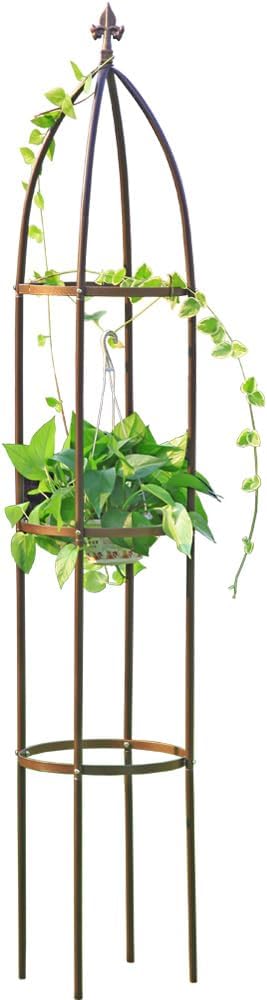
- 6.3 ft height suits tall climbers like pole beans
- All-metal frame with weather-resistant epoxy coating
- Four ground stakes keep it stable
- 12-month warranty from the seller
Cons
- Requires assembly with screws
- Narrow footprint supports only one or two plants
- Decorative bronze finish costs more than plain stakes
A good choice if you want one tall, permanent support for vining vegetables that also looks decorative in the garden. Pre-drilled tubes make assembly simple; leave the screws loose until the whole frame is together.
Most versatile
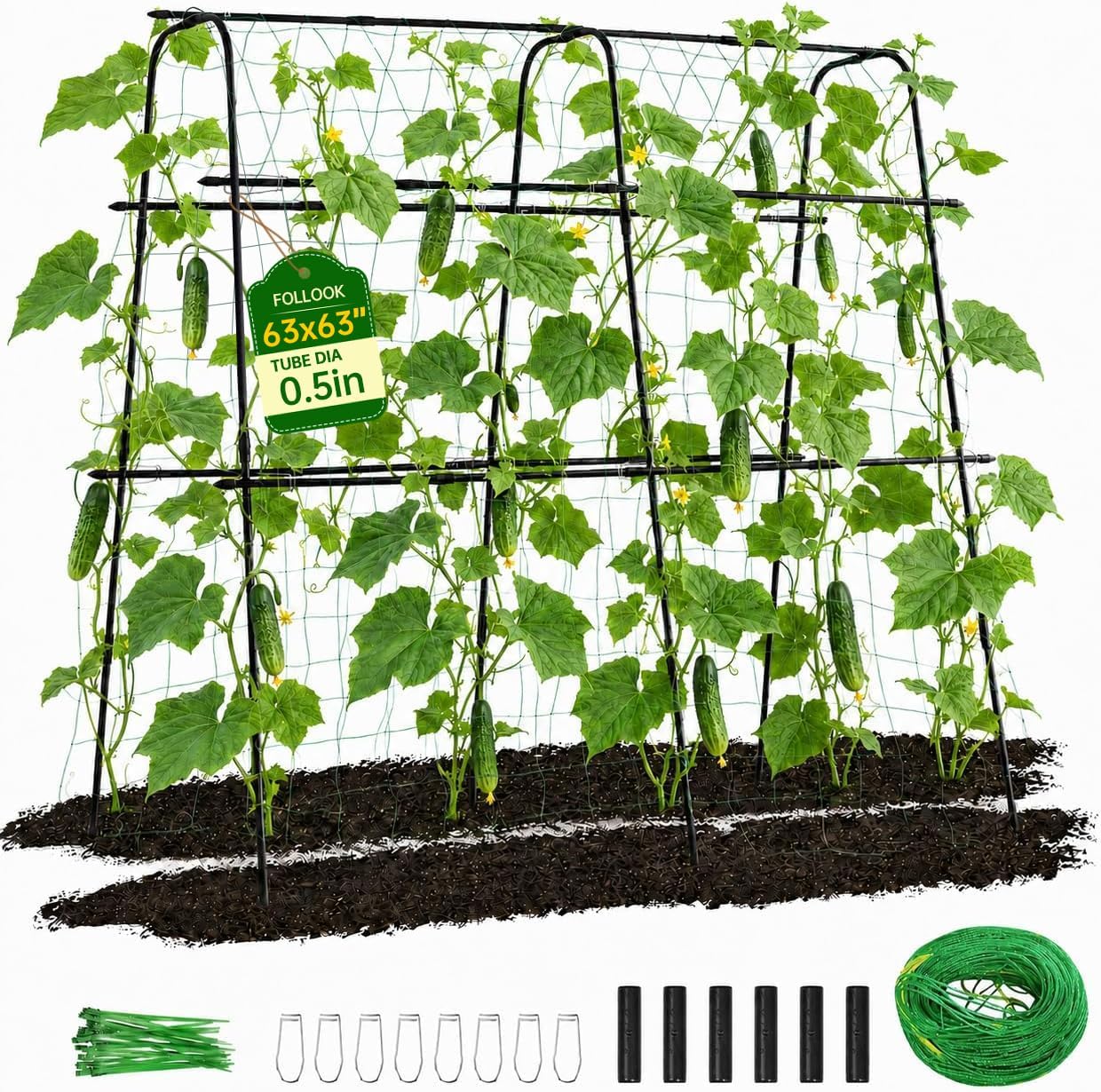
- Arch design keeps vines off the ground and improves airflow
- Polyethylene-coated steel tubes resist rust
- Adjustable base fits different raised-bed widths
- Snaps together without tools and comes apart for storage
Cons
- Large frame needs a dedicated bed or row
- Netting has to be tied onto the frame during setup
A strong pick for cucumbers, beans, peas and small squash in a raised bed. The arch shape lets you grow on both sides and harvest hanging fruit easily.
Best for lawns

- Two trellises per pack
- Plastic-coated steel stakes resist rust
- Assembles without tools
- Includes plant ties and a trowel
Cons
- Plastic support rings are less sturdy than an all-metal frame
- Narrow 10.6-inch width limits it to single plants
A budget-friendly way to give individual tomato, cucumber or pea plants a tall support in a garden bed or large container. Push the stakes deep into the soil for stability in windy spots.
Best budget option
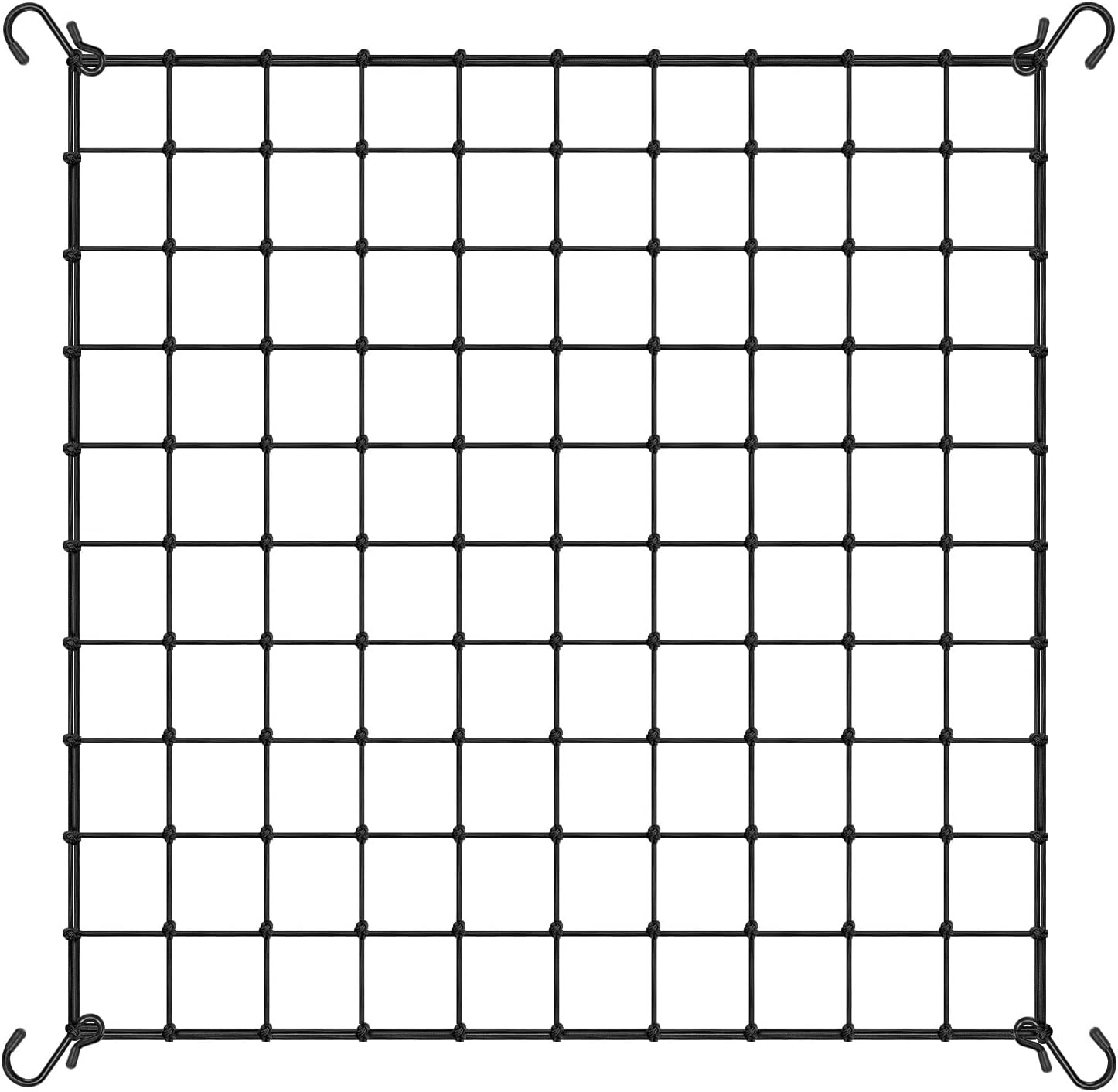
- Elastic cord stretches taut and is reusable
- Large 3.9-inch mesh makes pruning and picking easy
- Can be cut to fit; leftovers can be used elsewhere
- Includes 4 rustproof S hooks
Cons
- Needs an existing frame, posts or fence to attach to
- Single 5 x 5 ft net covers a limited area
An inexpensive add-on for gardeners who already have a frame or fence. Stretch it tight between supports and it will carry vining crops like cucumbers and peas.
Best organic choice

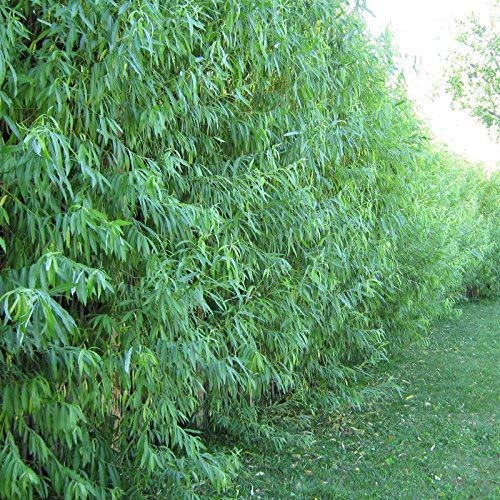
- Natural, handmade bamboo
- Six trellises plus 50 twist ties per pack
- Fan shape spreads young vines out to the light
- Works in pots and indoors
Cons
- 24-inch height suits only seedlings and compact climbers
- Natural bamboo will weather and wear over time outdoors
A natural-looking, low-cost option for seedlings, container peas or compact vines. For full-size pole beans or cucumbers, pair them with a taller trellis later in the season.
Buying Guide
When selecting a trellis for climbing vegetables, we recommend considering several key factors:
Material
Choose from options like wood, metal, or plastic. Each has pros and cons:
- Wood: Natural look, sturdy, may rot over time
- Metal: Durable, long-lasting, can rust
- Plastic: Lightweight, affordable, less sturdy
Size
Measure your garden space and select a trellis that fits. Consider the mature size of your plants.
Stability
Look for designs with sturdy bases or stakes for anchoring. Wind resistance is important for tall structures.
Weight Capacity
Ensure the trellis can support your chosen vegetables when fully grown and laden with produce.
Ease of Assembly
Some trellises come pre-assembled, while others require setup. Consider your DIY skills and available time.
Versatility
Multi-use trellises can support various plants and adapt to different garden layouts.
Maintenance
Consider how much upkeep the trellis will need. Some materials require more care than others.
Climate Suitability
Choose materials that withstand your local weather conditions. This includes sun exposure and moisture levels.
By carefully weighing these factors, we can select a trellis that best suits our garden needs. It also supports healthy vegetable growth.
We independently select all products and services. If you click through links we provide, Plant Native may earn a commission with no extra cost to you. As an Amazon Associate I earn from qualifying purchases.
peas, pole beans, cucumbers and squash all going up one trellis would save a lot of ground space.
Thanks Dana! Let us know how it goes. -Plant Native Team
Can you do this in containers? We rent so I can’t really dig up the yard.