
5 Best Commercial-Grade Soil Aerator In-Depth for Commercial Growers: Top Picks and Key Features
We independently select all products and services. If you click through links we provide, Plant Native may earn a commission with no extra cost to you. As an Amazon Associate I earn from qualifying purchases.
Last updated: November 8, 2026
Soil aeration keeps soil healthy and productive in commercial farming. Aerators boost air and water movement, which helps roots grow and absorb nutrients.
If you’re a commercial grower, you know that efficient soil aeration can really make a difference in crop yield and quality.
Commercial-grade soil aerators are built for large spaces and tough ground. You’ll find machines ranging in size, power, and aeration type—from spike to plug models.
Picking the right one comes down to your soil, crop needs, and acreage. It’s not always simple, but it’s worth taking the time to get it right.
When you’re shopping, look for durability, easy handling, and whether it’ll work with your current gear. Weight and power matter too since they affect how efficiently you can work.
We ran a bunch of these aerators through their paces and narrowed it down to five top commercial-grade picks for growers.
Best Commercial-Grade Soil Aerators
We researched the details and tested a bunch of commercial-grade soil aerators. Here are the models that really stood out for performance and toughness in professional settings.
These picks are built for heavy use and will help you improve soil health without slowing you down.
Our top pick
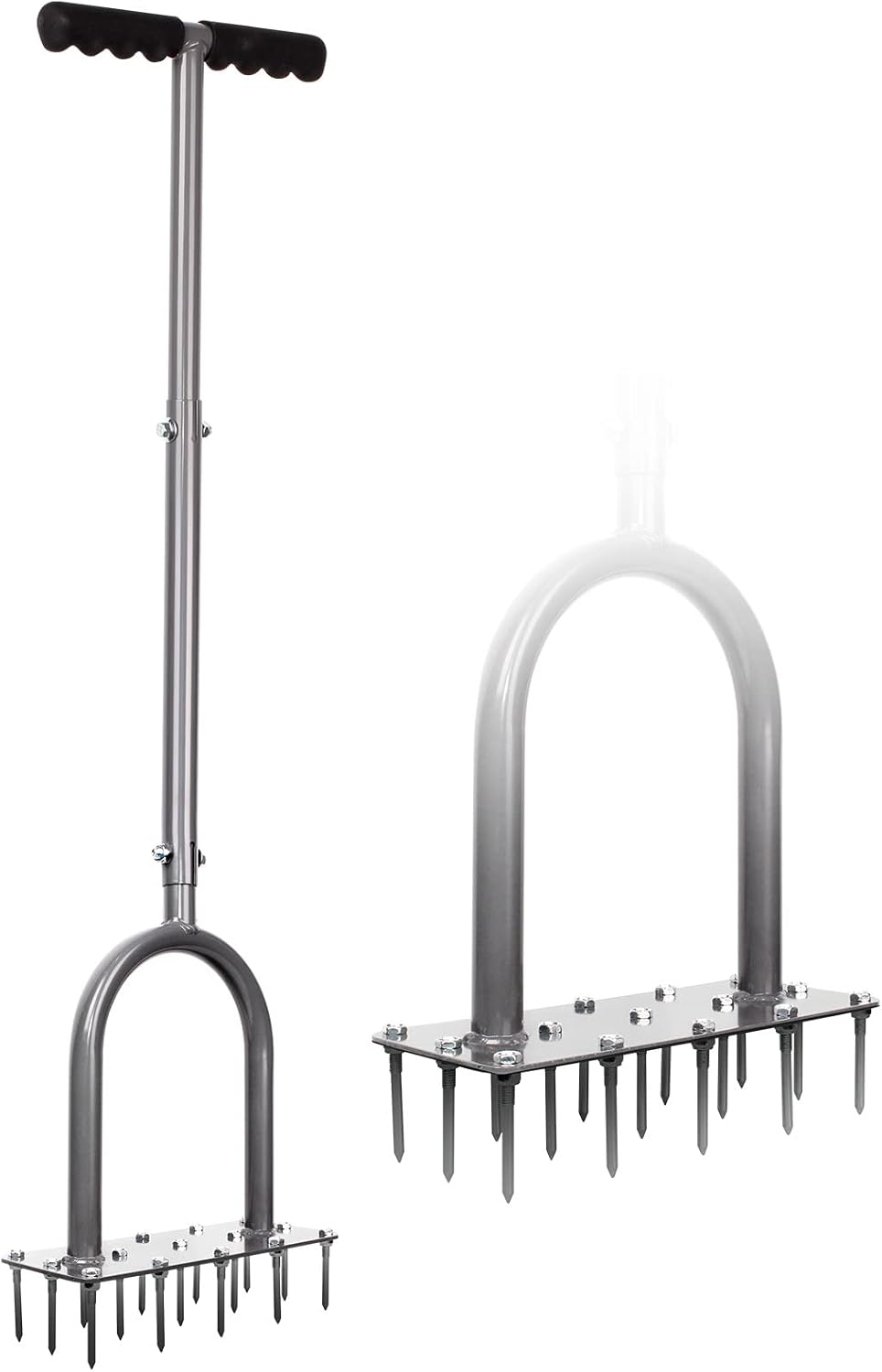
- 15 sharp spikes in three rows cover more ground per step
- Heavy-duty iron body with powder-coated finish
- Cushioned T-handle and foot pedal for leverage
Cons
- Not recommended for sticky clay, rocky ground or large-scale jobs
- Water hard, dry soil first
- Assembly involves small hardware
Bottom line: A solid, no-frills spike aerator for loosening compacted patches and bed edges; plan on pre-watering dry ground.
Best runner-up
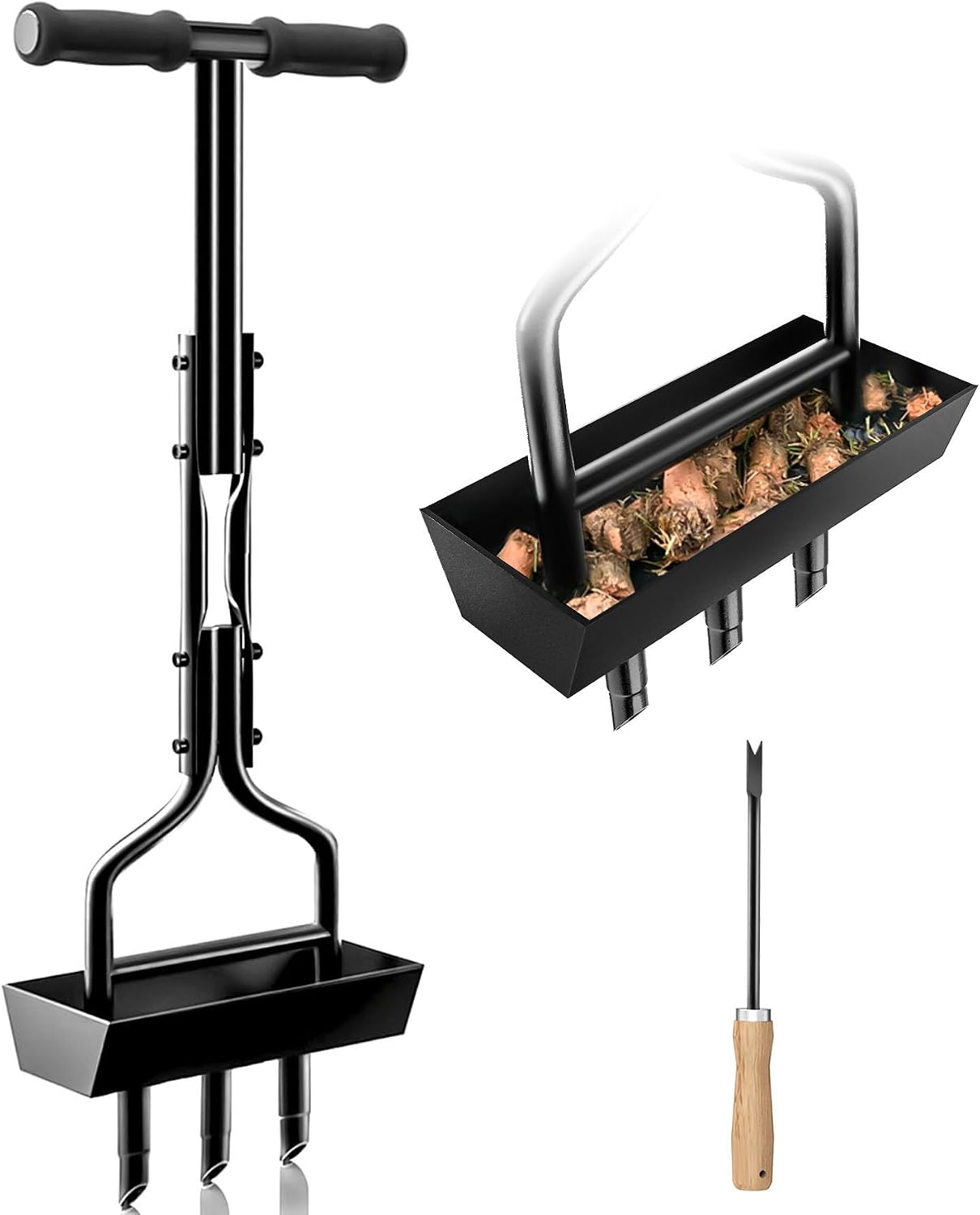
- Built-in tray catches soil plugs, so cleanup’s a breeze
- Three sharp coring tines for compacted soil
- 2 mm thick iron frame and padded handle
Cons
- Water deeply 24–48 hours before use for best results
- Tubes can collect plugs or small rocks that need clearing
- Not ideal for huge commercial fields
Bottom line: A tidy coring aerator for beds and small turf areas; the plug tray saves bending and raking after every pass.
Best budget option
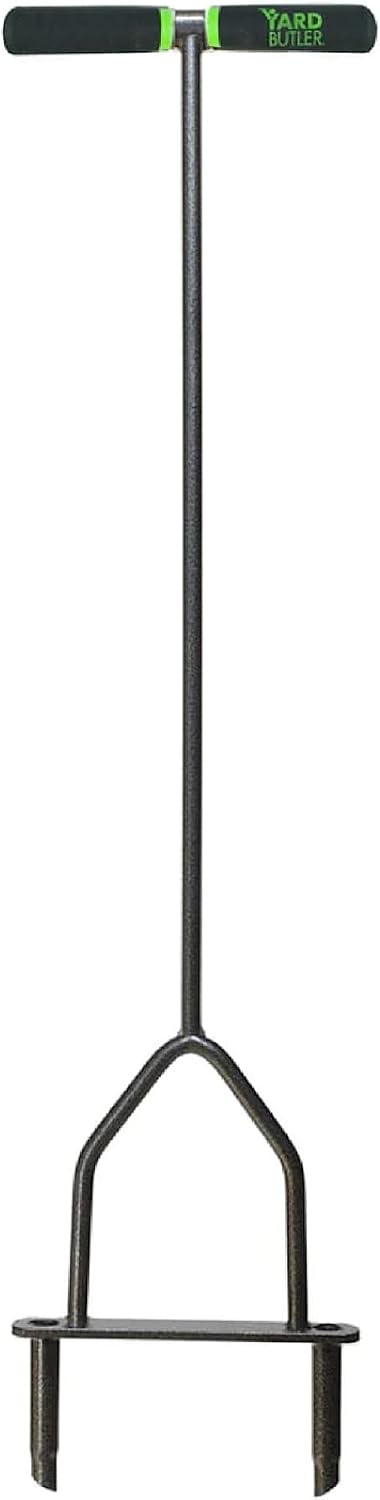
- Pulls two cores per step
- Powder-coated steel construction
- Long handle and foot bar reduce bending
Cons
- Only two tines, so each pass covers a small area
- No plug-collecting tray
- Manual work gets tiring on big areas
Bottom line: A simple, durable coring aerator from an established brand, well suited to smaller, well-watered beds and turf.
Best premium choice
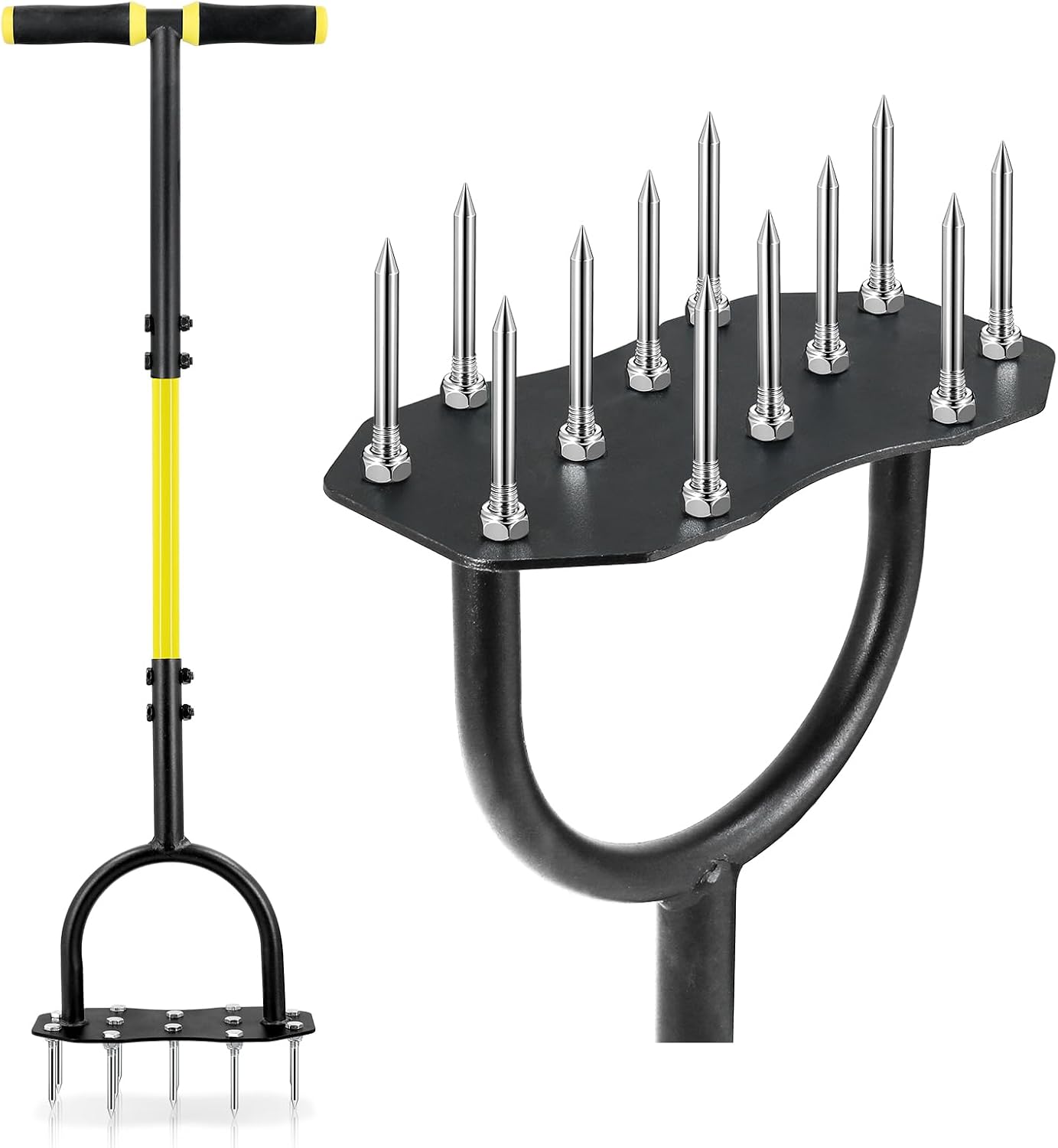
- Heat-treated steel spikes
- 36 in height and rubber grip reduce back strain
- Pre-assembled and detachable for storage
Cons
- Listed for residential lawns and small yards
- Works best on moist soil
- Demands leg strength for long sessions
Bottom line: An inexpensive spike aerator for regular maintenance on smaller, well-prepped areas.
Also great
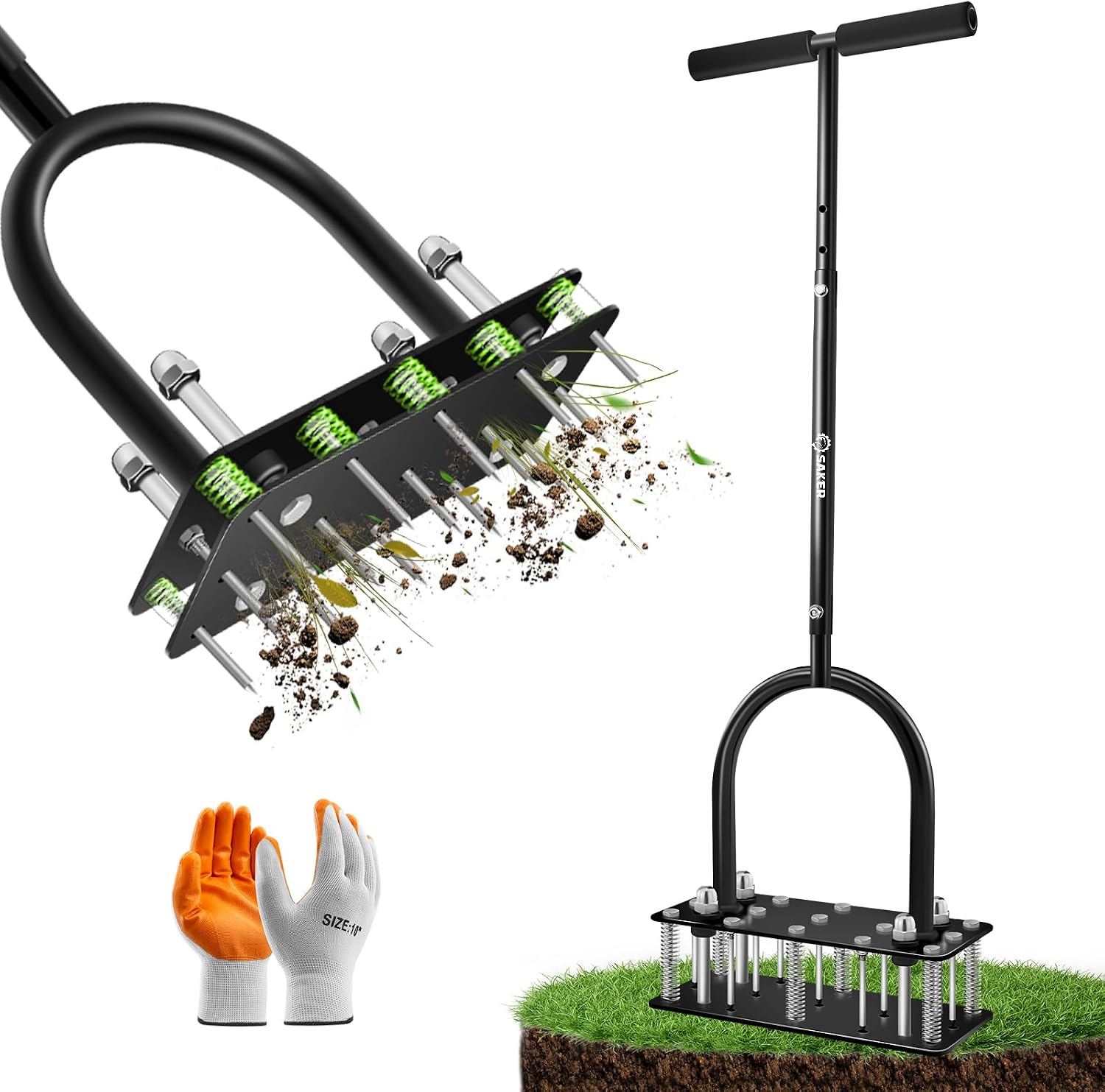
- 15 iron spikes cover a decent area
- Spring-loaded mechanism clears debris as you go
- Adjustable height from 32.2 to 35.4 in
Cons
- Pricier than other manual spike aerators
- Spikes are fairly short at 2.3 in
- Needs moist soil for best results
Bottom line: A convenient self-cleaning spike aerator for lighter-duty jobs on softer ground; expect to do some maintenance if you use it heavily.
When you’re picking a commercial-grade soil aerator, a few features really shape how well it works and how long it lasts. We want a machine that covers large areas quickly, but it also needs to be user-friendly and not a nightmare to maintain.
Power source? That’s a big one. Gas-powered aerators bring more muscle for tough jobs, but electric models are quieter and don’t need as much upkeep. The right pick depends on the size and vibe of the site.
We can’t ignore durability. Machines built with solid materials and tight construction hold up better when you’re using them all the time.
Maneuverability is another thing I care about. If you’re working around trees or fences, a lighter aerator with an adjustable handle feels like a lifesaver.
Maintenance and parts availability matter, too. Aerators with easy-to-reach components and parts you can actually find keep you working instead of waiting.
Buying Guide
When you’re picking a commercial-grade soil aerator, a few features really shape how well it works and how long it lasts. We want a machine that covers large areas quickly, but it also needs to be user-friendly and not a nightmare to maintain.
Let’s talk about tine type and number—these decide how deep you get and how much the soil gets disturbed. One design isn’t always best; what works in clay might flop in sandy soil.
Power source? That’s a big one. Gas-powered aerators bring more muscle for tough jobs, but electric models are quieter and don’t need as much upkeep. The right pick depends on the size and vibe of the site.
We can’t ignore durability. Machines built with solid materials and tight construction hold up better when you’re using them all the time.
Maneuverability is another thing I care about. If you’re working around trees or fences, a lighter aerator with an adjustable handle feels like a lifesaver.
Maintenance and parts availability matter, too. Aerators with easy-to-reach components and parts you can actually find keep you working instead of waiting.
| Feature | What to Consider |
|---|---|
| Tine Type & Number | Depth and soil type compatibility |
| Power Source | Gas (power) vs. electric (quiet/maintenance) |
| Durability | Materials and build quality |
| Maneuverability | Weight and handle adjustments |
| Maintenance | Ease of access and parts availability |
Good general info. I’d recommend also talking to your local extension office for area-specific advice.