
Texas Redbud Tree: How to Grow and Care
Last updated: September 8, 2026
⚡ Texas Redbud Quick Facts
- Scientific name: Cercis canadensis var. texensis
- Height/Spread: 12–20 feet tall × 15–25 feet wide
- Bloom time: March–April (before leaves emerge) — lavender-pink flowers
- USDA Zones: 6–9 (native to central Texas limestone country)
- Advantages over Eastern Redbud: More heat and drought tolerant; glossy waxy leaves; better for alkaline Texas soils
- Lifespan: 50–60 years with good care
- Wildlife value: Early spring nectar source for butterflies and native bees
What is the Texas Redbud Tree?
The Texas Redbud (Cercis canadensis var. texensis) is a spectacular native ornamental tree prized for its brilliant spring bloom display and heat tolerance. It’s a variety of the Eastern Redbud specifically adapted to Texas’s challenging conditions — alkaline soils, hot summers, and periodic drought. Unlike its eastern cousin, the Texas Redbud has distinctly glossy, waxy leaves that reflect heat and reduce water loss, making it significantly more heat-tolerant in zones 8–9.
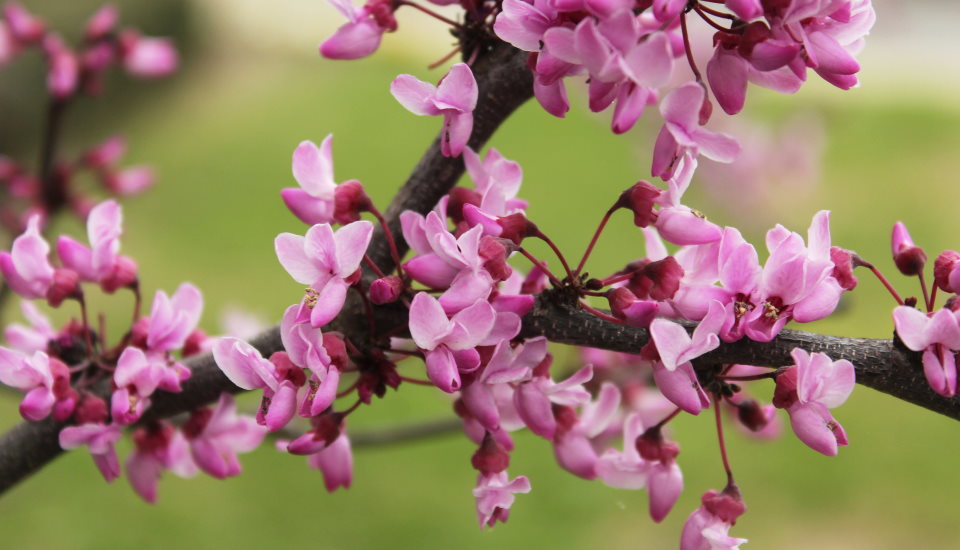
In spring, Texas Redbuds burst into bloom with clusters of vivid pink-to-magenta flowers before the leaves emerge — covering the bare branches in a breathtaking display that lasts 2–3 weeks. This is one of the earliest flowering trees in Texas, often blooming in March when little else is in flower. After bloom, heart-shaped, glossy leaves emerge, providing attractive summer foliage. In fall, the leaves turn yellow before dropping.
There are several redbud varieties you can explore for different growing conditions: Western Redbud, Oklahoma Redbud, European Redbud, Ace of Hearts, and Lavender Twist (weeping form).
Texas Redbud vs. Eastern Redbud: Key Differences
The Texas Redbud is often compared to the Eastern Redbud (Cercis canadensis), its close relative. Here’s how they differ:
| Feature | Texas Redbud | Eastern Redbud |
|---|---|---|
| Leaves | Glossy, waxy, leathery | Dull, heart-shaped |
| Heat tolerance | Excellent (zones 7–9) | Moderate (zones 4–8) |
| Drought tolerance | High once established | Moderate |
| Alkaline soil | Excellent tolerance | Prefers slightly acidic |
| Best for | Central/West Texas, Oklahoma | East Texas, Southeast US |
How to Grow and Care for a Texas Redbud Tree
Planting Location and Timing
Plant Texas Redbuds in early spring or fall — the two best establishment windows in Texas. Early spring planting gives the tree a full season to establish roots before its first hot summer. Fall planting takes advantage of cooler soil temperatures and typically more rainfall.
Site requirements:
- Sunlight: Full sun to part shade (6+ hours sun); afternoon shade in zones 8–9 reduces heat stress
- Soil: Well-drained; tolerates alkaline limestone soils that kill many other ornamentals
- Spacing: Plant at least 8–10 feet from structures (it reaches 15–25 feet wide at maturity)
- Avoid: Low spots, compacted soil, or areas with standing water — root rot is the #1 cause of Texas Redbud decline
Watering
During the establishment period (first 2–3 years), water deeply 1–2 times per week. Once established, Texas Redbuds are remarkably drought-tolerant — a critical advantage in Texas. During extended summer droughts (3+ weeks without rain), supplemental deep watering once every 2 weeks benefits even established trees. Never overwater — consistent soggy soil leads to Phytophthora root rot, which is difficult to treat.
Mulching
Apply a 3–4 inch layer of organic mulch (wood chips or shredded bark) from 6 inches away from the trunk out to the drip line. Mulch conserves soil moisture, moderates soil temperature (critical in Texas summers), and suppresses weeds that compete for water and nutrients. Never pile mulch against the trunk — this creates conditions for rot and pest problems.
Fertilizing
Texas Redbuds don’t require heavy fertilization. Apply a balanced slow-release fertilizer (10-10-10 or similar) once in spring. Young trees benefit from an annual spring application until established; mature trees in reasonable soil often need no fertilizer at all. Avoid high-nitrogen fertilizers that push leafy growth at the expense of flowering.
Pruning
Prune in late winter while the tree is dormant — before bud break in February/March. Remove dead, diseased, or crossing branches. Texas Redbud naturally develops an attractive multi-stemmed form; avoid heavy structural pruning that changes this natural architecture. Light pruning to maintain shape and improve air circulation is all that’s typically needed.
Common Problems and Solutions
- Canker disease — fungal cankers appear as sunken, discolored patches on branches. Prune out infected wood 6 inches below the canker. Prevent by not overwatering and avoiding wounds to the bark.
- Leaf rollers — caterpillars may roll leaves in spring. Generally cosmetic and not worth treating; beneficial insects control them.
- Root rot — the most serious threat; caused by overwatering or poor drainage. Prevention is far easier than treatment — plant in well-drained soil from the start.
- Verticillium wilt — a soil-borne fungus; causes wilting and branch dieback. No cure; remove affected trees to prevent spread.
- Scale insects — treat with horticultural oil spray in late winter when dormant if population is heavy.
Wildlife and Ecological Value
The Texas Redbud is an ecologically valuable native tree. Its early spring blooms — appearing in March when few other plants are flowering — provide critical nectar and pollen for native bees, honeybees, and early-emerging butterflies including Henry’s Elfin butterfly, which is specifically dependent on redbud for its larval host plant. The seeds in flat pods are eaten by birds including bobwhite quail and wild turkey. Planting native redbuds supports Texas’s native pollinator community at a critical time of year.
Frequently Asked Questions
How fast does a Texas Redbud grow?
Texas Redbud grows at a moderate rate of 7–10 feet per year in the first few years after establishment, slowing as it matures. In practice, a young nursery tree will reach 10–12 feet within 5–7 years of planting under good conditions. Growth is fastest in well-drained soil with adequate moisture; stressed trees on very dry sites grow considerably slower.
Is Texas Redbud drought-tolerant?
Yes — the Texas Redbud is significantly more drought-tolerant than the Eastern Redbud, especially once established (after 2–3 years). Its glossy, waxy leaves are an adaptation to Texas’s intense summer heat and periodic drought. In the Hill Country and West Texas, established Texas Redbuds often need no supplemental irrigation after their establishment period, even in dry years. This makes them an excellent low-water-use ornamental for water-conscious Texas landscapes.
When does a Texas Redbud bloom?
Texas Redbuds typically bloom in March–April in most parts of Texas, before the leaves emerge. In South Texas and the Rio Grande Valley (zones 9b–10a), they may bloom as early as late February. In the Panhandle and North Texas (zone 6–7a), bloom may extend into early April. The bloom lasts 2–3 weeks. In mild years with warm late winters, trees can have an impressive secondary bloom in fall, though this is less consistent than the spring display.
Can I grow Texas Redbud in a container?
Texas Redbud can be grown in large containers (30+ gallon) for several years, but it’s ultimately a tree that needs to be planted in the ground to reach its full potential and lifespan. Container growing is suitable for temporary situations or those in apartments. If container growing, use a well-draining native-range potting mix, water consistently (containers dry out faster than ground soil), and plan to transplant to a permanent in-ground location within 2–3 years.
You may also be interested in: Eastern Redbud Trees: Plant, Grow and Care | Oklahoma Redbud Tree | Western Redbud Tree
 Looking for a nursery that carries native trees in Texas?
Browse our native plant nursery directory: Texas


What is the best ph for Texas Redbud tree?
Thanks for stopping by, Lisa! We appreciate our readers and love the engagement. Wishing you a great growing season!
I have clay “soil” and am seeing lighter yellowing leaves with dark green veins, other specialists say iron deficiency, but I do not know. Current ph is 5.3-5.6.
Thanks for your comment, Lisa! We love hearing from our readers. If you have any specific questions, feel free to ask — we’re always happy to help fellow gardeners.
The best pH for a Texas redbud tree is between 6.5 and 7.2. A note, texas redbud trees prefer well-drained soil. If your soil is heavy clay, you may want to amend it with sand or compost to improve drainage.