
Top DIY Raised Bed Kits for Beginners: 5 Easy-to-Assemble Options for 2026
We independently select all products and services. If you click through links we provide, Plant Native may earn a commission with no extra cost to you.
Last updated: July 25, 2026
Raised bed gardening has become increasingly popular among home gardeners, offering numerous benefits such as improved soil drainage, easier pest control, and reduced strain on the back and knees.
DIY raised bed kits provide an accessible entry point for beginners looking to start their own vegetable or flower gardens. These kits typically come with pre-cut materials and hardware, simplifying the construction process and allowing gardeners to focus on planting and nurturing their crops.
When choosing a DIY raised bed kit, several factors are crucial to consider.
The material of the bed is paramount, as it affects durability, aesthetics, and potential chemical leaching into the soil. Common options include cedar, pine, composite wood, and metal.
Size is another important consideration, as it determines how much you can grow and how well the bed fits into your available space. The height of the bed can impact accessibility and the types of plants you can grow.
We researched and evaluated numerous DIY raised bed kits to identify the best options for beginners. Our selections prioritize ease of assembly, durability, and value for money.
Best DIY Raised Bed Kits for Beginners
We’ve compiled a list of the top DIY raised bed kits ideal for novice gardeners. These kits offer an easy way to start your own vegetable or flower garden, providing all the necessary components for a successful growing experience. Our selections balance quality, ease of assembly, and value to help you kickstart your gardening journey.
Our top pick
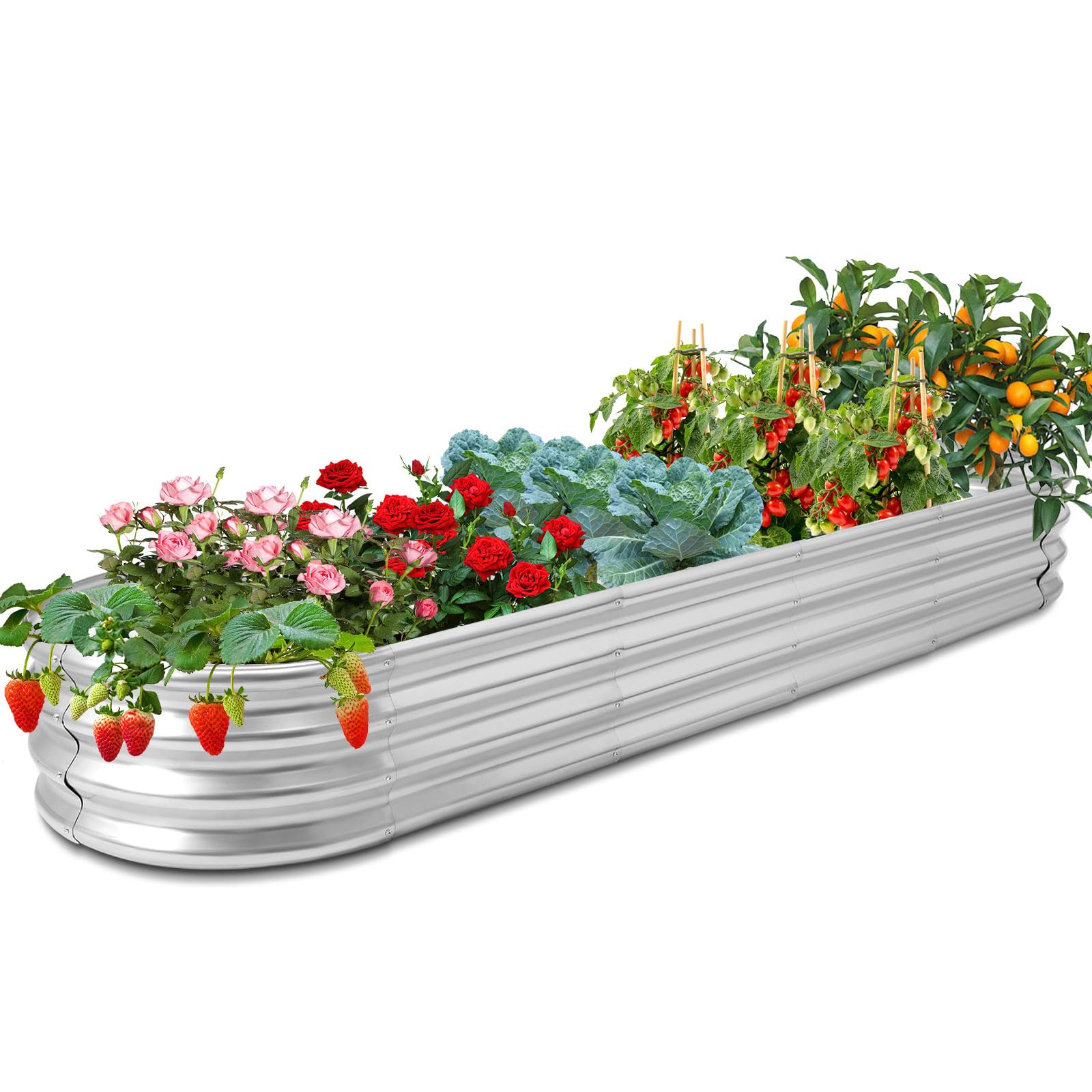
- Deep 12-inch growing depth
- Rust-resistant galvanized construction
- Attractive oval design
Cons
- Assembly required
- No bottom panel
- May be too large for small spaces
The Homdox raised garden bed impressed us with its generous size and depth. We appreciated the extra-thick 2-ply reinforcement, which added stability and prevented warping even when filled with soil. When you weigh all the factors, this one rises above the rest.
Best metal option

- Quick and tool-free assembly
- UV-protected and weather-resistant vinyl
- Includes grow grid for organized planting
Cons
- Limited to 13.3 inches in height
- May require multiple units for larger gardens
- White color might not suit all landscape designs
Its tool-free assembly took us just minutes to complete, making it ideal for those who want to start gardening without any hassle. The open-bottom design promotes healthy root growth and proper drainage, which we found beneficial for our plants. It delivers exactly where it counts most.
Best for beginners

- Sturdy galvanized steel construction
- Simple assembly process
- Spacious 67-inch length
Cons
- Sharp edges require careful handling
- May rust over time if paint chips
- Relatively shallow at 10 inches deep
When we set up this GADI raised garden bed, we were impressed by its sleek brown finish and oval shape. We found the raised height comfortable for planting and maintenance, reducing strain on our backs. It takes the guesswork out of the equation for newcomers.
Best galvanized option

- Large growing area
- Durable galvanized metal
- Quick and simple setup
Cons
- Sharp corners
- Requires significant soil to fill
- May rust over time
We recently tested the FOYUEE Galvanized Raised Garden Bed and found it to be a solid choice for beginner gardeners. We had the bed set up in about 5 minutes without any specialized tools. It’s a well-earned pick that lives up to the promise.
Best lightweight option

- Lightweight and durable galvanized steel construction
- Quick and simple assembly process
- Generous size for various plants
Cons
- Lower height may require more bending
- Instructions could be clearer
- Middle support may need repositioning
We recently tested the Utopia Home Galvanized Raised Bed, and it’s an excellent choice for novice gardeners. The included tool was helpful for final tightening, but we found using our own tools sped up the process. Its portability makes it a no-brainer for on-the-go use.
Buying Guide
Size and Space
When choosing a raised bed kit, consider the available space in your garden. Measure the area carefully and select a kit that fits comfortably. We recommend leaving enough room around the bed for easy access.
Materials
Look for kits made from durable materials like cedar, redwood, or recycled plastic. These options resist rot and last for many growing seasons. Avoid chemically treated wood that may leach harmful substances into the soil.
Depth
The depth of the bed affects what you can grow. For most vegetables, a minimum depth of 6 inches is necessary. Deeper beds (12-18 inches) allow for root crops and provide more soil volume.
Ease of Assembly
As beginners, we want a kit that’s straightforward to put together. Look for pre-cut pieces and clear instructions. Some kits require no tools, which can be a bonus for those new to DIY projects.
Soil Capacity
Consider how much soil the bed will hold. This affects both the cost to fill it and the variety of plants you can grow. Here’s a quick reference:
| Bed Size (feet) | Soil Needed (cubic feet) |
|---|---|
| 4 x 4 x 1 | 16 |
| 8 x 4 x 1 | 32 |
| 4 x 4 x 2 | 32 |
Additional Features
Some kits come with extras like built-in trellises, pest barriers, or irrigation systems. These can be helpful but may increase the price.
Decide which features are essential for your gardening needs.

Do deer bother these? That’s my biggest problem — they eat everything.
Deer can definitely be a challenge! Look into deer-resistant varieties for your area. Fencing also helps if it’s a serious problem. -Plant Native Team
Good info here.