Best Nursery Greenhouse Heater Complete Guide for Commercial Growers to Maximize Efficiency and Crop Yield
We independently select all products and services. If you click through links we provide, Plant Native may earn a commission with no extra cost to you.
Last updated: November 14, 2026
Keeping the right temperature in a nursery greenhouse is crucial for healthy plant growth and steady crop yields. Greenhouse heaters give you controlled warmth, shielding young plants from cold stress and helping you maintain optimal conditions through the colder months.
Heaters come in all shapes and sizes, with different fuel sources and heating capacities. It’s honestly a bit overwhelming at first, but understanding which type fits your commercial setup will save you headaches later.
Nursery greenhouse heaters aim to balance efficiency, safety, and even heat distribution. You might use propane, natural gas, electric, or radiant heat models—just make sure the heater’s output matches your greenhouse size and energy preferences.
Ventilation and heat regulation matter a lot too. If you don’t pay attention, overheating or humidity swings can sneak up and damage your plants.
When you’re picking a nursery greenhouse heater, you’ll want to look at heating capacity (BTU output), fuel efficiency, installation requirements, and safety features. Durability and maintenance matter too, since these things run for hours on end in commercial setups.
Best Nursery Greenhouse Heaters for Commercial Growers
We dug through a lot of options and narrowed it down to the best nursery greenhouse heaters for reliable temperature control and energy efficiency. This list covers different needs and greenhouse sizes.
Our top pick
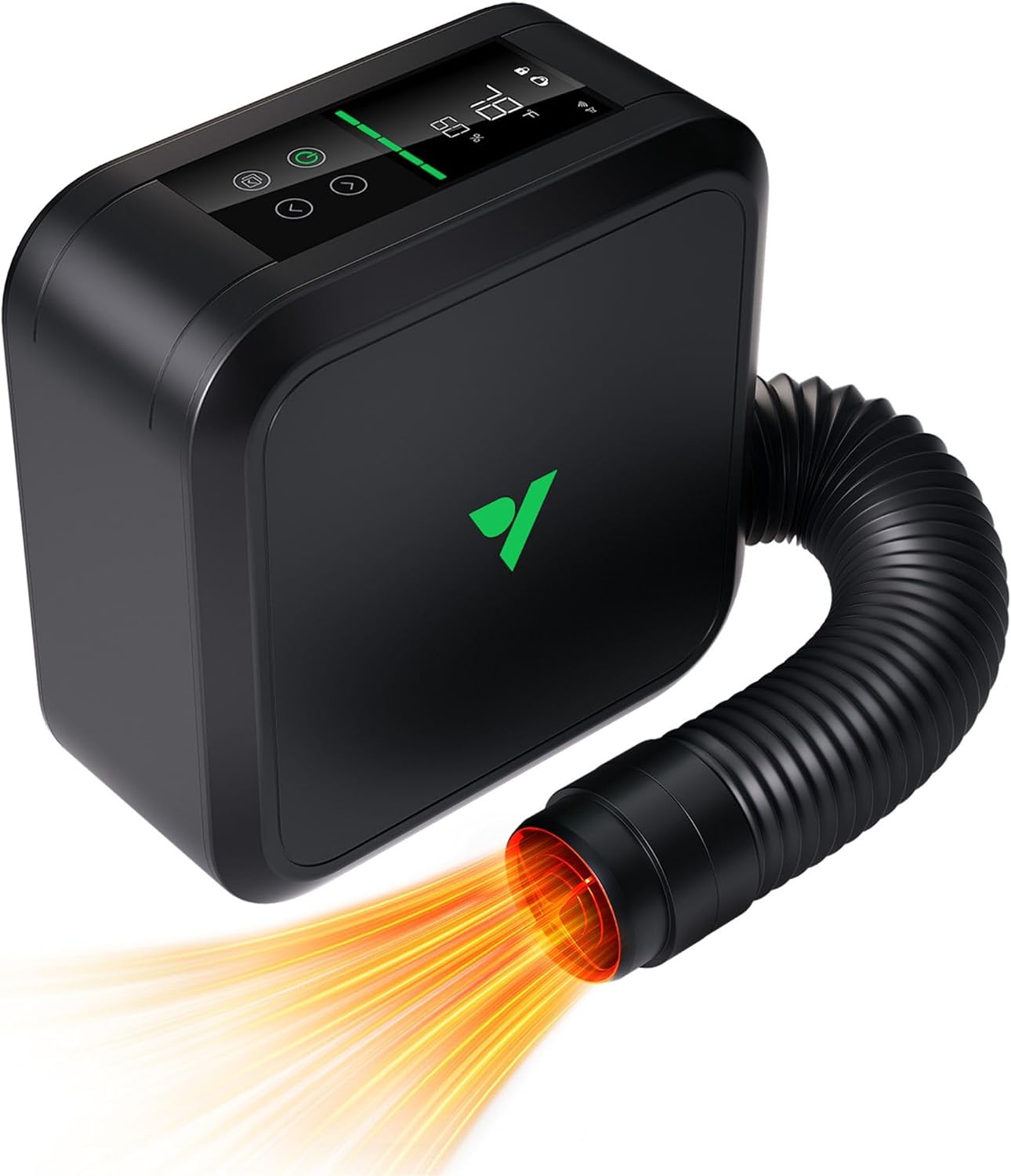
- Sensor auto-adjusts heat output to hold temperature and VPD targets
- App lets you set minimum temperature, target VPD and day/night modes
- V0 flame-retardant materials, tip-over protection and overheat shutoff
Cons
- 700W output is meant for tents and small rooms, not large houses
- Advanced settings require the app
The VIVOSUN AeroFlux is built for keeping small, enclosed growing areas at stable temperatures, which helps protect sensitive plants from sudden cold snaps.
Its compact body sits out of the way, and the hose lets you aim warmth where you want it instead of blowing directly on foliage.
Smart control is the main draw: the sensor tracks temperature and VPD and adjusts heat automatically, and the safety cut-offs and flame-retardant housing suit longer unattended runs.
Best runner-up
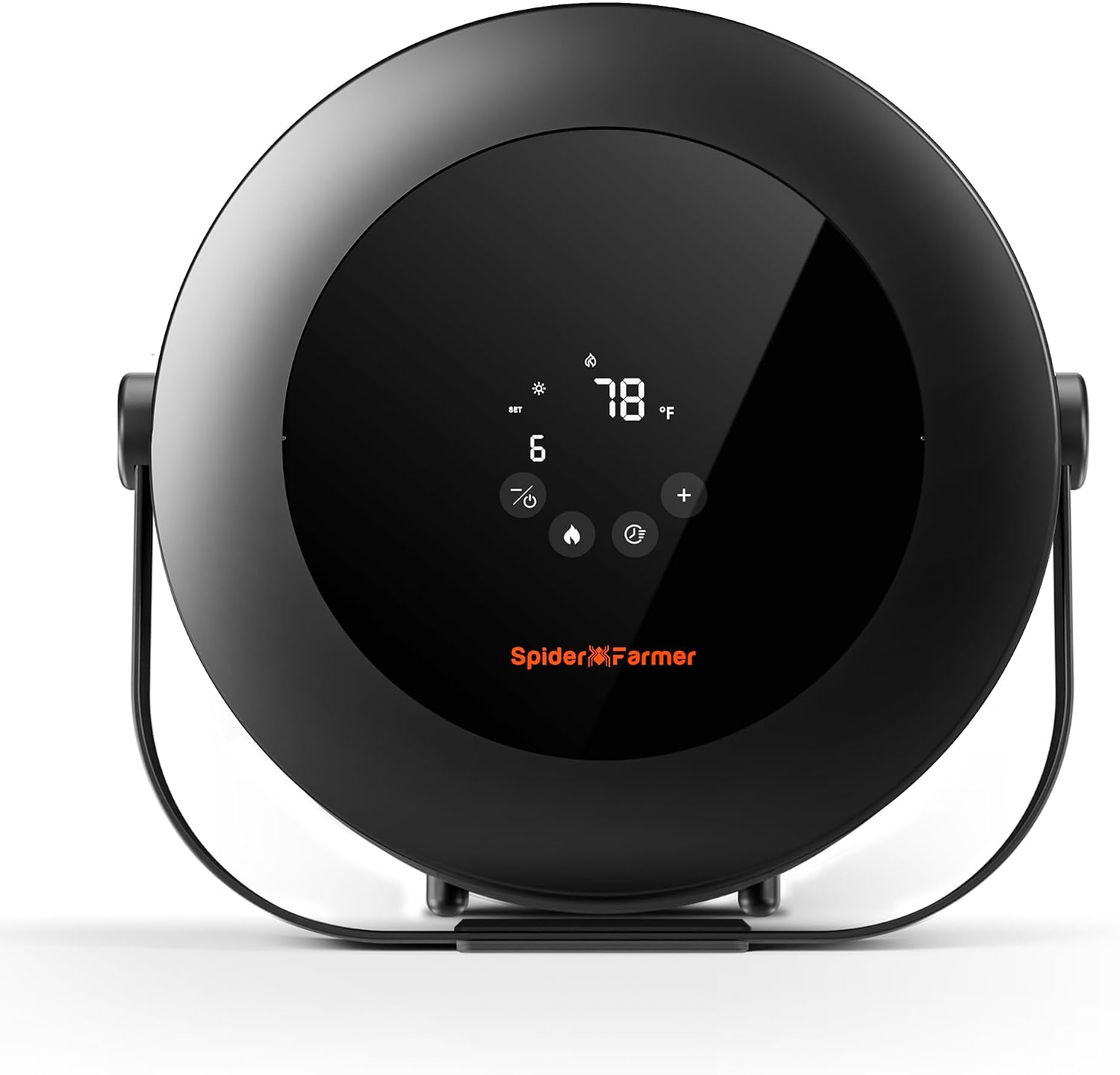
- Adjustable deadband (default ±3°F, down to 1°F) limits on/off cycling
- 10 adjustable levels for both heat and fan speed
- Light sensor switches between day and night temperature targets automatically
Cons
- 530W output suits tents and small rooms only
- Several modes and settings take time to learn
The Spider Farmer heater is designed to hold target temps in a home grow tent or small plant room. The deadband control helps keep things steady for sensitive plants.
Always-On, All-Day, Daytime and Nighttime modes add flexibility for different schedules, and the extension hose lets you heat the space without blowing directly on plants.
Self-diagnosis, over-temperature protection and flame-retardant materials round out the safety features. Its modest 530W output makes it a fit for small spaces rather than full greenhouses.
Best budget option
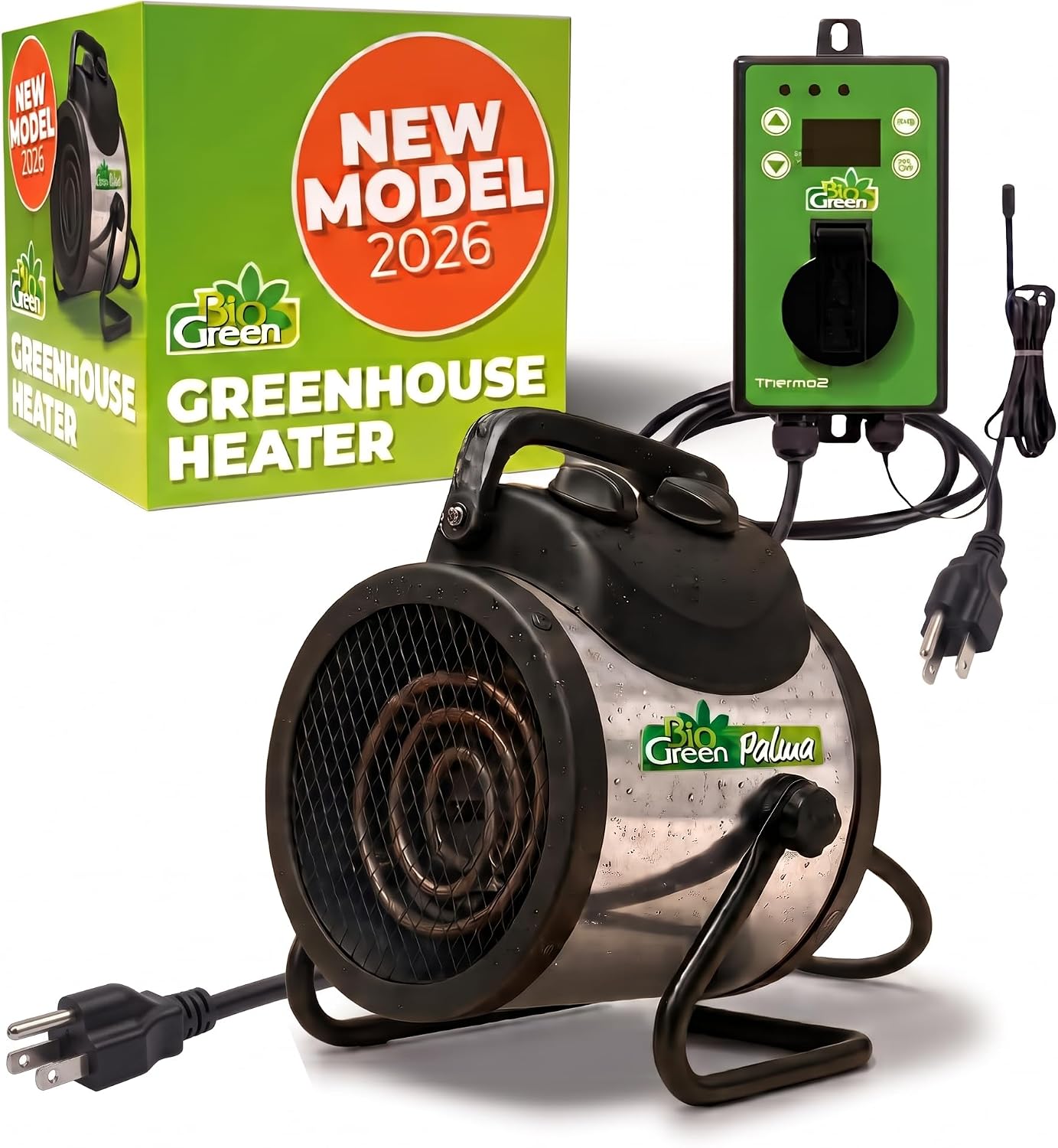
- Digital thermostat switches the heater on and off to hold your set temperature
- Fan mode circulates up to 5,800 cubic feet of air per hour
- IPX4 splash-proof housing for damp greenhouse conditions
Cons
- Rated for spaces up to about 120 sq ft
- Larger houses need several units or extra circulation fans
The Bio Green Palma is a purpose-built greenhouse heater: the separate digital thermostat starts and stops it at your target temperature, and the splash-proof stainless housing is designed for humid growing spaces.
Two heating elements let you run it at 750W or 1500W, and the fan-only mode keeps air moving in milder weather to prevent hot spots around plants.
For keeping smaller greenhouses frost-free, it is efficient and convenient. With more than 3,000 Amazon ratings, it is the most widely reviewed heater here.
Best premium choice
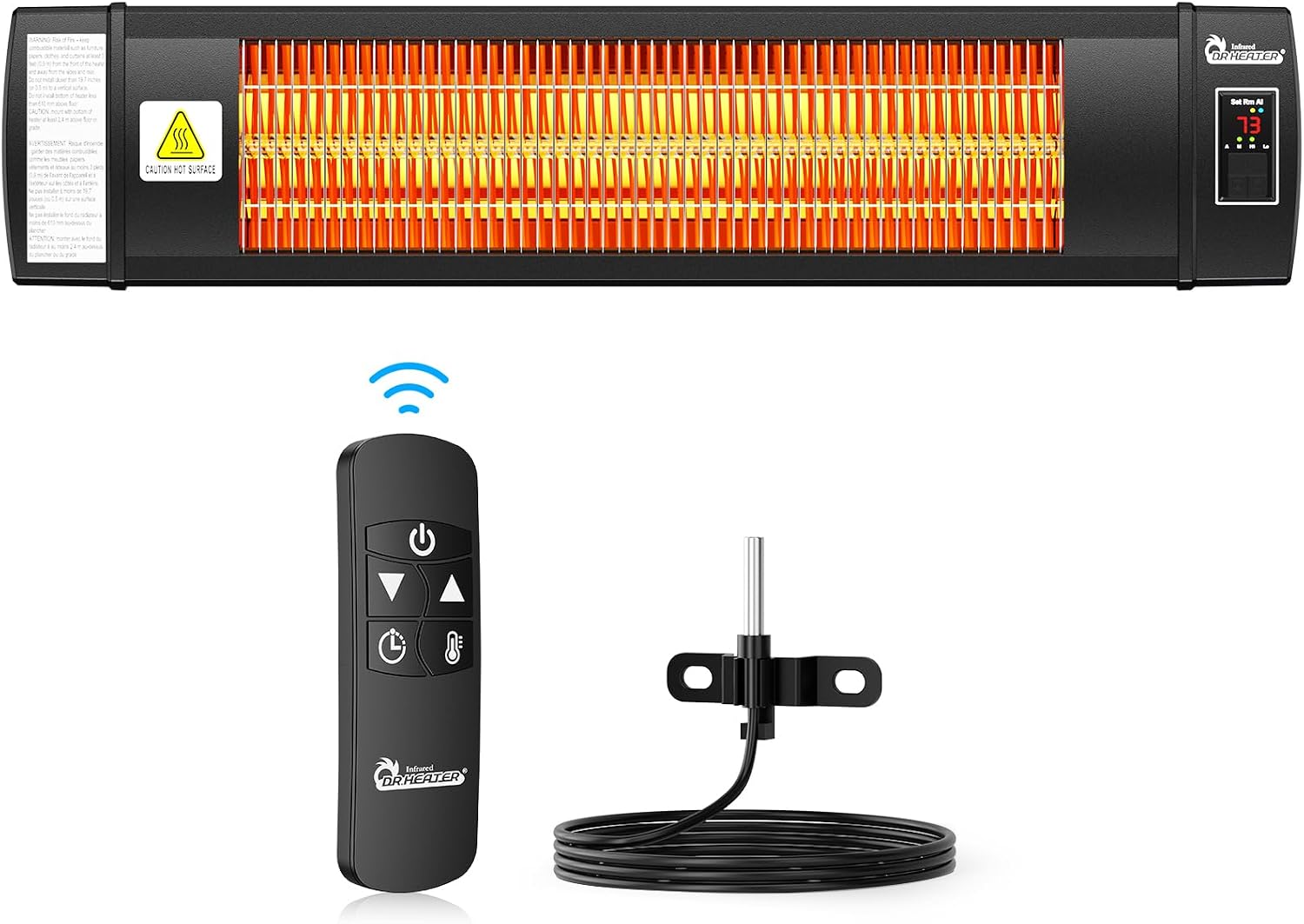
- Infrared heat warms plants and surfaces directly instead of heating the air first
- Corded probe thermostat with auto and manual modes
- IP55 weather rating and ETL certification
Cons
- Needs to be mounted or hung, unlike floor heaters
- Heats what it faces, so placement matters
The Dr. Infrared heater takes a different approach from fan heaters: it radiates heat directly onto plants and benches, which the listing notes is especially effective in colder, drafty areas.
The corded probe and digital display let it regulate to a set temperature, and it can be wall-mounted, ceiling-mounted or hung on the included chain to keep floor space clear.
With more than 6,000 Amazon ratings and an IP55 rating for damp conditions, it is a dependable pick for most greenhouse setups.
Also great
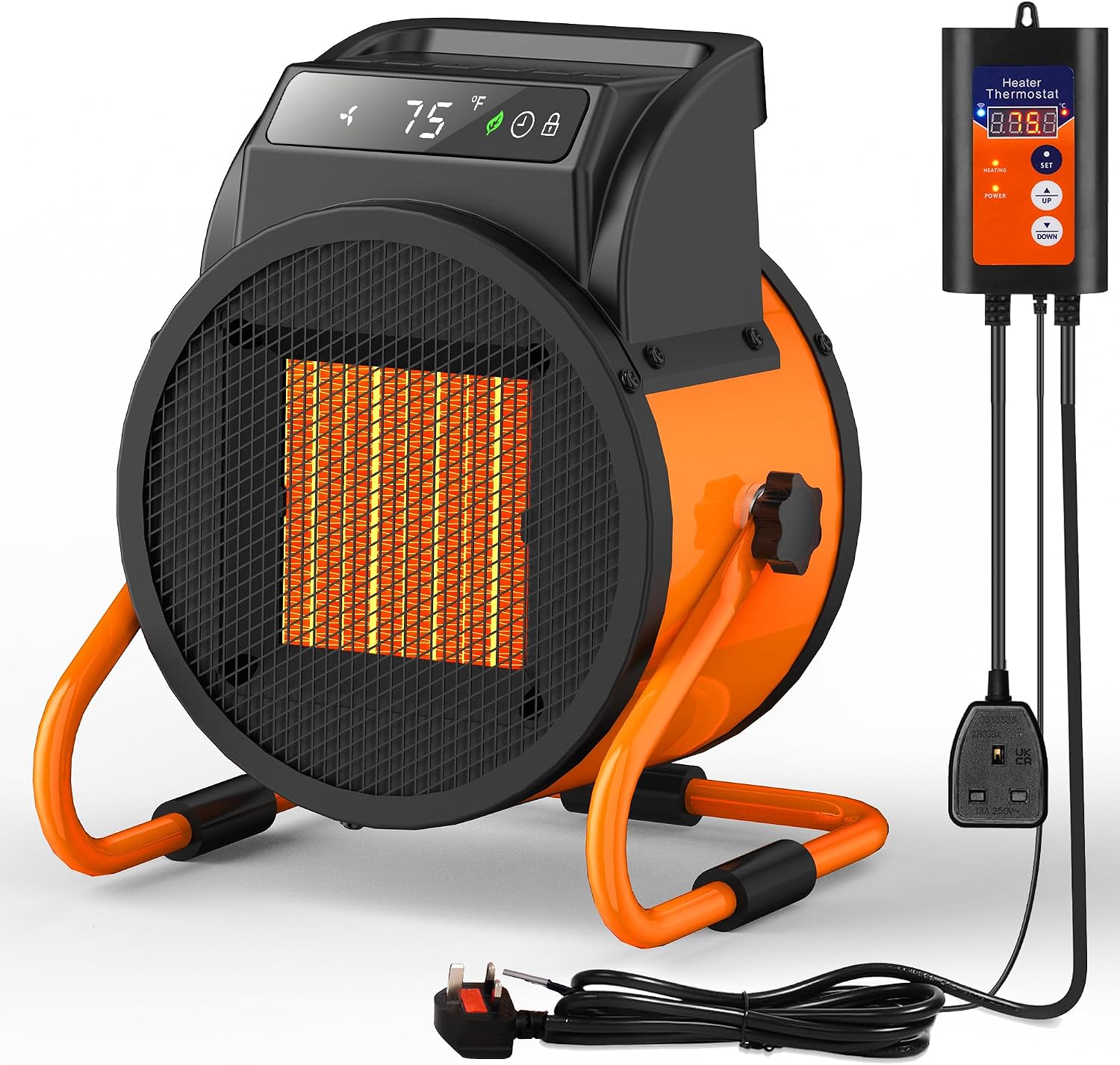
- WiFi app control and 7-day scheduling from anywhere
- External probe measures the temperature near your plants, not just at the heater
- UL certified with overheat shutoff, flame-retardant materials and child lock
Cons
- Works only with 2.4 GHz WiFi
- Newer listing with relatively few ratings
The Pasapair heater is built around remote control: the Smart Life app shows the probe temperature and lets you change targets, modes and schedules away from the greenhouse.
Four modes (ECO, Fan Only, Low and High), a 90° tilt and a 4 lb carry-handle body make it easy to place and aim.
It combines smart tech with safety features and fits small to medium greenhouse setups.
When picking out the best nursery greenhouse heater, you want to look at things like heating capacity, fuel type, and safety features. These factors help keep your plants and workers safe while making sure everything runs efficiently.
Heating capacity really comes down to the size of your greenhouse. Figure out how many BTUs (British Thermal Units) you need based on the square footage and how well your greenhouse holds in heat.
If your heater’s too small, it just won’t keep things warm enough.
Fuel type makes a big difference in both your budget and daily routine. You’ve got electric, propane, natural gas, and diesel to pick from.
Think about what’s easy to get, how much it costs, and how tricky the setup might be.
Safety matters a lot, especially in tight spaces. Look for heaters with automatic shutoff, tip-over protection, and flame failure devices.
Don’t forget about ventilation—nobody wants dangerous gases hanging around.
Durability and easy maintenance can save you a headache later. Heaters built with corrosion-resistant materials and simple-to-access parts mean less downtime and fewer repairs.
Buying Guide
When picking out the best nursery greenhouse heater, you want to look at things like heating capacity, fuel type, and safety features. These factors help keep your plants and workers safe while making sure everything runs efficiently.
Heating capacity really comes down to the size of your greenhouse. Figure out how many BTUs (British Thermal Units) you need based on the square footage and how well your greenhouse holds in heat.
If your heater’s too small, it just won’t keep things warm enough.
Fuel type makes a big difference in both your budget and daily routine. You’ve got electric, propane, natural gas, and diesel to pick from.
Think about what’s easy to get, how much it costs, and how tricky the setup might be.
Safety matters a lot, especially in tight spaces. Look for heaters with automatic shutoff, tip-over protection, and flame failure devices.
Don’t forget about ventilation—nobody wants dangerous gases hanging around.
Durability and easy maintenance can save you a headache later. Heaters built with corrosion-resistant materials and simple-to-access parts mean less downtime and fewer repairs.
| Feature | What to Look For | Why It Matters |
|---|---|---|
| Heating Capacity | BTU rating matching greenhouse size | Ensures adequate heat output |
| Fuel Type | Propane, electric, natural gas, or diesel | Balances cost and availability |
| Safety Features | Automatic shutoff, flame failure, tip-over | Prevents accidents and hazards |
| Durability | Corrosion-resistant, sturdy construction | Extends heater lifespan |
| Maintenance | Easy access to parts and cleaning requirements | Reduces downtime and repair costs |
We independently select all products and services. If you click through links we provide, Plant Native may earn a commission with no extra cost to you. As an Amazon Associate I earn from qualifying purchases.