Herb Gardening Tips for Nebraska: Essential Advice for Thriving Local Gardens
Last updated: November 10, 2026
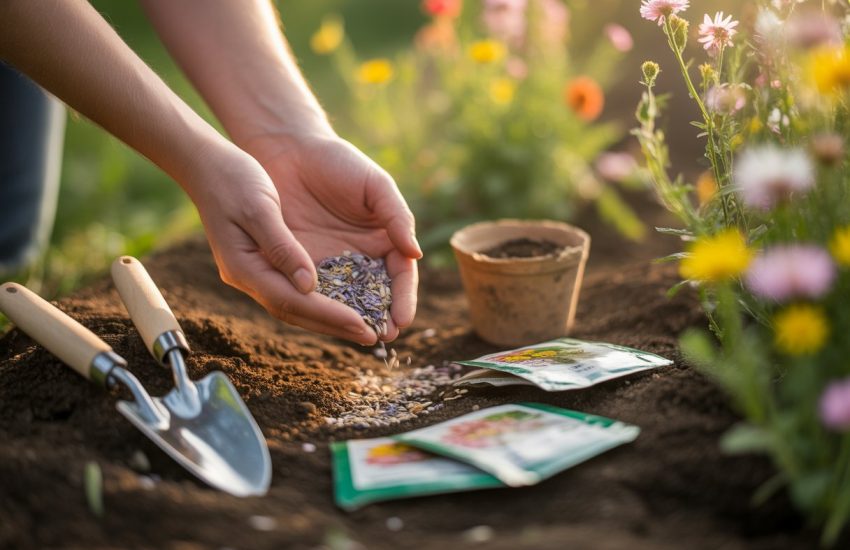
Herb gardening in Nebraska isn’t just about tossing seeds into the dirt and hoping for the best. You’ve got to understand the state’s wild swings in climate and the quirks of its soil.
Picking herbs that can handle Nebraska’s unpredictable weather—think freezing winters, scorching summers—is a smart move. Honestly, hardy, drought-tolerant herbs and decent soil prep make all the difference.
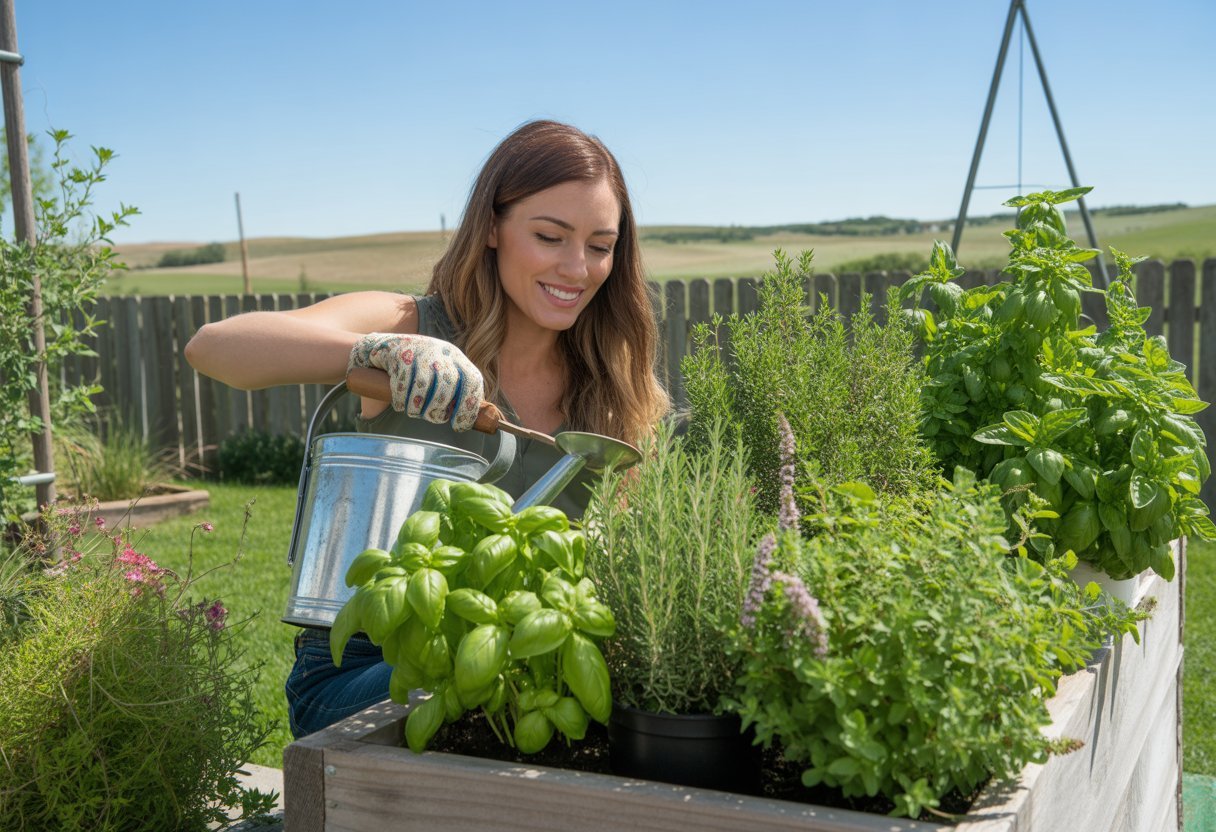
Timing matters a lot. If you plant herbs at the right moment, you’ll see stronger growth and better yields.
Many Nebraska gardeners start seeds indoors or wait until frost danger passes before moving plants outside. That way, herbs get a head start and can handle whatever Nebraska throws at them.
Herbs need consistent watering, good sunlight, and a watchful eye for pests. Some herbs just fit Nebraska’s environment better, so knowing which ones to pick saves you a ton of hassle.
Selecting the Right Herbs for Nebraska Gardens
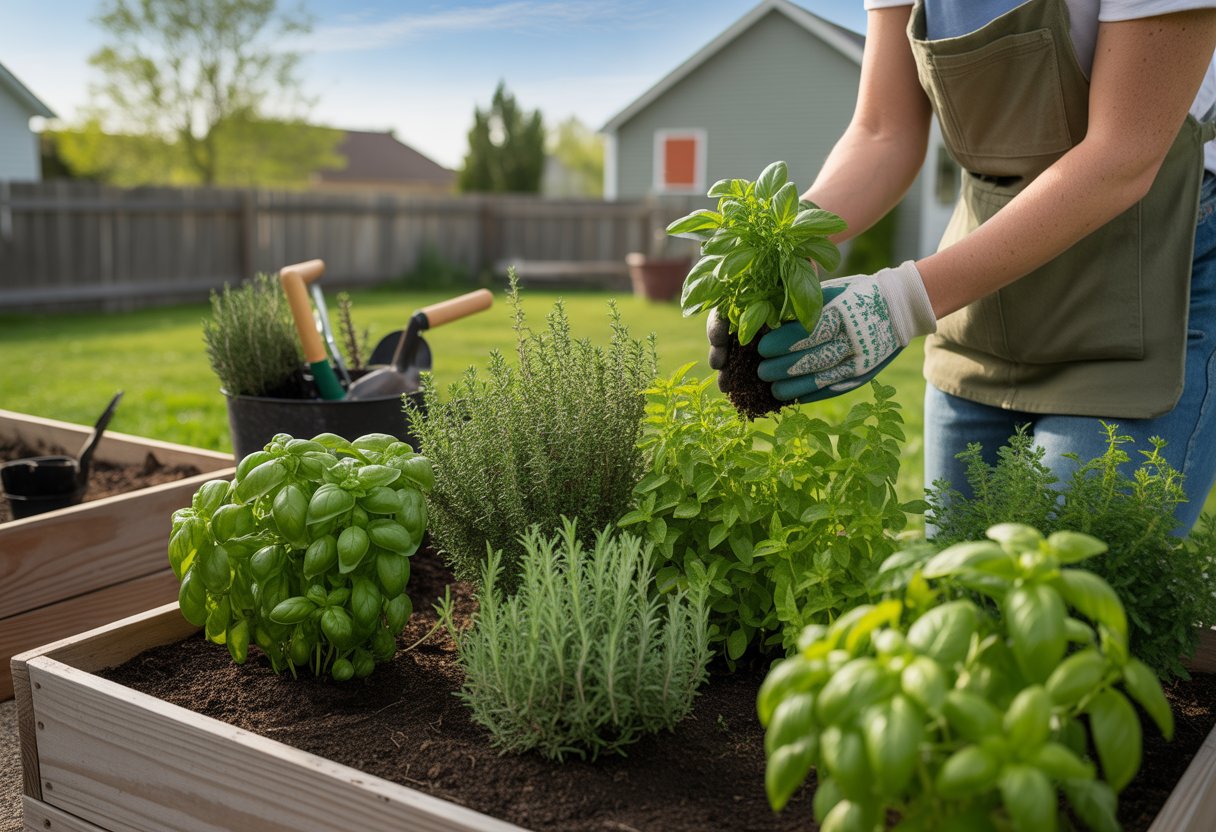
Nebraska’s climate and soil aren’t exactly easygoing. If you pick herbs based on how tough they are and how well they mesh with your other plants, you’ll have a much better shot at a solid harvest.
Best Annual and Perennial Herbs for Nebraska
Some annual and perennial herbs just work better in Nebraska’s growing season. Basil loves warm weather but won’t survive winter, so you’ll need to replant it each year.
Basil wants full sun and well-drained soil. On the perennial side, thyme, rosemary, and parsley each have their own quirks.
Thyme doesn’t mind drought and can survive mild winters. Rosemary needs a little extra care in harsh winters—maybe bring it indoors if you can. Parsley likes things a bit cooler and you can usually harvest it a few times in a season.
Mixing it up with annuals and perennials keeps your herb supply steady throughout the year.
Choosing Herbs Based on Climate and Soil
Nebraska soils run the gamut from sandy loam to sticky clay, and that definitely affects what herbs will thrive. Mediterranean types like rosemary and thyme hate soggy feet, so well-draining soil is a must.
Cold winters mean you’ll either need hardy perennials or be ready to replant annuals. Chives and mint shrug off the cold, but basil and cilantro are out once it freezes.
If your garden has a sunny, south-facing spot, it’ll warm up faster in spring—great for the more delicate herbs. Testing your soil’s pH helps too; herbs generally want it close to neutral.
Companion Planting With Herbs
Herbs aren’t just for flavor—they can protect your other plants, too. Some keep pests away or attract helpful bugs.
- Basil near tomatoes? Better flavor, fewer aphids.
- Thyme keeps cabbage worms at bay.
- Parsley brings in predatory insects that snack on pests.
Give each herb enough space for sunlight and airflow. If you combine herbs that get along, your whole garden benefits.
Integrating Herbs Into Vegetable Gardens
Herbs pull double duty in the veggie patch. They can chase off pests and fill in gaps between veggies.
Stick basil by your peppers and tomatoes for tastier, healthier plants. Low growers like thyme line the edges, keeping weeds down and soil moist.
Pay attention to how fast each herb grows and how far its roots spread. You don’t want them fighting your veggies for space. Rotating herbs each season helps keep the soil in good shape and throws pests off their game.
Site Preparation and Soil Management
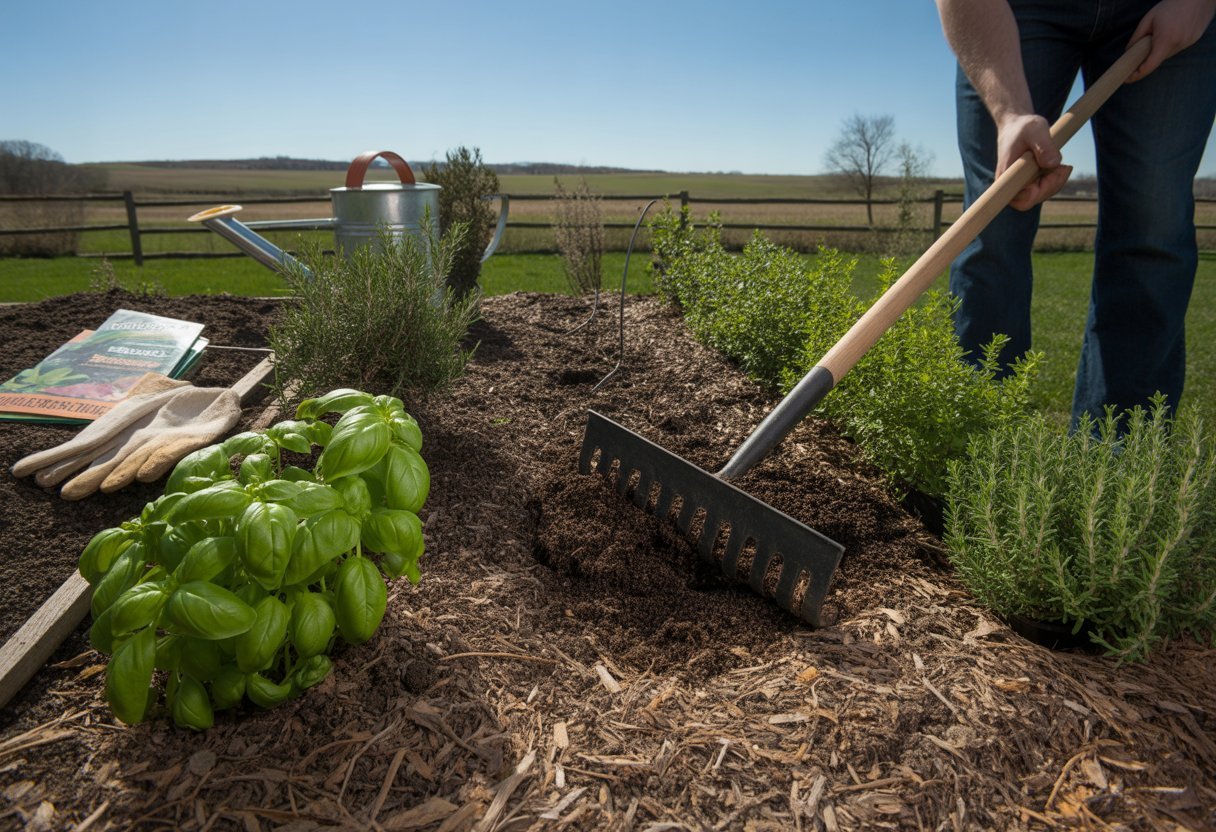
Getting your garden site and soil right is a game changer for herb gardening in Nebraska. Good soil means strong roots and happy plants, even when the weather gets weird.
Testing and Amending Nebraska Soils
Nebraska soils can be totally different from one area to the next. Start with a soil test—it’s worth the effort.
You can send samples to Nebraska Extension offices, usually sorted by zip code, and they’ll tell you exactly what your soil needs. The sweet spot for herbs is a pH of 6.0 to 7.0.
If your soil’s too acidic or alkaline, you might need to add lime or sulfur. Adjust nitrogen, phosphorus, and potassium based on your test results—don’t just guess.
Herbs like loam or sandy loam best since those drain well but hold a bit of moisture. If you’re stuck with heavy clay or sand, mix in organic matter to improve it. Testing every couple of years keeps you on track.
Importance of Compost and Organic Matter
Adding compost in Nebraska just makes sense. It boosts nutrients and helps the soil hold together better.
Compost brings in good microbes, which help your herbs absorb nutrients and fight off disease. Organic matter holds water in sandy soils and helps heavy soils drain.
Work 2–3 inches of compost into the top 6-8 inches of soil before planting. If you can, use local compost—it’s already tuned to the area.
Skip fresh manure or raw materials, though. Those can burn roots or bring in unwanted bugs.
Optimizing Soil Temperature for Herb Growth
Soil temperature really matters for getting seeds started and roots growing. In Nebraska, you’re usually safe to plant herbs around mid-May, but it depends on the year.
Most herbs like soil between 60°F and 70°F. Grab a cheap soil thermometer and check before you plant, especially after those unpredictable spring frosts.
Raised beds warm up quicker and drain better, which is handy. A layer of straw or leaves as mulch keeps soil temps steady and protects young roots from wild weather swings.
If you pay attention to your garden’s microclimate and timing, you’ll get more consistent results.
Planting, Care, and Harvesting Techniques
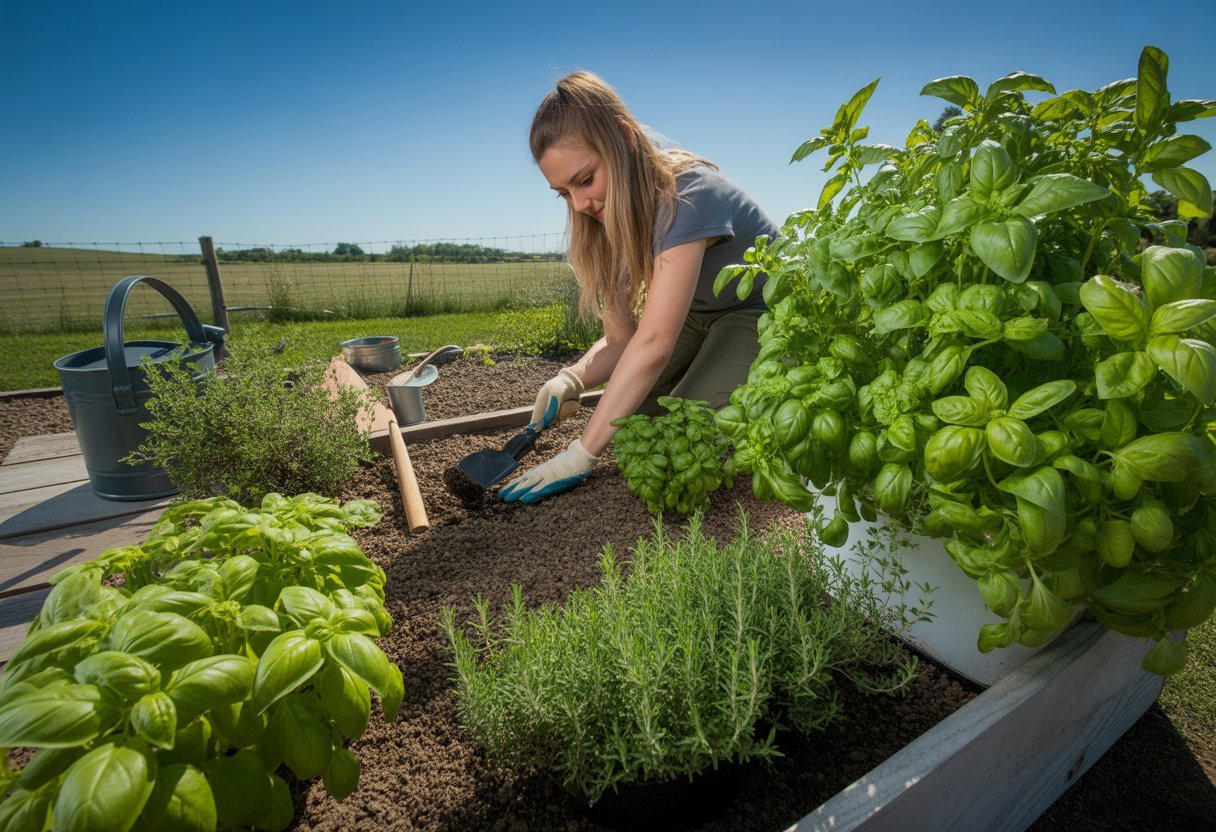
Getting herbs to thrive in Nebraska takes a bit of know-how. Good soil, smart planting, and regular care go a long way.
Planting Methods for Herbs in Nebraska
Bulb planting suits herbs like garlic—get them in the ground early fall, before it freezes. That way, they’ll put down roots over winter.
Most other herbs can start indoors 6-8 weeks before the last frost or go outside once you’re sure the cold snap is over. Raised beds or loose, not-too-acidic soil work best.
Mixing herbs with veggies like peppers, cucumbers, and radishes helps with pest control and keeps the garden balanced. Space herbs about 12-18 inches apart for airflow and less disease.
Watering and Fertilizing for Optimal Growth
Herbs want steady moisture, but not soggy feet. Water deeply once or twice a week rather than a bunch of little sprinkles.
If you’re dealing with Nebraska’s heavy clay, you might need to tweak your drainage. Use a balanced, slow-release fertilizer monthly—something like 10-10-10.
Don’t overdo it, though. Too much fertilizer can make herbs taste bland and grow floppy. Mulch with straw or leaves to hold moisture and keep weeds down.
On hot, dry days, check your herbs more often and adjust watering as needed.
Harvesting and Preserving Homegrown Herbs
Pick herbs like basil and mint just before they flower for the best flavor. Snipping them regularly helps them grow bushier, too.
Cut stems with sharp scissors or pruners, just above a pair of leaves. For garlic, wait until the bottom leaves brown before you dig up the bulbs.
Dry herbs in small bundles somewhere cool and dark, or freeze them in airtight containers. You can also chop fresh herbs and freeze them with water or oil in ice cube trays—super handy for cooking later.
Enhancing Herb Gardens With Nebraska-Native Plants
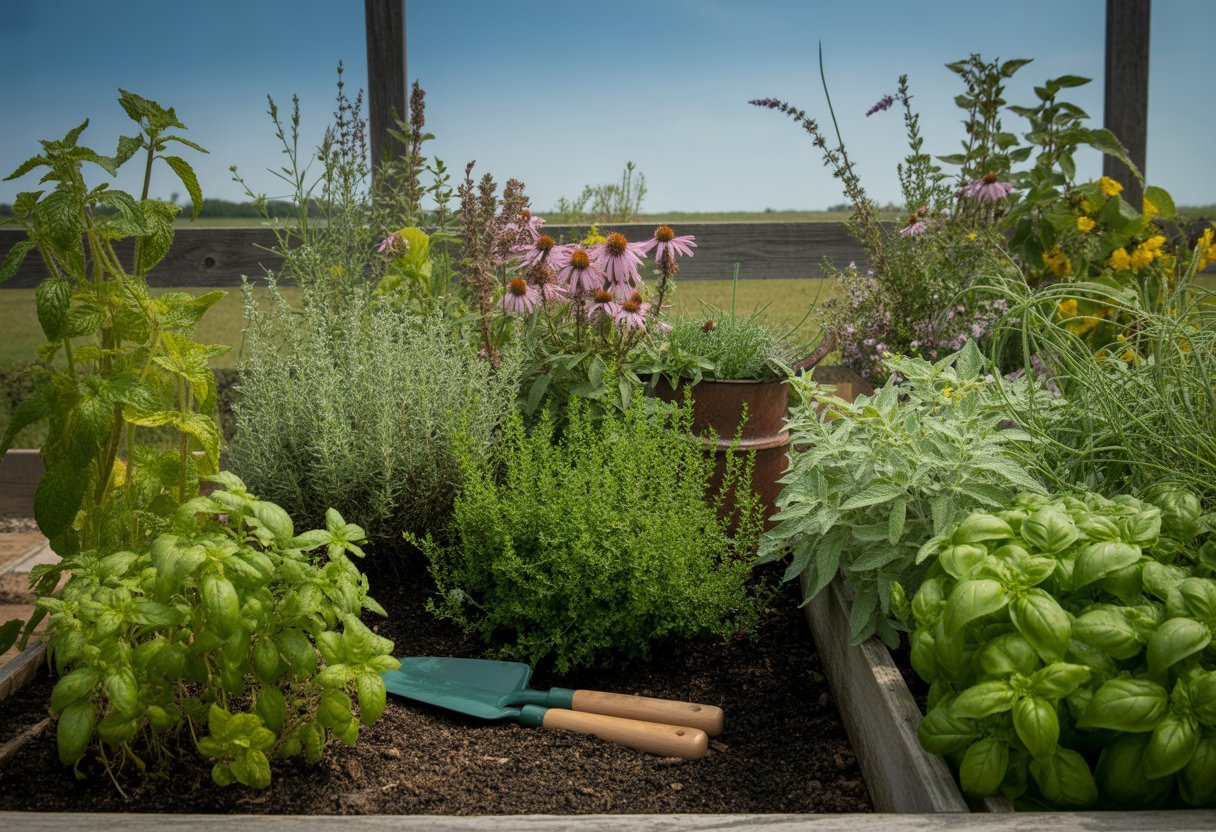
Bringing in native plants gives your herb garden a real boost in Nebraska. Some wildflowers and local species just fit right in and make the garden tougher.
Incorporating Wildflowers and Blazing Star
Wildflowers are perfect for Nebraska—they barely need any fuss once they’re settled. Blazing star (Liatris spp.) stands out with tall purple spikes that bees and butterflies love.
Plant blazing stars near herbs like basil or thyme to help with pollination. Native wildflowers also keep soil healthier and give your garden a more natural, Nebraska vibe.
They fill in gaps, crowd out weeds, and just make the whole space feel more alive. Picking varieties that already thrive here means less stress for you and your plants, even during those dry, hot summers.
Companion Planting With Flowers and Zinnias
Zinnias make fantastic companion plants in herb gardens. Bees and butterflies can’t resist them.
They bloom all summer, shrugging off Nebraska’s heat and sun. Not every flower can handle that.
If you plant zinnias next to herbs like oregano or sage, you’ll pull in more beneficial insects. Those bright pops of color liven up the garden, too.
Flower companions boost biodiversity. I always try to leave enough space between the herbs and flowers, so they don’t fight over water or nutrients. That way, everything has a shot at thriving.