Tools Every Florida Gardener Needs for Year-Round Success and Efficiency
Last updated: September 8, 2026
Gardening in Florida isn’t a walk in the park. The sandy soil, relentless humidity, and that blazing sun can really throw you for a loop.
To keep your garden thriving, you’ll want the right tools at your side. The key tools every Florida gardener needs include a sturdy spade, a reliable watering system, quality pruning shears, and soil amenders designed for sandy conditions.
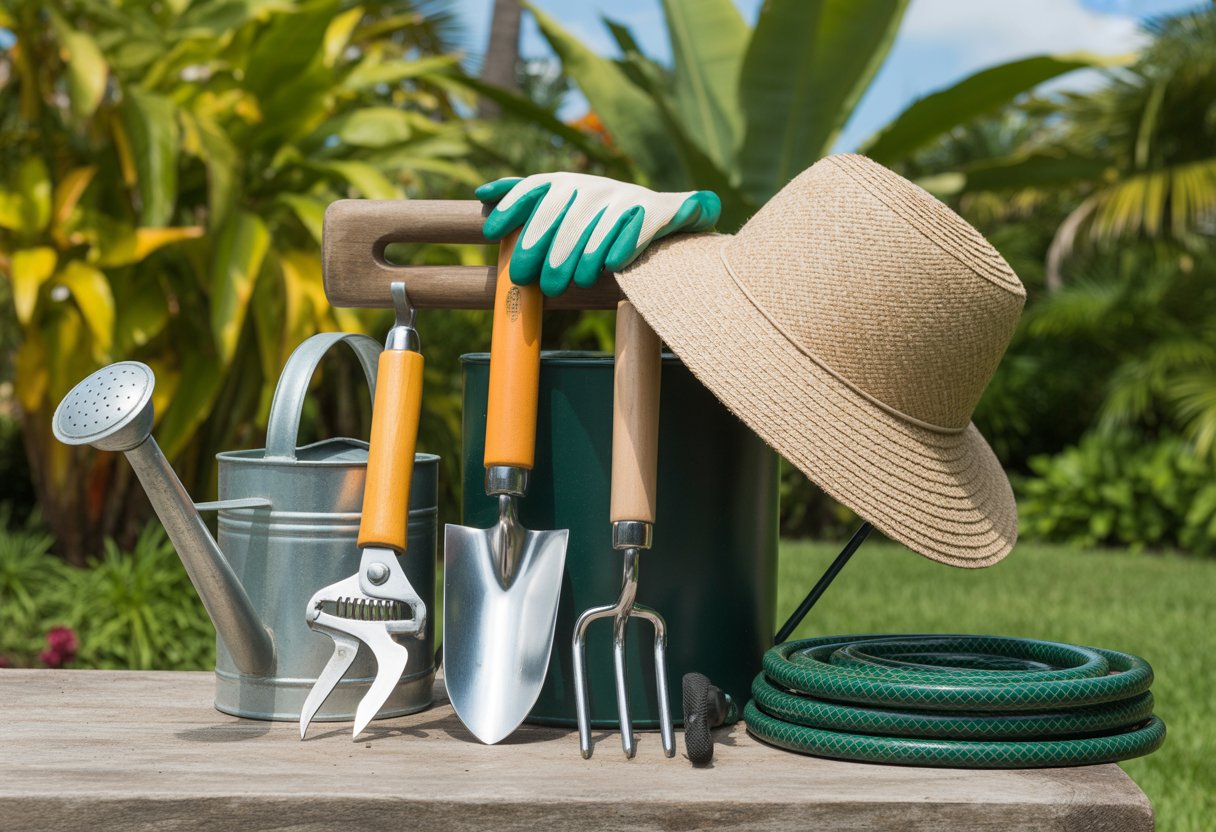
These tools help you tackle the tough environment, improve soil, control plant growth, and make sure everything gets enough water. Figuring out what works in Florida’s climate can honestly make gardening a lot more enjoyable.
Essential Hand Tools for Florida Gardens
Florida’s soil and climate call for tools that can handle sandy earth, wild-growing plants, and the rapid pace of growth. The right hand tools make planting, pruning, and weeding less of a chore.
Trowels and Transplanters
You’ll want trowels and transplanters with tough, rust-resistant blades. Florida’s humidity is no joke—stainless steel or carbon steel are solid choices.
A pointed tip helps you dig into sandy soil for bulbs, seedlings, and small plants. The handle should feel good in your hand and not slip, whether it’s made of wood or heavy-duty plastic.
Transplanters come with narrower blades, letting you dig carefully around roots. Both should give you decent leverage, especially in those dense beds that seem to pop up everywhere here.
Pruning Shears for Tropical Growth
Pruning shears need to be sharp and resist rust, since Florida’s plants grow like crazy. Bypass shears give you those clean cuts that keep plants happy and healthy.
You’ll appreciate ergonomic grips, trust me—pruning gets tiring fast. Look for handles with rubber or some kind of cushion.
Shears with a locking feature make storage safer and easier. Give them a quick clean and sharpen now and then, especially since humidity can be brutal on metal.
Weeding Tools for Sandy Soil
Weeding tools should be sturdy enough to yank out deep roots in sandy soil. A good dandelion weeder with a forked tip can handle stubborn weeds.
Hand forks or cultivators break up compacted earth around your plants. Stainless steel lasts longer, especially when the ground gets wet.
Pick handles that give you a firm grip. It makes a difference when you’re dealing with sandy patches or the occasional rocky spot.
Watering and Irrigation Must-Haves
Watering tools have to strike a balance between efficiency and not wasting water. In Florida, that’s pretty important.
The right hose, irrigation setup, and water storage can make a noticeable difference in your garden’s health.
Efficient Hose Options
Go for hoses made from durable materials like reinforced rubber or hybrid polymers. These handle the sun and heat without kinking up.
Lightweight hoses with swivel connectors are just easier to use and save your arms. Quick-connect fittings let you swap out nozzles or sprinklers fast.
A soaker hose gives plants deep, slow watering and cuts down on evaporation.
Some things to keep in mind:
- 5/8 inch diameter is a sweet spot for most folks
- Pick a length that fits your space—don’t go overboard
- UV resistance is a must if your hose bakes in the sun
Drip Irrigation Systems
Drip irrigation gets water right to the roots, so you waste less and avoid runoff. That’s a lifesaver in Florida’s unpredictable weather.
Set up a main line and run drip emitters to each plant. Timers and moisture sensors can take the guesswork out of watering.
You’ll save up to half the water compared to sprinklers. Plus, you’ll help prevent leaf diseases and cut down on weeds since water goes straight where it’s needed.
Rain Barrels for Conservation
Rain barrels collect roof runoff, which comes in handy during dry spells. They help you use less municipal water and can even lower your bill.
Look for a barrel with a screen on top to keep out debris and mosquitoes. A spigot at the bottom lets you hook up a hose or fill a watering can.
A few things to consider:
- 50-100 gallons is enough for most home gardens
- Food-grade plastic or recycled materials are safest
- An overflow outlet is helpful when the rain just won’t quit
Protective Gear for Florida Conditions
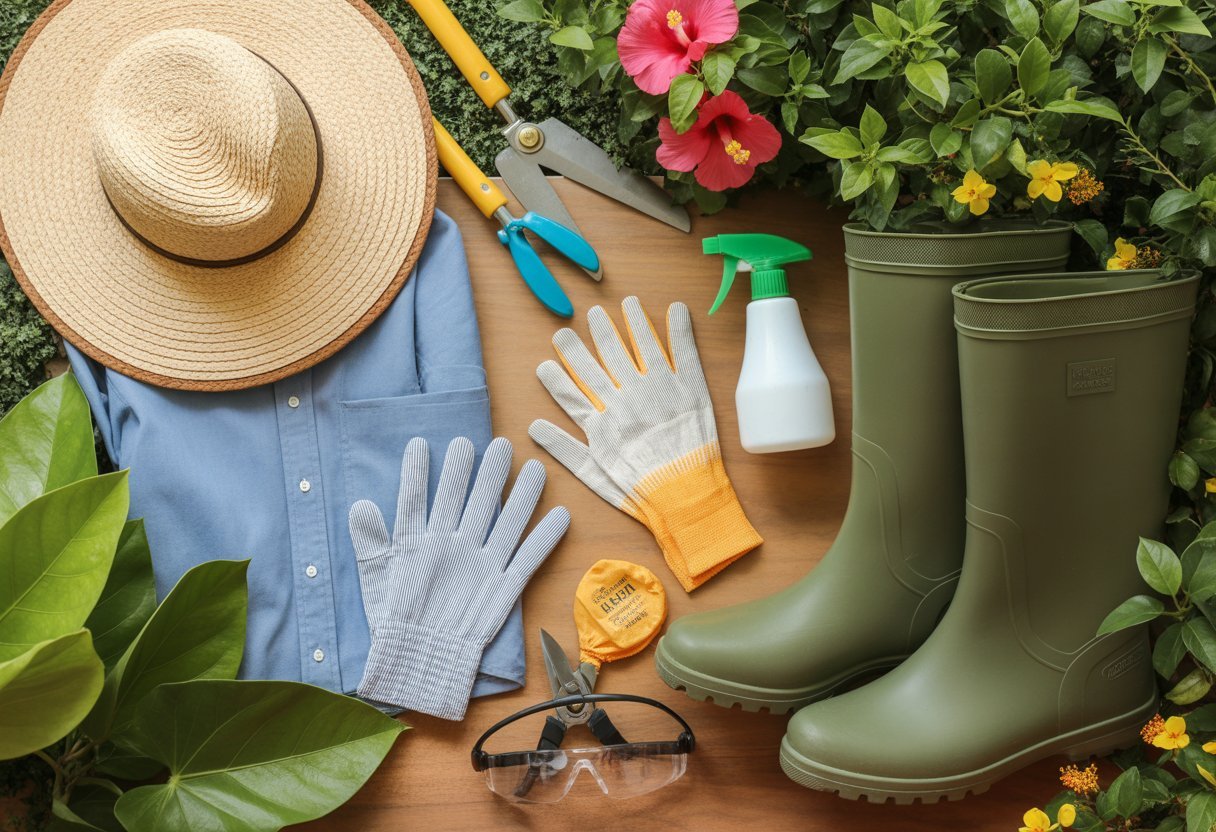
Florida gardening means dealing with harsh sun and plenty of insects. You’ll want protective gear that keeps you comfortable and safe.
Sun Protection and Clothing
The sun here is relentless. Wear lightweight, breathable clothes with a high UPF rating to keep those UV rays off your skin.
Long sleeves and pants made from moisture-wicking fabrics help you stay cool and protected. A wide-brimmed hat covers your face and neck, and sunglasses with UV protection guard your eyes.
Don’t skip sunscreen, even on cloudy days. Go for a broad-spectrum SPF 30 or higher—clouds don’t block UV rays as much as you’d hope.
Mosquito and Insect Repellent
Florida’s warm, humid weather brings mosquitoes and biting bugs all year. Honestly, it can get pretty annoying.
I always grab an insect repellent with DEET, picaridin, or oil of lemon eucalyptus. It really cuts down on bites and that itchy feeling.
You might want to try clothing treated with permethrin, too. Long sleeves and pants help cover up, so you’re less likely to get bitten.
If you’re gardening in shady or grassy spots, check for ticks afterward. It’s a quick habit that can help you avoid tick-borne illnesses.