Composting Tips for Massachusetts Gardeners: Maximizing Soil Health and Sustainability
Last updated: October 16, 2026
Gardening in Massachusetts really gets a boost from composting. It enriches soil and helps plants thrive.
The key to successful composting in Massachusetts is managing local climate factors by balancing green and brown materials while maintaining proper moisture and aeration. This method speeds up decomposition and produces nutrient-rich compost that fits the region’s changing seasons.
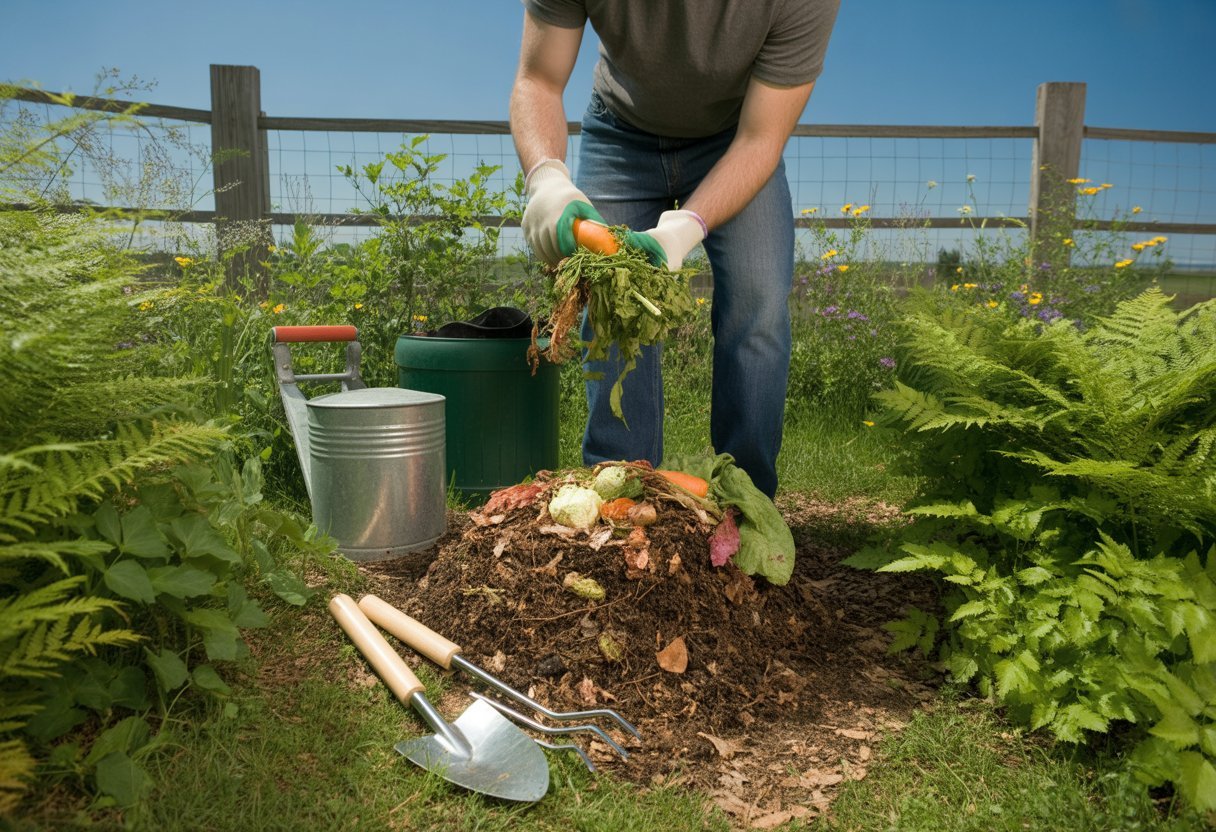
Massachusetts gardeners deal with cold winters and high humidity. Adjusting composting techniques for these conditions helps avoid slow breakdown or smelly piles.
With the right approach, composting becomes a steady way to boost garden yields and cut down on waste.
Understanding Composting in Massachusetts
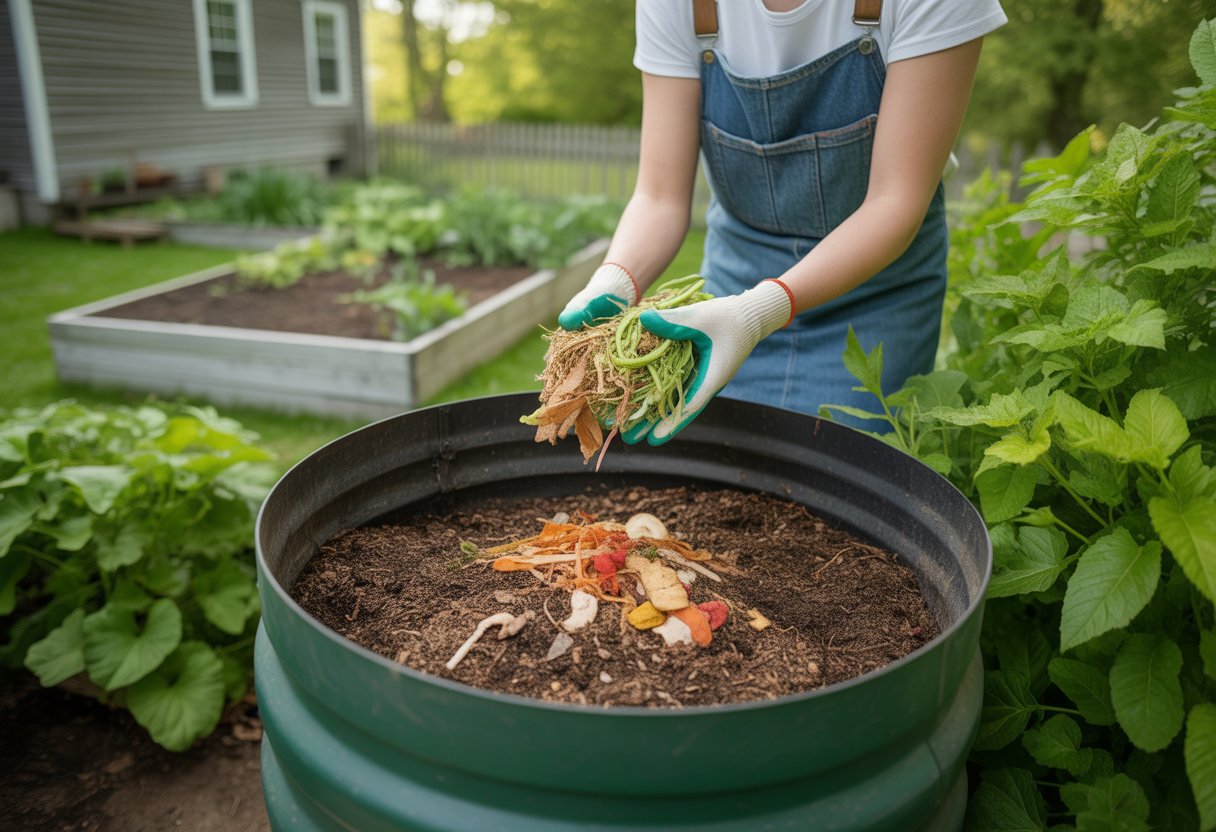
Composting in Massachusetts means paying attention to climate and materials. Gardeners need to balance moisture, air, and temperature to keep those microorganisms happy.
Choosing the right composting method can make a big difference as the seasons change.
Composting Basics for Local Gardeners
Composting combines organic materials like garden waste, kitchen scraps, and leaves to create rich compost. It’s all about balancing carbon-rich (“browns” like dry leaves) with nitrogen-rich (“greens” such as veggie peels).
Aerobic microbes need oxygen to break things down efficiently. This also keeps methane in check compared to anaerobic breakdown.
Turning the pile every week or two brings in fresh air, speeds things up, and helps keep odors away.
A good compost pile is about 3 feet wide and 3 feet tall. That size holds heat well.
Keep moisture like a wrung-out sponge—damp but not soggy or bone-dry.
Climate Considerations
Massachusetts weather plays a huge role in composting. Cold winters slow everything down, sometimes to a crawl.
To keep things working, gardeners can insulate piles with straw bales or leaves. Using a bin or tumbler helps keep the inside warmer than the outside.
Spring and summer are prime time for microbes. They break down organic matter fast, but heavy rain can be a pain.
If it pours, cover the compost to keep it from getting waterlogged. Too much water cuts oxygen and can make things stinky.
Common Composting Methods
Backyard piles and bins are go-tos for most Massachusetts gardeners. They’re easy to turn and let you tweak moisture or carbon-to-nitrogen ratios.
Tumbler composters make aeration simple—just spin and go. They’re great for smaller gardens or kitchen scraps.
Vermicomposting uses worms to break down food indoors or in a sheltered spot. It’s a year-round option, but it’s best for small batches or food scraps.
No matter the method, you’ve gotta keep an eye on oxygen and moisture. That keeps the good microbes busy and the pile healthy.
Building and Maintaining a Compost System
Setting up an effective compost system means picking the right spot or container, balancing your ingredients, and managing moisture and airflow. A little care makes the whole process faster and less smelly.
Choosing the Right Compost Bin or Pile
Pick a compost bin or pile size that matches your space and how much waste you have. Plastic or wood bins are common—they help trap heat and moisture.
Open piles need a level, shaded spot. They might take longer to break down, but they work fine if you’ve got the room.
A bin with a lid keeps out pests and holds in warmth, which is a lifesaver in winter. Aim for about 3 feet wide and 3 feet tall for best results.
For kitchen scraps, pick a bin with decent drainage. That keeps water from pooling and helps worms or earthworms do their thing.
Balancing Carbon and Nitrogen Sources
Getting the right mix of carbon and nitrogen is huge. Carbon comes from dried leaves, straw, sawdust, and wood shavings. Nitrogen comes from kitchen scraps, grass clippings, and green plants.
A rough rule: about 30 parts carbon to 1 part nitrogen by weight. Too much nitrogen makes it stink, too much carbon slows it down.
Layer browns and greens in thin layers. Give it a good mix to keep air flowing and compost cooking.
Managing Moisture and Oxygen
Compost should feel like a wrung-out sponge. Add water during dry spells, especially in hot Massachusetts summers, but don’t drown the pile.
If the pile gets too wet, oxygen drops and smells rise. Turning the pile every week helps bring in oxygen and keeps microbes and earthworms busy.
Bins with vents or open piles that get turned a lot work best here. Don’t pack materials down—let them breathe.
Optimizing Decomposition and Minimizing Odors
Insulate and turn the pile to keep heat in and speed things up. Compost should hit 130-150°F to kill off weed seeds and pathogens.
Earthworms help break down material if you keep things moist and airy.
Skip meat, dairy, or oily foods—they attract animals and smell bad. Cover fresh food scraps with dried leaves to soak up moisture and control odors.
Turning the pile regularly keeps those nasty smells at bay.
Using Finished Compost for Massachusetts Gardens
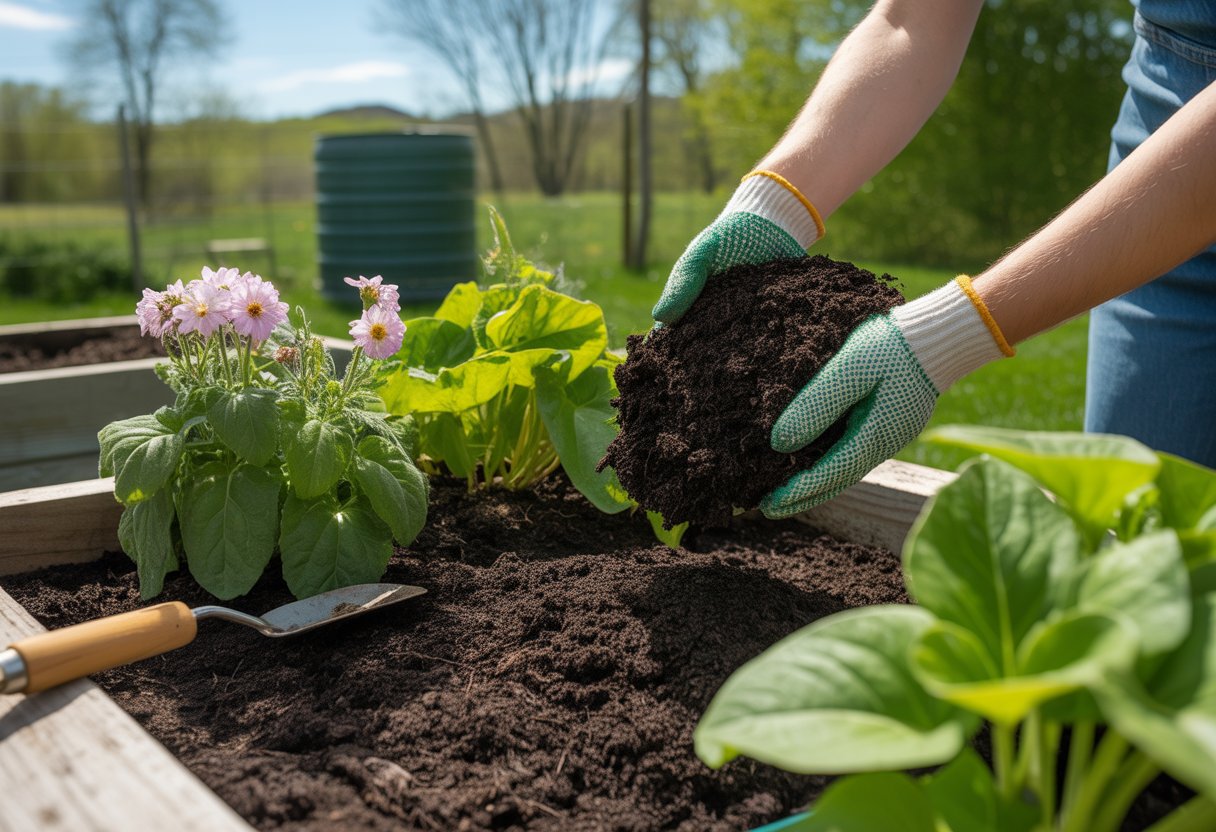
Finished compost really boosts soil quality. It adds organic matter and nutrients, improves structure, and helps beneficial critters thrive.
Applying it in raised beds and gardens means healthier plants and better yields.
Improving Soil Structure and Fertility
Compost adds humus, which helps clay soils drain and breathe better. In sandy soils, it holds in moisture.
This makes for healthier soil—something Massachusetts gardens can always use.
Compost brings in essential plant nutrients and works as a slow-release organic fertilizer. It keeps feeding the soil over time and encourages good organisms.
Before you add compost, it’s smart to do a soil test or pH test. That way, you can spot any missing nutrients and adjust your plan.
Applying Compost in Raised Beds and Gardens
In raised beds, mix finished compost with your soil or just spread it on top. A 2-3 inch layer each year really helps.
For garden rows, till compost into the top 6-8 inches before planting. Don’t go overboard—a thick layer can tie up nitrogen or make soil too soggy.
Homemade compost lets you skip chemical fertilizers. It also works as mulch to block weeds and hold moisture during those hot Massachusetts summers.
Maximizing Plant Health and Yields
Adding compost improves root growth and nutrient uptake. Plants get tougher against pests and diseases.
It keeps moisture levels more steady, so plants don’t stress out during dry spells.
If you need extra feeding, compost’s balanced nutrients pair well with organic fertilizers. Try to apply compost in early spring or fall for best results.
Adjust how much compost you use for different plants—some need more than others. That way, you get the best yields without messing up your soil’s balance.
Seasonal and Crop-Specific Composting Tips
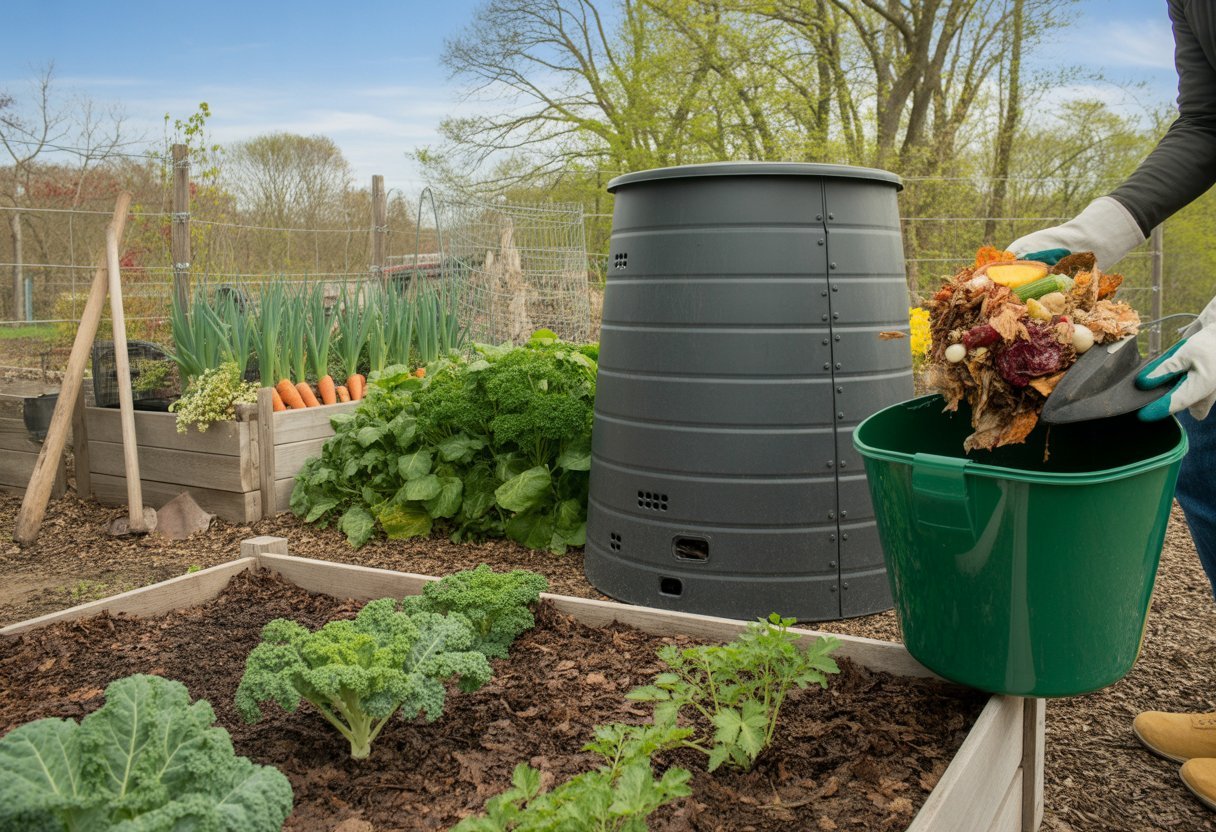
Composting in Massachusetts shifts with the seasons and the kind of garden you have. Tweak your composting for veggies or flowers so plants get what they need, when they need it.
Timing and crop choice can make a real difference in how compost improves soil and plant health.
Composting for Vegetable Gardens
Veggie gardens do best with compost rich in nitrogen, especially early in the season for leafy crops. Coffee grounds are a handy nitrogen boost for things like lettuce and radishes.
Spread compost in spring before planting corn or cherry tomatoes. It loosens up the soil, holds moisture, and adds slow-release nutrients for steady growth and better flavor.
Mulching with compost around veggies cuts water loss and keeps weeds down. This is a lifesaver in hot Massachusetts summers.
Supporting Flower Gardens with Compost
Flower gardens love compost high in organic matter—it boosts structure and drainage. Well-aged compost feeds roots slowly and keeps them healthy.
Use compost as mulch to stop erosion, hold in moisture, and get better blooms. It also helps buffer temperature swings in spring and fall.
Certain flowers want tweaks: acid-loving plants like compost mixed with pine needles or leaves, which can nudge the soil pH lower.
Best Practices for Growing Massachusetts Vegetables
Massachusetts gardeners should time compost application to match planting schedules. Adding compost in early spring or fall works best for cool-season crops like lettuce and radishes.
A 2-3 inch layer of compost mixed into the top 6 inches of soil gives vegetable beds a real boost. This helps roots grow stronger and lets plants like cherry tomatoes or corn soak up more nutrients.
Don’t use fresh compost right on your crops—it can have too much ammonia. Let compost mature for at least 6 months so nutrients release more gently and plants don’t get stressed.