Common Problems with Wisteria and Solutions: Expert Tips for Healthy Growth
Last updated: October 16, 2026
Wisteria is a favorite garden plant, famous for its cascading flowers. Still, it comes with its fair share of headaches—poor flowering, pests, and a tendency to take over if you’re not careful.
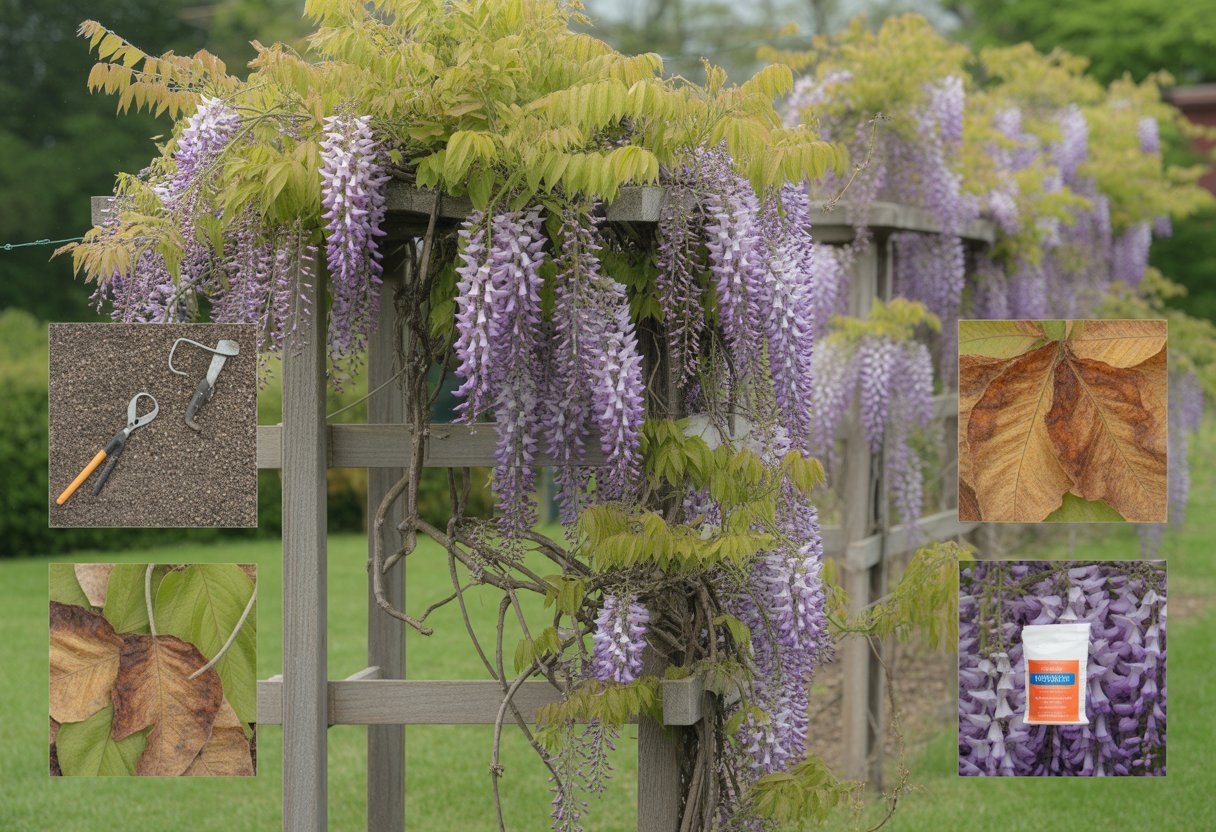
Plenty of folks find themselves frustrated when wisteria won’t bloom or just grows out of control. Spotting the problem early and acting fast keeps the vine healthy and the garden looking sharp.
Troubleshooting Poor Blooming
Wisteria sometimes refuses to bloom, and the usual culprits are right there in its environment or care routine. You’ll want to pay close attention to light, pruning habits, and what’s going into the soil if you expect those flower buds to show up.
Insufficient Sunlight
Wisteria really needs full sun—at least six hours of direct sunlight a day—to put on a good show. Both Wisteria floribunda (Japanese wisteria) and Wisteria frutescens (American wisteria) thrive with that much light.
If you tuck it in the shade, you’ll probably get lots of green leaves but barely any blooms. Try to find a spot with southern or western exposure. Sometimes, just trimming back nearby trees can make a big difference.
When sunlight’s lacking, flower buds develop slowly and blooms don’t last as long. If you garden in a cooler zone, catching every bit of sunshine matters even more.
Improper Pruning Practices
Pruning makes a bigger difference than most realize, but bad timing or technique can ruin your chances for flowers. For Chinese wisteria and Kentucky wisteria, you’re looking at two pruning sessions: a light one in summer and a heavier one in winter.
Summer pruning gets rid of extra leaves and shoots that steal energy from the buds. Winter’s the time to shape the vine and encourage those strong, flower-bearing spurs.
Don’t prune too late, or you’ll snip off next season’s buds without even realizing it. Avoid hacking everything back—focus on removing the long, wild shoots and trimming each branch to just two or three buds. That’s usually the sweet spot for more blooms.
Nutrient Imbalances
Too much nitrogen in the soil? That’s a recipe for lots of leaves and not many flowers. High-nitrogen fertilizers almost always lead to disappointing blooms.
Instead, use a balanced fertilizer with more phosphorus, like a 5-10-10 or 10-20-20 blend. Skip the heavy feeding—overdoing it delays flowering.
Native types like Wisteria frutescens don’t need much extra, while the imported ones might like a little boost in spring. If you’re not sure what your soil needs, a quick test can clear things up.
Managing Growth and Structure Issues
Wisteria has a knack for taking over if you let it. Managing its growth means keeping it in check, giving it strong support, and stopping it from spreading where it shouldn’t.
Controlling Vigorous Vines
Some varieties, like Wisteria brachybotrys and Amethyst Falls, grow fast—maybe too fast. Regular pruning in late winter or right after flowering keeps them from getting out of hand.
Cut back long shoots to about 6-10 buds. Pull out suckers and weak stems at the base to avoid a tangled mess.
Try thinning cuts instead of chopping everything back. It’s less stressful for the plant and gives you better control without losing blooms.
Supporting Heavy Shoots and Branches
Wisteria branches get pretty thick and heavy, especially as they age. You’ll need strong supports to keep them from snapping.
Use sturdy trellises, pergolas, or heavy-duty wires that can handle the load. Tie the vines loosely so you don’t choke the stems as they grow.
Check supports now and then—repairs are easier before things fall apart. If some branches get too heavy, prune them to keep the plant balanced and neat.
Preventing Invasive Spread
Some wisteria species spread like wildfire, sending runners underground or dropping seeds everywhere. You’ll need to contain them to protect your other plants.
Set up root barriers at least 18 inches deep to block those sneaky rhizomes. Keep an eye out for shoots popping up where they shouldn’t and yank them as soon as you spot them.
Don’t plant the aggressive types near wild areas. If you’re worried about invasiveness, stick with less pushy cultivars like Wisteria brachybotrys.
Addressing Pests, Diseases, and Environmental Stress
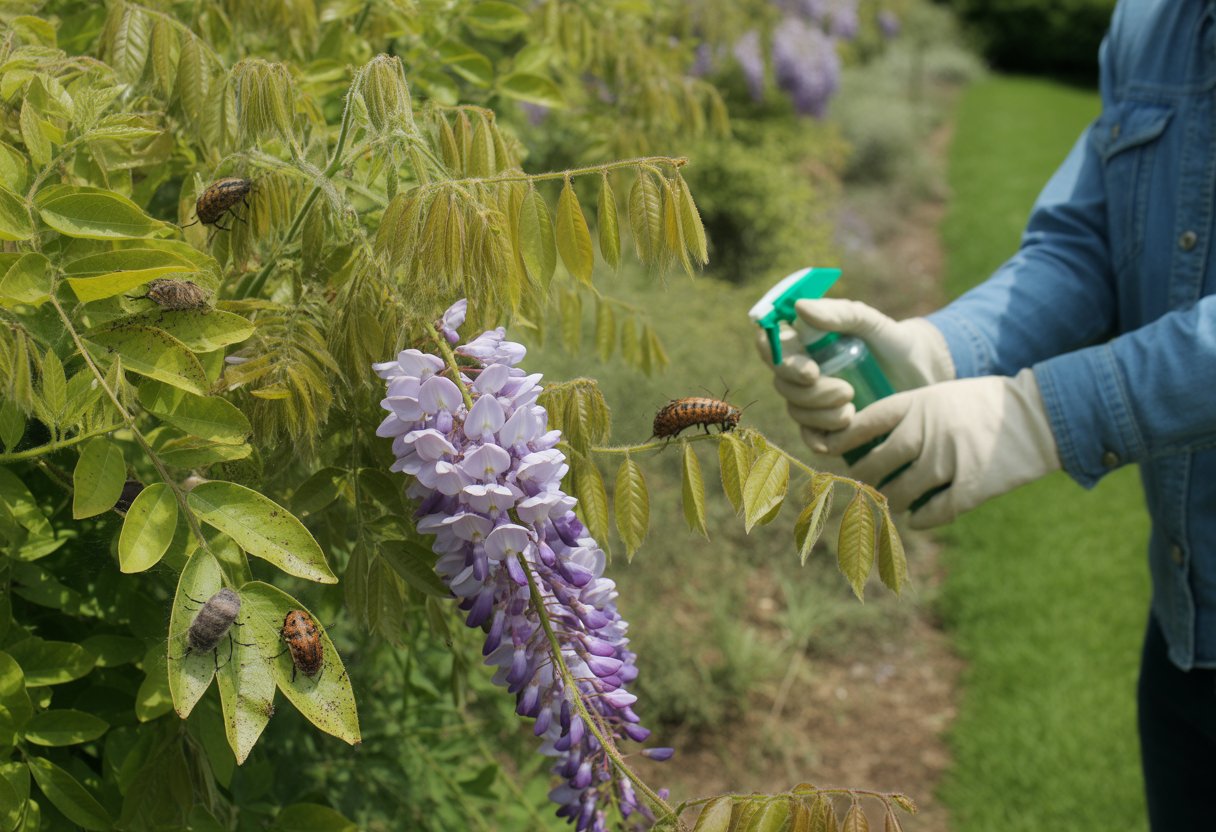
Wisteria deals with plenty of challenges—pests, competition, and tough weather can all slow it down. Tackling problems as they come up keeps the plant healthy and blooming.
Dealing With Aphids and Insect Pests
Aphids love wisteria, clustering on new shoots and leaves to suck out the sap. They cause twisted growth and leave behind sticky honeydew that can lead to sooty mold.
Check your plants often. If you spot aphids, spray them with insecticidal soap or neem oil—both work well and won’t hurt helpful bugs. Only reach for systemic insecticides if things get really bad, and use them sparingly.
Caterpillars and scale insects sometimes show up too. Pick them off by hand, or use targeted sprays if needed. Attracting ladybugs and other predators helps keep pest numbers down naturally.
Fending Off Weeds and Competition
Weeds compete with wisteria for water and nutrients, making the vine weaker. Keep the area around the base clear, especially when the plant’s young.
Spread mulch around the roots to block weeds and hold in moisture. Bark or straw works great and even improves the soil over time.
Hand-weed or use a hoe gently to avoid damaging shallow roots. Don’t pile mulch against the stem, though—it can cause rot, and nobody wants that.
Mitigating Cold Sensitivity
Wisteria varieties don’t all handle cold the same way. Wisteria sinensis, for example, really struggles if temperatures dip below -10°C.
On the other hand, Wisteria floribunda seems to handle colder climates a bit better. It’s a small difference, but it matters if you live somewhere with harsh winters.
If you’re in a chilly region, try planting wisteria in a sheltered spot or somewhere that faces south. That little bit of extra warmth can help cut down on frost damage.
Throwing down some mulch before winter hits also helps insulate the roots. It’s a simple step, but it makes a difference when the temperature swings.
If you prune late in the season, you can get rid of new growth that’s most at risk from frost. Sometimes, just covering young plants during a surprise cold snap can save them from serious damage.