Drought Tolerant Native Plants Alabama for Sustainable Landscaping and Water Conservation
Last updated: September 4, 2026
Alabama’s climate loves to throw curveballs at gardeners, especially during dry spells. Picking native plants that are drought tolerant helps keep your landscape healthy and saves a ton of water.
These plants already know how to thrive in Alabama’s soil and wild weather, so you won’t need to baby them like non-natives.
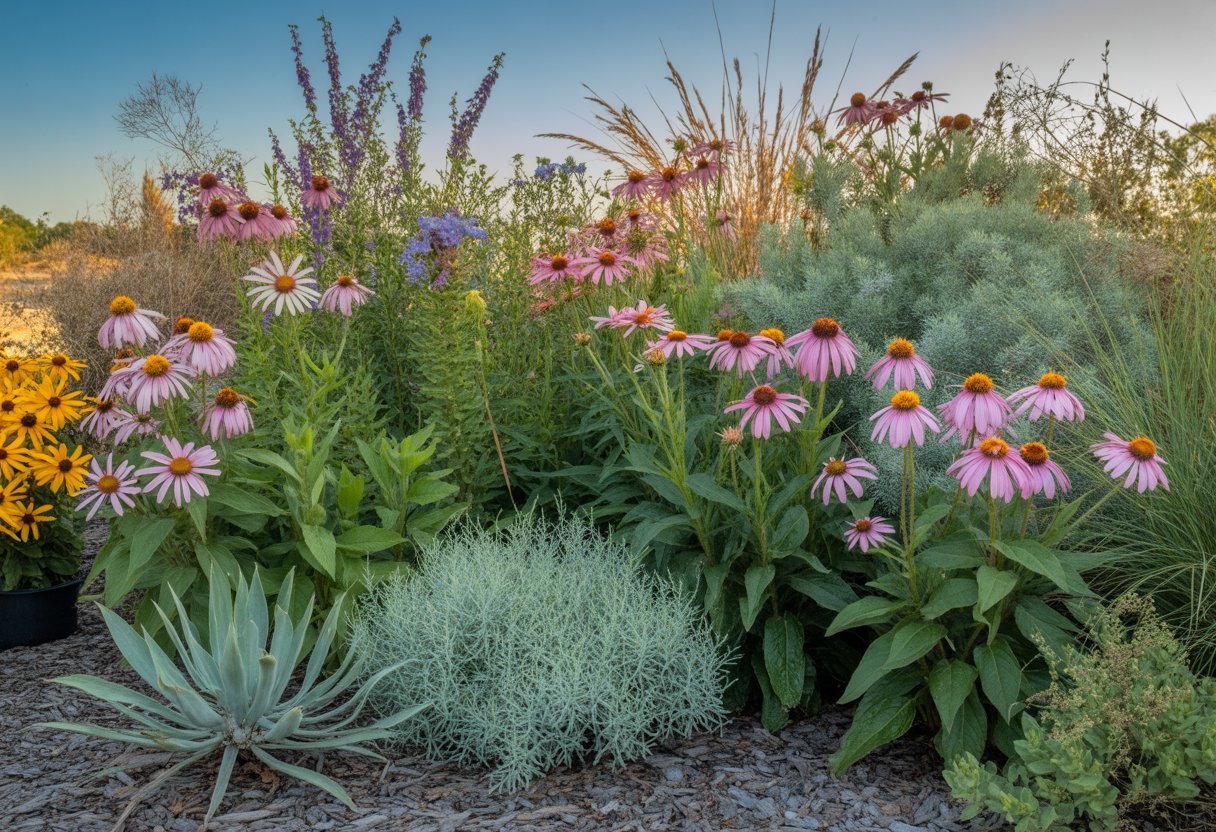
Some native species, like purple coneflower and black-eyed Susan, don’t seem to mind limited rainfall. Their deep roots dig down for moisture, making them a solid pick for sustainable gardening.
Knowing which plants naturally handle drought can really steer your landscaping choices in the right direction.
Going native with drought-tolerant plants helps conserve water, supports local wildlife, and keeps Alabama’s unique biodiversity around. If you’re into gardening that’s easier to maintain and better for the environment, this is definitely the way to go.
Essential Drought Tolerant Native Plants for Alabama
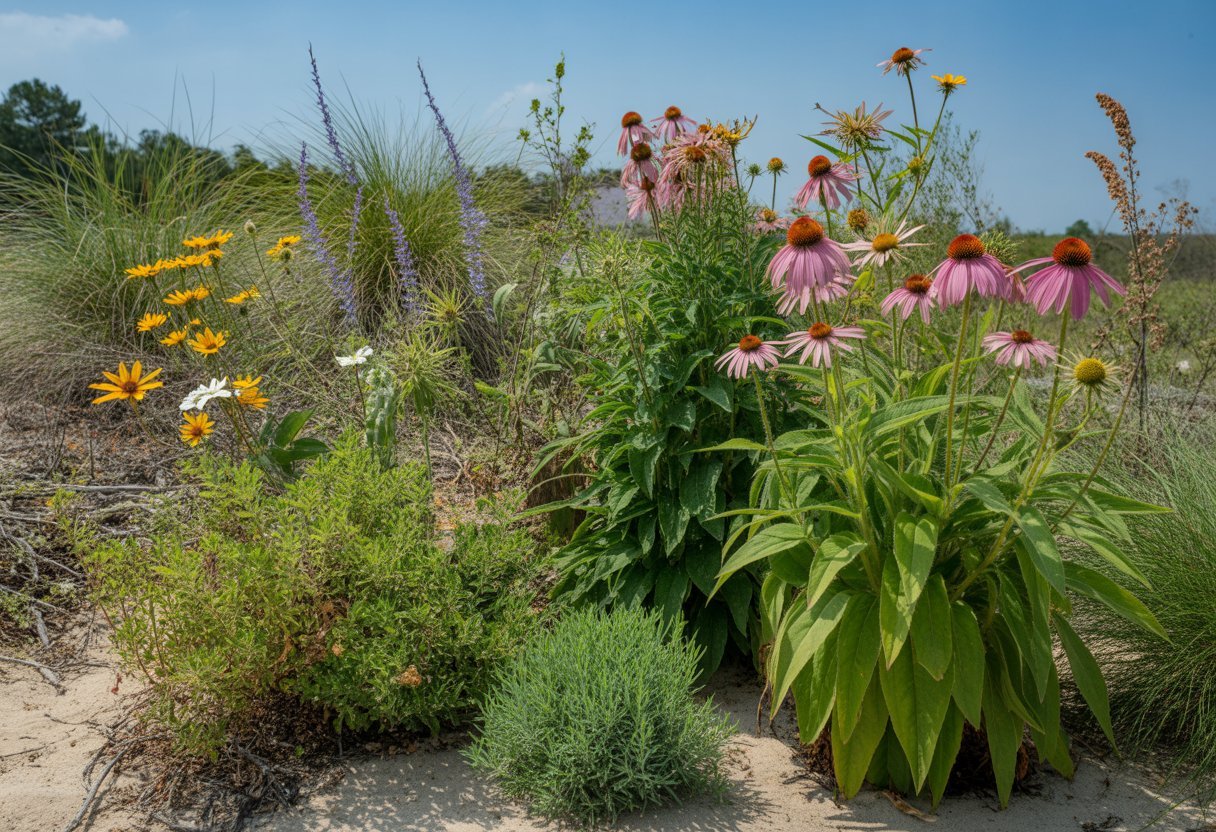
Alabama’s dry spells mean you need plants that can tough it out with little water. Local species usually handle it best, and they’re low maintenance to boot.
Top Shrubs for Dry Conditions
Some native shrubs really stand up to drought in Alabama. American beautyberry (Callicarpa americana) stands out with its bright purple berries and ability to handle dry, sandy soils.
Dwarf yaupon holly (Ilex vomitoria ‘Nana’) keeps its evergreen leaves and can deal with dry conditions once it’s settled in. It works great for hedges or foundation plantings.
Rusty blackhaw viburnum (Viburnum rufidulum) puts out white flowers in spring and dark blue fruit that wildlife love. It doesn’t mind drought and grows well in sun or partial shade.
Chokeberry (Aronia arbutifolia) manages dry soils and gives you red berries in fall—birds seem to go nuts for them. These shrubs look good and don’t quit when it’s dry.
Recommended Perennials for Alabama Gardens
You’ll find plenty of Alabama natives that shrug off drought. Black-eyed Susan (Rudbeckia hirta) shows off bright yellow flowers and doesn’t care if the soil isn’t perfect.
Purple coneflower (Echinacea purpurea) resists drought and draws in pollinators like bees and butterflies. Its deep roots help it survive the dry stretches.
Louisiana bluestar (Amsonia ciliata) likes full sun and barely needs extra water. Those star-shaped blue blooms in spring are a nice bonus.
Other tough perennials, like Blue mistflower (Conoclinium coelestinum), stick around even during dry spells and help out pollinators. They fit right into sustainable Alabama gardens.
Native Azaleas and Their Benefits
Native azaleas—think Alabama azalea (Rhododendron alabamense)—handle drought pretty well once they’re established. They bloom in spring with pink or white flowers that fit nicely along woodland edges or in partial shade.
You won’t have to water these as much as the fancy cultivated types. Plus, local butterflies and other wildlife benefit from them.
Native azaleas bring seasonal color without guzzling water, which is perfect for conservation-minded landscapes. They like Alabama’s acidic soils and adapt better to dry weather than most non-natives.
How to Design a Drought Tolerant Native Landscape
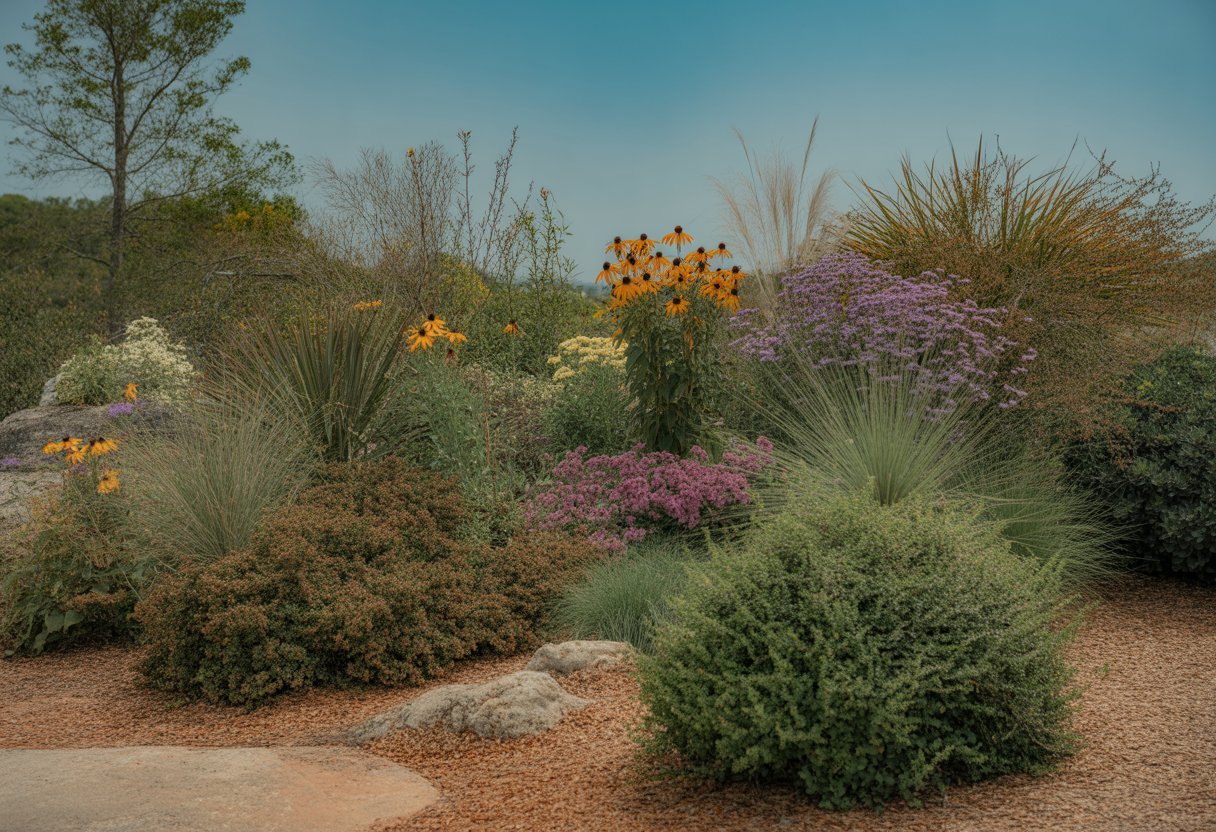
Designing a drought-tolerant native landscape in Alabama takes a little planning. You’ve got to pick the right plants and think about where to put them.
It’s a balancing act—sun, wildlife, moisture needs—but native perennials and shrubs adapted to low water make it a lot easier.
Selecting Plants for Full Sun Areas
Full sun in Alabama is no joke. Plants like Purple Coneflower (Echinacea purpurea), Black-eyed Susan (Rudbeckia hirta), and Blazing Star (Liatris spicata) love it, though.
Their deep roots reach for groundwater even when it’s bone dry.
Make sure your soil drains well—sandy or loamy is best. Mulch keeps moisture in and weeds down.
If you group plants with similar water needs, you’ll water less overall.
Don’t forget about grasses like Little Bluestem (Schizachyrium scoparium). They add texture and color without needing much water.
Landscaping for Wildlife and Hummingbirds
If you want wildlife and hummingbirds, go for plants that offer food and shelter. Bee Balm (Monarda didyma) and Coral Honeysuckle (Lonicera sempervirens) bring in hummingbirds and plenty of bees and butterflies.
Shrubs like Beautyberry (Callicarpa americana) feed birds and small mammals with their berries.
Layered plantings and dense shrubs make great nesting spots.
A little water feature or birdbath ups the habitat value, but design it so it doesn’t evaporate too fast. Skip the pesticides if you can—pollinators will thank you.
Integrating Ferns and Shade-Loving Species
Got some shade? Native ferns and drought-tolerant understory plants do well there. Christmas Fern (Polystichum acrostichoides) and Southern Lady Fern (Athyrium asplenioides) like the filtered light under trees.
They want soil that stays moist but drains well. Mulch helps keep humidity and temperature steady.
Try shade-loving perennials like Wild Ginger (Asarum canadense) for ground cover and variety.
Mixing these in helps the landscape hold moisture and gives woodland critters more options. Once they’re established, you won’t have to water them much.
Practical Considerations for Planting in Alabama and Neighboring Regions
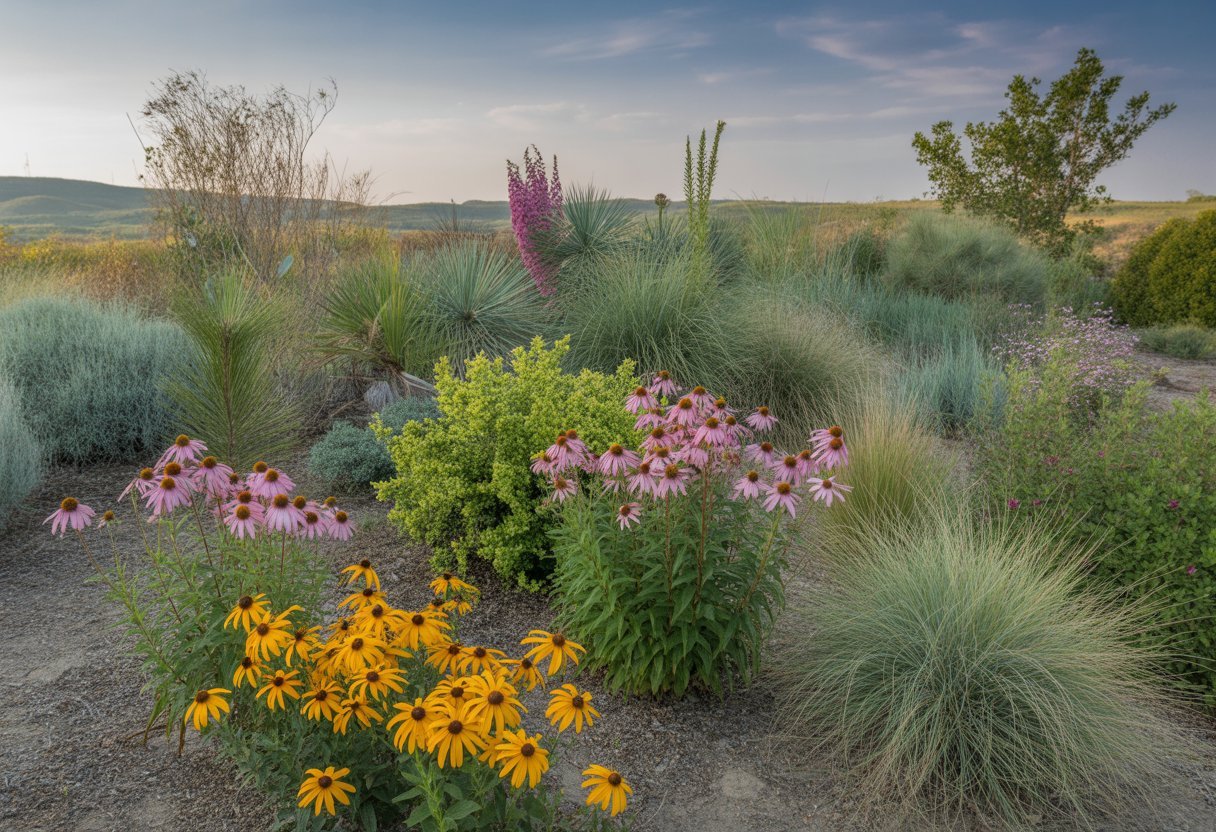
Picking the right spot and prepping your soil matter a lot for drought-tolerant planting. If you match the plants to the local conditions, you’ll save yourself a lot of headaches later.
Preparing Sites Like Parking Areas
Parking areas can be brutal for plants—compacted soil, poor drainage, heat. Before you plant, break up the soil and add organic matter to help water stick around.
Drought-tolerant natives like Coreopsis or Echinacea can handle the rough conditions. Mulch around them to cut down on evaporation and keep the soil cooler.
You’ll need to water a bit during the first few months, but after that, they should be fine on their own. Skip plants that need wet roots—parking lot runoff dries up fast, and those plants won’t make it.
Adapting Plant Choices for Georgia and Surrounding States
Plants native to Alabama often show up in Georgia and neighboring states too. Still, those subtle climate shifts mean you can’t just plant anything and hope for the best.
Northern Georgia gets colder winters, so you’ll want to look for hardier versions of your favorite natives. It’s not one-size-fits-all, even if the species list looks similar.
Black-eyed Susan and Little Bluestem? Those two handle state borders and weather swings without much fuss. If you’re down in southern Georgia, though, you’ll need plants that can take the heat and shrug off the occasional drought.
Soil and rainfall patterns bounce around from one spot to another. Testing your soil before planting—yeah, it’s a little extra work, but it’s worth it.
If you’re not sure where to start, regional extension services usually have solid species lists for your specific patch of Georgia (or wherever you happen to be nearby).