
Which DIY Irrigation Kits Are the Easiest to Assemble? Top 5 User-Friendly Options for 2026
We independently select all products and services. If you click through links we provide, Plant Native may earn a commission with no extra cost to you.
Last updated: November 14, 2026
DIY irrigation kits offer homeowners an efficient way to water their gardens and lawns without professional installation. These systems can save time, reduce water waste, and ensure plants receive consistent hydration. Many gardeners find that DIY kits provide a cost-effective alternative to hiring landscapers or sprinkler system installers.
When choosing a DIY irrigation kit, ease of assembly is a key factor to consider. Some kits come with detailed instructions and require minimal tools, making them accessible to beginners. Others may demand more technical skills or specialized equipment.
The complexity of assembly can vary based on the size of the area to be irrigated and the type of system chosen.
We researched and tested various DIY irrigation kits to determine which ones are the easiest to put together. Our focus was on finding systems that offer clear instructions, require few tools, and can be assembled quickly by people with limited DIY experience.
Easiest DIY Irrigation Kits to Assemble
We’ve researched and tested numerous DIY irrigation kits to find the ones that offer the simplest assembly process. Our list includes options that balance user-friendliness with effective watering capabilities, ensuring your garden stays hydrated without the hassle of complex installation.
Our top pick
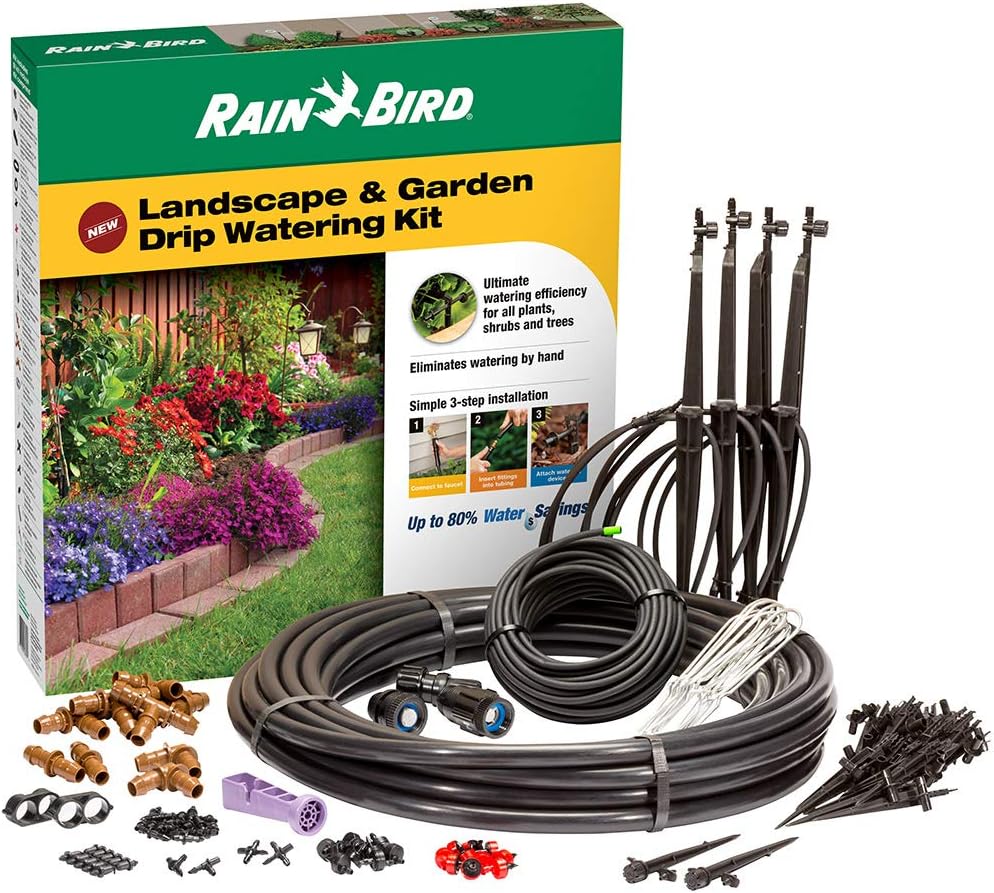
- Simple 3-step installation from the faucet
- Drippers, micro-bubblers and micro-sprays included
- Pressure-compensating, clog-resistant emitters
Cons
- Pricier than generic tubing kits
- Plastic fittings
- Larger yards may need extra tubing
The Rain Bird kit includes 108 pieces for flower beds, gardens and landscaped areas: connect it to a faucet, push the fittings into the tubing and attach the watering devices. Its pressure-compensating drippers deliver the same amount of water to every plant along the line, and Rain Bird rates the system for up to 80% water savings over hand watering.
Best value set

- Emitters adjust from off to micro-drip to spray
- Solid brass two-way splitter with individual shutoffs
- Simple push-in installation
Cons
- May leak under high pressure
- Only 12 emitters included
- Tubing can soften in heat
The kit includes 50 ft of 1/4-inch tubing, 12 tee connectors, 12 adjustable drip emitters on stakes and a solid brass splitter with a separate valve for each line (US standard 3/4-inch thread). The user manual links to an installation video.
Best for beginners
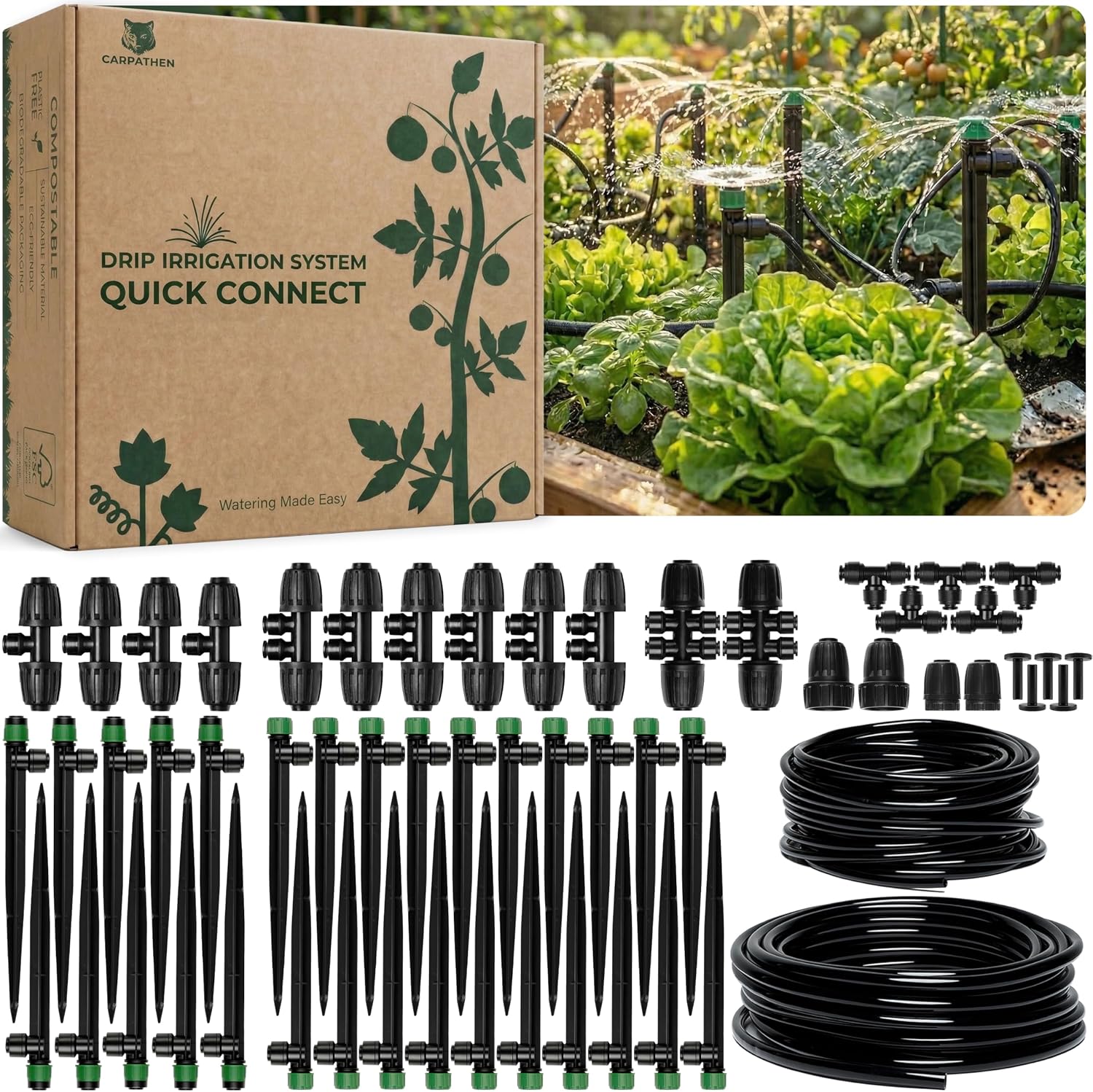
- Tool-free quick-connect fittings lock in place
- Covers about 100 sq ft and up to 29 plants
- Adjustable stream and vortex emitters
Cons
- May require additional kits for larger gardens
- Plastic components may not be as durable as metal
- Pricier than barbed-fitting kits
CARPATHEN says the kit sets up in about 30 minutes: run the 50 ft 5/16-inch mainline from the faucet and branch out with 50 ft of 1/4-inch tubing to 20 stream and 10 vortex emitters. Four-way, two-way and one-way connectors let you split the layout across several raised beds, and the locking fittings are designed not to pop off under pressure.
Best for flower beds
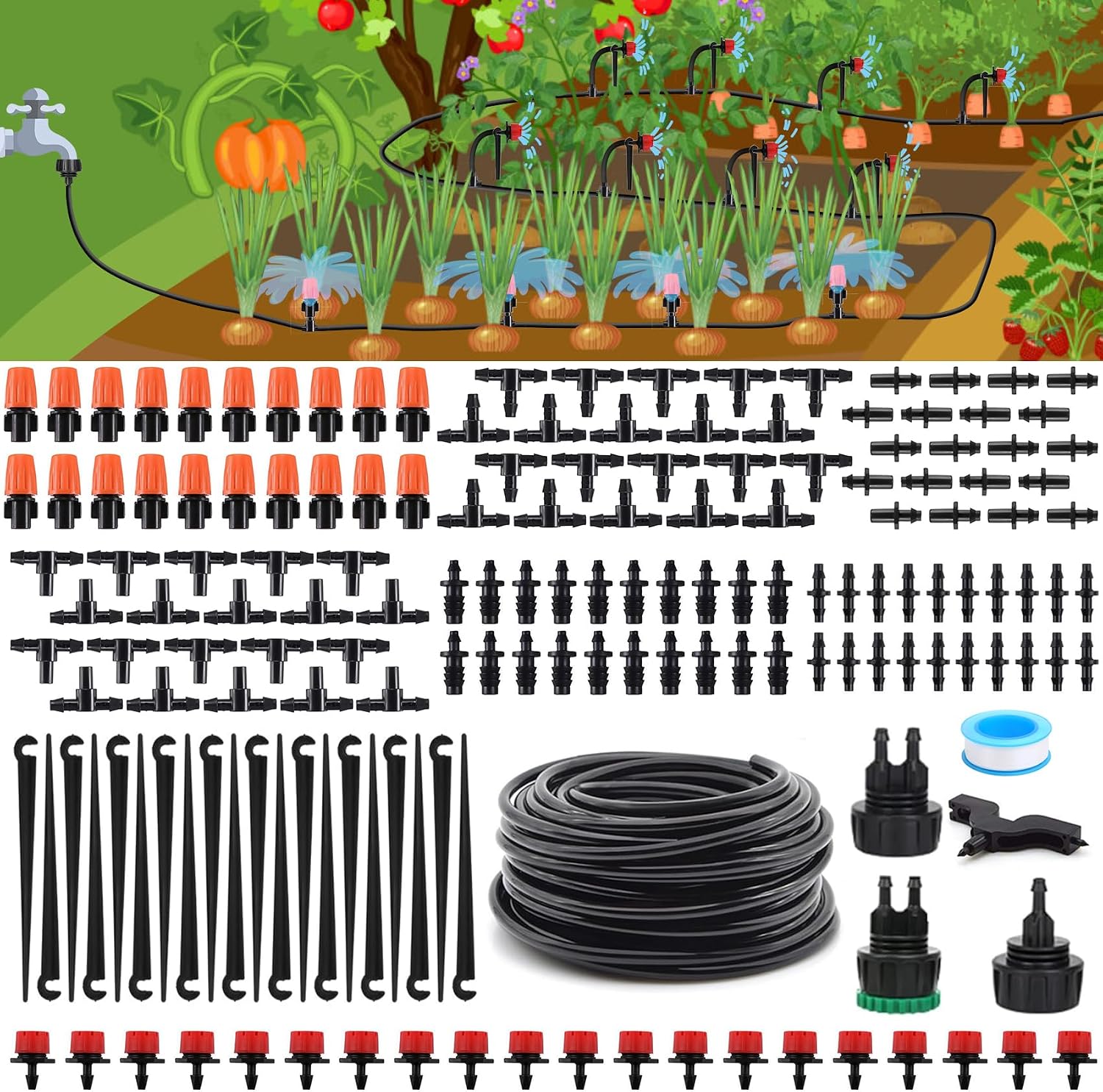
- Two nozzle types, each individually adjustable
- Two-way faucet connector for multiple branches
- No digging or plumbing skills needed
Cons
- Many small barbed fittings to assemble
- Timer not included
- Tubing is stiff until warmed
The Flantor kit connects to an outdoor faucet and splits into branches through a 2-way connector, with adjustable drip and spray nozzles you can set for each plant. Soaking the tubing in hot water for 30 seconds makes the fittings easier to push on, and an illustrated manual covers the layout. Add a hose timer to automate it.
Best for small spaces
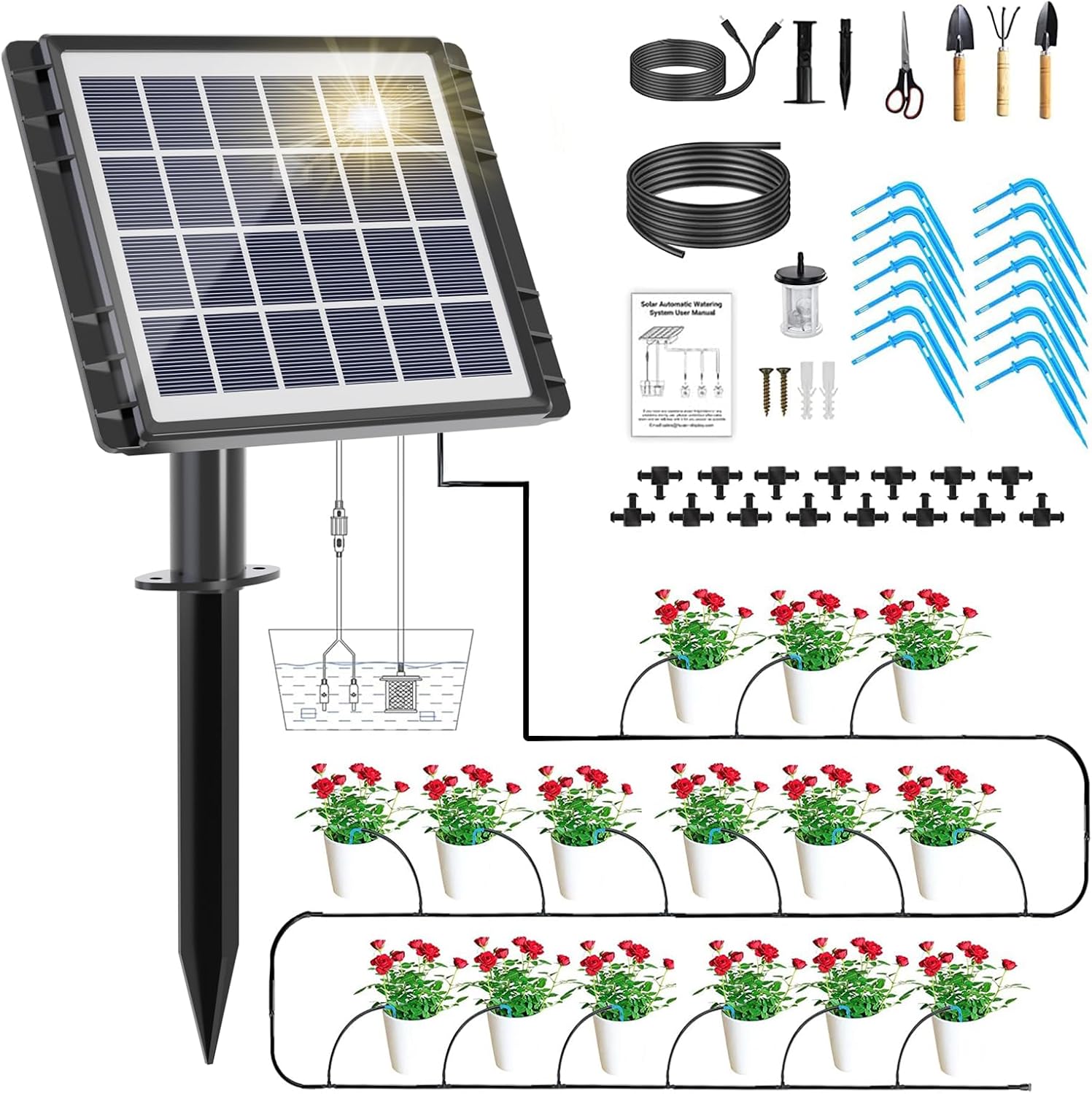
- 25 timer modes (3 to 20 minutes, every 12 to 96 hours)
- Solar-powered, with USB-C charging for winter
- Alarm for blocked pump or empty water container
Cons
- Limited to about 15 pots
- Needs a water container to draw from
- Water level sensor needs regular cleaning
The HEKIWAY kit pumps from a bucket or tank, so it works where there is no faucet. It includes about 50 ft of tubing, 15 watering stakes, 15 T-joints and a filter, with a flow rate of up to 900 ml per minute, and a buzzer or light alerts you when the pump is blocked or the water runs out.
Buying Guide
When selecting a DIY irrigation kit, we recommend considering several key factors to ensure you choose the best option for your needs:
Ease of Assembly
Look for kits with clear instructions and minimal tools required. Pre-assembled components can significantly reduce setup time and complexity.
System Type
Choose between drip irrigation, sprinkler systems, or soaker hoses based on your garden layout and plant types.
Coverage Area
Determine the square footage you need to irrigate and select a kit that can adequately cover that area.
Water Pressure Compatibility
Check your home’s water pressure and ensure the kit is compatible to avoid performance issues.
Expandability
Opt for modular systems that allow for easy expansion as your garden grows.
Durability
Select kits with high-quality materials that can withstand outdoor conditions and UV exposure.
Automation Options
Consider kits with timer capabilities for convenient, hands-off watering schedules.
Customization Features
Look for adjustable components like spray patterns or flow rates to tailor the system to your plants’ needs.
Warranty and Support
Choose kits from reputable brands offering solid warranties and customer support.
By carefully evaluating these aspects, we can select a DIY irrigation kit that’s both easy to assemble and effective for our gardening needs.
We independently select all products and services. If you click through links we provide, Plant Native may earn a commission with no extra cost to you. As an Amazon Associate I earn from qualifying purchases.


I’ve been dealing with this exact issue in my garden. Going to try some of these suggestions this weekend.
What about watering? I always seem to overdo it or not do enough.