Step by Step Rosemary Planting Guide for Healthy Growth and Easy Care
Last updated: September 10, 2026
Rosemary’s a tough little herb that loves full sunlight and well-drained soil. Once it settles in, it barely needs any fuss, so it’s fantastic for beginners—or honestly, anyone who doesn’t want to babysit their plants.
To have luck with rosemary, you’ll need to pick a good spot, prep the soil, and pay attention to watering and spacing.
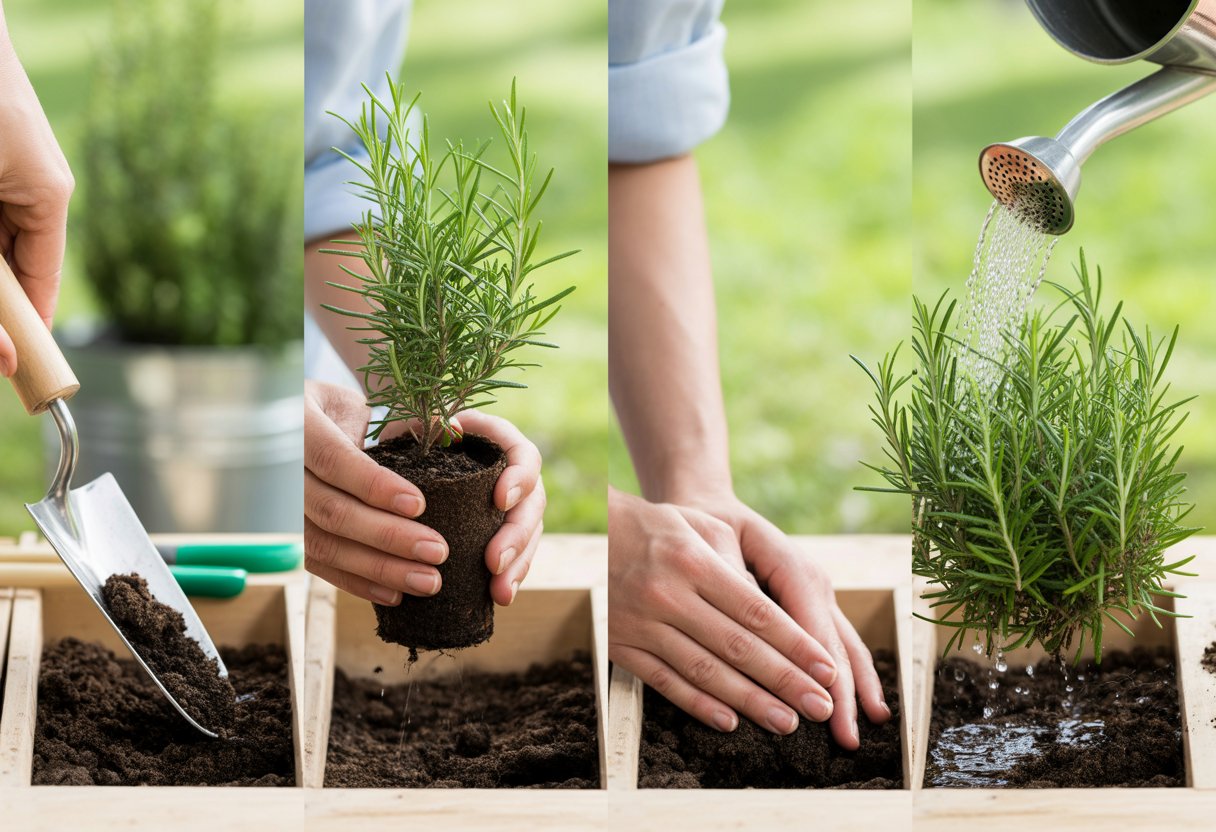
Getting rosemary going from cuttings or seeds takes a few clear steps. If you keep an eye on temperature and give it a trim now and then, you’ll end up with a much happier plant.
This guide breaks down what you need to do for a strong, productive rosemary bush.
Essential Preparations for Planting Rosemary
Picking the right rosemary variety, meeting its sunlight and soil needs, and setting up your garden bed or pot properly—these steps really make or break your rosemary’s future.
It’s a Mediterranean plant, so it’s a bit picky about its environment.
Selecting the Right Rosemary Variety
There are a bunch of rosemary varieties out there, and some handle cold better than others. Upright types like ‘Tuscan Blue’ do well in chillier spots, even down to zone 7.
Trailing varieties like ‘Blue Spires’ work nicely as ground cover or in containers.
Think about whether you want to keep your rosemary outside or grow it inside in a pot. Some types shrug off the cold, others are happier in warmth.
Picking a variety that matches your climate just makes life easier and the flavor better.
Understanding Light and Soil Requirements
Rosemary is a sun worshipper. It needs at least 6 to 8 hours of direct sunlight every day.
If it doesn’t get enough light, it gets leggy and loses some of that punchy aroma.
Well-drained soil is a must. It likes a bit of organic matter, but the soil should be sandy or gritty so water doesn’t hang around.
If you’ve got heavy clay, mix in sand or perlite, or just pick a different spot.
Preparing Garden Beds and Containers
When you’re planting in the ground, loosen the soil about 12 inches deep. Mix in some sand or perlite for drainage.
Stay away from spots where water puddles up after rain.
For pots, grab a well-draining potting mix or add extra sand and perlite to regular soil.
Make sure your containers have drainage holes. Rosemary hates wet feet.
Step-by-Step Rosemary Planting Instructions
Rosemary likes a gentle touch, especially when you’re starting out or moving it to a new spot. Good soil prep and careful handling of the roots set you up for success.
Getting the watering right and adding mulch helps keep things on track.
Starting Rosemary From Seed or Cuttings
Growing rosemary from seed takes patience—sometimes a lot of it. Seeds can take 2-3 weeks to sprout in a well-draining mix.
Keep the soil moist but not soggy, and warm (65-70°F or 18-21°C). Germination rates are hit or miss, so plant a few extra seeds just in case.
Cuttings are way faster and usually more reliable. Snip a healthy 4-6 inch stem from another rosemary plant.
Strip the lower leaves and pop the cutting in water or moist soil. Roots usually show up in 2-3 weeks.
Once you see roots, move the cutting to a small pot with well-draining soil.
Transplanting and Spacing Techniques
Move rosemary seedlings or rooted cuttings once they have a solid root ball. Handle them gently—roots don’t like rough treatment.
Use loose, sandy soil with good drainage, whether in pots or the ground.
Space plants 18-24 inches apart. This gives them room to breathe and helps prevent disease.
Firm the soil gently around the roots. The top of the root ball should sit just above the soil surface—don’t bury it too deep.
Proper Watering and Irrigation
Rosemary likes things on the dry side. Water new plants enough to keep the roots moist for the first couple of weeks.
After that, let the soil dry out a bit between waterings.
Too much water spells trouble—root rot is a real risk if the soil stays soggy.
If you have drip irrigation or a soaker hose, use it to keep moisture steady and avoid splashing water on the leaves.
Applying Mulch and Compost
Throw down a 1-2 inch layer of organic mulch—wood chips or straw work well. Mulch keeps weeds down, holds in moisture, and helps roots stay at a steady temperature.
Keep mulch a few inches from the stem so the base doesn’t rot.
Mix in some well-aged compost before planting. Rosemary likes slightly alkaline soil and moderate nutrients.
Don’t go overboard with fertilizer, though. Too much can mess with the flavor and reduce those essential oils.
Caring for Growing Rosemary
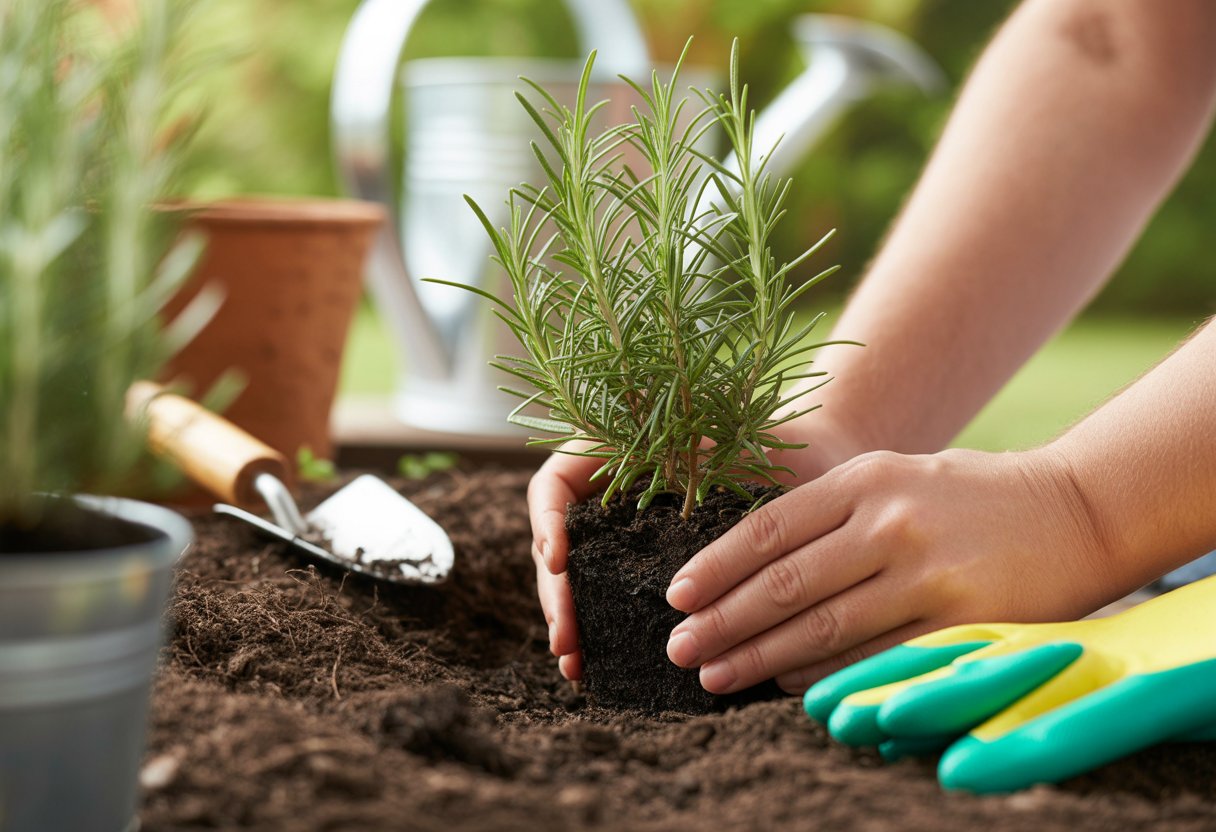
Rosemary needs a little attention here and there—mainly pruning, a touch of fertilizer, and some seasonal TLC.
If you keep up with these basics, your rosemary will look good and stay healthy, even if the weather’s not always perfect.
Pruning for Health and Shape
Pruning helps rosemary grow bushy and stops it from turning into a woody mess. Spring’s the best time, right after the last frost or once it’s done flowering.
Use sharp, clean shears and cut back about a third of the new growth.
Don’t hack into the old, woody stems—rosemary doesn’t bounce back well from that.
Trim it regularly to keep it compact and airy. This keeps the plant healthy and cuts down on fungal issues.
Snip off any dead or sick branches as soon as you spot them.
Fertilization and Ongoing Maintenance
Rosemary doesn’t need a lot of feeding. In early spring, sprinkle on a balanced, slow-release fertilizer if you want to give it a boost.
Skip heavy feeding—too much fertilizer can dull the flavor and scent.
Once your plant’s established, stick to well-drained soil and water only when needed.
Mulch helps hold moisture and keep weeds down, but don’t pile it up against the stem.
Overwintering and Seasonal Considerations
In warm places, rosemary acts like a perennial. But cold snaps can kill it off in a hurry.
If you live somewhere chilly, bring potted rosemary indoors before frost hits. For plants in the ground, cover them with frost cloths or heap mulch around the base to insulate the roots.
Ease up on watering during winter—rosemary likes things drier when it’s dormant.
When spring rolls around, slowly move your rosemary back outside. This gradual shift helps avoid shock and sets it up for a strong year.
Harvesting and Enjoying Rosemary
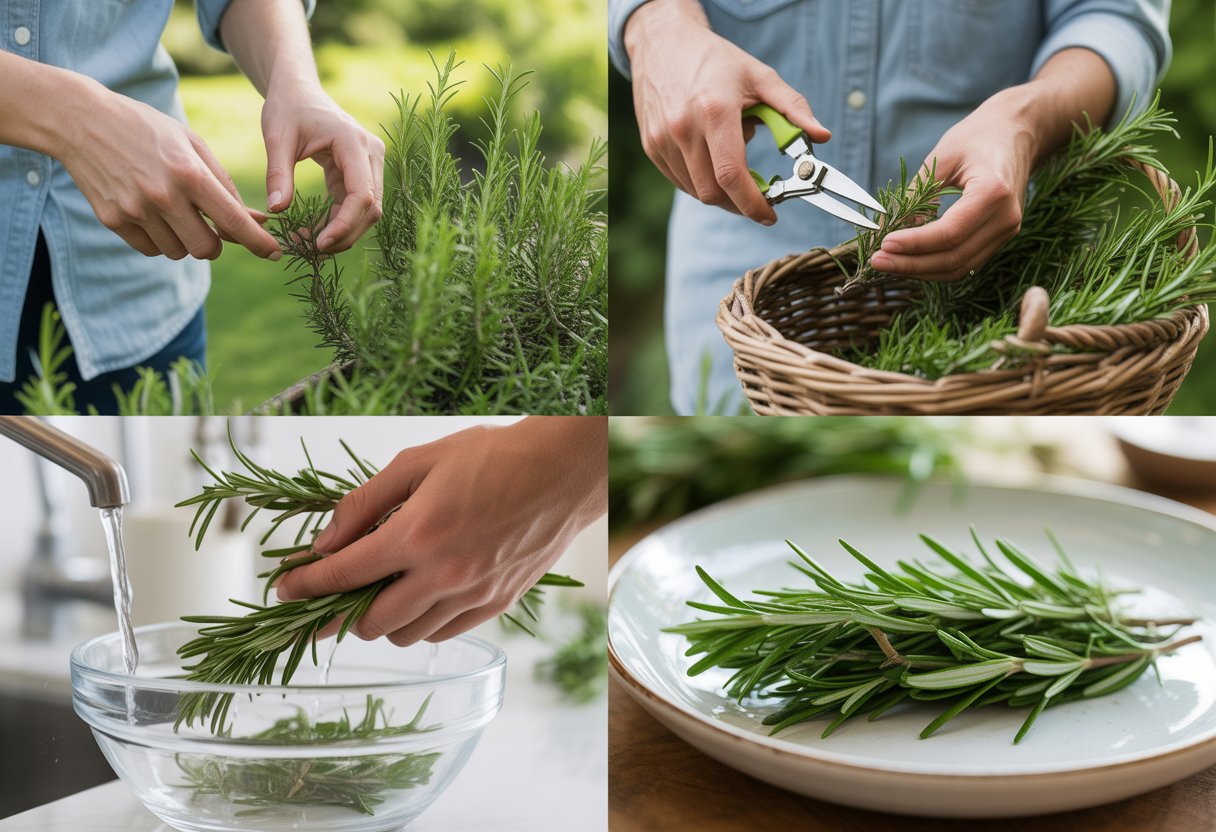
Harvesting rosemary at the right time keeps the plant healthy and gives you the best flavor. If you’re into those blue flowers, there are a few tricks to get more blooms, and some easy ways to keep your harvest fresh longer.
When and How to Harvest
Snip rosemary (Rosmarinus officinalis) right before it flowers—late spring or early summer is usually prime time. That’s when the oil content is at its peak.
Don’t take more than a third of the plant at once. Too much at once can stress it out.
Use sharp, clean scissors or pruning shears. Cut 4-6 inch sprigs from the top.
Cut just above a leaf node to encourage bushier growth. Early morning is best for harvesting—cooler temps help keep the oils in the leaves.
Encouraging Blue Flowers
Those blue rosemary flowers look great and bring in pollinators. To get more blooms, make sure your plant gets full sun (6-8 hours a day) and the soil drains well.
Don’t overdo it on fertilizer—too much nitrogen means more leaves, fewer flowers.
Regular harvesting encourages flowering and keeps the plant from turning woody. If flowers fade, snip them off quickly to push out new buds.
You’ll see the most flowers in spring, but with a little care, you might get blooms here and there through summer.
Preserving and Using Rosemary
You can keep fresh rosemary in the fridge for up to two weeks. Just wrap the sprigs in a damp paper towel and tuck them inside a plastic bag—simple enough, right?
If you want to store it longer, try freezing the sprigs. They actually hold onto their flavor pretty well in the freezer.
Drying rosemary is another classic move. Hang the stems upside down somewhere cool and dark, and make sure there’s a bit of airflow.
Once the leaves crumble easily between your fingers, you’re good to go. Toss the dried leaves into an airtight container to help them keep their oils.
Rosemary packs a punch with its strong, piney flavor. I love it with roasted meats, veggies, or even infused in oils or vinegars.
Both fresh and dried rosemary can really elevate a recipe. Dried rosemary is a bit more intense, so you’ll want to use less of it.