Top Spring Bulbs for Pollinators Boosting Garden Biodiversity and Health
Last updated: September 10, 2026
Spring bulbs really matter for early-season pollinators. They offer up nectar and pollen when almost nothing else is blooming.
If you want to help out pollinator populations, it’s worth focusing on bulbs that attract bees, butterflies, and other helpful bugs.
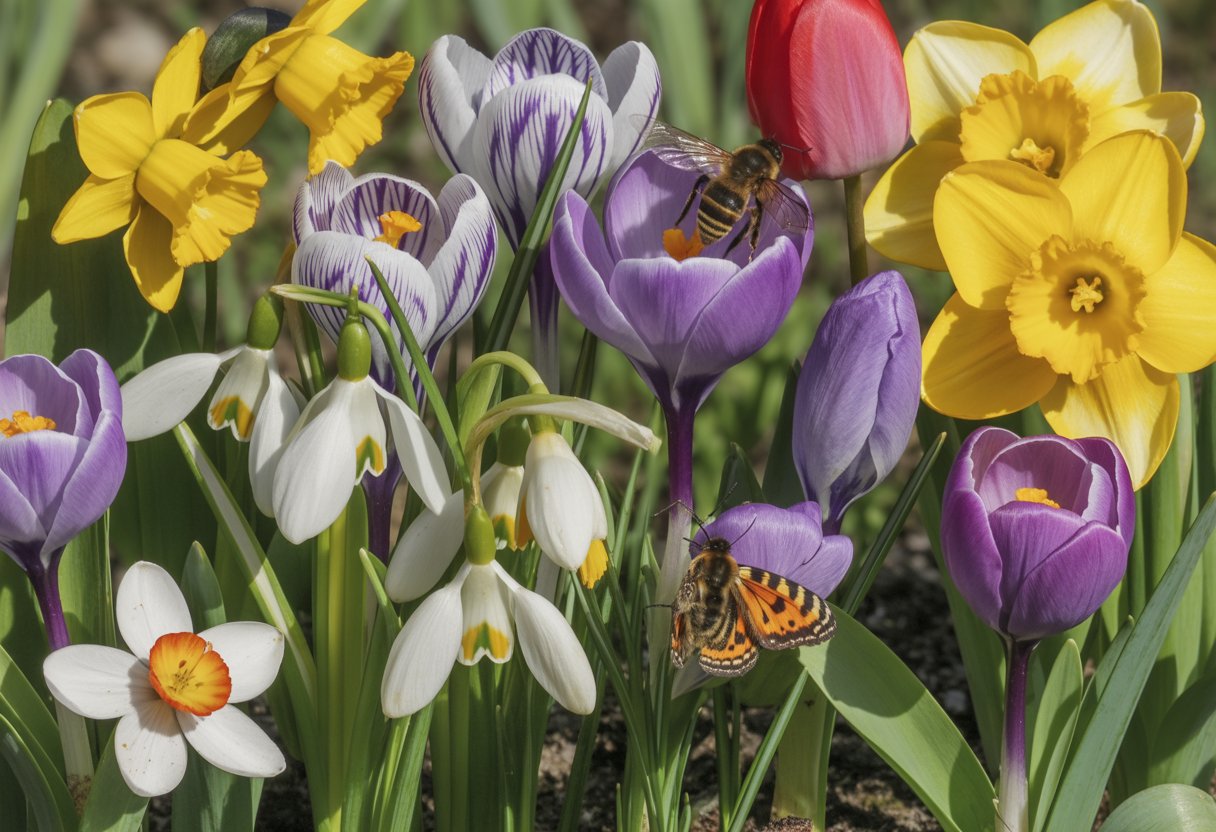
Crocus, snowdrops, and grape hyacinths are some of the best spring bulbs for drawing pollinators. They bloom early and become a lifeline for insects just waking up from winter.
Adding these bulbs doesn’t just make a garden look better. It also gives pollinators a fighting chance.
Why Spring Bulbs Are Essential for Pollinators
Spring bulbs show up when most flowers are still holding back. They’re a lifeline for pollinators emerging from winter, offering up nectar and pollen before anything else.
This early support really helps pollinators get going again.
Early Season Nectar and Pollen
When it’s still chilly and food is scarce, spring bulbs bloom anyway. Bees, butterflies, moths, and even hummingbirds start foraging as soon as these flowers appear.
Crocuses, snowdrops, and aconites pop up early and provide loads of pollen and nectar. These resources help pollinators recover from winter’s toll.
Without early blooms, pollinators might not make it through the season.
Supporting a Diversity of Pollinators
Not every pollinator wants the same thing. Spring bulbs offer different flower shapes and nectar types, so there’s something for everyone.
Bees go for the pollen, while butterflies and hummingbirds chase nectar. Some moths even show up at dusk.
Mixing different bulb species keeps the menu open for all sorts of pollinators.
Role in a Pollinator Garden
Spring bulbs kick off the food supply in any pollinator garden. They fill the gap before summer flowers get going.
If you plant bulbs in groups, pollinators notice them more easily. Pair bulbs with shrubs and native plants to keep the food and shelter coming.
That way, pollinators don’t have to rely on invasive plants or exotics.
Top Spring Bulbs for Attracting Pollinators
Some spring bulbs really stand out for early-season pollinators. They offer up nectar and pollen when almost nothing else is available.
Their bloom times and flower shapes work well for bees, butterflies, and other insects.
Crocus: Early Blooms for Bees
Crocus bulbs bloom super early, sometimes pushing up through the last bits of snow. Bees spot those bright, cup-shaped flowers and make a beeline for them.
Crocus flowers come in all sorts of colors, but they’re always easy for bees to access. They look great in lawns, borders, or under trees.
Planting crocus in clumps makes them more visible, which means more bees find them.
Allium: Ornamental Onions for Butterflies
Alliums, also called ornamental onions, send up big, globe-shaped flower clusters. Butterflies love them.
They bloom a bit later in spring, so they pick up where crocus leaves off. Alliums need sun and well-drained soil.
Their tall stems and round blooms look cool and bring in pollinators. Different allium types bloom at different times, so you get a longer stretch of flowers for pollinators.
Hyacinth and Grape Hyacinth
Hyacinths and grape hyacinths bloom in mid-spring with dense clusters of flowers. Hyacinths have a strong scent that draws pollinators from all over.
Grape hyacinths bloom a bit later and have smaller flowers, which are perfect for tiny pollinators. Both bulbs like sun and well-drained dirt.
Their purple and blue tones add color and attract even more pollinators. Try planting them next to other spring flowers to keep nectar coming.
Siberian Squill and Glory-of-the-Snow
Siberian squill (Scilla siberica) and Glory-of-the-Snow (Chionodoxa) are tiny but mighty. They bloom super early with bright blue flowers.
Bees love them for their first sips of nectar and pollen. These bulbs spread out and make a nice ground cover.
They can handle a bit of shade, especially under trees. Their early flowers fill a gap before bigger bulbs open up.
Their low-growing style even gives early pollinators a little shelter from wind and rain.
Additional Beneficial Bulbs and Related Plants
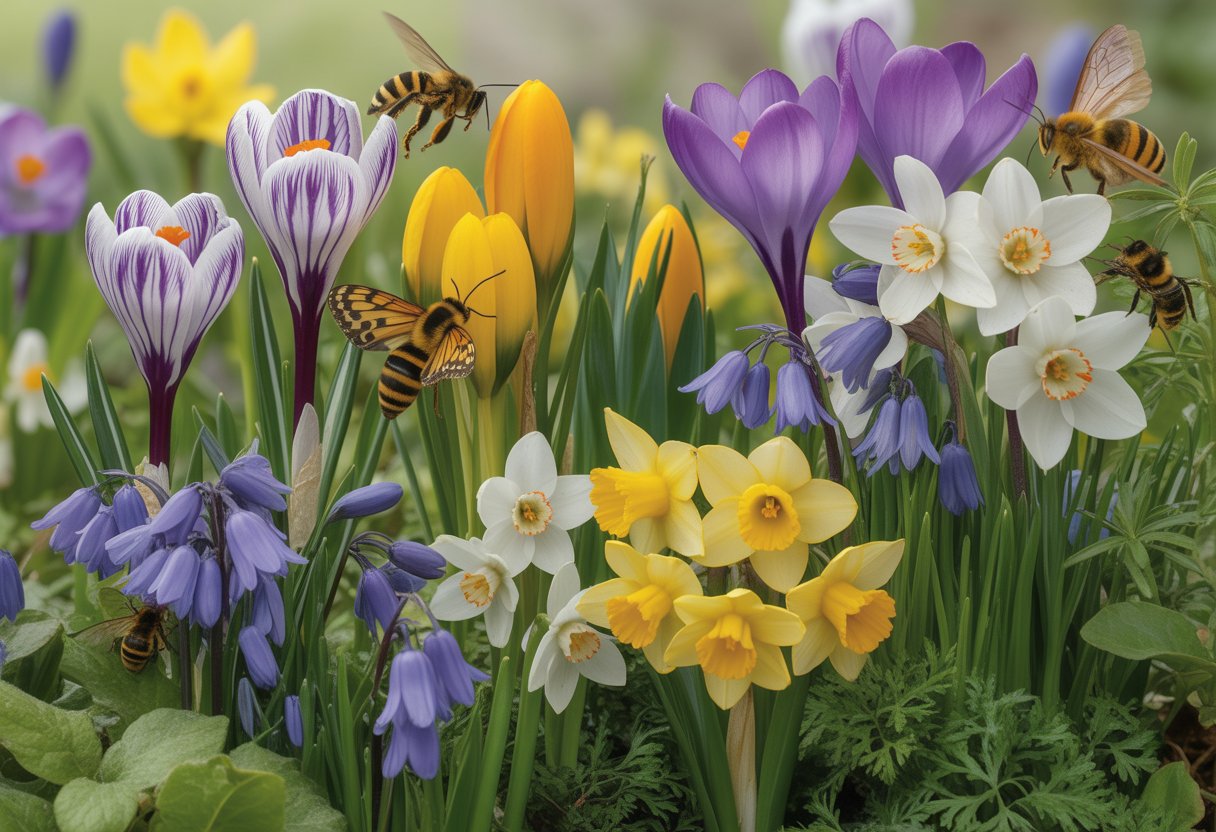
Lots of bulbs and spring-flowering plants offer valuable nectar and pollen for pollinators just waking up. Their different bloom times and flower shapes help a pretty wide range of insects.
Daffodil and Tulip Varieties
Daffodils (Narcissus) don’t usually top the pollinator charts because they don’t offer much nectar. Still, some wild types with simple flowers give early bees a little help.
Bright yellow blooms stand out in late winter or early spring and signal insects to come check them out.
Tulips (Tulipa) are hit or miss for pollinators. Single, open types let bees get to the good stuff, but double-flowered or heavily hybridized ones can be tough for insects to use.
Early tulips attract bees, especially bumblebees, when not much else is open. If you want to help pollinators, go for species tulips or classic garden types instead of fancy hybrids.
Fritillaria, Crown Imperial, and Quamash
Fritillaria bulbs have nodding, bell-shaped flowers with visible pollen and nectar. Bumblebees and solitary bees show up for these.
Crown Imperial (Fritillaria imperialis) has big, strong-smelling flowers that attract carpenter bees and other large pollinators. Their height and bold look add something different to a pollinator garden.
Quamash (Camassia) blooms later in spring with starry flowers on tall stems. Native bees especially like them for their rich nectar and pollen.
Snowdrops, Winter Aconite, and Spanish Bluebells
Snowdrops (Galanthus) bloom super early, sometimes in late winter. Their little flowers still manage to draw honeybees and solitary bees.
Winter Aconite (Eranthis hyemalis) pops up with bright yellow, cup-shaped blooms close to the ground. Early pollinators can’t resist their easy access to nectar.
Spanish Bluebells (Hyacinthoides hispanica) bloom mid-spring with fragrant, bell-shaped flowers. Bees and butterflies come for the nectar, especially after snowdrops and aconites finish up.
Cyclamen, Persian Buttercup, and Freesia
Cyclamen species bloom from late winter into early spring, with nodding flowers that bumblebees pollinate. Their tubers help them survive and offer shelter for early insects.
Persian Buttercup (Ranunculus asiaticus) produces bold, cup-shaped blooms in mid-spring. Hoverflies, small bees, and other insects use them for nectar and pollen.
Freesias bloom later in spring with tubular, fragrant flowers. Their scent and color bring in butterflies and bees just as the season shifts.
Best Practices for Planting and Caring for Spring Bulbs
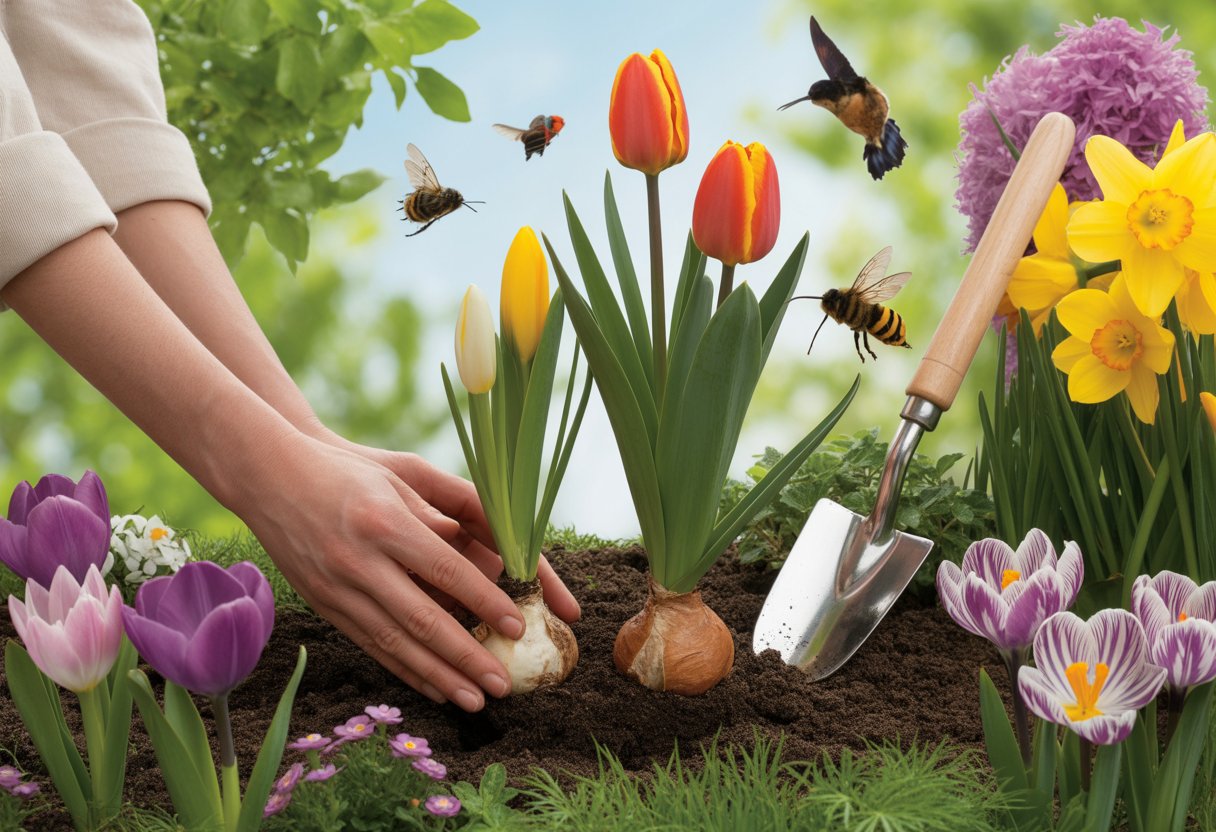
To get the best from spring bulbs, pay attention to soil conditions, moisture, and cold protection. Good care helps bulbs grow strong roots and healthy flowers that pollinators notice.
A little planning with planting techniques and maintenance goes a long way.
Soil, Moisture, and Mulch
Spring bulbs prefer well-draining soil with a pH between 6.0 and 7.0. Bulbs rot in heavy clay or soggy spots.
Add compost to loosen soil and give bulbs more nutrients. Keep the soil moist after planting, but don’t drown the bulbs.
Once they’re dormant, bulbs like things a bit drier. Mulch with 2-3 inches of bark or straw to keep the soil cool, hold in moisture, and block weeds.
Planting Techniques with Bulbs, Corms, and Rhizomes
Each type—bulbs, corms, rhizomes—has its own planting needs. Plant bulbs two to three times as deep as their height, pointy end up.
Corms go in at a similar depth but sometimes a bit shallower. Rhizomes should lie flat just below the surface.
Space bulbs out: tulips need about 4-6 inches, daffodils can go a little closer. Firm the soil to get rid of air pockets.
Water right after planting to settle everything in.
Cold Treatment and Frost Protection
Most spring bulbs need a cold spell to break dormancy and bloom well. If you’re in a warm place or planting late, you can chill bulbs in the fridge at 35-48°F for 8-12 weeks.
Before shoots show up, cover bulbs with fabric or mulch to protect them from late frosts. Once you see growth, pull back heavy mulch to avoid mold.
Keep an eye on soil temps so bulbs don’t get stuck in a freeze-thaw cycle. It’s a bit of work, but the payoff is worth it when pollinators start buzzing in.
Fertilizer, Bulb Catalogs, and Maintenance
Start with a low-nitrogen, phosphorus-rich fertilizer when you plant bulbs. Something like a 5-10-10 formula really helps roots, stems, and flowers get off to a strong start.
Don’t go overboard with fertilizer, though. Too much nitrogen just makes the leaves go wild and leaves you with fewer blooms.
I always check out a few trusted bulb catalogs before buying. They usually list species that do well locally and help pollinators, which is a nice bonus.
Once the flowers finish, let the foliage yellow and die back on its own. This step helps the bulbs store up energy for next year.
Every few years, if the bulbs start getting crowded, it’s time to divide them. I usually do this every 3-4 years to keep everything healthy and growing well.