Composting Tips for New Mexico Gardeners: Essential Practices for Optimal Soil Health
Last updated: September 4, 2026
Composting in New Mexico isn’t exactly a walk in the park. The dry climate and those relentless high temperatures can make things tricky.
Gardeners have to get creative—moisture retention and encouraging decomposition become top priorities. Honestly, the secret to successful composting here is all about managing water wisely and picking the right stuff for your pile.
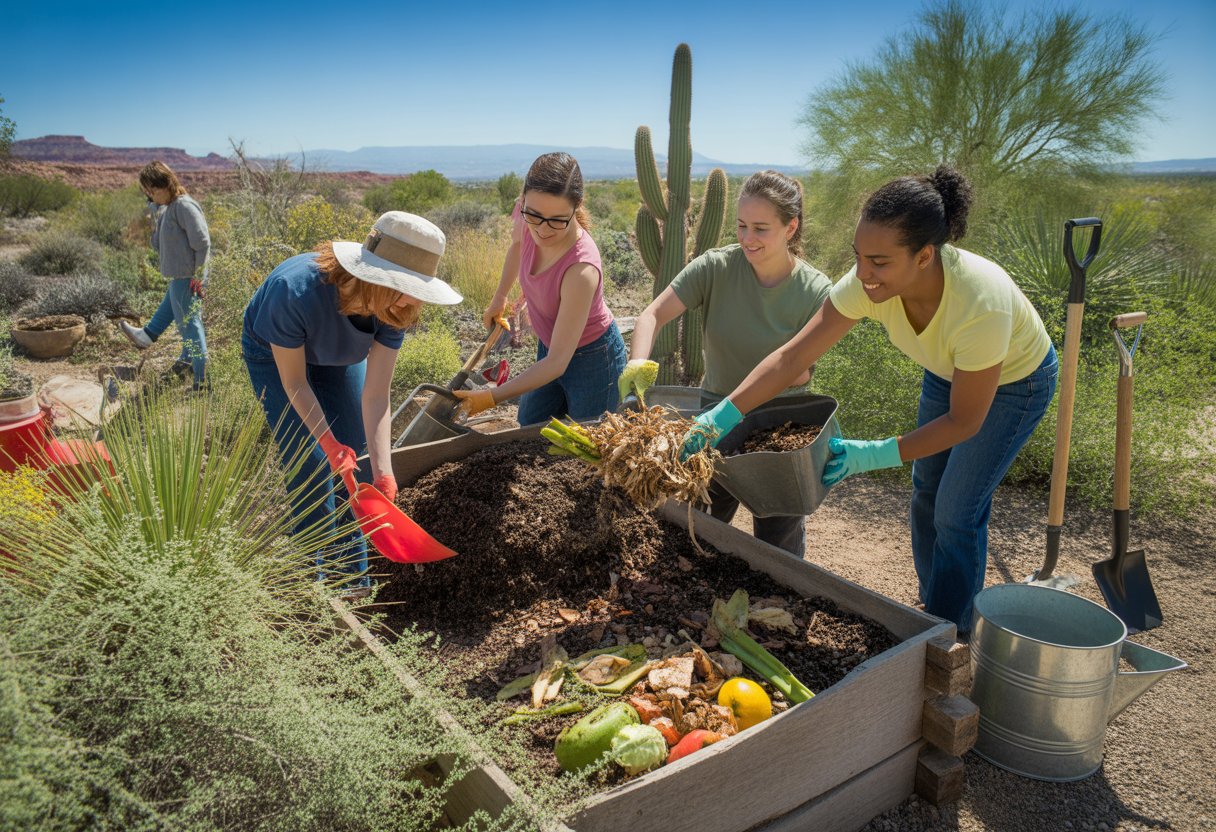
It’s a balancing act: green and brown materials need to stay damp, but not soggy, to keep those microbes happy. I’d suggest using some shade and maybe even a windbreak, since the sun and wind will dry things out in no time.
If you understand what your local soil and weather are up to, you can whip up compost that actually helps your garden thrive in New Mexico’s tough environment.
Understanding Composting in New Mexico
Composting here means paying close attention to the climate and whatever resources you can get your hands on. Local experts can really help if you want to improve soil health and keep your garden going strong in the arid heat.
Challenges of New Mexico’s Climate
The dry air in New Mexico slows down natural decomposition. Humidity is low, and those high temps can dry out a compost pile before the microbes even get started.
Wind is another headache—it’ll blow away anything light or dusty. To keep things moist, gardeners tend to water their piles regularly and throw on a tarp or mulch to help trap humidity.
Getting the right mix of green (nitrogen) and brown (carbon) materials matters a lot. Shredded leaves, grass clippings, and food scraps mixed with dry twigs or even paper seem to work pretty well for most folks.
The Benefits of Composting for Soil Health
Compost can transform New Mexico’s sandy, nutrient-poor soil into something plants actually want to grow in. It locks in moisture and nutrients, which is a big deal when water’s always scarce.
When you add mature compost, you boost microbial life in the soil. That means stronger roots and less need for chemical fertilizers.
People who compost regularly swear their plants look healthier and bounce back from stress faster. Compost also helps the soil hold water longer, so you don’t have to irrigate as much.
Role of New Mexico State University and Local Experts
New Mexico State University (NMSU) steps up with research-based composting tips. Their extension horticulture folks run workshops and hand out guides tailored for the local crowd.
NMSU shares advice on compost pile setup, where to find organic materials nearby, and how to manage water. They even help troubleshoot the weird issues that pop up in this climate.
Local experts and community programs often team up with NMSU, passing along what works best here. If you’re stuck, the extension offices can help you figure out composting solutions that actually fit New Mexico’s quirks.
Starting and Maintaining a Compost Pile
Getting a compost pile going takes some thought—where you put it, what you toss in, how wet it stays, and whether it heats up enough. Each piece affects how quickly you’ll get good compost.
Selecting the Right Composting Site
Pick a spot that makes your life easier and keeps the pile happy. Look for a level area with some shade during the hottest hours, so it doesn’t dry out too fast.
If you can, set up near a water source. Good drainage matters too—standing water will just slow everything down. Try not to put it right next to the house, unless you like dealing with pests and weird smells.
Balancing Food Scraps, Manure, and Yard Waste
You’ll want a mix of “greens” like kitchen scraps and manure, and “browns” like dry leaves or yard waste.
Aim for about a 30:1 carbon-to-nitrogen ratio. Too much green stuff? You’ll get odors. Too much brown, and the pile just sits there.
Chop or shred bigger pieces to speed things up. Skip diseased plants, pet waste, and a lot of meat or dairy—those just invite trouble.
Managing Moisture, Drainage, and Aeration
Think damp sponge—about 40-60% moisture. If it’s too dry, the microbes go dormant. Too wet, and you’ll get a stinky, slimy mess.
Make sure water drains away. Turn the pile now and then to let air in; microbes need oxygen just as much as water.
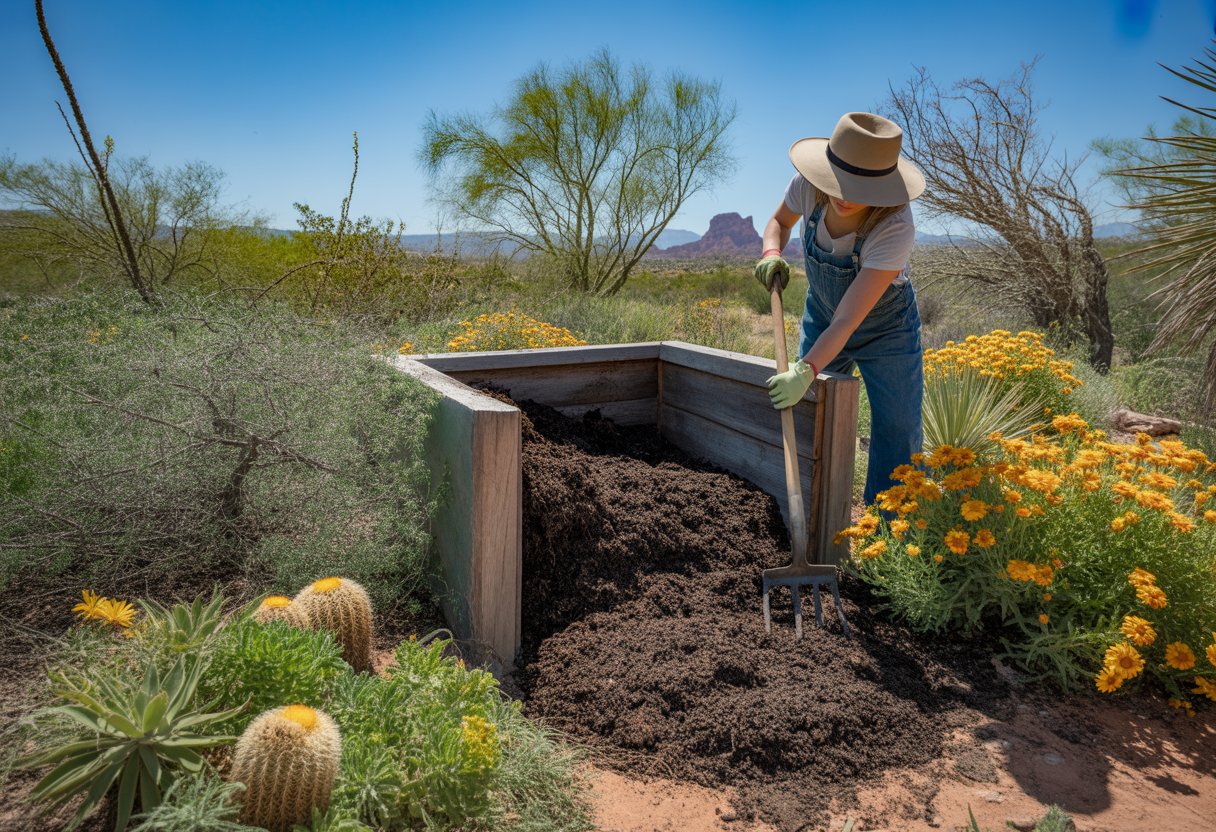
Turning every week or two usually does the trick. A pitchfork or compost aerator works well for mixing and breaking up clumps.
Monitoring Temperature and Decomposition
Temperature tells you if the pile’s working. A good compost pile can hit 130-160°F in just a few days.
Grab a compost thermometer and check the heat inside. If it’s holding steady over 140°F, you’re in business, but don’t let it climb past 160°F or you’ll lose the good microbes.
If the pile stays cold, it probably needs more green material, water, or air. When the temperature drops and stays low, that means it’s almost done and ready for the garden.
Optimizing Compost for New Mexico Gardens
To get the best compost for New Mexico gardens, pay attention to what goes in and keep pests in check. Good habits make sure your compost boosts soil quality without bringing in weeds or critters you don’t want.
Maximizing Nutrient Content with Organic Matter
Mixing lots of different organic materials is key for nutrient-rich compost. Toss in green stuff like veggie scraps and grass, plus browns like dried leaves and wood chips.
That balance keeps nitrogen and carbon in check and helps things break down. In this dry climate, mulch—especially wood chips—helps keep garden beds moist.
Keep your compost pile damp and turn it often. That keeps microbes busy, stops bad smells, and spreads nutrients around.
Spread finished compost in your veggie beds to boost fertility, improve the soil’s structure, and help it hold water. Do this regularly, and you’ll probably use a lot less synthetic fertilizer—and your garden will thank you.
Addressing Weed Seeds and Pests
Hot composting works best if you want to kill weed seeds and pests. You’ll need to keep the inside of your pile between 130°F and 160°F for several days—yeah, it’s a bit of a commitment, but it really does sterilize the material.
Check the temperature with a compost thermometer, and don’t forget to turn the pile often. That way, the heat spreads evenly and does its job.
If your compost doesn’t get hot enough, some weed seeds might survive and sneak into your garden later. Spreading mulch over your beds after adding compost can help smother any stubborn weeds and give your young plants a fighting chance.
Skip meat, dairy, and greasy scraps in your compost to keep pests away. When you keep the pile balanced and turn it for air, rodents and insects are less likely to show up.
Honestly, a little attention to compost management goes a long way. You can keep your garden healthy without reaching for chemical fixes.