Best Soil for Joe Pye Weed Growth to Maximize Health and Blooming
Last updated: September 4, 2026
Joe Pye weed really likes soil that’s moist, well-draining, and packed with organic matter. The ideal soil for Joe Pye weed is loamy with consistent moisture and a slightly acidic to neutral pH between 5.5 and 7.0. That combination helps roots dig in deep and keeps the plant looking lively.
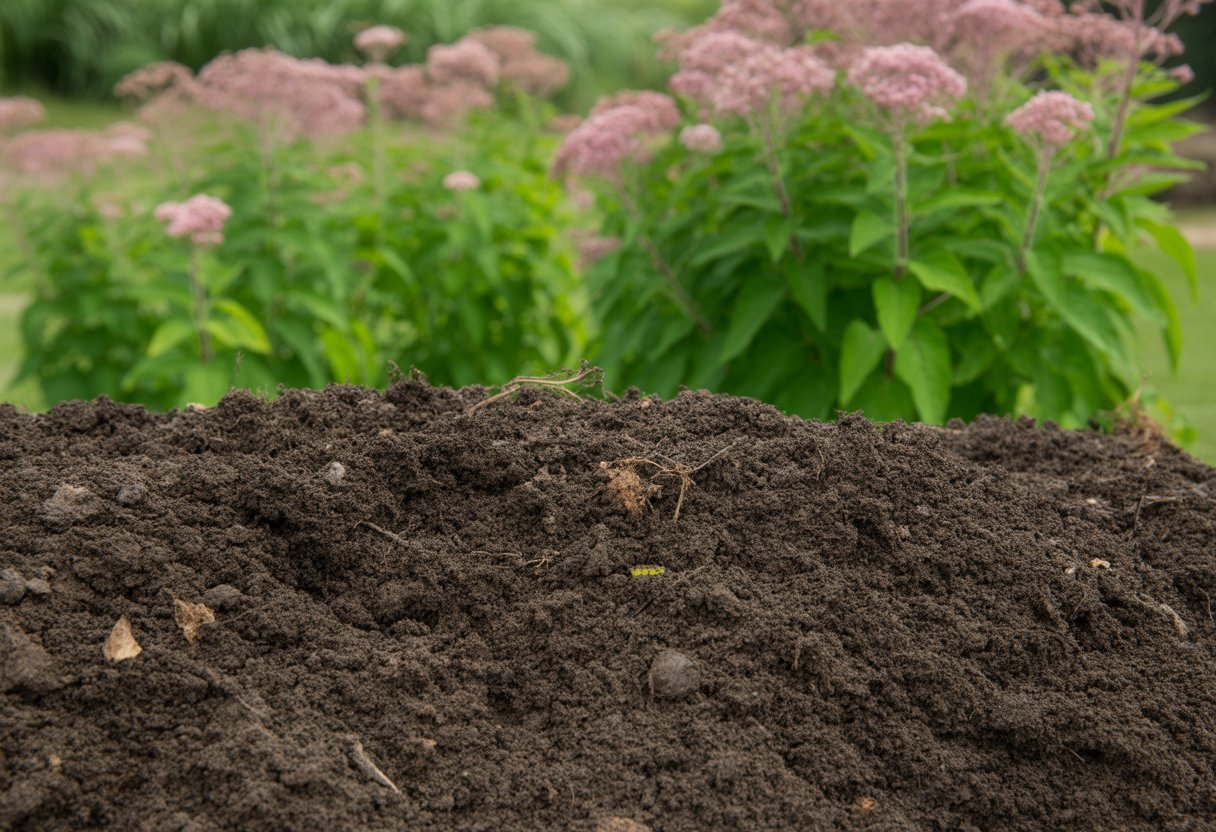
Joe Pye weed copes with a range of soils, but it struggles in dry or compacted ground. If you want those tall, robust stems, focus on soil that holds moisture but still lets excess water escape so roots don’t rot.
Essential Soil Characteristics for Joe Pye Weed Growth
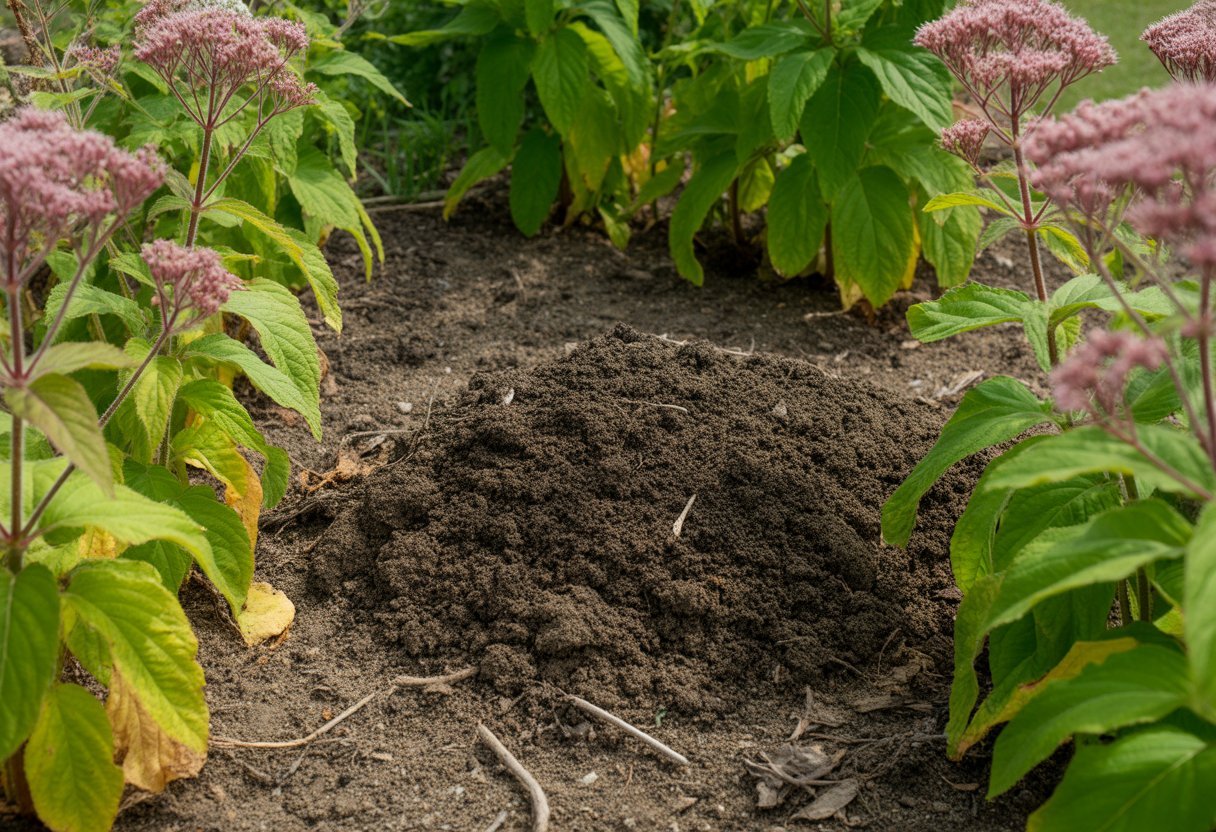
Joe Pye weed (Eutrochium maculatum) really takes off when you get the basics right: moisture, nutrients, and the right texture. Give it these, and you’ll see those classic pink blooms pop up everywhere.
Ideal Soil Type
This plant likes rich garden soil with a loamy texture. Loam is that sweet spot—enough sand, clay, and silt to drain well but still keep moisture around.
Clay soils can work if they aren’t packed solid, but pure sand dries out too fast and just doesn’t feed the plant enough. Joe Pye weed grows best in fertile, well-drained soil that holds onto water but doesn’t drown the roots.
Soil Moisture and Drainage
Joe Pye weed loves moist soil and often grows wild near marshes or in meadows. It needs evenly moist soil for healthy growth.
If the soil dries out between waterings, the plant looks stressed and stops blooming as much. But here’s the catch—too much water and soggy roots will cause rot. You want a balance: moist, but not waterlogged. Adding compost helps with that.
Nutrient Requirements
Joe Pye weed is a hungry plant—it needs soil rich in organic matter to shoot up tall and put out lots of flowers. The soil should have good levels of nitrogen, phosphorus, and potassium.
Mixing in compost or rotted manure really boosts the soil. If the ground’s poor, you’ll see weaker stems and fewer blooms. Keeping up soil fertility is pretty much non-negotiable if you want this perennial to thrive year after year.
Optimizing Soil for Healthy Joe Pye Weed Development
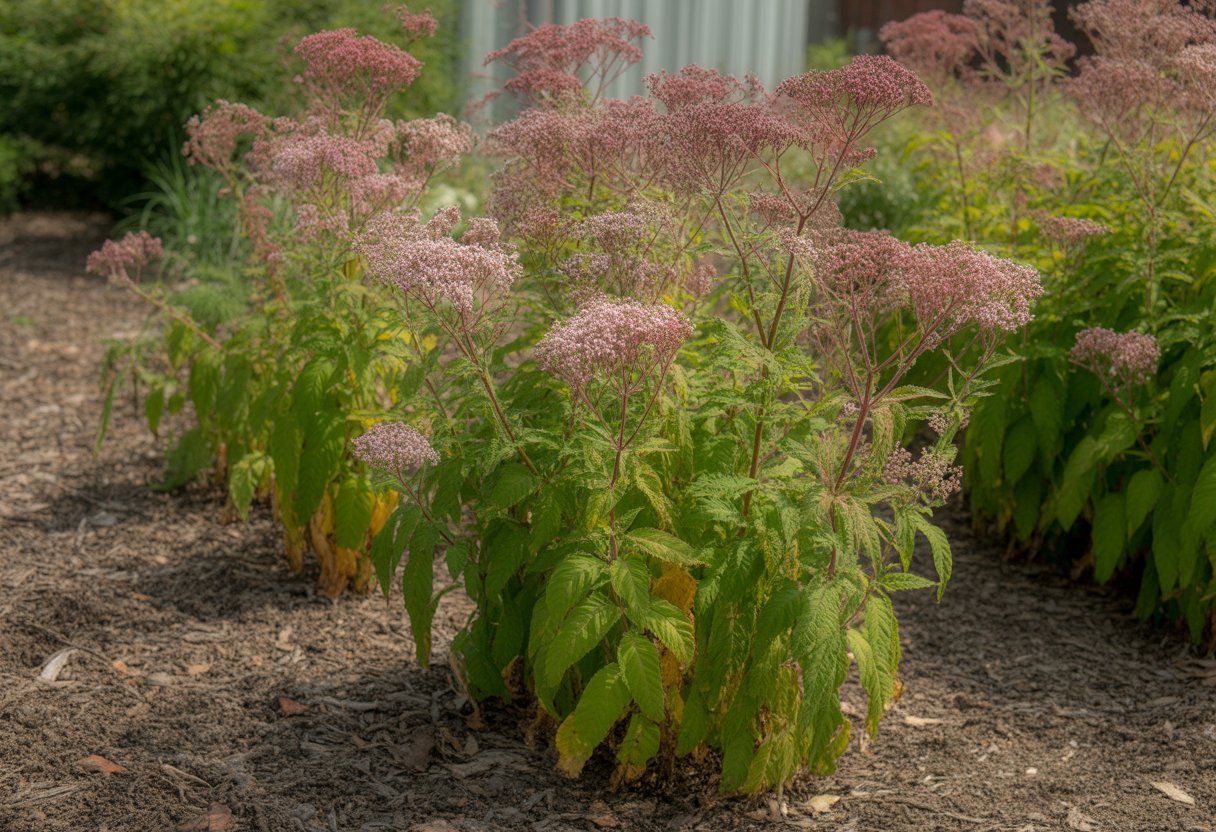
Joe Pye weed does best when you balance moisture, light, and soil. Prepping the spot properly gives it a great start, especially in rain gardens or cottage gardens where it naturally fits.
Amending Soil for Best Results
The best soil for Joe Pye weed stays moist, has plenty of organic matter, and drains well. Loam is ideal—it holds water but doesn’t get bogged down.
If your soil’s sandy, toss in some compost or peat moss to help it hold water. For heavy clay, add coarse sand or more organic material to open it up and help roots spread. Checking the soil pH is worth the effort; Joe Pye weed likes it slightly acidic to neutral, about 6.0 to 7.0.
Prepping the soil before planting makes a big difference for roots and nutrients. That’s even more true in rain gardens, where you want to keep things moist but not swampy.
Location and Light Requirements
Joe Pye weed can handle full sun to part shade, but it’s happiest in spots with sun or partial shade. In full sun, you’ll need to water more to keep it from drying out.
For home gardens, putting the plant where it gets morning sun and a bit of afternoon shade can really help it bloom. Partial shade keeps the soil moist, which is handy in hot areas or if your soil is sandy.
Give each plant enough space—about 24–36 inches apart—to let air move and keep diseases down. Crowding just makes things harder for both the plant and you.
Watering and Mulching Practices
Joe Pye weed wants steady moisture, so you’ll need to water during dry spells. It’s right at home in rain gardens, where the soil stays wet but not flooded.
Mulch helps a lot. Use shredded bark or leaf mold to lock in moisture, keep weeds out, and keep the soil cooler. A 2–3 inch layer works, but don’t pile it up against the stems or you’ll risk rot.
Consistent watering and a good mulch layer keep the plant happy. It just doesn’t like to dry out, so don’t let it go thirsty.
Planting, Propagation, and Maintenance Tips
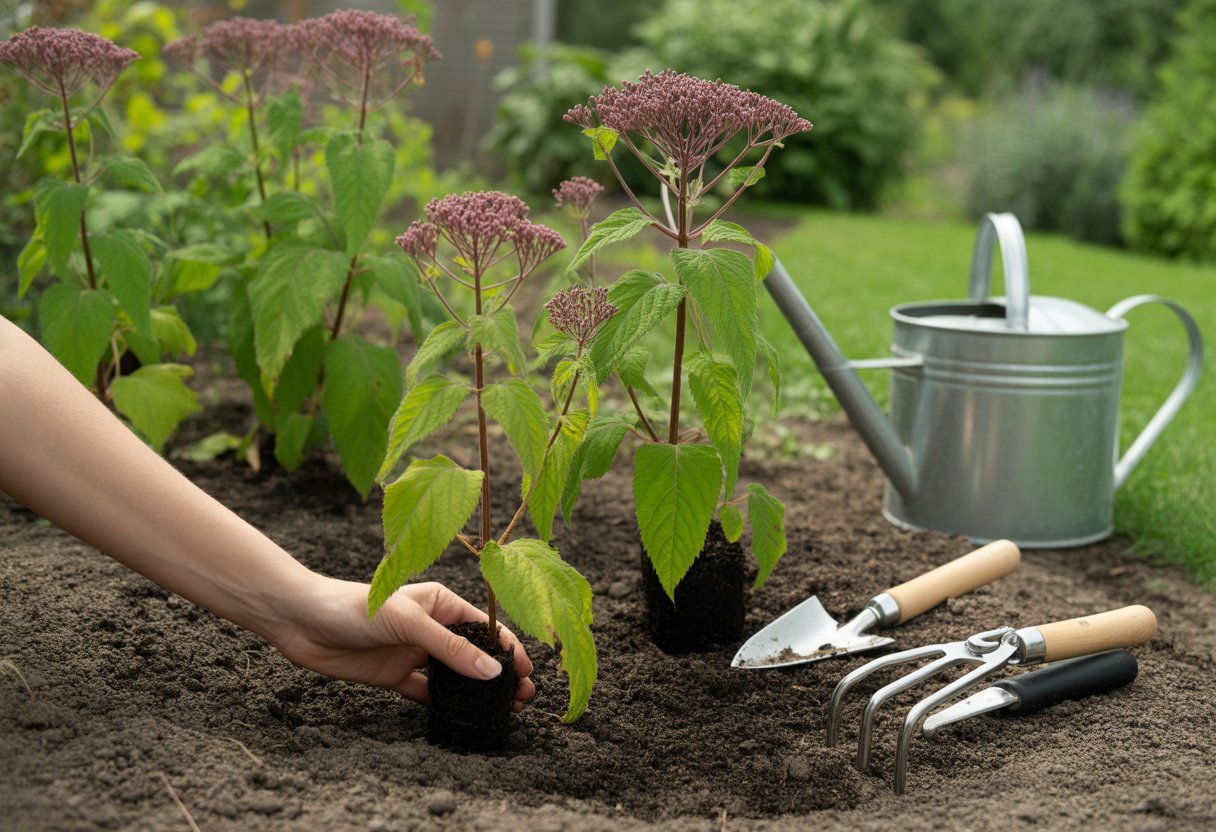
Joe Pye weed rewards a bit of extra attention, especially when you’re starting from seed or dividing established clumps. Knowing how to handle germination and seasonal care makes all the difference, especially for types like ‘little joe’ and baby joe.
Seed Germination and Moist Stratification
Joe Pye weed seeds need moist stratification to wake up. Keep them in a damp medium near freezing for about 30 days—that’s what they’d get in nature.
Sow seeds in early spring after stratifying them. Just barely cover them; they need some light to sprout. Keep the soil moist but not soaked.
Spotted joe-pye weed (Eutrochium purpureum) especially benefits from this. Expect germination in 2 to 4 weeks if you keep conditions right, and thin or transplant seedlings once they have their first true leaves.
Vegetative Propagation and Root Systems
Joe Pye weed grows a fibrous root system that makes division pretty straightforward. Early spring is the best time to divide or take cuttings, especially for sweet joe pye weed and similar varieties.
Cut healthy stems or split up big clumps, making sure each piece has roots. Pinching back new shoots during the season encourages bushier growth and more blooms.
The roots spread out but don’t take over the garden, so it’s easy to manage. Plus, deer tend to leave it alone, which is always a win.
Seasonal Care and Pruning
Joe Pye weed doesn’t need much pruning. Pinch it back in late spring or early summer before it starts flowering to make it fuller and less leggy.
Snip off faded flower heads in late summer if you want it to look tidy. In fall, cut the whole plant down to the ground after the leaves die back—this helps keep diseases away and gets it ready for winter.
You’ll usually see those fragrant, trumpet-shaped flowers from August to September. They’re great for cut flowers too. Just keep the soil moist and give it enough light for the best results.
Environmental Benefits and Landscaping Uses
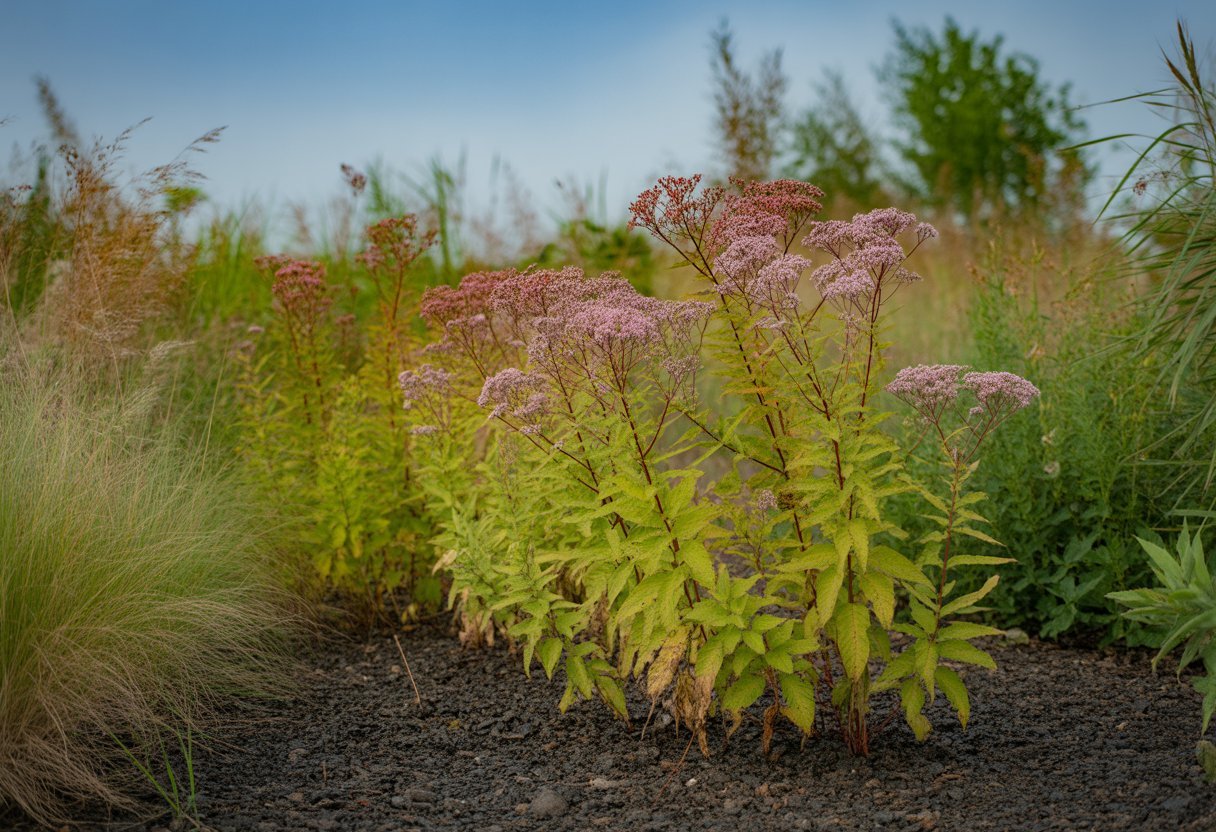
Joe Pye weed fits right into natural gardens and eco-friendly landscapes, especially in wetter spots or planting zones that get plenty of rain. It’s a real asset for wildlife and pollinators.
Wildlife and Pollinator Attraction
Joe Pye weed is famous for attracting butterflies and pollinators. It blooms from late summer into fall, offering nectar when not much else is around.
In the eastern U.S., you’ll see monarchs, swallowtails, and plenty of bees visiting the flower clusters. It also pairs well with boneset, another native, boosting biodiversity.
Having Joe Pye weed in the garden can noticeably raise pollinator numbers, which helps nearby crops and flowers too. Isn’t that what we all want—a garden buzzing with life?
Best Garden Settings
Joe Pye weed thrives in hardiness zones 4-9. It likes moist, well-drained soils but doesn’t mind the occasional flood.
You’ll find it happy in rain gardens, along pond edges, or near streambanks where the ground stays damp. If you’ve got a spot with steady water, you’re in luck.
Because it grows tall with a sturdy frame, it works well as a backdrop in borders or at the edge of a woodland area. Just don’t stick it in bone-dry or packed-down soil—nobody enjoys that, not even this tough plant.
Pair it with native plants if you want a landscape that feels authentic and low-fuss. It even helps manage water runoff and keeps soil from washing away on slopes or near creeks.