Native Grasses for Prairie Gardens: Essential Choices and Care Tips
Last updated: September 1, 2026
Native grasses are the backbone of prairie gardens. They offer structure, resilience, and a natural vibe that non-native plants just can’t match.
They support local ecosystems by providing habitat for wildlife, improving soil health, and needing less water and maintenance than your average garden plants.
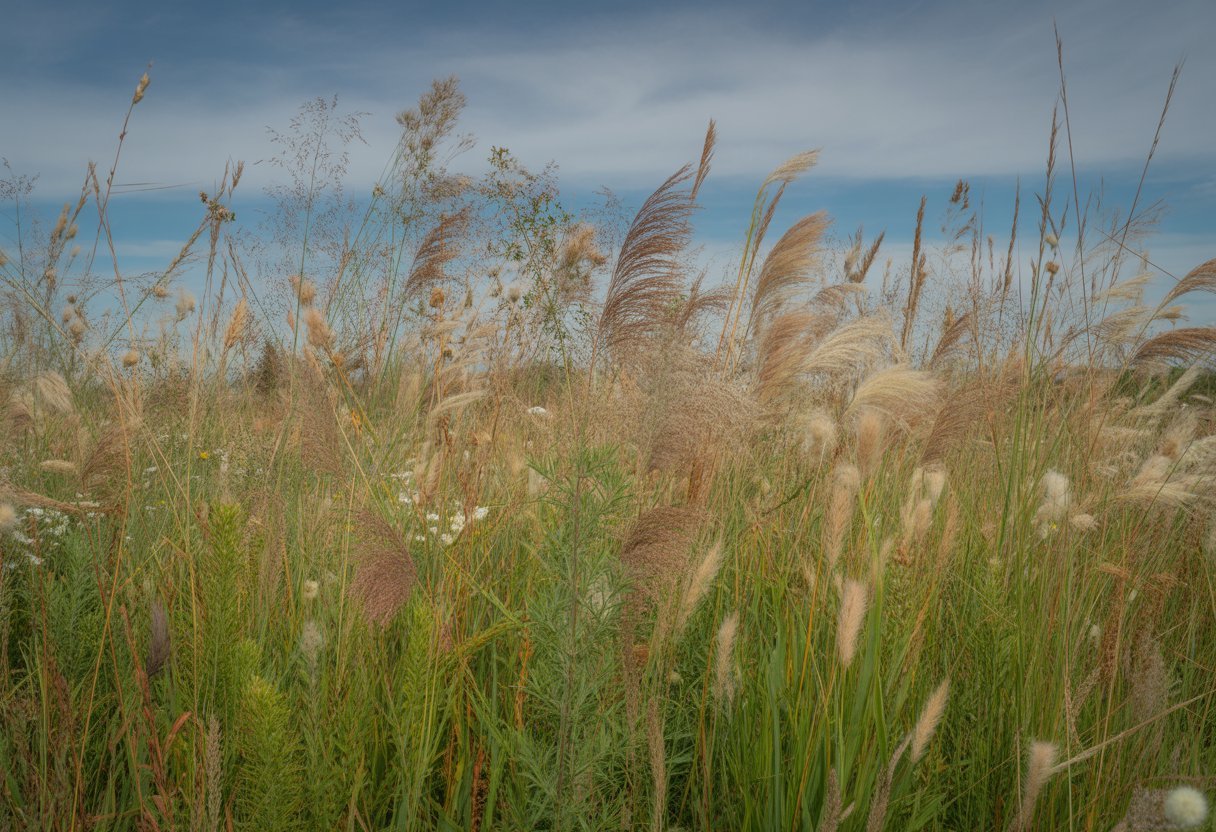
These grasses come in all sorts of heights, textures, and colors. That gives gardeners plenty of options for creating a landscape that shifts with the seasons.
Adding native grasses isn’t just about looks—it preserves regional plant heritage. Plus, it makes prairie gardens more sustainable and balanced, ecologically speaking.
Picking the right native grasses depends a lot on your local climate and soil. Still, they’re adaptable, so most folks can make them work.
Their deep roots help prevent erosion, and natural growth patterns support healthy gardens for the long haul.
The Importance of Native Grasses in Prairie Gardens
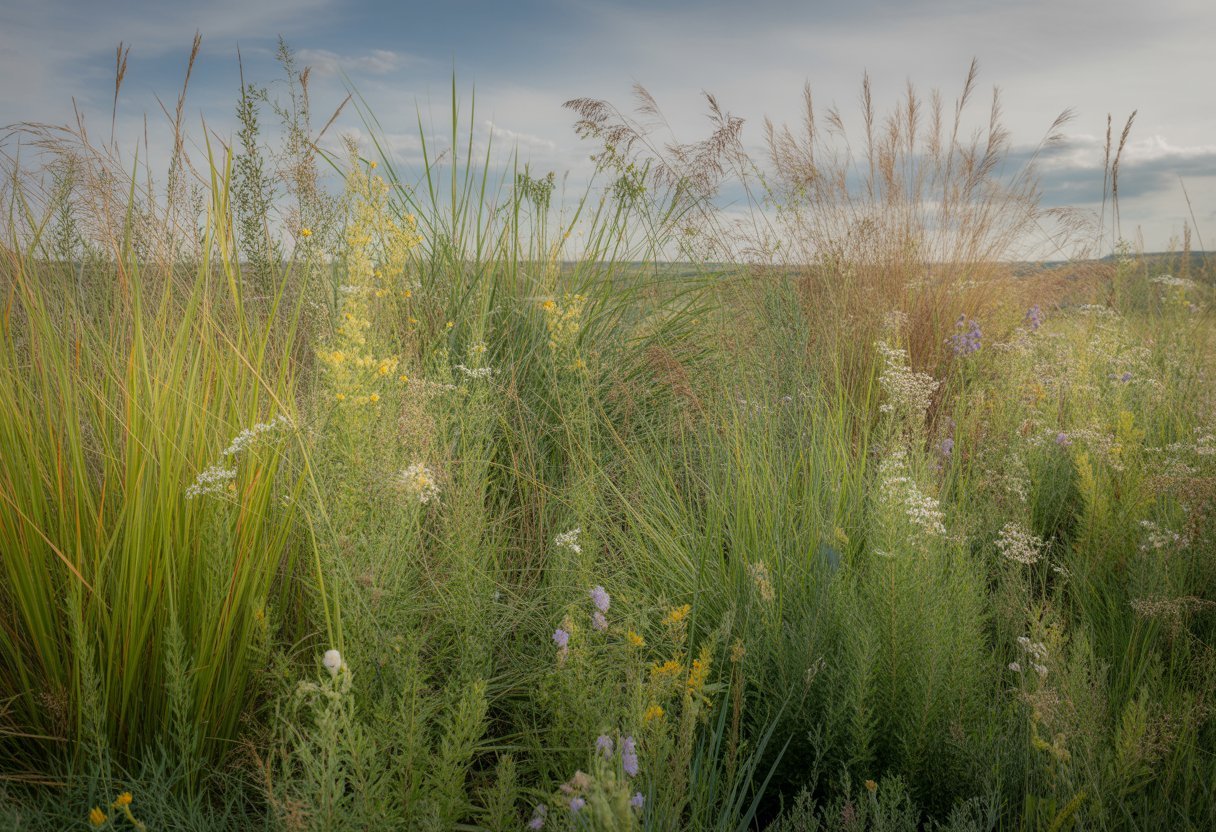
Native grasses play a huge role in keeping prairie gardens healthy. They help balance the ecosystem, improve soil, and support all kinds of wildlife.
Ecological Benefits
Native grasses thrive in prairie climates and soils. They need less water and fertilizer than non-native species, so they’re a solid choice for anyone aiming for sustainability.
Their deep roots slow down runoff and help the soil hold onto moisture, especially in dry spots.
You’ll spot pollinators and other wildlife hanging around these grasses. Certain insects and birds absolutely depend on specific prairie grass species, which makes them vital for conservation.
When you plant native species, you strengthen grassland resilience and keep those natural cycles humming along.
Soil Stabilization and Erosion Control
Native prairie grasses have roots that anchor soil and stop erosion from wind and water. If you’ve got a sloped garden or an area that loses soil easily, these grasses are a must.
Their roots go deep, making the soil structure better and boosting organic matter over time.
This natural stabilization lets water soak in, cutting down on runoff and erosion. Native grasses can even help fix up bad soil by breaking up compacted spots, letting air move through more easily.
Healthy soil, thanks to native grasses, keeps the whole prairie ecosystem productive.
Supporting Biodiversity
Native grasses bring variety to prairie gardens. Their different heights and densities create shelter and nesting spots for insects, small mammals, and birds.
These habitats matter for pollinators and other wildlife. Many native grasses bloom at different times, so there’s always something for critters to eat—nectar, seeds, you name it.
That kind of diversity encourages natural seed spreading and helps keep invasive plants in check. Boosting biodiversity with native grasses keeps prairie ecosystems lively and balanced.
Popular Native Grasses for Prairie Landscapes
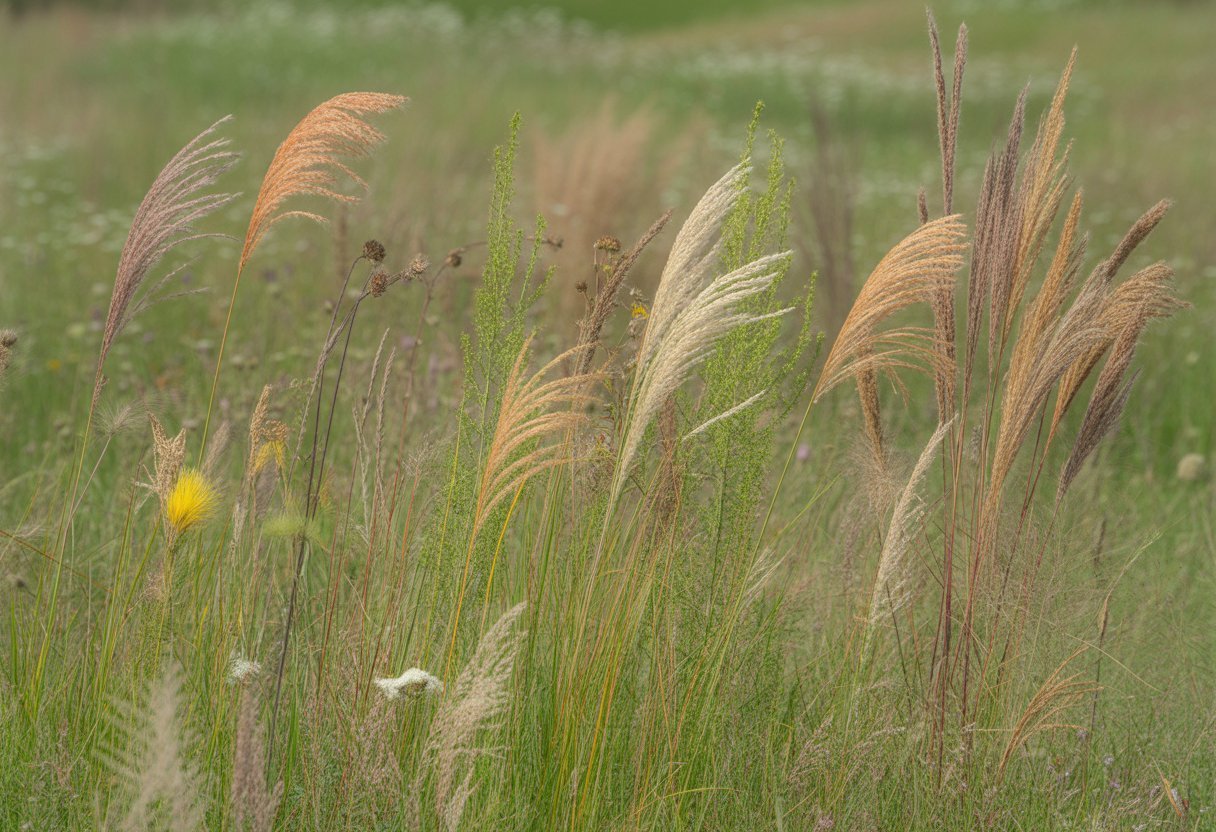
Native warm-season grasses really shine in prairie gardens. They bring texture, color, and plenty of benefits for the environment.
You’ll find all kinds of heights, seed head shapes, and growth habits, so there’s something for every landscape.
Little Bluestem
Little bluestem (Schizachyrium scoparium) stands out for its bluish-green leaves that turn reddish-orange in fall. It usually grows 2 to 4 feet tall, forming tidy clumps—great for erosion control and wildlife habitat.
Its fluffy seed heads attract birds and pollinators. Little bluestem handles a range of soils but prefers dry, well-drained spots.
It’s drought-tolerant and low maintenance, which probably explains why so many prairie gardeners love it.
Big Bluestem
Big bluestem (Andropogon gerardii) towers over most prairie grasses, reaching 5 to 8 feet. Some folks call it “porcupine grass” because the seed heads look like quills.
This grass forms thick clumps with blue-green leaves that shift to reddish-purple or bronze in fall. It likes full sun and moist, well-drained soil, but once it’s settled in, it can take some drought.
Big bluestem gives wildlife shelter and food, and it’s a mainstay in prairie restoration projects.
Prairie Dropseed
Prairie dropseed (Sporobolus heterolepis) is known for its fine, arching leaves and a sweet scent, especially when it’s hot out. It grows 1.5 to 3 feet tall, with airy green-and-gold seed heads that move with the breeze.
This grass loves well-drained, sandy or loamy soil and lots of sun. People use it for its graceful shape and slow, clumping growth.
Prairie dropseed draws in butterflies and stands up to heat. Its fall color can go from yellow to deep red—pretty striking, honestly.
Indiangrass and Side Oats Grama
Indiangrass (Sorghastrum nutans) and side oats grama (Bouteloua curtipendula) often show up together in prairies. Both are warm-season grasses, but they’re a bit different.
Indiangrass gets up to 3 to 6 feet tall, with golden-yellow leaves and fluffy seed heads. Side oats grama is shorter, around 1 to 3 feet, and has oat-like seeds that dangle from one side of the stem.
Both need full sun and well-drained soil. Indiangrass gives birds a place to perch, while side oats grama’s quirky seed heads make it easy to spot in a prairie.
Designing and Planting a Native Prairie Garden
If you want your prairie garden to thrive, you’ll need to plan ahead. Prep the site, plant thoughtfully, and pay attention to details like soil and seasonal changes.
That’s what really helps native grasses and wildflowers take off.
Site Selection and Soil Preparation
Pick a spot that gets plenty of sun—at least six to eight hours a day. Most native prairie plants just won’t do well in the shade.
Avoid places that stay soggy or flood easily. It’s worth doing a soil test to check the pH and nutrients.
Prairie plants usually like well-drained, moderately fertile soil with a pH between 6.0 and 7.0. Get rid of existing weeds and grass—solarization, herbicides, or tilling all work, depending on your style.
Don’t go overboard with compost or organic matter. Prairie plants are used to lean soils.
If the ground is compacted, give it a light till to help air get in, but don’t dig too deep or mess up the soil’s natural layers.
Planting Techniques and Germination
Sow seeds in late fall or early spring to mimic how things happen in nature. Cold winter weather helps break seed dormancy for a lot of native species.
Mix in both rhizomatous grasses (like little bluestem) and bunchgrasses (like Indian grass) for a variety of root systems.
Scatter seeds evenly over the prepared ground and press them in lightly—don’t bury them more than a quarter inch.
Keep the soil moist for the first month or so to help seeds sprout. Skip heavy mulch at first; a thin straw layer is enough to keep seeds from washing away or getting eaten.
Incorporating Wildflowers and Other Native Plants
Add a mix of wildflowers for pollinators and seasonal color. Pick Midwest natives that play well with your chosen grasses—purple coneflower, black-eyed Susan, and butterfly milkweed are all solid options.
Plant wildflowers in small clusters to mimic how prairies look in the wild and to make the colors pop. Spread them out enough to let grasses get established.
Think about bloom times so there’s always something flowering from spring through fall. Steer clear of aggressive non-natives or cultivars that don’t help local wildlife or might disrupt your prairie’s balance.
Landscape Design for Year-Round Interest
Think about structure and texture if you want your garden to pop in every season. Seed heads and shifting foliage colors bring a lot of life to fall and winter, which can otherwise feel a bit drab.
Try mixing tall and short grasses with wildflowers of different heights. That way, your beds won’t look flat or boring.
Add in pathways or small clearings so you can get around easily—and maybe catch a glimpse of some wildlife. Layering plants by when they bloom keeps things interesting, and species with seed heads that stick around or cool winter shapes really help.
Native plants? They keep the landscape lively and changing, but still balanced as the months roll on.