Rock Garden Plants for Dry Sites Ideal for Low-Maintenance Landscapes
Last updated: August 26, 2026
Dry rock gardens need plants that don’t mind a little neglect and can get by with barely-there soil. Picking the right species is honestly the best way to end up with a vibrant, low-maintenance landscape that doesn’t wilt at the first sign of trouble.
Succulents, drought-tolerant perennials, and hardy ground covers are some of the best options for dry rock garden sites.
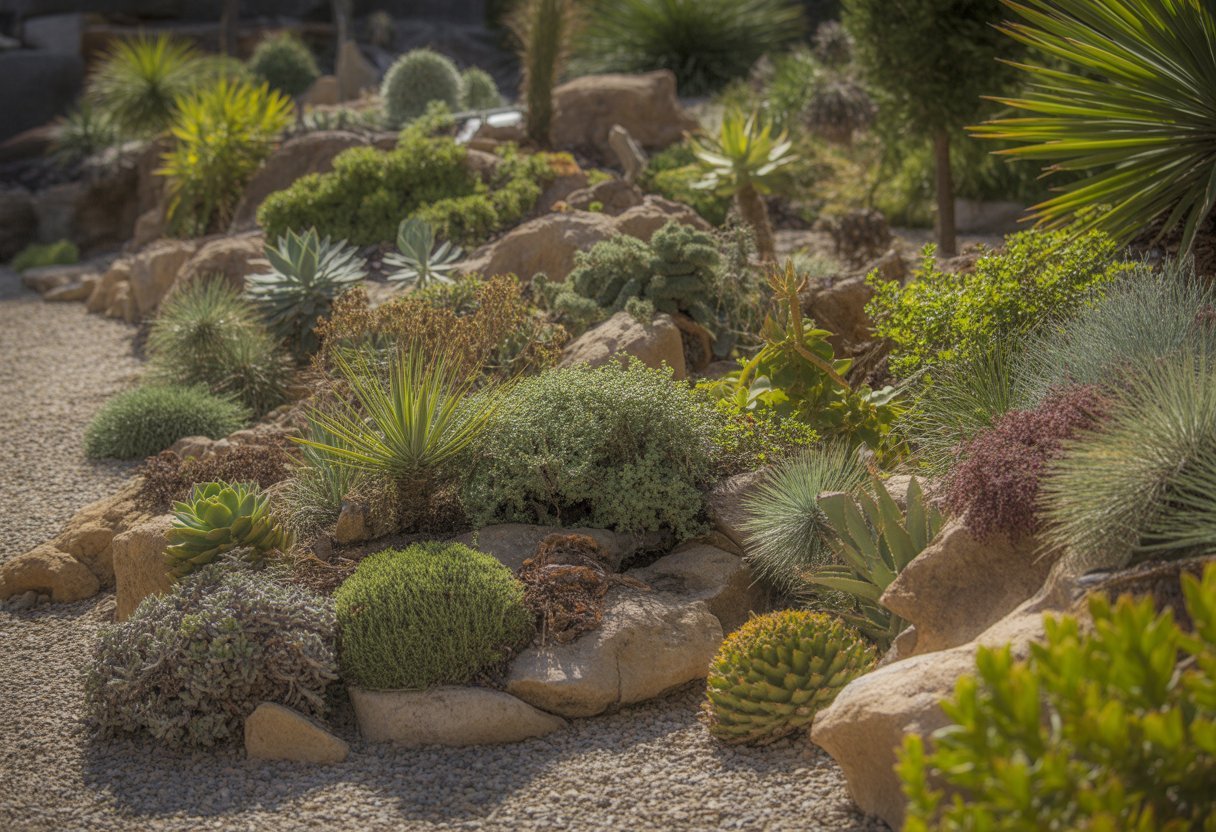
These plants evolved to handle rocky, well-drained soil and full sun. They just keep chugging along, which means less watering and fussing for you.
Selecting Rock Garden Plants for Dry Sites
When you’re picking plants, focus on ones that can survive with little water and love rocky, well-drained soil. Understanding soil and plant quirks helps a ton.
Practical tips make it easier to use perennials that actually want to be in tough, dry spots.
Key Characteristics of Drought-Tolerant Plants
Drought-tolerant plants usually dig deep with their roots to find water underground. Many have thick, waxy, or even hairy leaves to keep water from escaping.
They often grow slowly, which honestly helps them need less water overall. Sedums, lavender, and yuccas are go-tos for dry rock gardens.
You’ll find these plants don’t mind poor soil and rarely need fertilizer. They shrug off heat stress and thrive with little attention—perfect for a chill landscape.
Understanding Soil and Drainage Requirements
Rock garden plants really need well-drained soil or they’ll just rot. Sandy or gritty soil with some organic matter lets water escape fast.
Even lousy soil with not much nutrition can work if it drains well. If you’re stuck with heavy clay, toss in gravel or sand to loosen things up.
Drainage matters so much, especially where water vanishes fast. Slopes help too, since they naturally move water away from roots.
Essential Tips for Choosing Suitable Perennials
Pick perennials that match your climate’s dryness and temperature swings. Always check plant tags or descriptions for drought tolerance.
Stick plants with similar water needs together so you don’t drown or starve anyone. Look for perennials that love full sun and dry feet.
Think about how big each plant will get so your rock garden doesn’t turn into a jungle. Creeping thyme works well for ground cover, and blanket flower adds a splash of color.
Top Plant Choices for Dry Rock Gardens
Dry rock gardens do best with plants that don’t need much water and love rocky, well-drained soil. Mixing up textures, colors, and bloom times keeps things interesting.
Popular Perennials: Columbine, Dianthus, and More
Columbine (Aquilegia) puts out quirky, bell-shaped flowers and handles dry, rocky spots like a champ once it settles in. It brings in pollinators and gives the garden some height.
Dianthus species are all about their sweet-smelling, pink or red blooms. They stay low and handle drought, making them perfect for tucking into crevices or along edges.
Lavender and sedum round things out with tough leaves and long-lasting flowers, especially when it’s dry. Together, these perennials offer a nice mix of color and shape for rough garden spots.
Colorful Ground Covers: Creeping Phlox and Thymus Serpyllum
Creeping phlox throws out a carpet of star-shaped flowers in spring, blanketing rocks with thick green leaves. It prefers full sun and well-drained soil, just right for dry rock gardens.
Thymus serpyllum, or wild thyme, stays evergreen and aromatic, forming a mat that keeps weeds down and holds onto moisture. Its tiny purple flowers bring in bees and a subtle pop of color in summer.
Both spreads quickly but don’t get out of hand. They’re easy to care for, drought-tolerant, and add texture and color where you want it most.
Showy Species: Basket of Gold, Candytuft, and Penstemon
Basket of Gold (Aurinia saxatilis) lights up early spring with bright yellow blooms against gray-green leaves. It’s happy in poor soil and dry, rocky slopes.
Candytuft (Iberis sempervirens) is a tidy evergreen with clusters of white flowers in spring. It likes dry, alkaline ground and makes a crisp border or ground cover.
Penstemon species shoot up with tubular flowers in reds, pinks, or purples. Hummingbirds love them, and they’re right at home in sunny, well-drained rock gardens—barely asking for water once they’re settled.
High-Altitude Favorites: Alpine Plants and Viola
Alpine plants just get it—they’re built for rocky, tough environments with not much water. Saxifrage and some sedums come to mind, with their tight rosettes and real drought resistance.
Viola species bring delicate, colorful flowers and handle poor, dry soil without complaint. They do well in shaded nooks or cooler pockets in the rock garden.
These plants thrive where others give up, offering both grit and seasonal color in exposed, dry spots—especially at higher elevations.
Designing and Maintaining Rock Gardens in Dry Locations
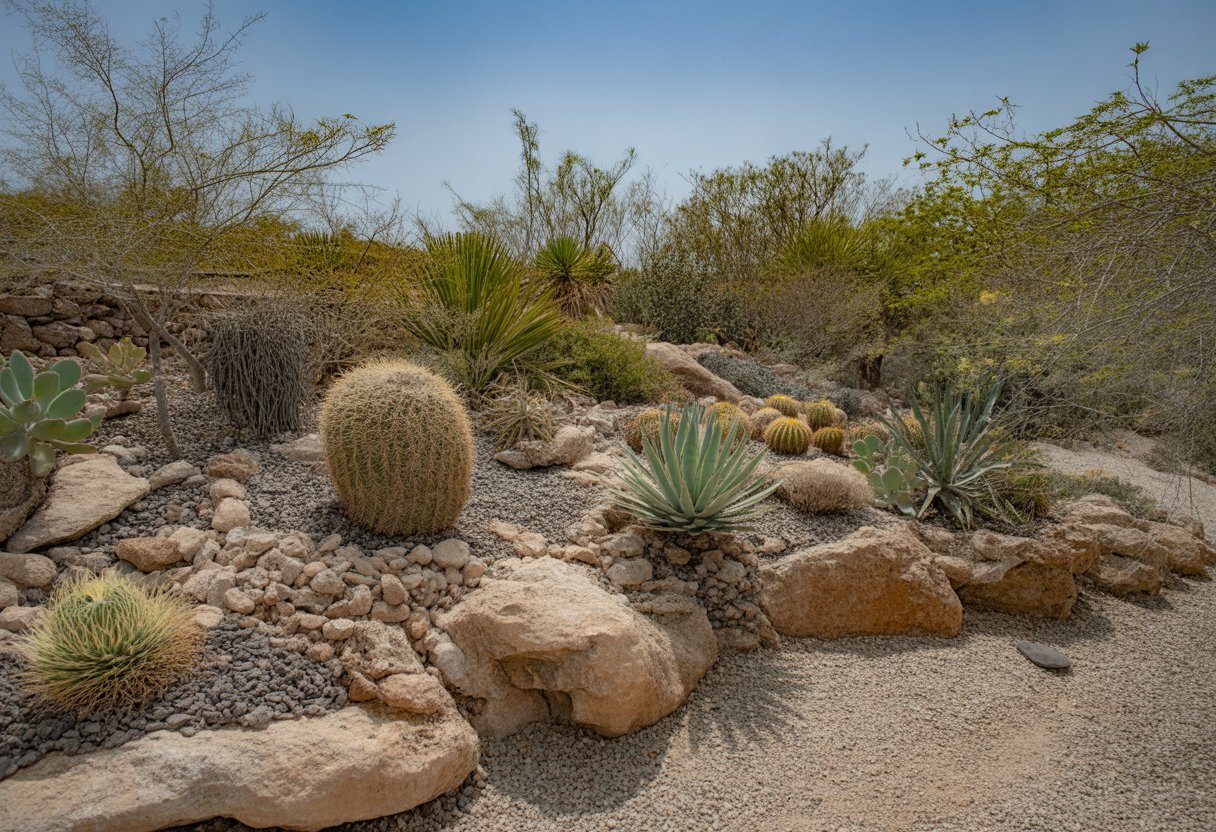
A little planning and some basic care keep dry-site rock gardens looking good. Drainage, soil, and plant placement all play a part when water’s scarce.
Strategies for Effective Rock Garden Layout
Start with a layout that saves water and keeps plants happy. Place rocks to form natural catch basins so rainwater collects without drowning the roots.
Use bigger stones to cast shade—less sun means less evaporation. Group plants with similar thirst together to make watering simpler.
Don’t pack plants too tight; air needs to move to keep diseases away. Paths or gravel areas help you get around without trampling the soil.
Preventing Standing Water and Soil Compaction
Standing water just spells trouble for roots. Arrange rocks and soil on a gentle slope so water drains off instead of pooling.
Low spots can turn into puddles after rain, so avoid them when planting. Compacted soil makes it tough for roots to grow or soak up water.
Stick to stepping stones or marked walkways to cut down on foot traffic in planting zones. When you dig or prep the soil, use light tools and skip heavy equipment—roots prefer loose, airy ground anyway.
Landscaping and Horticultural Best Practices
Try using drought-tolerant plants that naturally thrive in dry places. They’re usually a lot easier to keep alive and honestly, they just make sense if you want something sustainable.
Throw down some mulch to help the soil hold onto moisture. Just don’t get carried away—if you pile it on too thick, it can end up trapping too much water and that’s no good.
Clear out debris regularly. It really keeps pests at bay and lets the air move better around your plants.
Keep an eye on your plants’ health. Sometimes they need a little more water, sometimes less, and a quick trim now and then never hurts.
Test your soil every so often. It’s a good way to figure out what amendments might help your plants hang onto moisture and nutrients, without making the ground soggy or packed down.