Bleeding Heart (Dicentra formosa)
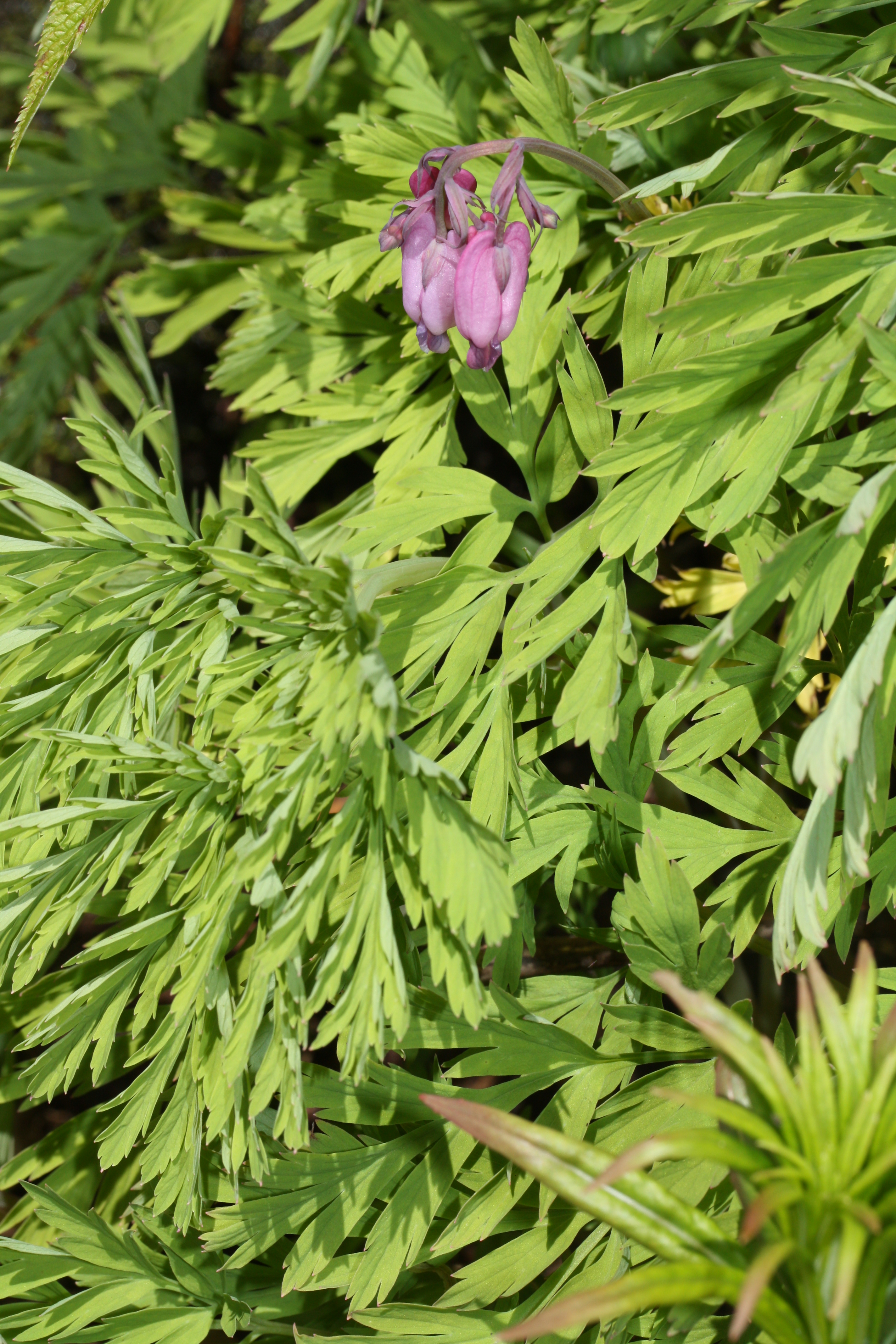
Dicentra formosa, commonly known as Pacific Bleeding Heart, Western Bleeding Heart, or Wild Bleeding Heart, is a captivating native perennial that brings delicate beauty and enduring charm to Pacific Northwest gardens. This enchanting member of the Papaveraceae (poppy) family graces woodland floors from California to British Columbia with its distinctive heart-shaped flowers and elegant, fern-like foliage. Unlike its flashier Asian cousin, the common garden bleeding heart (Lamprocapnos spectabilis), Pacific Bleeding Heart offers sustainable beauty that thrives in our region’s natural conditions while supporting local ecosystems.
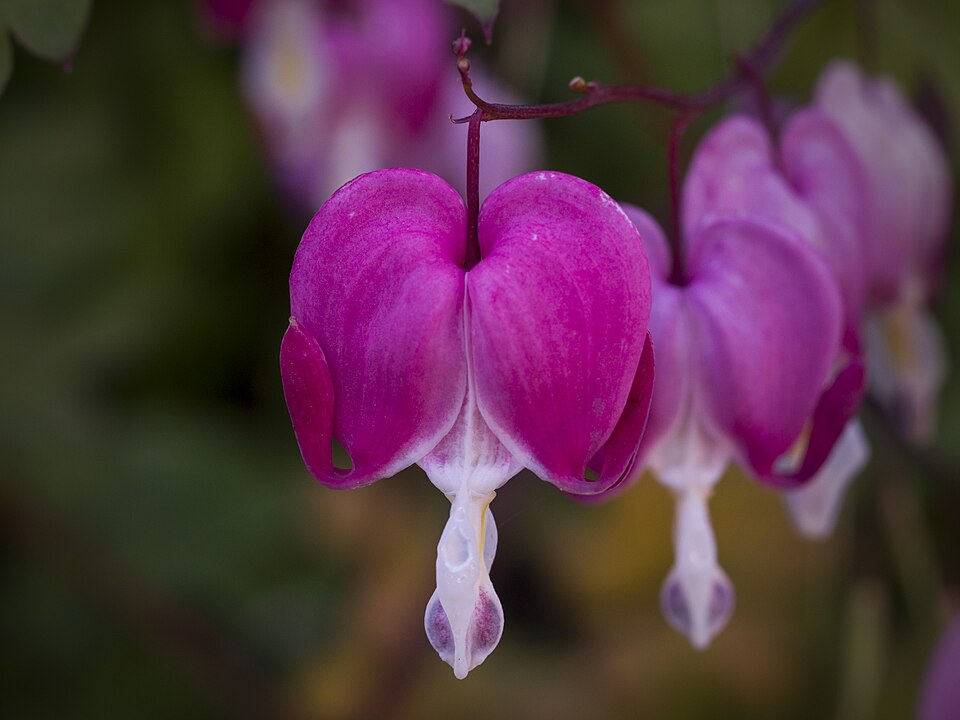
The plant’s romantic common name derives from its uniquely shaped flowers, which hang like tiny pink or rose-colored hearts from graceful, arching stems. Each bloom measures about 1⁄2 to 3⁄4 inch long and features four petals arranged in a distinctive heart or locket shape — two outer petals that curve outward at the tips and two inner petals that connect at the pointed base. These charming flowers appear in loose, drooping clusters above the foliage from mid-spring through autumn, with the most spectacular displays occurring in spring.
Pacific Bleeding Heart represents the perfect marriage of ornamental value and ecological responsibility. It naturally spreads by underground rhizomes to form attractive colonies in woodland gardens, provides nectar for native bees and other pollinators, and requires minimal care once established. The plant’s ability to go summer dormant and re-emerge in fall makes it ideally adapted to our Mediterranean climate, while its shade tolerance makes it invaluable for areas where few other flowering plants will thrive.
Quick Facts
| Scientific Name | Dicentra formosa |
| Family | Papaveraceae (Poppy) |
| Plant Type | Herbaceous Perennial |
| Mature Height | 1–2 ft |
| Spread | 18–24 in (45–60 cm) |
| Growth Rate | Moderate |
| Sun Exposure | Full Shade |
| Water Needs | High |
| Soil Type | Well-drained, humus-rich |
| Soil pH | 6.0–7.5 (slightly acidic to neutral) |
| Bloom Time | March – May (again in fall) |
| Flower Color | Pink, rose, purple, white |
| Fruit | Small pointed pods with seeds |
| Wildlife Value | Native bees, beneficial insects |
| USDA Hardiness Zones | 4–8 |
Identification
Pacific Bleeding Heart is easily recognized by its combination of distinctive flowers and delicate foliage. The plant forms neat, mounded clumps that spread gradually by shallow, fleshy rhizomes. During the active growing season, it presents one of the most refined and elegant appearances of any native wildflower.
Flowers
The flowers are the plant’s most distinguishing feature. Each bloom measures 1⁄2 to 3⁄4 inch long and hangs from slender, curved pedicels in loose, nodding clusters of 5-15 flowers. The distinctive heart shape is formed by four petals: two outer petals that form pouches at the base and curve gracefully outward at the tips, and two smaller inner petals that meet at the pointed end, creating the characteristic “bleeding” appearance. Colors range from deep rose-pink to pale pink to pure white, with some forms displaying purple tints.
Foliage
The leaves are perhaps equally attractive as the flowers. They are compound, finely divided into numerous small leaflets that create a delicate, fern-like appearance. The foliage is blue-green to gray-green and has a soft, almost succulent texture. Leaves emerge directly from the ground on petioles 8-12 inches long, creating attractive mounds of dissected foliage that provide excellent texture contrast in shade gardens.
Growth Habit
Pacific Bleeding Heart grows from brittle, fleshy rhizomes that spread slowly but steadily underground. The plant typically reaches 12-18 inches in height and spreads 18-24 inches wide at maturity. In ideal conditions with adequate moisture and rich soil, colonies can spread several feet over time, creating stunning groundcover displays.
Native Range
Pacific Bleeding Heart is native to the moist coniferous forests and woodland margins of the Pacific coast from northern California north through Oregon and Washington to British Columbia. Its natural range extends from sea level to the subalpine zone, typically found at elevations up to 4,000 feet in the Cascade Range and Sierra Nevada mountains.
In its native habitat, Pacific Bleeding Heart thrives in the understory of Douglas fir, western hemlock, and western red cedar forests, often growing alongside other shade-loving natives such as trilliums, coral root orchids, and various ferns. It particularly favors spots with dappled sunlight filtering through the forest canopy and consistently moist, humus-rich soil built up from decades of decomposing conifer needles and deciduous leaves.
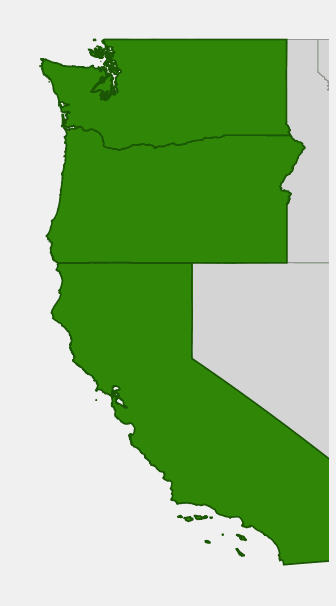
📋 Regional plant lists featuring Pacific Bleeding Heart: Western Oregon & Western Washington
Growing & Care Guide
Pacific Bleeding Heart is an ideal choice for low-maintenance shade gardens, offering months of delicate beauty with minimal care requirements once properly established. Understanding its natural growth cycle is key to success with this charming native perennial.
Site Selection & Planting
Choose a location with partial to full shade — morning sun with afternoon shade is ideal, though the plant tolerates deep shade remarkably well. Avoid hot, sunny locations, as the delicate foliage will quickly burn and the plant may go dormant prematurely. Pacific Bleeding Heart thrives in the same conditions preferred by rhododendrons, camellias, and other acid-loving shade plants.
Plant in early spring or fall when temperatures are cool and soil moisture is adequate. The plant prefers well-drained, humus-rich soil with consistent moisture during the growing season. Amend heavy clay soils with compost or aged manure to improve drainage, as waterlogged conditions can cause the fleshy rhizomes to rot.
Seasonal Growth Pattern
Understanding Pacific Bleeding Heart’s unique growth cycle is essential for successful cultivation. The plant emerges in early spring with fresh foliage and begins flowering from March through May. After the initial flowering period, it often continues producing scattered blooms through summer if conditions remain favorable.
In response to summer heat and drought stress, the plant may go completely dormant, with all above-ground growth dying back by midsummer. This is perfectly normal and not a sign of plant death. With the return of cool, moist conditions in fall, new foliage often emerges and the plant may produce a second, smaller flush of flowers.
Watering & Moisture Management
Consistent moisture during the active growing season (spring through early summer) encourages the longest flowering period and prevents premature dormancy. However, the plant is quite drought-tolerant once established and summer dormancy is a natural adaptation that allows it to survive our region’s dry summers.
Apply a 2-3 inch layer of organic mulch around plants to help retain soil moisture and suppress weeds. Good mulch choices include shredded bark, aged compost, or leaf mold — materials that mimic the natural forest floor conditions the plant prefers.
Fertilization
Pacific Bleeding Heart rarely requires supplemental fertilization if grown in organically rich soil. An annual spring application of compost or aged manure provides adequate nutrition while improving soil structure. Avoid high-nitrogen fertilizers, which can promote excessive foliage growth at the expense of flowers.
Propagation & Division
The plant spreads naturally by underground rhizomes and can be divided in early spring or fall when dormant. Carefully dig up established clumps and separate the fleshy rhizomes, ensuring each division has both roots and growth buds. The brittle rhizomes break easily, so handle gently and plant divisions immediately.
Pacific Bleeding Heart also self-seeds readily in favorable conditions. Allow seed pods to ripen and naturally scatter for volunteer seedlings, though named cultivars will not come true from seed.
Wildlife & Ecological Value
While Pacific Bleeding Heart may appear delicate, it plays important ecological roles in Pacific Northwest forest ecosystems and provides valuable resources for native wildlife, particularly pollinators and beneficial insects.
For Pollinators
The nectar-rich flowers attract various native bees, including small mason bees, sweat bees, and other solitary species that are active during the cool spring months when Pacific Bleeding Heart blooms most abundantly. The flowers’ shape requires pollinators to work for their reward, making them particularly valuable for species with longer tongues that can access the nectar hidden within the heart-shaped blooms.
For Beneficial Insects
The plant’s extended blooming period and high-quality nectar support beneficial insects including parasitic wasps and predatory flies that help control garden pests. The foliage also provides shelter and hunting grounds for spiders and other predatory arthropods that contribute to garden ecosystem balance.
Ecosystem Services
As a native understory plant, Pacific Bleeding Heart helps create the layered structure that characterizes healthy Pacific Northwest forests. Its presence indicates good soil health and adequate moisture levels, making it useful as an environmental indicator species.
The plant’s ability to thrive in shade makes it valuable for establishing native plant communities under existing trees and shrubs, helping to suppress invasive weeds while providing habitat complexity that supports diverse wildlife populations.
Garden Design & Landscape Uses
Pacific Bleeding Heart excels in numerous garden applications where its delicate beauty and shade tolerance make it invaluable:
- Woodland gardens — Essential for naturalistic forest understory plantings
- Shade borders — Provides spring color where few other flowers will bloom
- Rock gardens — Perfect for shaded rock garden pockets with good drainage
- Container gardens — Excellent for patio containers in shaded locations
- Groundcover — Forms attractive colonies in suitable conditions
- Native plant gardens — Showcases regional flora with sustainable beauty
- Cottage gardens — Adds romantic charm with old-fashioned appeal
- Rain gardens — Tolerates periodic moisture fluctuations
Companion Plants
Pacific Bleeding Heart combines beautifully with other Pacific Northwest natives and shade-tolerant plants. Consider pairing with Western Trillium (Trillium ovatum) for early spring impact, Wild Ginger (Asarum canadense) for evergreen groundcover, and native ferns such as Sword Fern (Polystichum munitum) for textural contrast.
Bulbs make excellent companions, with species tulips, daffodils, and native camas (Camassia spp.) providing color before the bleeding heart emerges. Heuchera species echo the heart-shaped theme while adding different foliage colors and textures.
Cultivars & Selections
Several excellent cultivars of Pacific Bleeding Heart are available, offering variations in flower color and foliage characteristics. White-flowered forms such as ‘Langtrees’ provide luminous beauty in deep shade, while cultivars like ‘Bacchanal’ offer deeper red flowers for dramatic color impact.
Hybrid cultivars created by crossing Pacific Bleeding Heart with eastern species often show improved heat tolerance and longer blooming periods, making them excellent choices for gardens outside the Pacific Northwest or in warmer microclimates.
Common Questions
Why did my bleeding heart disappear in summer?
Summer dormancy is completely normal for Pacific Bleeding Heart. The plant is adapted to our Mediterranean climate and goes dormant during hot, dry periods. It will likely re-emerge with fall rains.
How do I tell Pacific Bleeding Heart apart from other bleeding hearts?
Pacific Bleeding Heart has smaller, more delicate flowers and finer-textured foliage than the large Asian bleeding heart. The flowers are typically pink rather than the pure white or deep red of many garden varieties.
Can I grow Pacific Bleeding Heart in sun?
While it tolerates some morning sun, Pacific Bleeding Heart performs best in partial to full shade. Hot, sunny conditions cause the foliage to burn and the plant to go dormant early.
Is Pacific Bleeding Heart deer resistant?
Like many members of the poppy family, Pacific Bleeding Heart contains alkaloids that make it unpalatable to deer and rabbits. However, very hungry wildlife may still sample the foliage.
Frequently Asked Questions
Is Pacific Bleeding Heart toxic to humans and pets?
Yes, all parts of the plant contain alkaloids that are toxic if ingested. Keep away from children and pets. However, it’s not typically dangerous unless consumed in significant quantities. The bitter taste usually prevents accidental poisoning.
When do Bleeding Hearts bloom?
Pacific Bleeding Heart typically blooms from March through June in the Pacific Northwest, with peak flowering in April and May. In warmer areas, blooming may start as early as February.
Can Bleeding Heart grow in full sun?
While it can tolerate some morning sun, Pacific Bleeding Heart performs best in partial to full shade. In full sun, especially in hot climates, the foliage may die back early in summer. Consistent moisture can help if grown in sunnier locations.
Does Bleeding Heart spread or self-seed?
Yes, Pacific Bleeding Heart spreads both by underground rhizomes and by self-seeding. It can form substantial colonies over time, making it excellent for naturalizing in woodland gardens. The spreading habit is generally manageable and not considered invasive.
What should I do when the foliage dies back in summer?
This is natural behavior called “going dormant.” Simply cut back the yellowed foliage to ground level. The plant will return next spring. Mark the spot so you don’t accidentally disturb the roots while the plant is dormant.

Looking for a nursery that carries Pacific Bleeding Heart?
Browse our native plant nursery directory: Oregon · Washington
Cultural & Historical Uses
Pacific Bleeding Heart holds significant cultural importance for Indigenous peoples of the Pacific Northwest. The Squaxin Island Tribe and other Coast Salish nations traditionally used the roots and leaves medicinally, though with great caution due to their toxic alkaloid content. The plant was sometimes called “lady’s locket” by early European settlers, who were enchanted by the heart-shaped flowers that seemed to “bleed” drops when gently squeezed.
In traditional medicine, very small amounts of the root were occasionally used as a pain reliever and to treat skin conditions, though this practice required extensive knowledge of proper preparation and dosage. The Quinault people had specific protocols for gathering and using the plant, recognizing both its healing potential and its dangers.
Today, Bleeding Heart is primarily valued as an ornamental garden plant and for ecological restoration. The species has become popular in shade gardens throughout the Pacific Northwest and is frequently used in native plant landscaping. Modern research has identified several alkaloids in the plant, including protopine and sanguinarine, confirming both its therapeutic potential and toxicity warnings found in traditional knowledge systems.
The flowers have also found their way into contemporary wildflower photography and botanical art, with their distinctive heart shape making them instantly recognizable symbols of Pacific Northwest forests. Some Indigenous artists continue to incorporate Bleeding Heart motifs into traditional and contemporary artwork, honoring the plant’s enduring cultural significance.