Grand Fir (Abies grandis)
Abies grandis, commonly known as Grand Fir, Great Fir, or Lowland Fir, is a magnificent native conifer that stands as one of the Pacific Northwest’s most impressive and fastest-growing forest trees. This majestic member of the Pinaceae (pine) family can reach extraordinary heights of over 300 feet, making it one of the tallest firs in the world. With its distinctive flat needles arranged in two rows, glossy dark green color, and classic Christmas tree shape, Grand Fir combines spectacular beauty with exceptional ecological value throughout its native range.
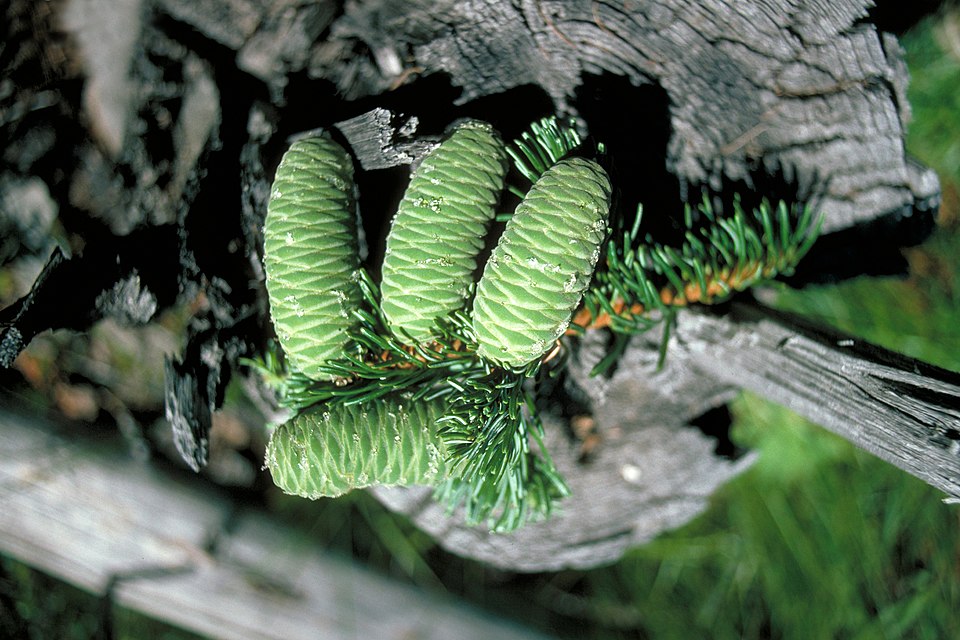
Grand Fir is easily identified by its unique needle arrangement — flat, glossy needles that spread horizontally from the branches in two distinct rows, creating a feather-like appearance. The needles are typically 1-2 inches long, dark green above with two silvery-white bands beneath, and remain on the tree for 5-10 years. The tree develops a classic pyramidal shape when young, gradually developing a more cylindrical crown with age. The smooth, grayish bark becomes furrowed and scaly on older trees, while the distinctive upright cones, 3-5 inches long, sit atop the branches like candles.
This adaptable conifer thrives in the moist, temperate forests of the Pacific Northwest, where it forms extensive stands in mixed coniferous forests alongside Douglas fir, western hemlock, and western red cedar. Grand Fir’s rapid growth rate, impressive size potential, and tolerance for various site conditions make it valuable for both forest ecology and human uses, from timber production to ornamental landscaping. Its ability to grow in both sun and shade allows it to fill multiple forest niches throughout its long lifespan.
Identification
Grand Fir is easily distinguished from other conifers by its distinctive needle arrangement and size. Mature trees typically reach 150-250 feet in height, with some exceptional specimens exceeding 300 feet, making it one of the tallest firs in North America. The trunk diameter commonly reaches 3-4 feet, though ancient trees can achieve 6-8 feet in diameter. The overall form is classically pyramidal when young, gradually developing a more cylindrical crown with a rounded or flattened top as the tree matures.
Bark
Young Grand Firs have smooth, thin, gray bark marked with resin blisters — small, raised pockets of clear resin that pop when pressed. As trees mature, the bark becomes thicker and develops shallow furrows with flat-topped ridges. The mature bark is gray-brown to reddish-brown, with a somewhat plated appearance. Unlike many other firs, Grand Fir bark remains relatively thin throughout the tree’s life, rarely exceeding 4 inches thick even on the largest specimens.
Needles & Branches
The needles are Grand Fir’s most distinctive feature — flat, glossy, and arranged in two horizontal rows along the branches, creating a feathery, comb-like appearance. Individual needles are 1-2 inches long and about 1/8 inch wide, with a distinctly flat cross-section. The upper surface is dark green and shiny, while the underside displays two prominent white stomatal bands that run the length of the needle. A key identification feature is the variation in needle length on the same branch — some needles are notably shorter than others, creating an irregular but characteristic pattern.
The needles attach directly to the branch with small suction-cup-like bases and typically persist for 5-10 years before dropping. When crushed, they release a pleasant citrus-like fragrance. Branches are arranged in regular whorls around the trunk, with younger branches having a greenish color that gradually turns gray-brown with age.
Cones & Reproduction
Grand Fir is monoecious, bearing both male and female cones on the same tree. Male cones are small, yellowish, and found on the underside of branches, releasing clouds of pollen in late spring. Female cones are the tree’s most striking feature — they stand upright on the top sides of branches like purple-green candles, measuring 3-5 inches long and 1-1.5 inches wide when mature. These cones ripen from green to brown over one season, disintegrating while still on the tree to release winged seeds in late summer and fall.
The upright cone positioning is a key distinguishing feature from spruces and Douglas fir, whose cones hang downward. Grand Fir typically begins cone production around 20-30 years of age, with peak production occurring in mature trees every 2-3 years in heavy seed years.
Quick Facts
| Scientific Name | Abies grandis |
| Family | Pinaceae (Pine) |
| Plant Type | Evergreen Coniferous Tree |
| Mature Height | 100–200 ft |
| Trunk Diameter | 2–4 ft (0.6–1.2 m) |
| Growth Rate | Fast |
| Sun Exposure | Full Sun to Part Shade |
| Water Needs | Low to Moderate |
| Soil Type | Deep, moist, well-drained; alluvial or loamy |
| Soil pH | 5.5–7.0 (slightly acidic to neutral) |
| Bloom Time | April – May (cones) |
| Cone Color | Yellow-green to green (upright) |
| Fall Color | Evergreen |
| Lifespan | 250–300+ years |
| Deer Resistant | Moderate (deer browse seedlings) |
| USDA Hardiness Zones | 5–9 |
Native Range
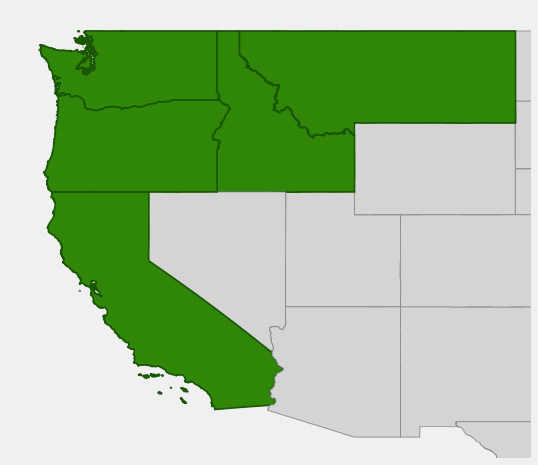
Grand Fir is native to the Pacific Northwest and northern Rocky Mountains, with a natural range extending from southern British Columbia south through western Washington and Oregon to northern California, and eastward into northern Idaho, western Montana, and a small population in northeastern Oregon. The species reaches its greatest abundance in the moist valleys and lower mountain slopes of the Cascade Range and Coast Range, where deep soils and consistent moisture create ideal growing conditions.
The species occupies a diverse range of habitats, from near sea level along the Pacific coast to elevations of 5,000 feet in the inland mountains. Grand Fir is most commonly found in mixed coniferous forests, often growing in association with Douglas Fir, Western Hemlock, Western Red Cedar, and Bigleaf Maple. It thrives in valley bottoms, gentle slopes, and areas with good drainage but consistent soil moisture throughout the growing season.
Grand Fir demonstrates remarkable adaptability across its range, tolerating both the maritime climate of the Pacific coast and the more continental climate of the inland Northwest. This adaptability, combined with its rapid growth and impressive size potential, has made it valuable for both natural forest ecosystems and human uses including timber production, Christmas tree farming, and ornamental landscaping.
📋 Regional plant lists featuring Grand Fir: Western Oregon & Western Washington
Growing & Care Guide
Grand Fir is remarkably adaptable and relatively easy to grow when provided with conditions that mimic its natural forest habitat. Success depends on understanding its preference for moist, well-drained soils and its tolerance for both sun and shade. While it can reach enormous size in the wild, cultivated specimens typically grow 2-3 feet per year and can be managed at smaller sizes through careful site selection and pruning.
Light
Grand Fir tolerates a wide range of light conditions, from full sun to partial shade, making it versatile for various landscape applications. In full sun, trees develop denser branching and a more compact form, but require more consistent watering during dry periods. In partial shade, the tree grows taller and more open, reaching toward available light. This shade tolerance allows Grand Fir to thrive under taller conifers or as an understory tree in mixed plantings.
When young, Grand Fir benefits from some protection from intense afternoon sun, especially in hotter climates at the southern edge of its range. A location with morning sun and afternoon shade often provides ideal conditions for establishment and early growth.
Soil & Water
Grand Fir thrives in deep, moist, well-drained soils with a slightly acidic to neutral pH (5.5-7.0). The ideal soil is loamy with good organic content, similar to the rich forest soils of its native habitat. Heavy clay soils should be amended with compost and coarse sand to improve drainage, as standing water around the roots can lead to rot problems.
Consistent soil moisture is crucial, especially during the first 3-5 years after planting. Established trees are somewhat drought tolerant but perform best with regular watering during dry summer months. Apply 2-3 inches of organic mulch around the base, extending to the drip line, to retain moisture and suppress weeds while keeping mulch several inches away from the trunk to prevent pest and disease issues.
Planting Tips
Plant Grand Fir in fall or early spring for best establishment. Choose container-grown or balled-and-burlapped specimens from reputable nurseries, as this species can be difficult to transplant from wild locations. Dig the planting hole twice as wide as the root ball but no deeper — the top of the root ball should be level with or slightly above the surrounding soil surface.
Space trees according to their intended use: 20-30 feet apart for screening, 40-50 feet for naturalistic groves, or as single specimens with adequate room for mature spread. Consider the tree’s ultimate size when selecting locations — mature Grand Firs need considerable space and should not be planted near buildings or power lines without long-term maintenance plans.
Pruning & Maintenance
Grand Fir requires minimal pruning when properly sited. Remove dead, damaged, or crossing branches in late winter while the tree is dormant. Avoid heavy pruning, as conifers do not readily sprout from old wood. If lower branching needs to be removed to create clearance, do so gradually over several years, removing no more than 25% of live branches in any single year.
Young trees may benefit from light structural pruning to develop a strong central leader and evenly spaced branch whorls. Stake young trees only if necessary and for the shortest time possible — typically one growing season. Monitor for pest issues including aphids, adelgids, and occasional needle diseases, though Grand Fir is generally quite pest-resistant when grown in appropriate conditions.
Propagation
Grand Fir can be grown from seed collected from mature cones in late summer. Seeds require a cold stratification period of 30-60 days in slightly moist sand or peat moss at 33-38°F. Germination rates are typically 50-70% for fresh seeds. Seedlings grow slowly the first year but accelerate rapidly once established.
Commercial propagation sometimes uses cuttings from young trees, though success rates are variable and the process requires specialized equipment and expertise. For most gardeners, purchasing nursery-grown specimens is the most practical approach.
Landscape Uses
Grand Fir’s impressive size and rapid growth make it suitable for specific landscape applications:
- Specimen planting — single trees in large landscapes and parks
- Windbreaks and screening — planted in rows for privacy and wind protection
- Reforestation projects — rapid growth makes it valuable for ecological restoration
- Christmas tree farms — excellent needle retention and pleasant fragrance
- Large naturalized areas — mixed with other native conifers and deciduous trees
- Erosion control — on slopes and in riparian areas where space allows
Grand Fir is not suitable for small residential lots due to its ultimate size, but it excels on acreage, in parks, and in commercial landscapes where its majestic presence can be fully appreciated. The tree’s longevity means it will be a lasting feature in the landscape, potentially outliving several generations of human stewards.
Wildlife & Ecological Value
Grand Fir stands among the most ecologically valuable conifers in the Pacific Northwest, providing essential habitat and food resources for a diverse array of wildlife species. From its towering canopy to its massive trunk and extensive root system, every part of the tree contributes to forest ecosystem health and biodiversity.
For Birds
The winged seeds of Grand Fir are consumed by numerous bird species, including Pine Siskins, Red Crossbills, Evening Grosbeaks, and various finches and nuthatches. The seeds are particularly important during winter months when other food sources become scarce. Mature trees provide essential nesting sites for raptors — Great Horned Owls, Cooper’s Hawks, and occasionally Bald Eagles construct nests in the strong branch forks of large Grand Firs.
The dense branching structure offers excellent shelter and roosting sites for songbirds during harsh weather. Species like Dark-eyed Juncos, Golden-crowned Kinglets, and various warbler species often forage among the branches for insects and spiders. Woodpeckers, including Pileated Woodpeckers and Three-toed Woodpeckers, excavate cavities in older trees, creating nest sites that are later used by secondary cavity nesters such as flying squirrels and various songbird species.
For Mammals
Large mammals rely heavily on Grand Fir forests for thermal cover during winter months. Roosevelt Elk, Black-tailed Deer, and Mule Deer seek shelter under the dense canopy, while Black Bears occasionally climb younger trees to access seed cones. The thick bark and large size of mature trees make them relatively fire-resistant, creating refugia that persist through natural disturbance cycles.
Small mammals including Douglas Squirrels (chickarees), Northern Flying Squirrels, and various mice and voles consume Grand Fir seeds and cache them for winter survival. These caching behaviors help disperse seeds throughout the forest, contributing to natural regeneration patterns. Porcupines occasionally damage trees by feeding on the inner bark, though this is typically not a significant ecological issue except in areas with very high porcupine populations.
For Pollinators & Insects
While Grand Fir is wind-pollinated and doesn’t rely on insect pollinators, it supports a remarkable diversity of insect life. The bark harbors numerous beetle species, while the needles support various aphids, adelgids, and mites. These insects, in turn, provide food for insectivorous birds and beneficial predatory insects.
Several moth and butterfly species depend on Grand Fir during their larval stages. The Western Hemlock Looper and various geometrid moths feed on the needles, though significant defoliation is rare and typically occurs only during outbreak years. Native bees and other beneficial insects often seek shelter in the deep furrows of mature bark during winter months.
Ecosystem Role
Grand Fir plays a crucial structural role in Pacific Northwest forests. As one of the tallest species in its range, it forms part of the upper canopy layer, creating complex vertical habitat structure that supports diverse wildlife communities. The species’ tolerance for both sun and shade allows it to fill gaps in the forest canopy and contribute to natural succession processes.
The extensive root system of Grand Fir helps stabilize soil on slopes and contributes to watershed protection by intercepting rainfall and reducing surface runoff. Large, fallen Grand Firs become “nurse logs” — massive decomposing logs that provide substrate for countless plants, fungi, and invertebrates over decades or centuries. These nurse logs are particularly important for the establishment of other conifer seedlings, including Western Hemlock and Western Red Cedar.
Grand Fir forests support extensive mycorrhizal networks — symbiotic relationships between tree roots and beneficial fungi that enhance nutrient uptake and facilitate communication between trees. These networks are essential for forest health and resilience, particularly during drought periods and following disturbances.
Frequently Asked Questions
How can I tell Grand Fir apart from other firs?
Grand Fir has distinctive flat, glossy needles arranged in two rows (like a comb), with needles of different lengths on the same branch. The bark is smooth and gray when young, developing furrows with age. The cones sit upright on branches and are 4-6 inches long.
How fast does Grand Fir grow?
Grand Fir is one of the fastest-growing firs, typically adding 18-24 inches per year in favorable conditions. Young trees can grow even faster — up to 3 feet per year — making it excellent for quick screening or reforestation projects.
Can Grand Fir tolerate drought once established?
While Grand Fir prefers consistent moisture, established trees can tolerate moderate drought. However, prolonged dry conditions will stress the tree and make it more susceptible to pests and diseases. Regular watering during dry summers is recommended, especially for younger trees.
Is Grand Fir good for Christmas trees?
Yes! Grand Fir is excellent for Christmas trees due to its strong branches, good needle retention, and pleasant citrus fragrance. Many commercial Christmas tree farms grow Grand Fir, and it’s considered one of the premium Northwest Christmas tree species.
What’s the lifespan of Grand Fir?
Grand Fir can live 200-300 years in ideal conditions, though most trees live 100-150 years. In the forest, they often serve as “nurse logs” when they fall, supporting new generations of plants and continuing to contribute to forest ecology long after death.

Looking for a nursery that carries Grand Fir?
Browse our native plant nursery directory: Oregon · Washington
Cultural & Historical Uses
Grand Fir has been a cornerstone resource for Indigenous peoples of the Pacific Northwest for millennia. The Nez Perce, Coeur d’Alene, Spokane, and many other tribes utilized virtually every part of this massive conifer. The inner bark was harvested in spring and eaten fresh or dried for winter storage — it provided crucial carbohydrates and nutrients during lean times. Young shoots and needles were brewed into vitamin C-rich teas that prevented scurvy during long winters.
The tree’s straight, tall trunk and workable wood made it invaluable for construction. Tribes used Grand Fir logs for lodge poles, canoe frames, and temporary shelters. The pitch was collected and used as a waterproofing agent for baskets and canoes, and as a medicine for treating wounds and respiratory ailments. The aromatic branches were often used in sweat lodge ceremonies and as bedding material due to their pleasant fragrance and insect-repelling properties.
During the early logging era of the late 1800s and early 1900s, Grand Fir was initially overlooked in favor of more valuable species like Douglas Fir and Ponderosa Pine. However, as old-growth forests dwindled, Grand Fir became increasingly important for lumber production. Its fast growth rate and large size made it economically valuable, though its tendency to decay when exposed to moisture limited its use to interior construction applications.
Today, Grand Fir continues to be harvested for lumber, pulp, and paper production. The species is also valued for Christmas tree farms due to its excellent needle retention and pleasant fragrance. In restoration forestry, Grand Fir is increasingly recognized for its role in creating complex forest structures and providing habitat for diverse wildlife communities.