Alumroot (Heuchera americana)
Heuchera americana, commonly known as Alumroot or American Alumroot, is a distinctive native perennial herb that brings both ornamental beauty and ecological value to shaded woodland gardens throughout eastern North America. This member of the Saxifragaceae (saxifrage) family is renowned for its attractive, evergreen basal leaves that form neat rosettes, making it an excellent groundcover plant for naturalized areas and formal shade gardens alike.
The plant gets its common name from its astringent root, which was historically used by Indigenous peoples and early settlers for medicinal purposes, particularly for treating wounds and digestive ailments. The root contains high levels of tannins, giving it strong astringent properties that made it valuable in traditional medicine. Today, Alumroot is prized primarily as an ornamental native plant, valued for its elegant foliage, delicate flower spikes, and ability to thrive in challenging shaded conditions where few other flowering perennials succeed.
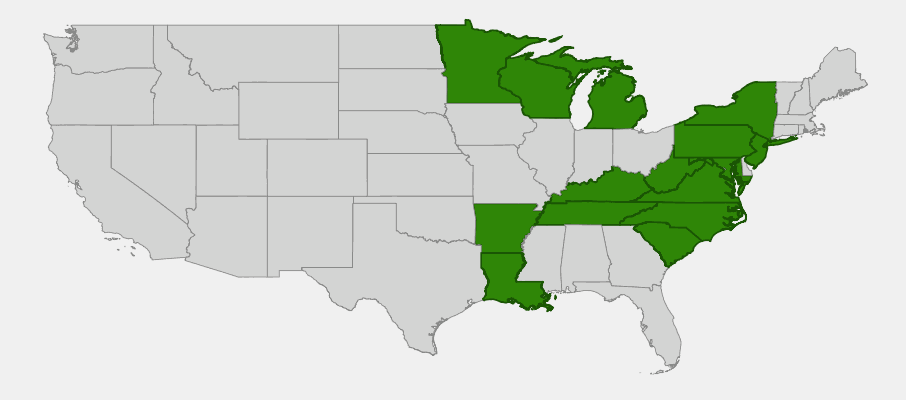
Native to rich, moist woodlands from Canada south to Georgia and Louisiana, Alumroot is perfectly adapted to the dappled shade beneath deciduous trees. Its scalloped, heart-shaped leaves often take on beautiful reddish or purplish tints, especially in fall and winter, while the airy sprays of tiny white or greenish flowers provide nectar for small pollinators. As both a garden plant and a component of healthy forest ecosystems, Alumroot represents the perfect marriage of beauty and ecological function.
Identification
Alumroot is a low-growing perennial herb that typically reaches 1 to 3 feet tall when in bloom, though the basal foliage remains much shorter at 6 to 12 inches. The plant forms neat clumps through slowly spreading rhizomes, creating attractive colonies over time without being aggressively invasive.
Leaves
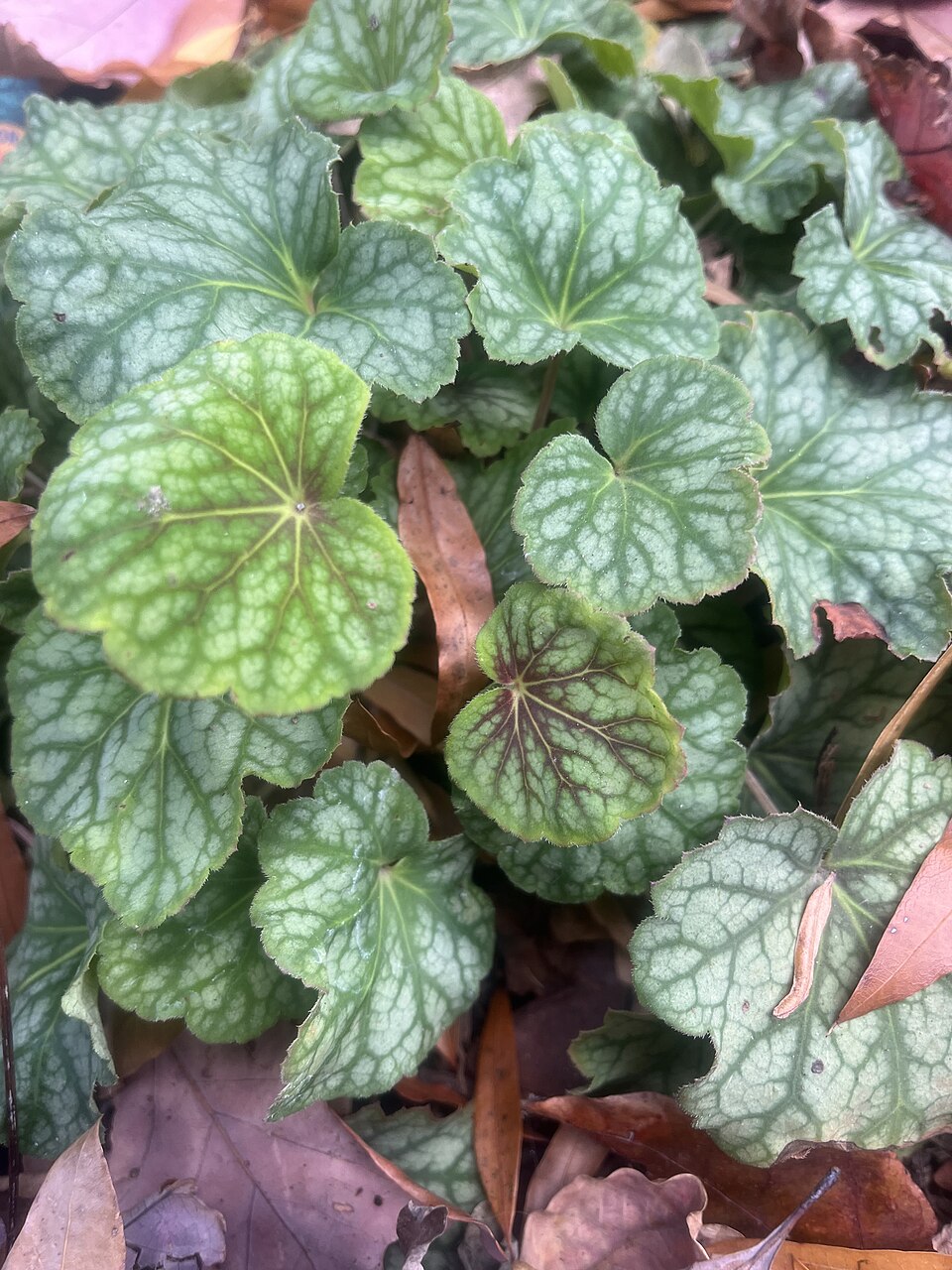
The most distinctive feature of Alumroot is its basal rosette of leaves. Each leaf is broadly heart-shaped to nearly round, 2 to 4 inches across, with 5 to 9 shallow, rounded lobes that create an attractively scalloped margin. The leaves are palmately veined with prominent veining that creates a textured surface. They emerge green in spring but often develop beautiful reddish, purple, or bronze tinting as the season progresses, particularly on the undersides and along the veins. The leaves are evergreen to semi-evergreen, persisting through winter in milder climates and providing year-round garden interest.
Flowers & Stems
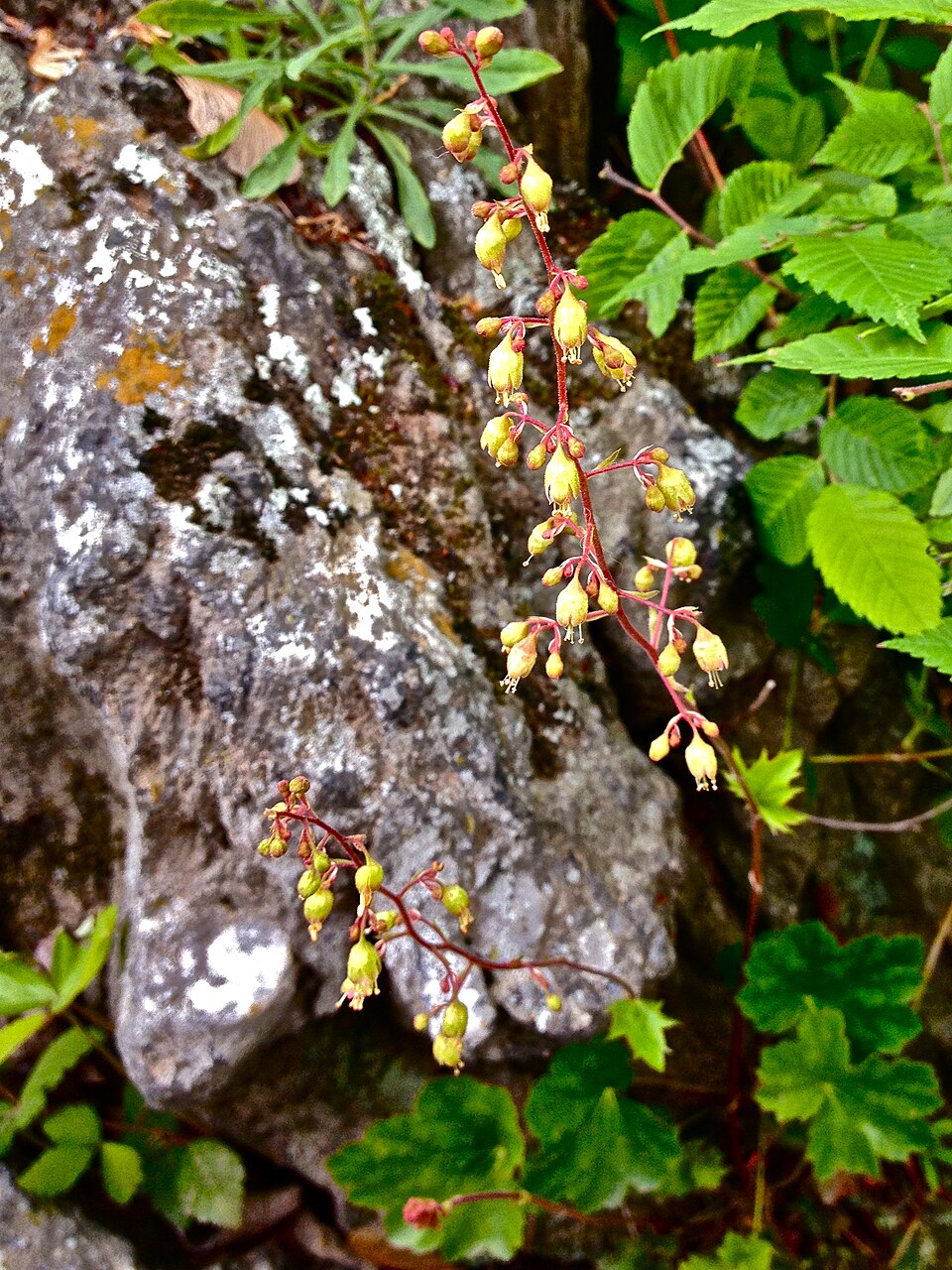
From late spring through early summer, Alumroot produces tall, slender flowering stems that rise 1 to 3 feet above the foliage. These stems are typically reddish or purplish and bear open, airy panicles of tiny flowers. Each individual flower is small — about 1/8 inch across — with five white to greenish-white petals and prominent stamens. The flowers lack petals in some forms, consisting mainly of sepals and stamens. While individually tiny, the flowers are arranged in attractive, delicate sprays that create a misty effect above the foliage.
Root System
True to its common name, Alumroot has a thick, fleshy rootstock that is rich in tannins and has strong astringent properties. The root system consists of a central taproot with fibrous side roots and slowly spreading rhizomes that allow the plant to form small colonies. This robust underground system makes Alumroot quite drought-tolerant once established, despite its preference for moist conditions.
Quick Facts
| Scientific Name | Heuchera americana |
| Family | Saxifragaceae (Saxifrage) |
| Plant Type | Herbaceous Perennial |
| Mature Height | 1–3 ft (flowering stems), 6–12 in (foliage) |
| Sun Exposure | Part Shade to Full Shade |
| Water Needs | Moderate |
| Bloom Time | May – July |
| Flower Color | White to greenish-white |
| USDA Hardiness Zones | 4–8 |
Native Range
American Alumroot has one of the broadest native ranges of any Heuchera species, extending from southeastern Canada south to northern Georgia and Louisiana, and from the Atlantic coast west to Minnesota, Wisconsin, and eastern Kansas. This extensive range reflects the plant’s adaptability to various woodland conditions across much of eastern North America.
Throughout its range, Alumroot typically inhabits rich, moist deciduous forests, particularly those dominated by maple, oak, hickory, and other hardwood species. It thrives on north-facing slopes, in ravines, and along stream banks where the soil remains consistently moist but well-drained. The species shows a preference for slightly acidic soils rich in organic matter, conditions commonly found in mature forest understories.
Alumroot’s broad geographic distribution has led to considerable variation within the species, with plants from different regions showing differences in leaf coloration, flower characteristics, and cold tolerance. This natural variation has made it an important parent species in the development of ornamental coral bells cultivars, many of which trace their colorful foliage back to wild American Alumroot populations.
📋 Regional plant lists featuring Alumroot: North Carolina & South Carolina
Growing & Care Guide
Alumroot is one of the most reliable and low-maintenance native perennials for shade gardens, combining attractive year-round foliage with delicate flowers and excellent adaptability to various growing conditions.
Light
American Alumroot performs best in part shade to full shade, mimicking its natural woodland habitat. It can tolerate morning sun but should be protected from intense afternoon sunlight, especially in southern regions. In deep shade, the plant may produce fewer flowers but will maintain attractive foliage. In cooler northern climates, it can handle more sun exposure if given adequate moisture.
Soil & Water
This species prefers rich, well-drained soil with consistent moisture, similar to woodland conditions. It thrives in slightly acidic to neutral soil (pH 5.5–7.0) amended with organic matter such as leaf compost or aged bark mulch. While it prefers evenly moist conditions, established plants are surprisingly drought-tolerant due to their thick, fleshy roots. Avoid waterlogged conditions, which can lead to crown rot.
Planting Tips
Plant Alumroot in spring or fall, spacing plants 12 to 18 inches apart for groundcover use. Choose sites with good air circulation to prevent fungal issues. When planting, position the crown at soil level — avoid burying it too deeply. Apply a 2-inch layer of organic mulch around plants, keeping it away from the crown to prevent rot.
Pruning & Maintenance
Alumroot requires minimal maintenance. Remove spent flower stems after blooming to encourage continued foliage growth, or leave them for winter interest and self-seeding. In late winter or early spring, remove any damaged or extremely weathered leaves to make way for fresh growth. Divide clumps every 3–4 years in spring or fall if they become overcrowded or begin to die out in the center.
Landscape Uses
Alumroot’s versatility makes it valuable in many garden settings:
- Woodland groundcover — excellent for naturalizing in shade
- Rock gardens — attractive in shaded crevices and along paths
- Border edging — neat rosettes provide structure in shade borders
- Container gardens — good choice for shaded patio containers
- Native plant gardens — pairs well with wild ginger, bloodroot, and ferns
- Rain gardens — tolerates periodic flooding in shaded areas
- Erosion control — helps stabilize soil on shaded slopes
Wildlife & Ecological Value
While not as showy as some native wildflowers, Alumroot provides important ecological services and supports various forms of wildlife throughout its growing season.
For Pollinators
The small flowers of Alumroot attract a variety of small native bees, including sweat bees and small carpenter bees, as well as beneficial flies and tiny butterflies. While each flower is modest in size, the abundant clusters provide a reliable nectar source during the late spring and early summer period when many other woodland plants have finished blooming.
For Birds
Several bird species benefit from Alumroot, particularly small seed-eating birds such as juncos and sparrows, which consume the tiny seeds produced after flowering. The dense foliage rosettes also provide shelter and foraging habitat for ground-dwelling birds and small wildlife.
Ecosystem Role
As a native understory perennial, Alumroot plays an important role in forest floor ecology. Its evergreen to semi-evergreen leaves help prevent soil erosion and provide habitat for beneficial insects and soil organisms throughout the year. The plant’s ability to thrive in deep shade makes it valuable for maintaining plant diversity in the forest understory, where it often grows alongside other shade-tolerant natives like wild ginger and bloodroot.
Cultural & Historical Uses
Alumroot has a rich history of medicinal use by Indigenous peoples across its native range. Many Eastern Woodland tribes, including the Cherokee, Iroquois, and Ojibwe, utilized the astringent root for various medicinal purposes. The common name “alumroot” reflects the root’s strongly astringent taste, similar to alum, which made it valuable for treating wounds, mouth sores, and digestive ailments.
Cherokee healers prepared root decoctions to treat diarrhea and dysentery, while the Iroquois used it as a wash for cuts and sores. The Ojibwe applied powdered root to wounds as a styptic to stop bleeding. Early European settlers learned of these uses and incorporated Alumroot into their own folk medicine practices, sometimes calling it “American sanicle” for its wound-healing properties.
In modern times, while Alumroot is no longer commonly used medicinally, it has found new purpose as an ornamental plant. The species’ attractive foliage and adaptability to shade made it the foundation for developing the modern coral bells (Heuchera) cultivars that are now popular in gardens worldwide. Many of the colorful-leafed varieties available today trace their genetics back to wild American Alumroot, making it truly the ancestor of a major group of garden perennials.
Frequently Asked Questions
Is Alumroot the same as coral bells?
Alumroot (Heuchera americana) is the wild ancestor of modern coral bells cultivars. While they’re closely related, wild Alumroot typically has green leaves (sometimes with reddish tinting) and more modest flowers compared to the colorful cultivars bred for gardens.
Will Alumroot spread aggressively?
No, Alumroot spreads slowly through rhizomes and is not considered invasive. It forms neat clumps that gradually expand but won’t overrun other plants. It may self-seed modestly in ideal conditions.
Can I grow Alumroot in full sun?
While Alumroot prefers shade, it can tolerate some morning sun, especially in northern climates. In hot southern regions, it should be protected from afternoon sun to prevent leaf scorch and stress.
How long do Alumroot plants live?
Individual plants typically live 3–5 years, but they form expanding clumps through rhizomes, so colonies can persist indefinitely. Dividing clumps every 3–4 years helps maintain vigor and prevents die-out in the center.
Do deer eat Alumroot?
Alumroot is generally deer-resistant due to its thick, somewhat fuzzy leaves and astringent taste. While no plant is completely deer-proof, this species is rarely browsed even in areas with heavy deer pressure.

Looking for a nursery that carries Alumroot?
Browse our native plant nursery directory: North Carolina · South Carolina