
Spicebush (Lindera benzoin)
Lindera benzoin, commonly known as Spicebush, Wild Allspice, or Benjamin Bush, is an aromatic native deciduous shrub that brings exceptional beauty and ecological value to shaded woodland gardens throughout the eastern United States. This distinctive member of the Lauraceae (laurel) family is renowned for its spicy fragrance — when any part of the plant is crushed or bruised, it releases a delightful spicy-sweet scent reminiscent of allspice, making it a sensory delight in the landscape.
Growing naturally in the moist, rich soils of deciduous forests from Canada to the Gulf States, Spicebush forms graceful clumps 8 to 15 feet tall with a naturally rounded, somewhat open growth habit. In early spring, before the leaves emerge, the bare branches become covered with clusters of tiny, bright yellow flowers that create one of the most cheerful displays in the still-sleeping woodland. This early bloom makes Spicebush invaluable for early-season pollinators when few other sources of nectar are available.
Beyond its ornamental value, Spicebush plays a crucial ecological role as the primary host plant for the Spicebush Swallowtail butterfly and provides food and shelter for numerous other wildlife species. Its tolerance of deep shade, adaptability to various moisture conditions, and exceptional autumn color make it an ideal choice for woodland gardens, naturalized areas, and restoration projects throughout its extensive native range.
Identification
Spicebush typically grows as a multi-stemmed deciduous shrub reaching 8 to 15 feet in height with an equal or greater spread. The overall form is naturally rounded and somewhat open, with slender, aromatic branches that give off a pleasant spicy scent when broken or crushed.
Bark
Young twigs are smooth and olive-green to brown, becoming gray-brown with age. The bark on older stems is smooth to slightly furrowed and gray. The twigs remain aromatic throughout the year — a reliable identification feature even in winter dormancy.
Leaves
Leaves are alternate, simple, and oval to elliptical, measuring 3 to 6 inches long and 1½ to 3 inches wide. They have smooth margins (entire) and prominent venation. The upper surface is bright green and smooth, while the underside is paler. When crushed, leaves release the characteristic spicy fragrance. Fall color is exceptional — leaves turn clear, bright yellow to golden-yellow, creating one of the most reliable and attractive autumn displays among native shrubs.
Flowers & Fruit
Flowers appear in early spring before the leaves emerge, typically from March to May depending on location. Male and female flowers are borne on separate plants (dioecious). The tiny flowers — about ¼ inch across — appear in small, dense clusters along the branches and are bright yellow with a spicy fragrance. Male flowers are more abundant and showy, while female flowers are smaller and less conspicuous.
Female plants produce bright red, oval drupes about ½ inch long that ripen in late summer to early fall. The berries are initially green, turning bright red when mature. Each fruit contains a single large seed and is high in fat content, making them particularly valuable for migrating and wintering birds.
Aromatic Properties
All parts of Spicebush are aromatic, containing benzoin and other compounds that create the distinctive spicy scent. This fragrance is most noticeable when branches, leaves, or bark are crushed, but can often be detected simply by brushing against the plant on humid days.
Quick Facts
| Scientific Name | Lindera benzoin |
| Family | Lauraceae (Laurel) |
| Plant Type | Deciduous Shrub |
| Mature Height | 8–15 ft |
| Sun Exposure | Part Shade to Full Shade |
| Water Needs | Moderate to High |
| Bloom Time | March – May |
| Flower Color | Bright Yellow |
| USDA Hardiness Zones | 4–9 |
Native Range
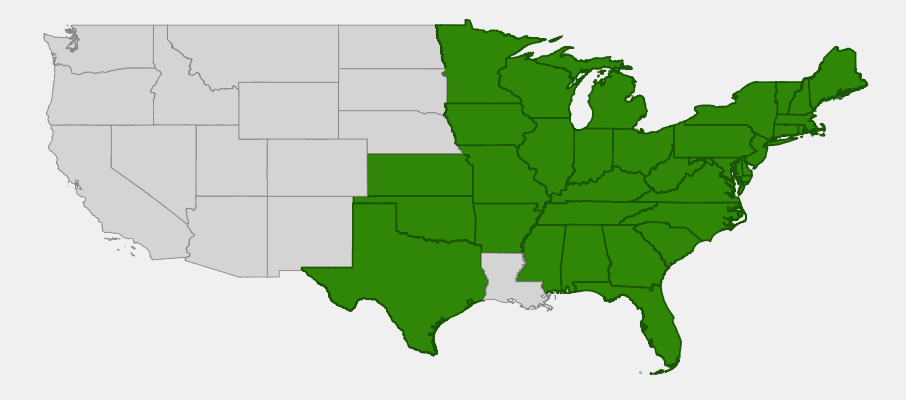
Spicebush has an extensive native range throughout eastern North America, naturally occurring from southern Maine west to southern Ontario and Kansas, and south to northern Florida and eastern Texas. This wide distribution reflects the species’ adaptability to various climatic conditions while maintaining a consistent preference for moist, shaded woodland environments.
The species reaches its greatest abundance in the rich, moist deciduous forests of the Appalachian region and the eastern deciduous forest biome. It’s a characteristic understory shrub in mature hardwood forests, often growing alongside other shade-tolerant species like pawpaw, elderberry, and various viburnum species. Spicebush thrives in the deep shade of established forest canopies, where its early spring flowers provide crucial resources for emerging pollinators.
Throughout its range, Spicebush shows remarkable consistency in habitat preference, typically found in moist, well-drained soils rich in organic matter. It’s most common along streams, in ravines, on north-facing slopes, and in bottomland forests where moisture levels remain relatively high throughout the growing season. The species’ tolerance of flooding and seasonal wetness makes it an important component of riparian forest communities.
📋 Regional plant lists featuring Spicebush: North Carolina & South Carolina
Growing & Care Guide
Spicebush is one of the most adaptable and low-maintenance native shrubs, particularly well-suited to shaded locations where many other flowering shrubs struggle. Its natural woodland habitat makes it perfect for naturalizing in established landscapes.
Light
Spicebush thrives in partial shade to full shade, making it ideal for woodland gardens and areas beneath mature trees. While it can tolerate some morning sun, it performs best with protection from hot afternoon sun, especially in southern climates. In deep shade, the plant may become more open in habit but will still flower and fruit reliably.
Soil & Water
This shrub prefers moist, well-drained soil rich in organic matter, similar to natural forest floor conditions. It grows well in loamy soils but adapts to clay and sandy soils if moisture levels are adequate. Spicebush appreciates consistent moisture and performs best with regular watering during dry spells, though established plants show good drought tolerance. The plant benefits from a 2–3 inch layer of organic mulch to retain moisture and suppress weeds.
Planting Tips
Plant container stock in spring or fall when temperatures are moderate. Choose a location with morning sun and afternoon shade, or in the dappled light beneath mature trees. Space plants 6–10 feet apart if creating a naturalistic grouping. Since Spicebush is dioecious, plant both male and female specimens if berry production is desired — one male can pollinate several females.
Pruning & Maintenance
Spicebush requires minimal pruning. Remove dead, damaged, or crossing branches in late winter while the plant is dormant. The naturally rounded form rarely needs shaping, though light pruning can increase density if desired. Avoid heavy pruning as this can reduce flowering and fruiting. The plant typically maintains good form with no intervention.
Landscape Uses
Spicebush excels in naturalistic settings:
- Woodland gardens and forest understory plantings
- Shade borders and foundation plantings on north sides
- Rain gardens and bioswales in shaded areas
- Wildlife gardens — essential for Spicebush Swallowtail butterflies
- Naturalized areas along streams and in moist, shaded valleys
- Erosion control on shaded slopes and stream banks
- Fragrance gardens — aromatic foliage and flowers
Wildlife & Ecological Value
Spicebush is extraordinarily valuable for wildlife, serving as a keystone species in woodland ecosystems and providing essential resources for numerous animals throughout the year.
For Birds
The bright red berries are consumed by more than 20 species of birds, including Wood Thrushes, Veeries, American Robins, Gray Catbirds, and various vireo species. The high fat content of the berries makes them particularly valuable for birds preparing for migration or surviving winter conditions. The dense branching structure provides excellent nesting sites for small songbirds, and the early flowers attract insects that insectivorous birds depend on during spring migration.
For Mammals
Small mammals including chipmunks, squirrels, and mice consume the berries, while deer and rabbits browse the foliage and twigs. Black bears eat the berries where ranges overlap. The dense growth provides cover and travel corridors for various woodland mammals.
For Pollinators
Spicebush flowers are among the earliest reliable nectar sources in woodland environments, blooming before most trees leaf out. They attract early-emerging native bees, flies, small beetles, and other beneficial insects at a critical time when few other flowers are available. The plant is also the primary host for the Spicebush Swallowtail butterfly (Papilio troilus) — the caterpillars feed exclusively on Spicebush and closely related species, making this shrub essential for the butterfly’s survival.
Ecosystem Role
As an understory shrub, Spicebush contributes to forest structural diversity and provides important habitat niches. Its early flowering supports pollinator communities at a crucial time, while its berries provide high-energy food resources during fall migration. The plant’s tolerance of various moisture conditions allows it to stabilize soil in areas prone to erosion, and its aromatic compounds may help deter some pest insects, benefiting nearby plants.
Cultural & Historical Uses
Spicebush has a rich history of use by Indigenous peoples throughout its native range, valued for both its medicinal properties and its culinary applications. The aromatic bark, leaves, and berries contain compounds similar to those found in true allspice, making the plant a valuable spice source for Native American cuisines.
Various tribal groups, including the Cherokee, Iroquois, and Ojibwe, used different parts of Spicebush medicinally. The bark was commonly prepared as a tea for treating fever, colds, and rheumatism. The berries were used to treat dysentery and other digestive ailments. Cherokee medicine specifically employed Spicebush tea for treating coughs and colds, while the Iroquois used leaf poultices for treating bruises and swelling.
The aromatic berries were dried and ground as a substitute for allspice in cooking, giving the plant its common name of Wild Allspice. Early European colonists quickly adopted this use, particularly during times when imported spices were unavailable or expensive. The berries were used to flavor meats, stews, and beverages, providing a warm, spicy taste reminiscent of a mixture of cinnamon, nutmeg, and pepper.
During the American Revolution and Civil War, Spicebush tea served as a substitute for imported black tea, earning it the name “liberty tea” in some regions. The practice of using native plants as substitutes for expensive imports was common throughout American frontier history and helped establish many traditional uses for native species.
Modern herbalists still value Spicebush for its traditional medicinal properties, though any therapeutic use should be undertaken only with proper knowledge and guidance. The plant is primarily grown today for its ornamental and ecological value, though some foragers and traditional foods enthusiasts still harvest the berries for culinary use.
Frequently Asked Questions
How can I tell male and female Spicebush plants apart?
Male plants have more abundant, showier flowers with prominent stamens, while female flowers are smaller and less conspicuous. You’ll only see berries on female plants, and they need a nearby male plant for pollination. Most nurseries can tell you the sex of plants they’re selling, or you can wait to observe flowering patterns after planting.
Will Spicebush grow in deep shade?
Yes, Spicebush is one of the few flowering shrubs that performs well in deep shade. While it may grow more open and tall in very shaded conditions, it will still flower and fruit reliably. This makes it excellent for areas beneath mature tree canopies where other shrubs struggle.
Are Spicebush berries edible for humans?
Yes, the red berries can be eaten fresh or dried and ground as a spice substitute for allspice. However, they should be consumed in moderation and properly identified before eating. The berries are quite spicy and aromatic, with a flavor similar to allspice or black pepper.
How important is Spicebush for Spicebush Swallowtail butterflies?
Extremely important — Spicebush is the primary host plant for this butterfly species. The caterpillars feed almost exclusively on Spicebush and closely related species. Planting Spicebush in your garden directly supports the survival of this beautiful native butterfly.
Does Spicebush need special care to establish?
No, Spicebush is quite easy to establish. Keep newly planted specimens watered during their first growing season, then they typically become quite self-sufficient. Mulching helps retain moisture and suppress weeds, but the plant is generally low-maintenance once established in an appropriate site.

Looking for a nursery that carries Spicebush?
Browse our native plant nursery directory: North Carolina · South Carolina