
Drooping Leucothoe (Leucothoe fontanesiana)
Leucothoe fontanesiana, commonly known as Drooping Leucothoe, Highland Doghobble, or Mountain Fetterbush, is an elegant native evergreen shrub that brings year-round beauty and exceptional shade tolerance to southeastern landscapes. This member of the Ericaceae (heath) family is particularly prized for its gracefully arching stems, glossy lance-shaped leaves, and delicate drooping clusters of white bell-shaped flowers that appear in spring.
Native to the southern Appalachian Mountains, Drooping Leucothoe naturally grows in the understory of moist, acidic forests where it forms attractive colonies through underground runners. The plant’s distinctive growth habit — with slender, fountain-like stems that arch gracefully outward — creates a refined, almost oriental garden aesthetic that has made it a favorite among landscape designers seeking native alternatives to exotic shrubs.
One of the most shade-tolerant native evergreens available, Drooping Leucothoe thrives in conditions where many other shrubs would struggle. Its leathery, dark green foliage provides excellent year-round structure, while the seasonal progression from spring flowers to summer seed capsules to bronze-purple winter foliage offers multi-season interest. For gardeners seeking a low-maintenance, deer-resistant native plant that excels in challenging shady conditions, Drooping Leucothoe represents an outstanding choice.
Identification
Drooping Leucothoe is an evergreen to semi-evergreen shrub that typically grows 3 to 5 feet tall and 4 to 6 feet wide, with a distinctive fountain-like growth habit. The plant produces multiple slender, arching canes that emerge from the base and gracefully droop at the tips, creating an elegant, cascading appearance that gives the plant its common name.
Stems & Bark
The stems are slender and flexible, initially green to reddish-brown on young growth, maturing to brown or gray-brown with age. New canes emerge each spring from the rhizomatous root system, while older canes may persist for several years. The bark is smooth on young stems, developing slight ridging as it matures. In winter, the youngest shoots often take on attractive reddish tones that add color to the landscape.
Leaves
The leaves are perhaps Drooping Leucothoe’s most distinctive feature — lance-shaped to elliptical, 2 to 5 inches long and ½ to 1½ inches wide, with finely serrated margins and prominent parallel veins. They are arranged alternately along the stems and have short petioles. The upper surface is glossy dark green, while the underside is paler and slightly duller. The leaves are leathery and evergreen in milder climates, semi-evergreen where winters are harsher. In fall and winter, many leaves develop beautiful bronze, purple, or reddish tones, particularly on plants growing in more sun exposure.
Flowers
The flowers appear in late spring in drooping, one-sided clusters (racemes) that emerge from the leaf axils near the tips of the previous year’s growth. Each individual flower is small, bell-shaped, and creamy white to pale pink, about ¼ inch long. The flowers have a waxy texture and sweet fragrance, and the drooping clusters can be 2 to 4 inches long. The blooming period typically lasts 3 to 4 weeks and attracts various native bees and other beneficial insects.
Fruit & Seeds
Following pollination, the flowers develop into small, dry capsules that ripen in late summer. The capsules split open to release numerous tiny seeds that can be dispersed by wind. While not particularly ornamental, the seed capsules add subtle texture to the plant and provide food for small birds and mammals.
Quick Facts
| Scientific Name | Leucothoe fontanesiana |
| Family | Ericaceae (Heath) |
| Plant Type | Evergreen Shrub |
| Mature Height | 3–5 ft |
| Sun Exposure | Part Shade to Full Shade |
| Water Needs | Moderate |
| Bloom Time | Late Spring |
| Flower Color | Creamy White to Pale Pink |
| USDA Hardiness Zones | 5–8 |
Native Range
Drooping Leucothoe is native to the southern Appalachian Mountains, with its natural range extending from southwestern Virginia south through western North Carolina and South Carolina, into northern Georgia and Alabama, eastern Tennessee, and a small portion of West Virginia. The species is most abundant in the Blue Ridge and Great Smoky Mountains, where it grows in the understory of moist, acidic mountain forests at elevations typically between 1,000 and 4,000 feet.
In its native habitat, Drooping Leucothoe is commonly found along streams, in ravines, on north-facing slopes, and in other areas where soils remain consistently moist and acidic. It often grows in association with rhododendrons, mountain laurel, hemlocks, and various fern species, forming part of the diverse understory community that characterizes southern Appalachian forests. The plant typically occurs in areas with high humidity and reliable rainfall throughout the growing season.
While its natural range is relatively limited compared to some other native plants, Drooping Leucothoe has proven adaptable to cultivation well beyond its native distribution, growing successfully in gardens throughout the southeastern United States and into the lower Midwest where soil and climate conditions are suitable.
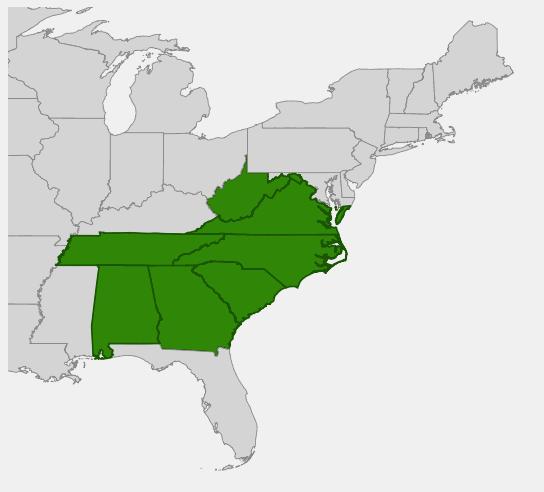
📋 Regional plant lists featuring Drooping Leucothoe: North Carolina & South Carolina
Growing & Care Guide
Drooping Leucothoe is one of the finest native plants for shady, acidic conditions. Its combination of elegant form, evergreen foliage, and exceptional shade tolerance makes it invaluable for challenging sites where few other attractive shrubs will thrive.
Light
This plant excels in partial to full shade, making it perfect for the north sides of buildings, under tree canopies, or in woodland gardens. While it can tolerate some morning sun, Drooping Leucothoe performs best with protection from hot afternoon sun, particularly in southern climates. In deep shade, the plant may become more open in habit but will remain healthy and attractive. Too much direct sun can cause leaf scorch and stress.
Soil & Water
Drooping Leucothoe requires acidic soil (pH 4.5-6.0) that is consistently moist but well-drained. Like other members of the heath family, it cannot tolerate alkaline conditions and will develop chlorosis (yellowing leaves) in soils with pH above 7.0. The plant prefers humus-rich, organic soils similar to those found on the forest floor in its native habitat. Consistent moisture is important, especially during establishment, but the plant cannot tolerate waterlogged conditions. Mulching with acidic organic matter such as pine needles or shredded oak leaves helps maintain proper soil conditions.
Planting Tips
Plant Drooping Leucothoe in spring or fall when temperatures are moderate. Choose a site with morning sun and afternoon shade, or full shade throughout the day. Space plants 4-6 feet apart for individual specimens, or closer for mass plantings. The plant benefits from wind protection, as strong winds can damage the graceful arching stems. When planting, dig a hole only as deep as the root ball but 2-3 times wider, and amend heavy clay soils with organic matter to improve drainage.
Pruning & Maintenance
Drooping Leucothoe requires minimal pruning. Remove dead, damaged, or crossing branches in late winter or early spring. Older canes can be selectively removed at ground level to encourage new growth and maintain the plant’s fountain-like shape. Avoid shearing or heavy pruning, which destroys the plant’s natural graceful form. The plant may benefit from light fertilization with an acid-loving plant fertilizer in spring, but over-fertilization can reduce flowering and make the plant more susceptible to diseases.
Landscape Uses
Drooping Leucothoe’s versatility and elegance make it valuable in many garden settings:
- Shade gardens — excellent structure plant for difficult shady areas
- Foundation plantings — elegant alternative to exotic shrubs
- Woodland gardens — perfect companion for native wildflowers
- Mass plantings — creates attractive groundcover in large shady areas
- Erosion control — root system helps stabilize slopes
- Winter interest — evergreen foliage and colorful stems
- Container gardens — works well in large planters with acidic potting mix
Wildlife & Ecological Value
While not as dramatic a wildlife magnet as some native plants, Drooping Leucothoe provides important ecological services and supports various native species throughout the year.
For Birds
The dense evergreen foliage provides excellent cover and nesting sites for small birds, particularly during winter when deciduous plants have lost their leaves. Various songbirds, including wrens, towhees, and sparrows, utilize the sheltered spaces within the arching stems. The small seeds are occasionally eaten by finches and other seed-eating birds, though they are not a major food source.
For Mammals
Small mammals such as chipmunks and various mouse species find shelter among the dense stems and may occasionally browse the foliage. The plant is generally avoided by deer, making it valuable for gardens where deer pressure is high. The thick growth provides travel corridors and hiding places for small wildlife moving through the landscape.
For Pollinators
The spring flowers attract various native bees, including bumblebees and solitary bees, as well as flies and other beneficial insects. While the flowers are not particularly showy, they provide an important nectar source during the spring bloom period when few other plants in the shade garden are flowering. The plant’s long bloom period extends the availability of this nectar resource.
Ecosystem Role
In forest ecosystems, Drooping Leucothoe plays an important role as an understory species, contributing to habitat complexity and supporting the diverse community of organisms that depend on layered forest structure. Its evergreen foliage provides year-round cover, while its ability to thrive in low-light conditions makes it valuable for maintaining plant diversity in heavily shaded areas. The plant’s root system helps prevent soil erosion on slopes and contributes to soil health through leaf litter decomposition.
Cultural & Historical Uses
Drooping Leucothoe has a rich history of use among the indigenous peoples of the southern Appalachians. Several Native American tribes, including the Cherokee, recognized the plant’s medicinal properties and used leaf preparations to treat various ailments. However, it’s important to note that all parts of Leucothoe species contain grayanotoxins, which are toxic to humans and animals, making traditional medicinal uses potentially dangerous without proper knowledge and preparation.
The plant’s common name ‘doghobble’ refers to the way the arching, interlaced stems can trip up dogs (and people) trying to move through dense stands in the wild. Despite this somewhat unflattering name, early botanists and horticulturists quickly recognized the plant’s ornamental value. By the late 1800s, Drooping Leucothoe was being cultivated in European gardens, where its evergreen foliage and graceful form made it popular for shaded areas of formal landscapes.
During the early 20th century, the plant became widely used in American landscape architecture, particularly in the design of naturalistic gardens and parks. Famous landscape architects like Frederick Law Olmsted appreciated native plants that could provide structure and year-round interest in challenging conditions, and Drooping Leucothoe fit this need perfectly. The plant was frequently used in the understory plantings of large estates and public gardens throughout the eastern United States.
Today, Drooping Leucothoe continues to be valued by landscape designers and gardeners seeking native alternatives to exotic evergreen shrubs. Its deer resistance, low maintenance requirements, and exceptional shade tolerance have made it increasingly popular as awareness of native plants has grown. The plant is also used in restoration projects aimed at recreating authentic Appalachian forest understory communities.
Frequently Asked Questions
Is Drooping Leucothoe deer resistant?
Yes, Drooping Leucothoe is generally avoided by deer due to the toxic compounds (grayanotoxins) present in all parts of the plant. This makes it an excellent choice for gardens where deer browsing is a problem. However, extremely hungry deer may occasionally sample young growth.
Can Drooping Leucothoe grow in full sun?
While it can tolerate some morning sun, Drooping Leucothoe performs best in partial to full shade. Full sun exposure, particularly in southern climates, can cause leaf scorch, stress, and reduced vigor. For best results, provide afternoon shade or dappled light throughout the day.
How fast does Drooping Leucothoe grow?
Drooping Leucothoe has a moderate growth rate, typically adding 6-12 inches per year under good conditions. Young plants may grow more slowly until they become well established, usually taking 2-3 years to reach full vigor. The plant spreads gradually through underground runners to form colonies over time.
When should I prune Drooping Leucothoe?
Pruning should be minimal and done in late winter or very early spring before new growth begins. Remove only dead, damaged, or crossing branches, and occasionally thin older canes at ground level to encourage fresh growth. Avoid heavy pruning or shearing, which destroys the plant’s natural graceful form.
Can I grow Drooping Leucothoe in containers?
Yes, Drooping Leucothoe can be successfully grown in large containers using an acidic, well-draining potting mix. Choose a container at least 18-24 inches wide and deep, and place it in a location with morning sun and afternoon shade. Container plants will need more frequent watering and occasional fertilization with acid-loving plant food.

Looking for a nursery that carries Drooping Leucothoe?
Browse our native plant nursery directory: North Carolina · South Carolina