Sweet Azalea (Rhododendron arborescens)
Rhododendron arborescens, commonly known as Sweet Azalea, Smooth Azalea, or Tree Azalea, is a breathtakingly beautiful native deciduous shrub that brings both visual splendor and intoxicating fragrance to woodland gardens throughout the Appalachian region. This exceptional member of the Ericaceae (heath) family stands out among native azaleas for its powerfully sweet, spicy fragrance that can perfume an entire garden on warm summer evenings when the flowers are in full bloom.
Growing naturally in the moist, cool environments of mountain streams, seepage areas, and high-elevation forests from Pennsylvania to Georgia, Sweet Azalea forms elegant, upright shrubs 3 to 6 feet tall with smooth, reddish-brown bark and glossy green foliage. In early summer, after the leaves have fully emerged, the plant produces clusters of pristine white to pale pink flowers adorned with prominent red stamens that extend gracefully beyond the petals, creating one of the most sophisticated and refined displays in the native plant world.
Sweet Azalea is particularly valued for its late blooming season — flowering in June and July when most other azaleas have finished — extending the azalea season well into summer. Its preference for moist, acidic soils and partial shade, combined with its exceptional fragrance and elegant appearance, make it a prized addition to woodland gardens, shade borders, and naturalistic landscapes throughout its native Appalachian range.
Identification
Sweet Azalea typically grows as a deciduous shrub reaching 3 to 6 feet in height, though in ideal conditions it can occasionally reach 8 to 10 feet. The growth habit is generally upright and somewhat open, with a naturally graceful, rounded form that requires little pruning to maintain its attractive shape.
Bark
The bark is notably smooth and attractive, particularly on younger stems, with a distinctive reddish-brown to cinnamon color that provides winter interest. As stems mature, the bark may develop slight fissures but remains relatively smooth compared to many other shrubs. This smooth bark is one of the distinguishing features that gives the plant its alternative common name of “Smooth Azalea.”
Leaves
Leaves are alternate, simple, and deciduous, typically measuring 2 to 4 inches long and 1 to 2 inches wide. They are elliptical to obovate with entire or slightly serrated margins and are arranged in clusters at the ends of branches. The upper surface is glossy dark green, while the underside is paler and may have fine hairs along the midrib and veins. Unlike some azaleas, the leaves are relatively smooth and hairless (glabrous) on both surfaces, contributing to the “smooth” common name. Fall color is typically yellow to orange-red, though it can be variable.
Flowers & Fruit
The flowers are the plant’s most spectacular feature and appear in early to mid-summer (June–July) after the leaves have fully developed. Flower clusters (corymbs) contain 3 to 6 fragrant blooms, each measuring 1½ to 2 inches across. The flowers are typically pure white to very pale pink, with five petals that are often slightly recurved. The most distinctive feature is the prominent cluster of red to pink stamens and style that extend well beyond the petals, creating an elegant, almost spider-like appearance. The fragrance is intensely sweet and spicy, often described as similar to honeysuckle but more complex and sophisticated.
The fruit is a dry capsule containing numerous small seeds. The capsules are about ½ inch long and split open in fall to release the seeds. Like most rhododendrons, the seeds require specific mycorrhizal associations to germinate successfully in nature.
Distinguishing Features
Sweet Azalea can be distinguished from other native azaleas by its combination of smooth bark, relatively hairless leaves, late summer blooming period, intensely fragrant white to pink flowers, and prominent red stamens extending beyond the petals.
Quick Facts
| Scientific Name | Rhododendron arborescens |
| Family | Ericaceae (Heath) |
| Plant Type | Deciduous Shrub |
| Mature Height | 8–20 ft (2.4–6 m) |
| Sun Exposure | Full Sun to Part Shade |
| Water Needs | Moderate |
| Bloom Time | June – July |
| Flower Color | White to Pale Pink with Red Stamens |
| USDA Hardiness Zones | 4–8 |
Native Range
Sweet Azalea has a relatively restricted native range compared to many other eastern azaleas, being endemic to the Appalachian Mountains and their foothills from southwestern Pennsylvania south through western Maryland, West Virginia, Virginia, western North Carolina, northwestern South Carolina, northern Georgia, and northeastern Alabama. This distribution follows the mountain chain and reflects the species’ preference for the cool, moist conditions found at higher elevations and in protected mountain valleys.
The species is most abundant in the Blue Ridge Mountains and the Allegheny Mountains, where it grows naturally along mountain streams, in seepage areas, and on moist, north-facing slopes. It typically occurs at elevations between 1,000 and 5,000 feet, though it can be found at lower elevations in protected ravines and along cool mountain streams. Sweet Azalea often grows in association with other acid-loving, moisture-dependent plants like Mountain Laurel, Catawba Rhododendron, and various heath family members.
The plant’s habitat preferences are quite specific — it requires consistently moist, well-drained, acidic soils and benefits from the cool, humid conditions found in mountain environments. This makes it somewhat more challenging to grow outside its native range, though it can succeed in similar microclimates throughout the eastern United States where adequate moisture and cool conditions can be provided.
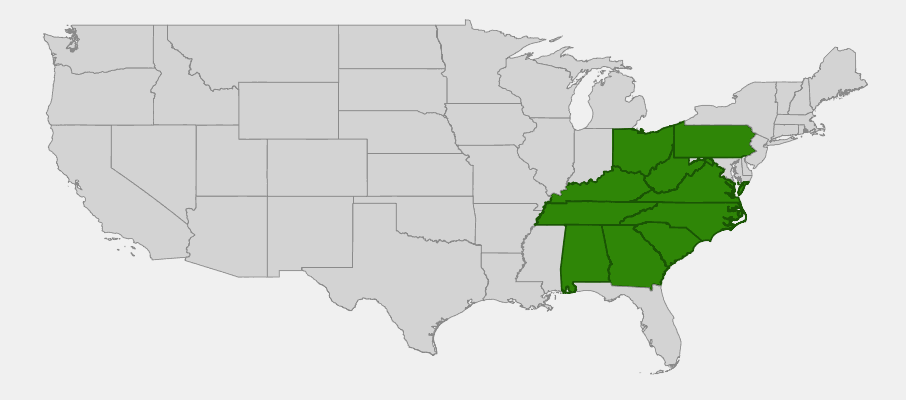
📋 Regional plant lists featuring Sweet Azalea: North Carolina & South Carolina
Growing & Care Guide
Sweet Azalea requires more specific growing conditions than some native shrubs, but when properly sited, it becomes a low-maintenance and exceptionally rewarding garden plant. Success depends primarily on providing the cool, moist, acidic conditions it enjoys in its mountain habitat.
Light
Sweet Azalea performs best in partial shade, particularly in locations that receive morning sun and afternoon shade. In its native mountain habitat, it often grows in dappled light beneath taller trees. While it can tolerate full sun in cooler climates with adequate moisture, it generally prefers some protection from intense afternoon sun. In warmer regions, more shade is beneficial to prevent stress during hot summers.
Soil & Water
The most critical requirement for Sweet Azalea is consistently moist, well-drained, acidic soil with a pH between 4.5 and 6.0. The soil should be rich in organic matter, similar to the forest floor conditions found in its native habitat. Amend clay soils with compost, leaf mold, or peat moss to improve drainage while retaining moisture. The plant is intolerant of drought and requires regular watering during dry periods. A 2–3 inch layer of organic mulch helps maintain soil moisture and suppress weeds.
Planting Tips
Plant Sweet Azalea in spring or fall when temperatures are moderate. Choose a site with some protection from wind and hot afternoon sun. If your soil is not naturally acidic, incorporate sulfur or organic acidifying amendments before planting. Space plants 4–6 feet apart to allow for mature spread. The shallow, fibrous root system means plants don’t need deep planting holes, but they benefit from wide planting areas amended with organic matter.
Pruning & Maintenance
Sweet Azalea requires minimal pruning and naturally maintains an attractive form. Remove spent flower clusters immediately after blooming to encourage more flower buds for next year. Prune only to remove dead, damaged, or crossing branches, and do so immediately after flowering since flower buds for next year form during summer. Avoid heavy pruning, as azaleas recover slowly from major cuts. The shallow root system means careful cultivation around the plant is important — avoid disturbing the soil near the base.
Landscape Uses
Sweet Azalea is ideal for specialized garden situations:
- Woodland gardens and naturalistic shade borders
- Rhododendron and azalea collections
- Fragrance gardens — position near seating areas
- Stream-side plantings and water garden edges
- Foundation plantings on north or east sides of buildings
- Understory plantings beneath tall shade trees
- Rock gardens with moist, shaded conditions
Wildlife & Ecological Value
Sweet Azalea provides valuable resources for wildlife, particularly for pollinators and other insects that are active during its mid-summer blooming period when many other flowers have finished.
For Birds
While the flowers don’t produce berries that birds commonly eat, the dense branching structure provides good nesting sites for small songbirds. Ruby-throated Hummingbirds occasionally visit the tubular flowers for nectar, though they prefer red tubular flowers. The plant’s presence in woodland settings contributes to the overall habitat complexity that supports diverse bird communities.
For Mammals
Deer generally avoid browsing azaleas due to the toxic compounds in the leaves, making Sweet Azalea relatively deer-resistant. However, the plant does provide some cover for small woodland mammals and contributes to the overall structure of forest understory communities.
For Pollinators
Sweet Azalea’s summer blooming period makes it particularly valuable for pollinators, as it provides nectar when many spring flowers have finished and before late-summer blooms begin. The large, fragrant flowers attract various native bees, including bumblebees and specialist native bees. Butterflies, particularly swallowtails, often visit the flowers for nectar. Moths are significant pollinators due to the flowers’ intense evening fragrance — the plant appears to be adapted for moth pollination with its white color and powerful nighttime scent.
Ecosystem Role
In its native mountain habitat, Sweet Azalea helps maintain the understory structure of cool, moist forests. Its presence indicates high-quality woodland habitat with good water retention and minimal disturbance. The plant’s specific habitat requirements make it a good indicator species for healthy mountain forest ecosystems.
Cultural & Historical Uses
Sweet Azalea, like other native rhododendrons and azaleas, has been valued more for its ornamental beauty than for utilitarian purposes, though it does have some historical cultural significance in the Appalachian region where it grows naturally.
Indigenous peoples of the southeastern mountains were familiar with the plant, though specific traditional uses are less well-documented than for some other native species. The Cherokee and other regional tribes generally recognized the toxicity of rhododendron and azalea species and used them cautiously, if at all. The plant’s prominent summer flowering and intense fragrance made it a notable species in the mountain landscape.
Early European settlers in the Appalachian region quickly noticed and appreciated Sweet Azalea’s beauty and fragrance. The plant was among the first native azaleas to be brought into cultivation, valued for its late blooming period and exceptional fragrance. By the mid-1700s, it was being grown in botanical gardens and estates, and plant collectors specifically sought it out in the wild.
The species played an important role in the development of American azalea breeding programs. Its late blooming habit, fragrance, and elegant flower form made it valuable for hybridization work aimed at extending the azalea blooming season and incorporating fragrance into garden varieties. Many modern azalea cultivars have Sweet Azalea in their genetic background.
Today, Sweet Azalea is primarily appreciated for its ornamental value and as a component of authentic Appalachian woodland gardens. It’s increasingly recognized by native plant enthusiasts as an exceptional choice for adding fragrance and summer bloom to shade gardens, and conservation groups work to protect its natural habitat from development and overcollection.
Frequently Asked Questions
Why is it called Sweet Azalea?
The name refers to the intensely sweet, spicy fragrance of the flowers, which is more powerful and complex than most other native azaleas. The fragrance is particularly strong in the evening and can perfume an entire garden area when the plant is in full bloom.
Can Sweet Azalea tolerate alkaline soil?
No, Sweet Azalea requires acidic soil with a pH between 4.5 and 6.0. In alkaline soils, the plant will develop chlorosis (yellowing leaves) and eventually die. If your soil is naturally alkaline, you’ll need to create an acidic microenvironment with sulfur amendments and organic matter, or choose a different plant.
How is Sweet Azalea different from other native azaleas?
Sweet Azalea blooms later than most other native azaleas (June-July vs. April-May), has exceptionally fragrant flowers, smooth bark, and white to pale pink flowers with prominent red stamens. It’s also more restricted in its native range, being primarily an Appalachian Mountain species.
Is Sweet Azalea difficult to grow?
It’s more challenging than some native shrubs because of its specific requirements for moist, acidic soil and partial shade. However, when properly sited with adequate moisture and acidic conditions, it’s relatively low-maintenance and very rewarding. Success depends primarily on choosing the right location.
When is the best time to see Sweet Azalea in bloom?
The peak blooming period is typically June through July, making it one of the latest-blooming native azaleas. This extended season is one of its most valuable garden characteristics, providing color and fragrance when most other azaleas have finished flowering.

Looking for a nursery that carries Sweet Azalea?
Browse our native plant nursery directory: North Carolina · South Carolina